
West Seattle, Washington
08 Monday
Early tomorrow, Washington State Ferries‘ M/V Chelan “will go out of service for maintenance, repairs, and inspections,” WSF says. They don’t have a boat to replace it on the Fauntleroy-Vashon-Southworth run, so the Triangle Route will be down to two boats for a week or so. (The two-boat schedules are linked from the WSF Alerts page.)
Last June, after months of controversy over City Councilmember Rob Saka‘s espousal of removing a centerline curb on Delridge Way, he and Mayor Bruce Harrell announced the curb would stay and three other projects would be done instead. The biggest of those projects is about to start:

SDOT says work could start as soon as this Friday (December 5) on the 22nd/Delridge turnaround. From the flyer it’s sent to nearby residents:
New Turnaround at Delridge Way SW and 22nd Ave SW
As soon as Friday, December 5, the Seattle Department of Transportation (SDOT) will start construction at Delridge Way SW and 22nd Ave SW in the Delridge neighborhood at the request of City Councilmember Rob Saka pursuant to a budget investment passed by the Full Council. We will reconfigure the triangle at Delridge Way SW and 22nd Ave SW by building a 24-foot wide turnaround on the north side of the triangle connecting the two streets (see map). This will improve circulation for people driving in this part of the Delridge neighborhood. Please note this project will remove the existing informal parking in this triangle and add landscaping within the triangle area south of the street segment.
The other two projects involve signage; together, all three cost $500,000, according to SDOT, a quarter of what the original plan was budgeted for.
For Metro, today is Mark McLaughlin Day, a tribute to the driver murdered on the job on the day after Thankgiving in 1998, including a 4 pm moment of remembrance for drivers if they can stop safely. Here’s the system alert:
Metro bus service will pause for a moment of reflection and remembrance for transit operator Mark McLaughlin at 4 pm today.
Metro operators will honor the legacy of operator Mark McLaughlin, who died tragically while driving Route 359 in 1998. Operators throughout the system will pause for a moment of silence at 4 pm today to honor Mr. McLaughlin. Operators participating in the annual remembrance will stop only where and when it is safe to do so. Operators will not pause service if they are traveling on highways or on roadways where there is no place to safely pull over.
This Metro Matters post from two years ago has the backstory.
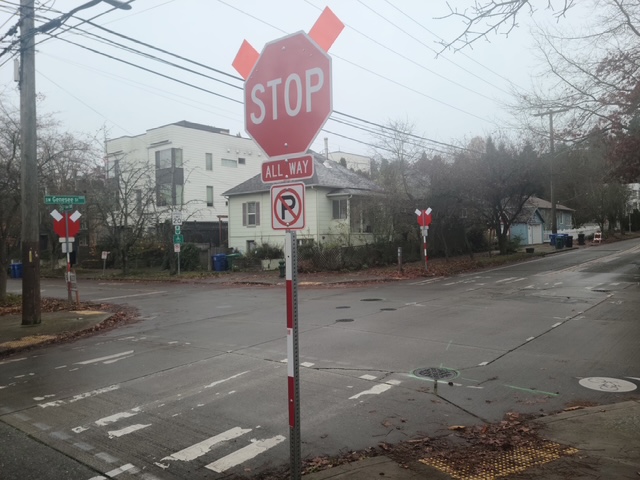
Thanks for the tip and photos! A reader reports that the intersection of 26th SW and SW Genesee is now an all-way stop, after SDOT installed signs on Genesee today:
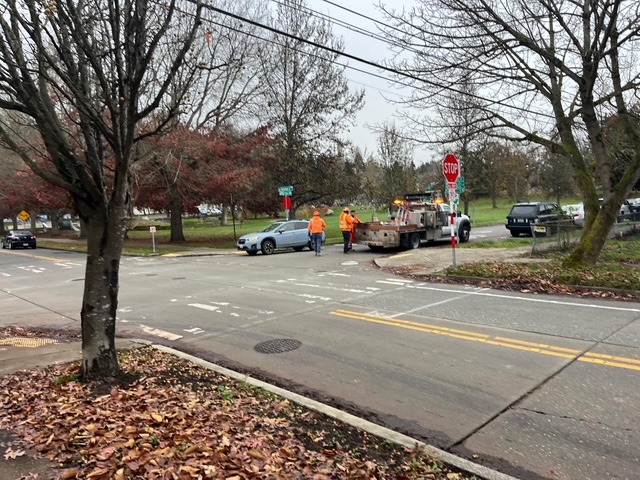
This comes five-plus years after a community controversy over a different plan to calm traffic at that intersection: In 2020, SDOT announced a sudden plan for “diverters” at this intersection and 26th/Brandon; after neighborhood pushback, they shelved the idea in March 2021, and that’s the last time the word “diverters” appears in our archives. 26th SW is a greenway through the area.
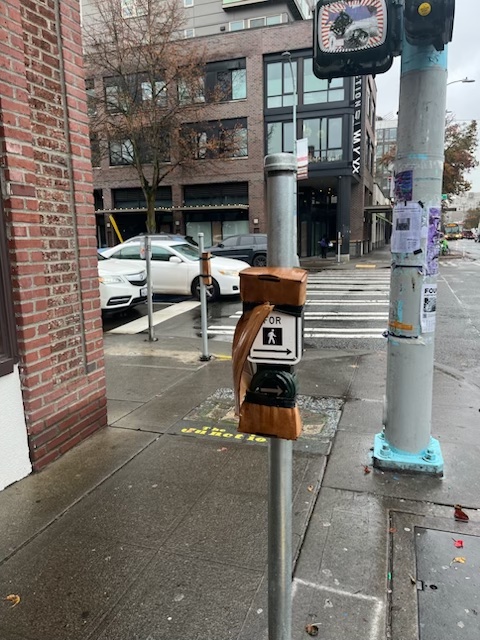
Starting right after an SDOT crew left California SW and SW Alaska on Saturday morning, people started asking us about the then-covered-up pushbuttons they installed on all corners. Some worried these were “beg buttons” meaning the intersection would stop being automatically cycled “Walk All Ways.” An explanation wasn’t available over the weekend, but we just got this reply from SDOT spokesperson Mariam Ali:
What you’re seeing are new Accessible Pedestrian Signal (APS) push buttons being installed to meet ADA standards. These provide audio and tactile cues to help people who are blind or low-vision know when it’s safe to cross. The cardboard covers are just temporary — crews keep them in place until all APS units are ready to be activated at the same time.
We’re also replacing some vehicle signal heads and overhead signs while crews are onsite, but none of this changes how the intersection operates. The California/Alaska all-walk “scramble” will continue to activate automatically. We are not switching to push-button (“beg button”) operation or making any other timing or operational changes.
Our crews will also be doing this same type of work at California Ave SW & SW Oregon St — upgrading APS push buttons and replacing vehicle signal heads and overhead signage. That work may begin once the Alaska intersection is complete, possibly early next year, weather depending.
Some other intersections already have the APS buttons – just a block east, 42nd SW and SW Alaska, for example.
SDOT has just announced the timeline for previously promised changes/additions on the Alki Point “Healthy Street” – Beach Drive and Alki Avenue’s stretches west of 63rd SW – and vicinity. These are basically what it announced early this year would be the “next steps.”
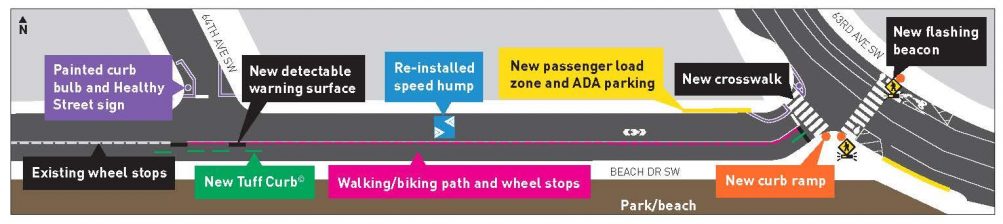
That SDOT graphic summarizes what’s ahead:
We’re excited to announce that we’ll soon begin making upgrades to the Alki Point Healthy Street at 63rd Ave SW and Beach Drive SW. These upgrades will enhance safety, accessibility, and make it easier for people to cross the street. They include:
-New accessible curb ramps, crosswalk, a flashing pedestrian / bike crossing sign at the intersection of 63rd Ave SW and Beach Dr SW.
-Two new accessible parking spaces and two new passenger loading zones near the intersection of Beach Dr SW and 63rd Ave SW. These will be on the north side of Beach Dr SW just west of the intersection at 63rd Ave SW and on the west side of Beach Dr SW just south of the intersection at 63rd Ave SW.
-An extension of the walking and rolling path on Beach Dr SW to 63rd Ave SW that will include wheel stops and a painted edge to match the existing path.We expect to begin installing these upgrades as soon as later this year. During installation you can expect some temporary parking restrictions, sidewalk and travel lane closures, and construction equipment staged in the work area. We expect work to occur during daytime hours. Design details are subject to change as we finalize design and prepare for construction. We’ll share more information about what you can expect once the work is scheduled.
As also mentioned in the previous update, a painted mural will be installed in the walking/rolling lane – here’s the design concept:

As previously announced, the artist will be Angelina Villalobos, who’s created other murals in the area, including this one.
P.S. One thing mentioned early this year but not mentioned in either today’s announcement or on the project webpage – consideration of possibly making the Beach Drive stretch one way. We’ll follow up to see if that idea is still under review or permanently scrapped.

Just back from Alki, where we checked on the 60th/61st/62nd SW speed-bump project. As of noon, two speed humps (no cut in the middle) are newly installed on 60th SW, south of Stevens.
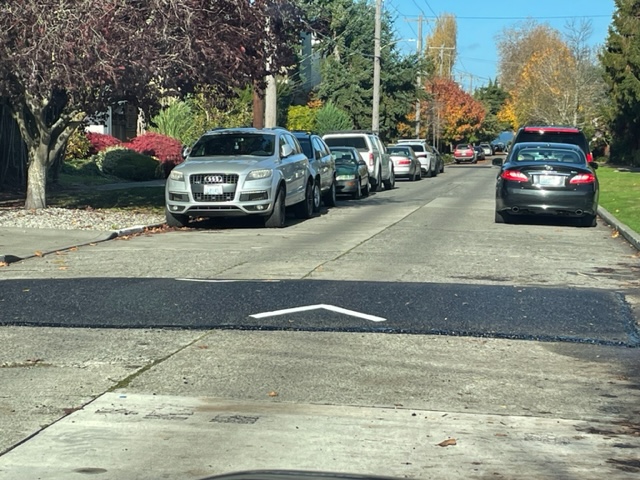
We saw two SDOT trucks in the area but it wasn’t clear where crews would work next. The installation was delayed by the rainy weather. In all, the plan was for 11 new bumps in all on the three streets, between Alki Avenue and Admiral Way – speed humps on 60th and 62nd, cushions (the type with space between them) on 61st.
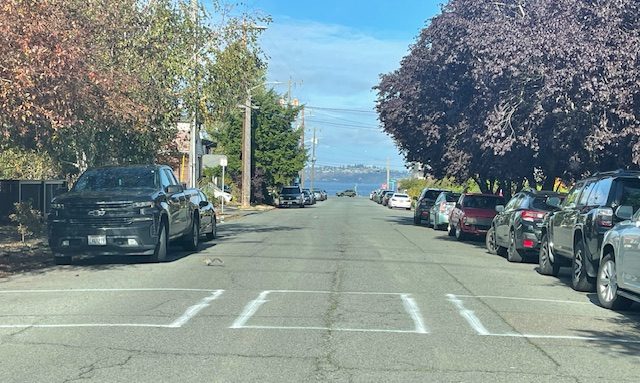
More than a week has passed since SDOT‘s tentative start date for installing 11 new speed cushions/humps on 60th, 61st, and 62bd SW between Alki Avenue and Admiral Way, but as we’ve been noting in daily traffic/weather/road work roundups, no sign of work. They always warn that it’s weather-dependent, but at this point in the year, the rainy days tend to outnumber the non-rainy days, so we asked SDOT if they’re considering shelving it until spring, No, replied a spokesperson, they’re still planning on installation: “I’m told crews cannot do speed cushions in the rain and so the weather is the reason you haven’t seen them out there. The ‘no park’ signs are being pulled for now, but crews are hoping to start construction next week. That said, I can’t give a set date because the work continues to be weather-dependent.” (The “no parking” signs were marked to expire yesterday.)
The photo and report from Delridge Way SW and SW Alaska were sent by Shane:
Wanted to write as I didn’t see it mentioned on the road work today … it looks like the city (finally) put in an official crosswalk by the Delridge Playfield. It’s just paint and a couple signs but it’s still much clearer to cars that this is an official crosswalk now and hopefully is a step toward real pedestrian safety improvements along this road!
(The median was already there, but without crosswalk markings.) Customary reminder – this corner and others were/are crosswalks even without paint.
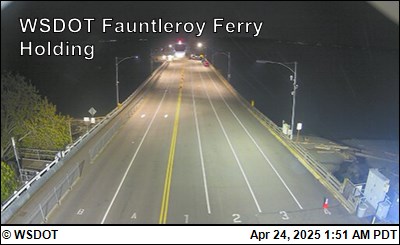
Going into the busy Friday afternoon commute period, the Fauntleroy-Vashon-Southworth ferry route remains down to two boats. M/V Sealth went out of service this morning, in need of repairs, and it’s at the WSF Eagle Harbor facility (Bainbridge Island) to get worked on, so M/V Issaquah and M/V Cathlamet are on the 2-boat schedule (timetables are linked here). Compounding matters, the South Vashon route (Tahlequah-Point Defiance) had some cancellations this morning too.
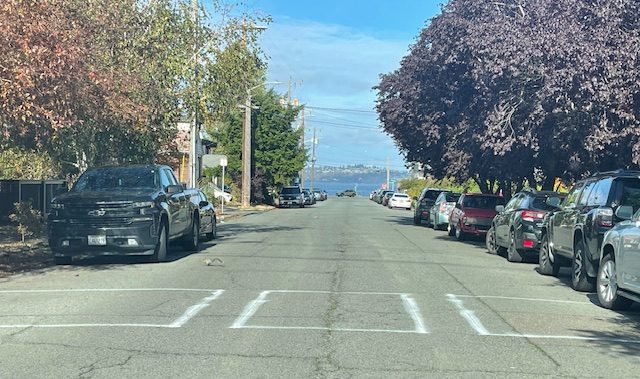
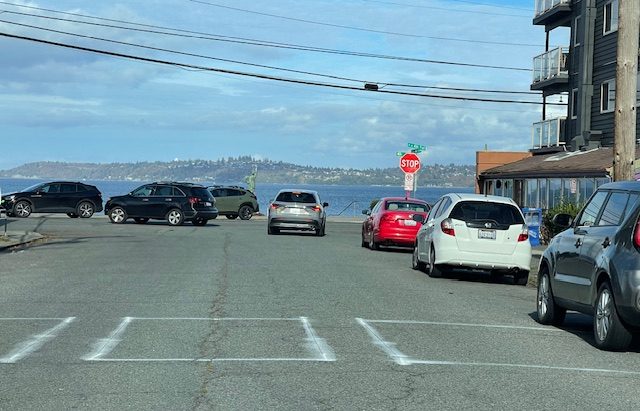
Before the sun went away, we got over to Alki for a look at exact locations for some of the about-to-be-installed Alki cross-street speed bumps between Alki Avenue and Admiral Way. The three photos here are the three northernmost cushions planned for 61st SW.
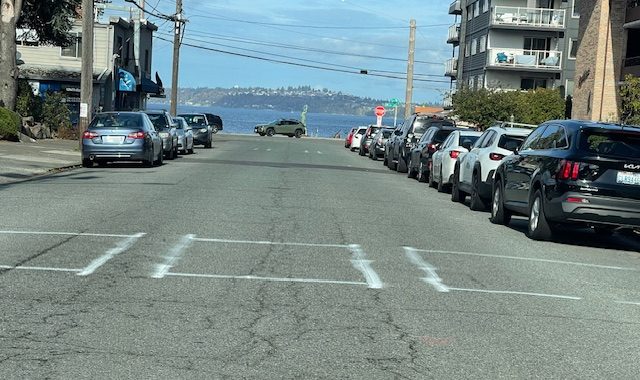
These last two are barely half a block apart, just south of Alki Avenue.
Here’s the full three-street rundown per a followup question SDOT spokesperson Amy Abdelsayed answered for us today:
There will be 11 speed humps/cushions: four speed humps on 60th Ave SW, four speed cushions on 61st Ave SW, and three speed humps on 62nd Ave SW. Speed cushions are being installed on 61st Ave SW to accommodate the bus route.
As reported here last week, SDOT says installation could start as soon as Wednesday; it’s expected to be complete within four days of when work starts.
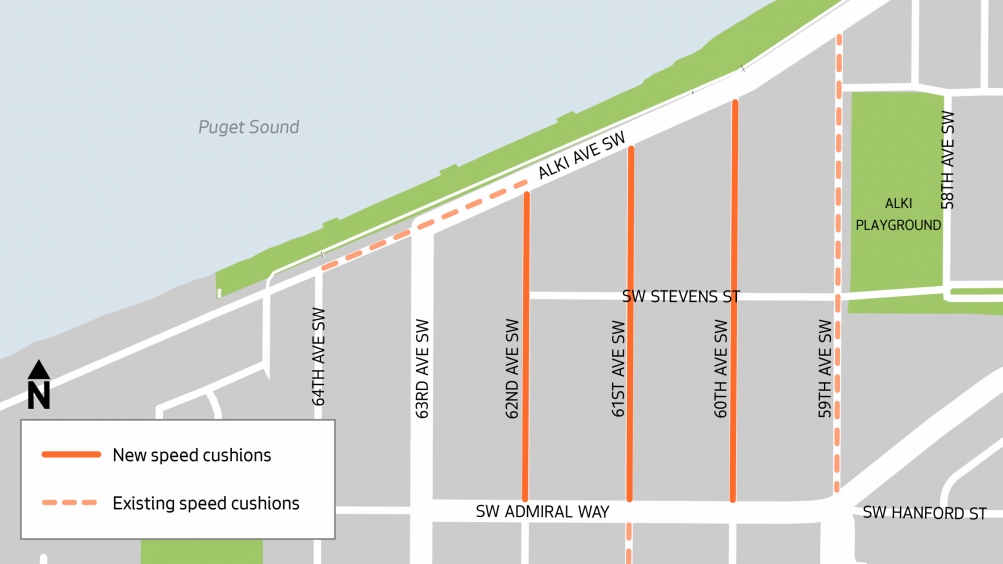
1:49 PM: We first showed you that map back in August, when SDOT confirmed where it’s planning to add speed cushions on 60th, 61st, and 62nd SW in the heart of Alki. After a reader spotted the first preparatory outlines this week, we asked SDOT for an update on the construction timeline. They say installation will start as soon as next week (Monday, October 20 and beyond), weather permitting, and hope to provide us more details shortly. Here’s the original construction notice.
2:39 PM: Update from SDOT spokesperson Mariam Ali: “The start of construction has been pushed to Wednesday, October 22, due to rain … Construction is expected to last about four days total across all three streets, with each block impacted for roughly one day. The schedule will continue to be weather dependent since wet conditions prevent asphalt work.” Sidewalks are expected to remain open but drivers might have to detour during “active construction.”
(WSF recording of Wednesday’s Community Advisory Group meeting)
By Tracy Record
West Seattle Blog editor
A long journey has come to an end for the Community Advisory Group that has been a sounding board for the Fauntleroy ferry-terminal replacement project.
The group was convened four and a half years ago as Washington State Ferries navigated the process of determining a concept for the new dock, and included members from all three communities on the route – Fauntleroy, Vashon, and Southworth. WSF brought them together online last night one last time, 10 months after their previous meeting (WSB coverage here).
Nicole McIntosh, who returned earlier this year to the role of terminal-engineering director, introduced the meeting and thanked the group members for their contributions and said they hope to continue collaborating with them as the project moves forward.
Facilitator was Laura LaBissonier Miller. She turned it over to WSF’s Hadley Rodero for a timeline update (previewed here on Tuesday), with design/construction expected 2028-2031.
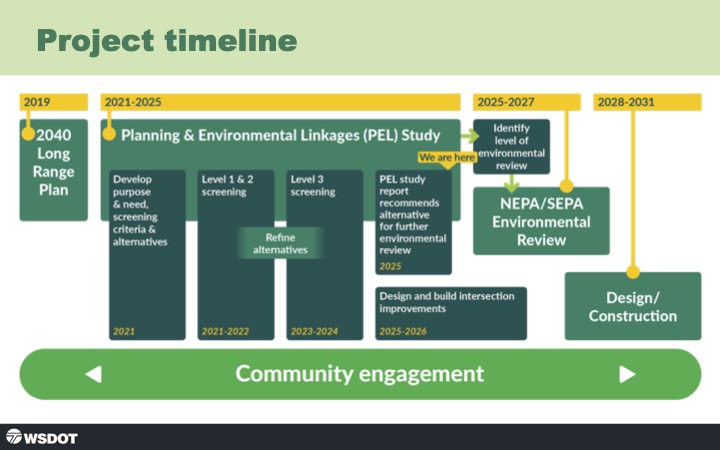
A key document discussed at the meeting was the PEL (Planning and Environmental Linkage) report – which led to the decision to settle on a version of “Alternative B,” longer and narrower than the current dock, holding up to 155 cars (almost twice as many as the current dock).
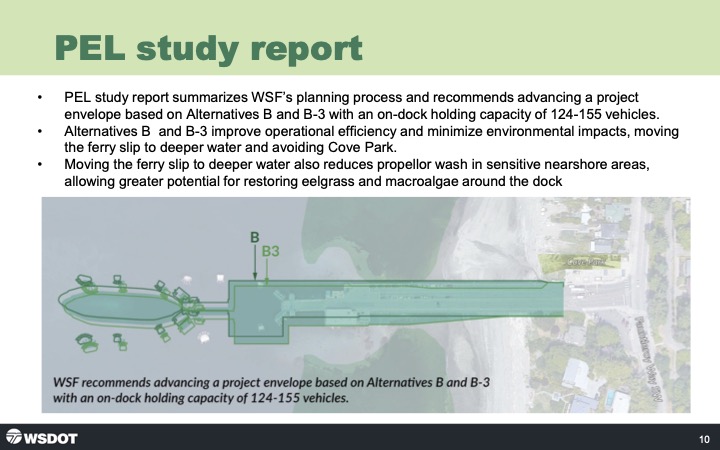
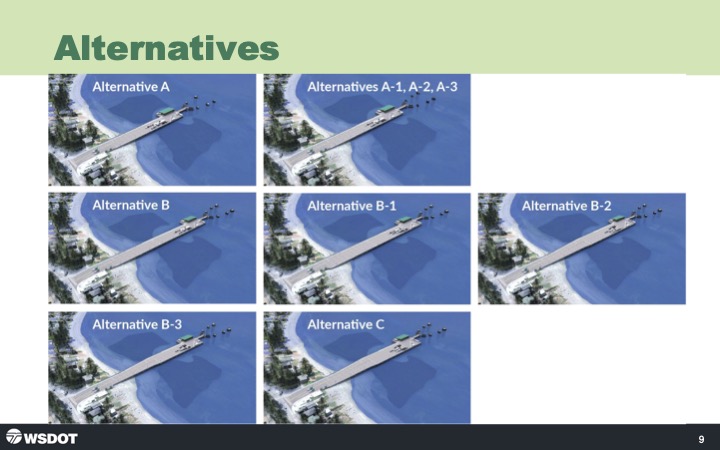
They believe this will minimize impact to Cove Park, north of the dock, among other attributes.
What’s next – environmental review, but they don’t know yet exactly what level of it. Community engagement will be part of it and WSF promises to go above and beyond the bare minimum required.
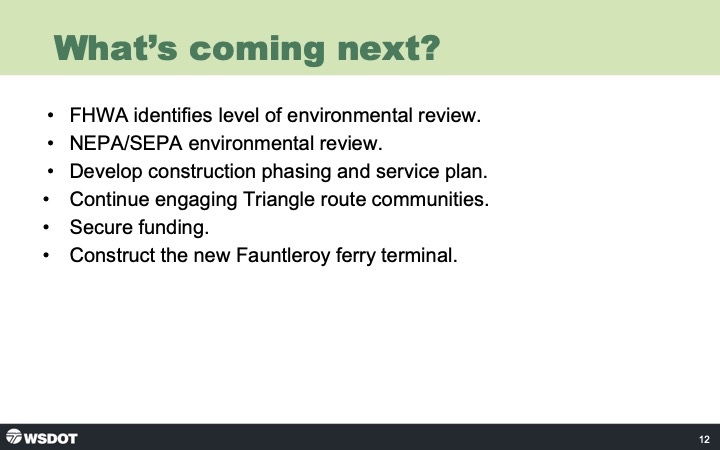
They’re also working to “secure full funding” for the project (for which $100 million is budgeted for starters – in a question later, they reiterated that this project so far is state-funded so they’re not expecting the federal-funding chaos to affect it).
Q&A ensued. First question: CAG member Susan Frith asked, How will they determine what the final design will hold, since right now it’s a range of 124 to 155? WSF’s Charles Torres said the difference is four lanes versus four-plus lanes, which could help WSF staffers sort – but “we don’t want to overbuild,” he noted.
CAG member Judy Pickens asked if they’ve learned more about what will happen with a dock stretching further out “into the weather.” Short answer, not much; Torres said the initial response was “it’s probably going to be fine, we’re only going out another 240 feet or so.”
CAG member Justin Hirsch says he’s more worried about underbuilding than overbuilding, and had a process question: Do they have to wait for a determination of the level of environmental review before they settle on a footprint, whether B or B-3?
Environmental consultant James Gregory said they’re working on a hybrid of the two rather than expecting the final design will be either B or B-3. So when will they have to settle on a capacity? Hirsch pressed. Not an exact timeline but at some point during the “early part of the NEPA chapter” – the forthcoming environmental review. But once they get there “there’ll be pros and cons to this decision, it won’t be a slam dunk.”
Another question, from CAG member Scott Harvey: Wasn’t the WSF standard for new docks to be one and a half times the vehicle capacity of the boats they serve? (If so, that would be at least 180 vehicles, since the Triangle Route’s standard is 124-vehicle vessels.) McIntosh says that’s just a guideline, and they have to work with the communities that are home to their terminals.
Pickens asked about communication going forward, and when they’d ask for feedback. Rodero said WSF will use public meetings, email updates, the other ways they’ve been communicating most recently. But, she then asked, would this group be interested in advisory-group type involvement going forward? There was no conclusive reply, but Rodero promised to share the “draft commmunication plan” for next phases of the project when it’s available.
Group member Mardi Clements wondered about the difference in required pile-driving between B and B-3 – “is there a big difference in the number of piles and how many are we talking about?” Torres said that’s not finalized yet but somewhere slightly more than 100, and they’ll need two seasons of in-water work.
Why no second slip? was asked in a written question. That’s been suggested but hasn’t been studied; it could result in a smaller trestle, but what they are more likely to do is build something, Torres said, that “does not preclude it.”
There was also an update on the intersection project that’s set to be built before the new terminal: Mark Bandy provided it, with more new visuals beyond the one with the short update sent earlier this week. He said they’ve been working on completing the design and working with the city. They’re going out to bid soon and hope to start construction “early next year.”
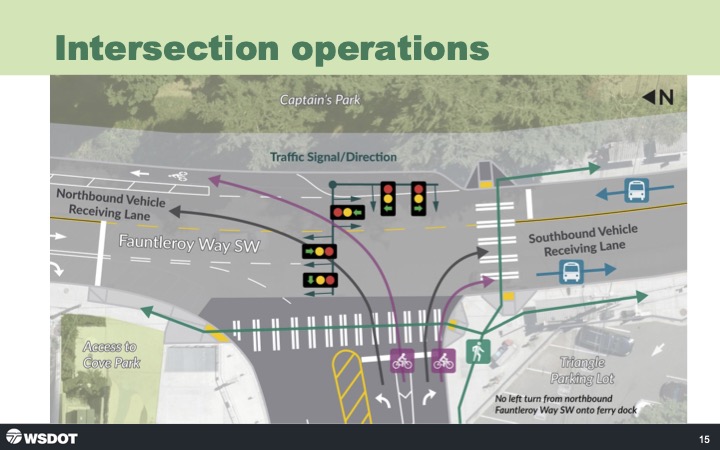
Bandy recapped the traffic flow plan – including no left turn onto the dock from northbound Fauntleroy Way. They hope to have it all fine-tuned by next year’s summer peak-traffic season. He also pointed out that the design has the fewest number of poles – but it’s still a view obstruction in some spots.. He showed renderings of how the setup will look, looking out from Captain’s Park uphill, and toward it from the dock.
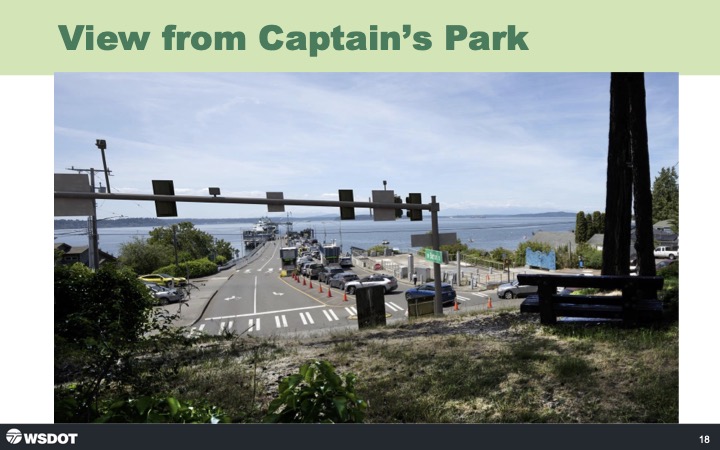
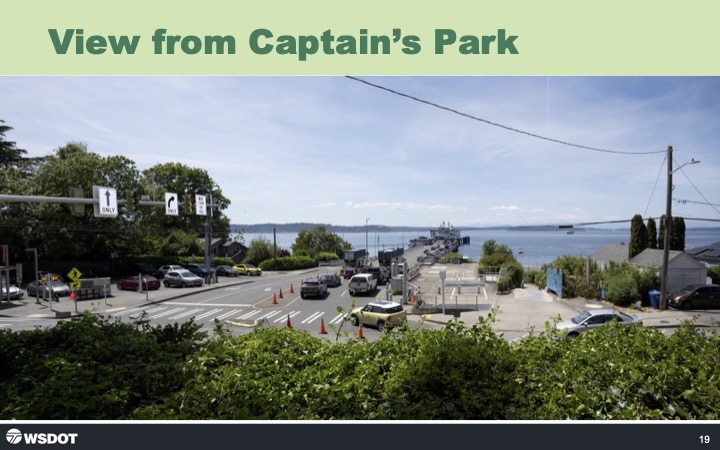
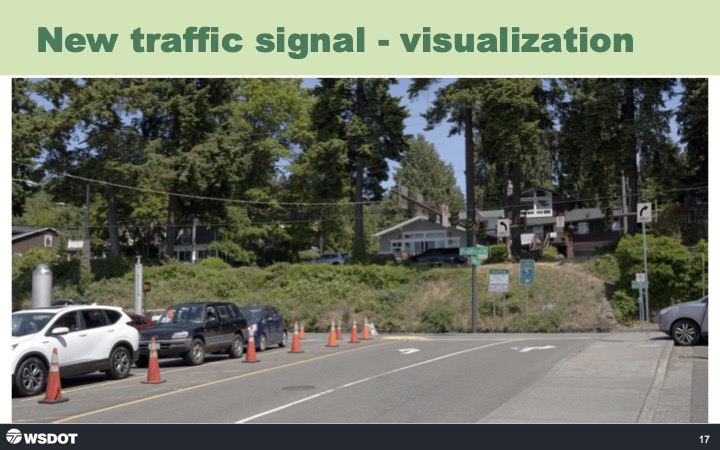
The pole will not have another street light because they’ve determined that the ones already near the intersection provide enough light.
In Q&A on that, Pickens pointed out that culvert construction will complicate things in the area next year, and also wondered how people coming downhill are supposed to get to the dock if they can’t make a left turn. Bandy said they did talk through the left-turn issue with the city and they settled on 24/7, so peole will either have to find a different route or else figure out how to u-turn or loop further north.
Frith suggested that it would make sense to at least allow left turns during “low-traffic times.” Clements said a signage change will be needed because up around 35th, people are pointed that way to get to the dock. She said her garage door/driveway near the dock are a popular U-turn spot and she can only imagine that getting worse.
Will the new signal have transit prioritization? The project team wasn’t clear, though the new signal certainly would capable of it. Also revealed:
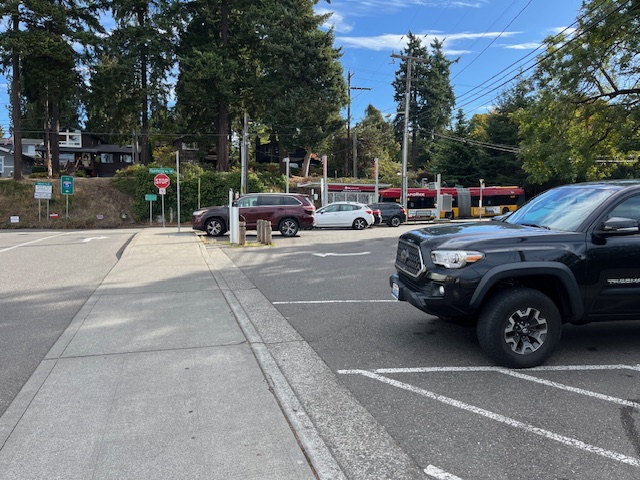
The parking lot at the east end of the dock will be a bit smaller.
Next came a real-estate update, specifically the white house on the Cove Park beach north of the dock.
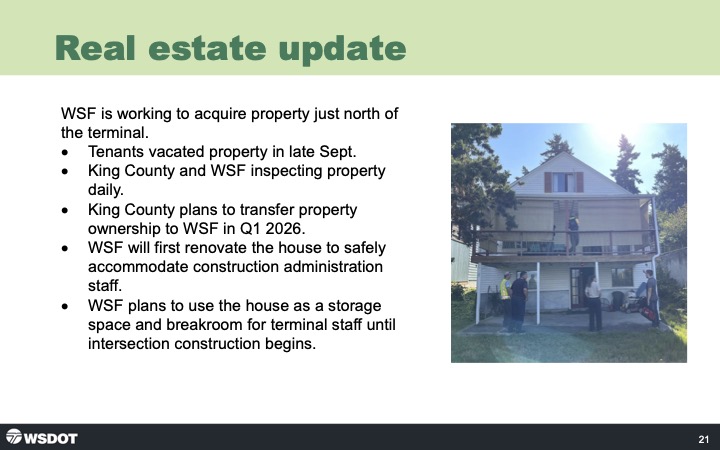
“We are working to acquire it.” The tenants have vacated it and security is checking daily to be sure squatters don’t come in. King County will transfer ownership to the state early next year, and then the house will be renovated for construction administration, storage place, maybe a break room, ways to. keep it occupied ‘and keep people out of it that we don’t want in it.’
What’s next: They’re promising a community update when the next phase of environmental review starts.
Final questions included: When will the PEL report be finalized? In the next month or two. Rodero said it’s not likely to look much different from the draft report just circulated, but they’ll “share it out” when ready.
And with that, plus another round of thanks to the advisory-group members, their long and winding road … route … on this project ended. “It’s pretty impressive what you all accomplished together,” observed McIntosh.
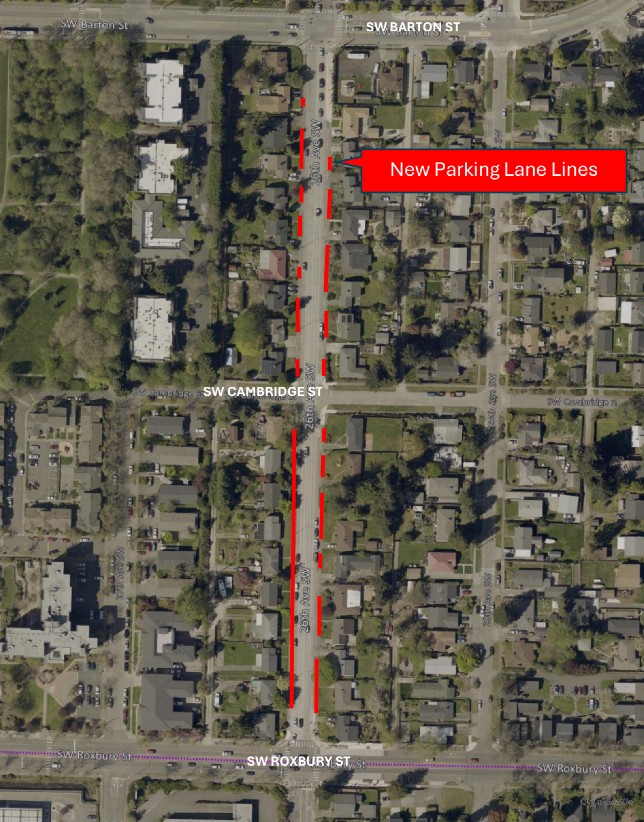
Thanks to Rick for the tip. Residents along 26th SW between SW Barton and SW Roxbury, just south of Westwood Village, recently got notification of a “traffic-calming” feature SDOT plans to install: Parking-lane lines. The map above, from the official notice that we requested and obtained from SDOT, shows where they’ll be painted. The notice explains:
On 26th Ave SW between SW Barton St and SW Roxbury St, we will install parking lane lines. These changes to the street will slow traffic and make the street safer for people walking, rolling, and biking.
We are planning to begin to install these improvements before the end of the year. We anticipate this work to be completed over a couple of weekends. Please note this work is weather dependent and subject to change.
The funding for this, SDOT says, is coming from not the current Seattle Transportation Levy, but its predecessor, Move Seattle.
By Tracy Record
West Seattle Blog editor
Tonight at 6 pm, Washington State Ferries will hold the second of two sessions of their fall systemwide online community meeting.
We watched the first session at 1 pm so you’d know what they’re covering, in case you’re undecided on attending.
Here are the panelists introduced this afternoon:
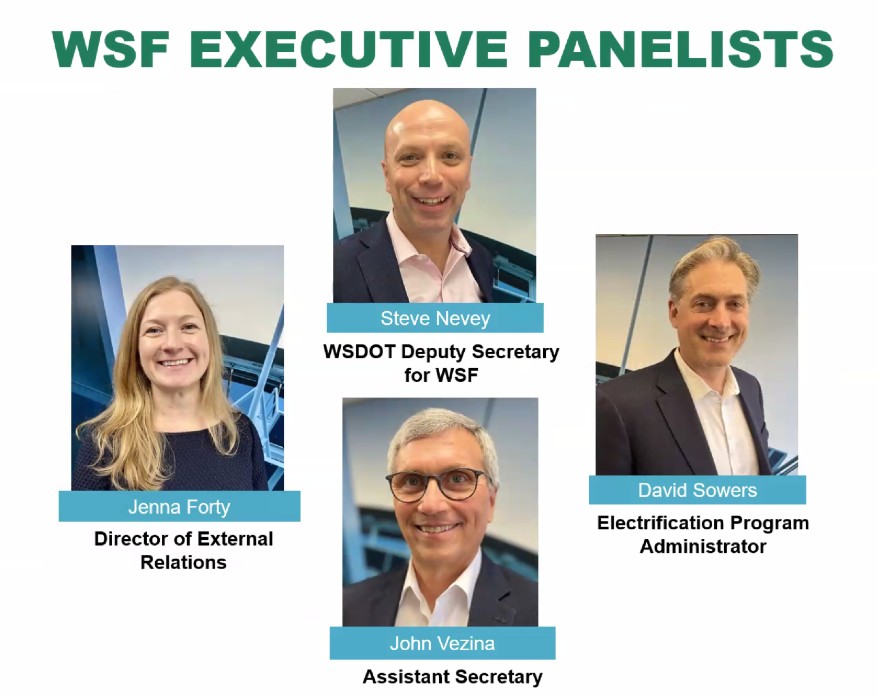
Bryn Hunter moderated. The first to speak was Steve Nevey, who’s been leading WSF for a year and a half. He said he set three strategic priorities at the start of his tenure and he feels they’ve “made great strides” toward achieving them. “We’re trending better by every metric (but) we still have a lot of work to do.” He said he’d proudest of a dramatic drop in cancellations related to crewing, attributed to hiring and training improvements.
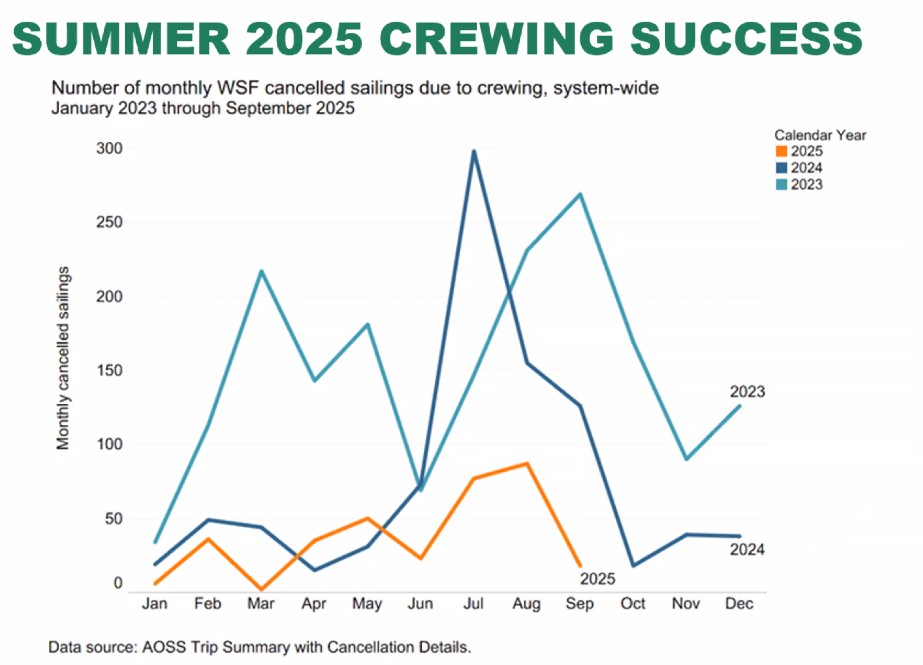
Other numbers:
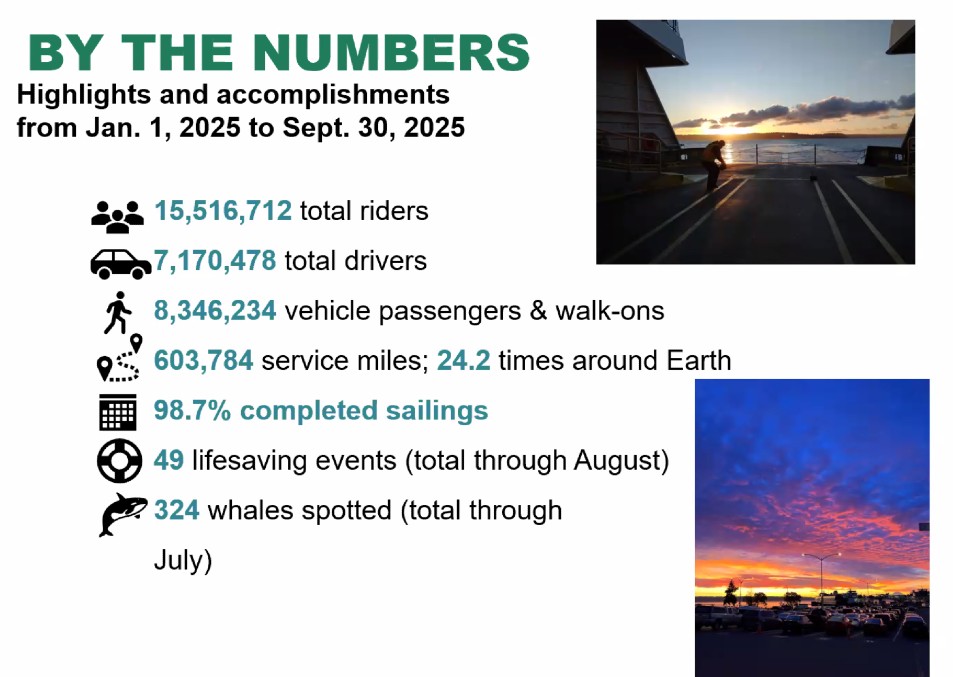
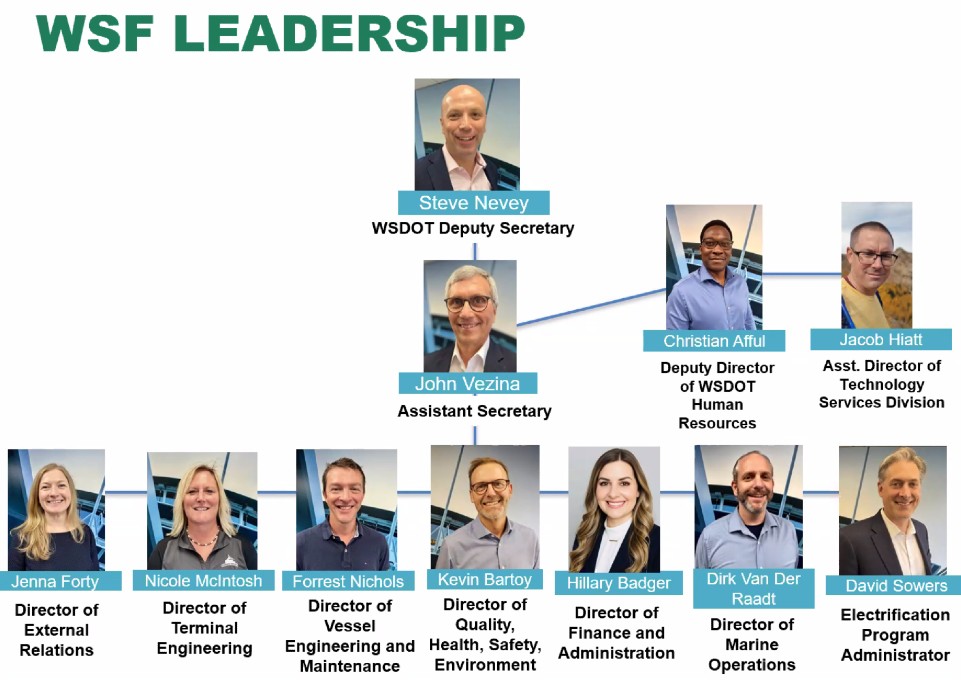
He then made way for the system’s second-in-command John Vezina. He showed the full tree of system leadership, saying they’re “laser-focused on making things better for our customers and our colleagues.”
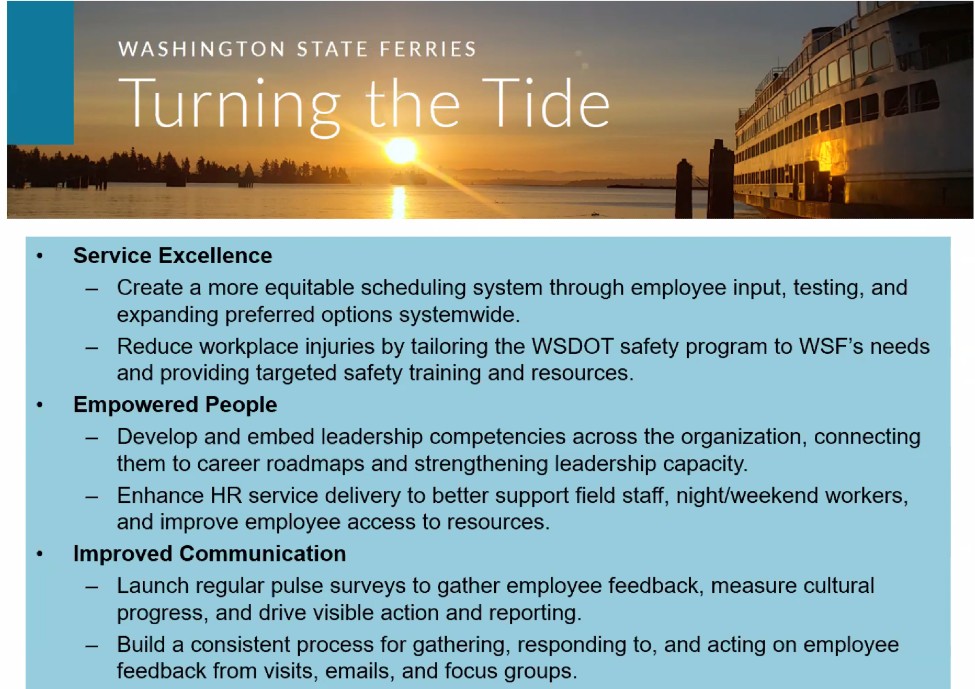
Here’s how they’re doing that:
Vezina handed the baton to his successor as director of external relations, Jenna Forty. This summer, she said, ridership on the Triangle Route was up almost 9 percent, and its on-time performance improved in a big way, now up to 85 percent. Forty said vessel supply and stability remains a challenge but they’re doing what they can.
Next, David Sowers talked about his latest role, electrification-program director. He said WSF has embarked on an “unrivaled” program of building new boats and retrofitting existing ones.
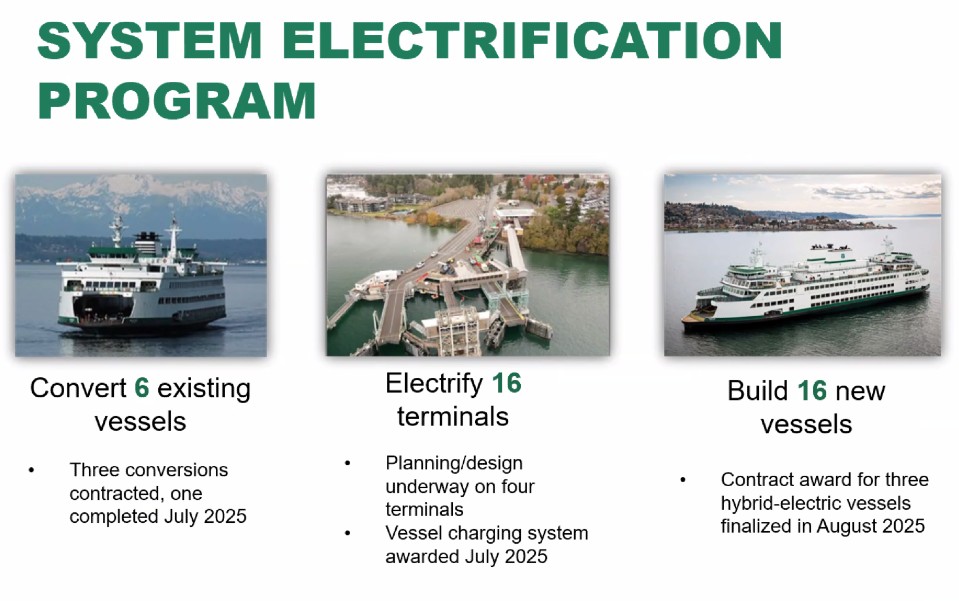
He said M/V Wenatchee is now back in service full time after its conversion, with 864 batteries installed; the other two Jumbo Mark II ferry conversions remain on hold until after the World Cup. Meantime, the new ferries to be built on the East Coast will start arriving in 2030, with the other two of the first three to arrive annually after that.
He was the last planned speaker before Q&A. We’re just noting the ones of Fauntleroy-Vashon-Southworth interest:
-What about terminal support for electrification? They’ve got money to design and build one terminal system, money to design two more. The Triangle Route terminals were not mentioned as being in the early construction plans.
–What can WSF do about line-cutting? (The question was focused on the downtown terminal, but applied everywhere.) Vezina’s answer boiled down to “not much can be done, we know it’s frustrating, has even happened to me.” Another question later: Could camera enforcement be used? Vezina’s answer was mostly, “no.” Among other reasons, he said some people might have the right to “cut,” such as a medical emergency.
–General staffing update and “what’s being done to sustain it”? Nevey said a big concern a few years ago had been shortage of qualified captains, so they’ve invested time and money in training programs so crew can climb the ladder. They used to have unfilled captain’s jobs; now they have a waiting list for people seeking them. “We’re doing very well to set us up for permanent solutions, not just band-aids.”
–Will fares go up every year? And why so “dramatic(ally)”? Vezina explained that WSF doesn’t set its fares – fare policy is set by the Legislature, for starters. Pre-pandemic, he said, WSF had 80 percent farebox recovery (fares covering costs), but now is closer to 50 percent. There won’t be a new “how much WSF needs to make from fares” policy next Legislative session, but there will be one the following year.
–Fleet replacement. Nevey said they’re deciding whether they can keep their three oldest boats in service slightly longer, rather than retiring them as the new boats are completed.
–Passenger-only ferry service? The Legislature ordered WSF out of that business years ago. So counties (King and Kitsap, for example) are providing it. The state did a study last year and it’s being reviewed, but one question, “do you add new service when WSF still has significant needs?” Vezina observed, “Interesting policy conversation going forward.”
–Why can’t you pay WSF fares with ORCA cards? Vezina noted that their fares are so much higher than other transit services (particularly vehicle/driver) that it just doesn’t work with the way ORCA functions.
If you want to watch and/or ask questions at the 6 pm meeting (questions are all in writing, no live voice or video of participants), register here. WSF promises to post meeting recordings to that page too.
Story and photos by Jason Grotelueschen
Reporting for West Seattle Blog
If you live in or visit the Arbor Heights neighborhood, then you’ve undoubtedly noticed the limited number of sidewalks.
The $1.55 billion Seattle Transportation Levy (approved by voters last November) includes funding for the construction of 350 new sidewalk blocks in the city in the next eight years as part of the Sidewalk Development Program. Current plans call for 10-15 of those blocks to be built in Arbor Heights.
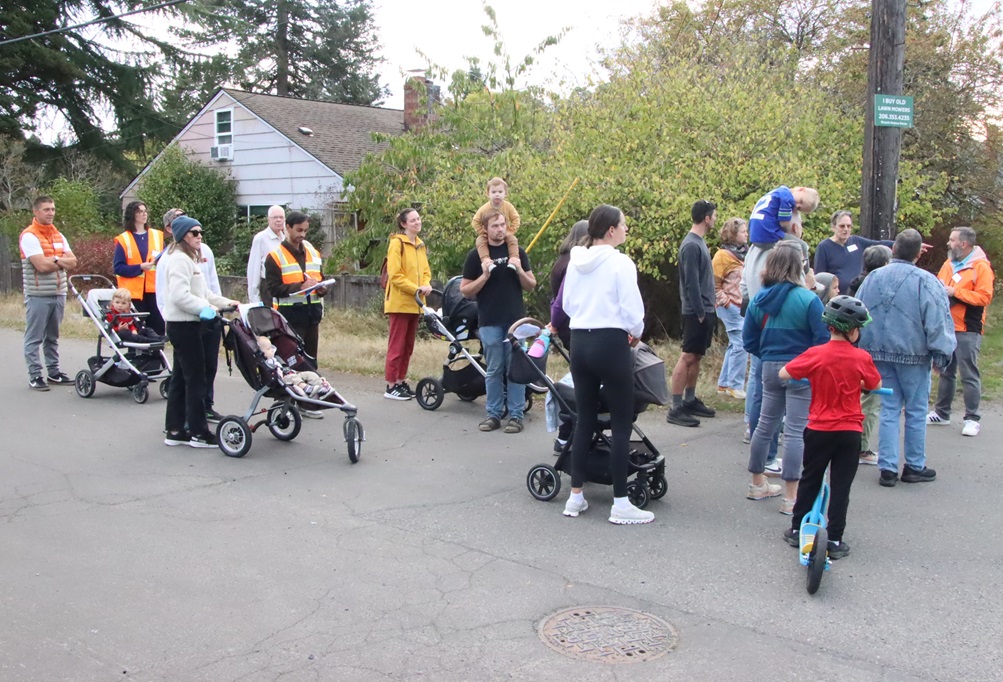
On Wednesday afternoon, neighbors of all ages met at Arbor Heights Elementary to embark on a walking tour led by representatives from the Seattle Department of Transportation (SDOT) to learn about sidewalk/walkway options, feasibility, opportunities and challenges, and to share feedback and perspectives with SDOT staff.
The event began at the school with a welcome and overview from SDOT staff, including deputy director of project development Brian Dougherty (speaking, below):
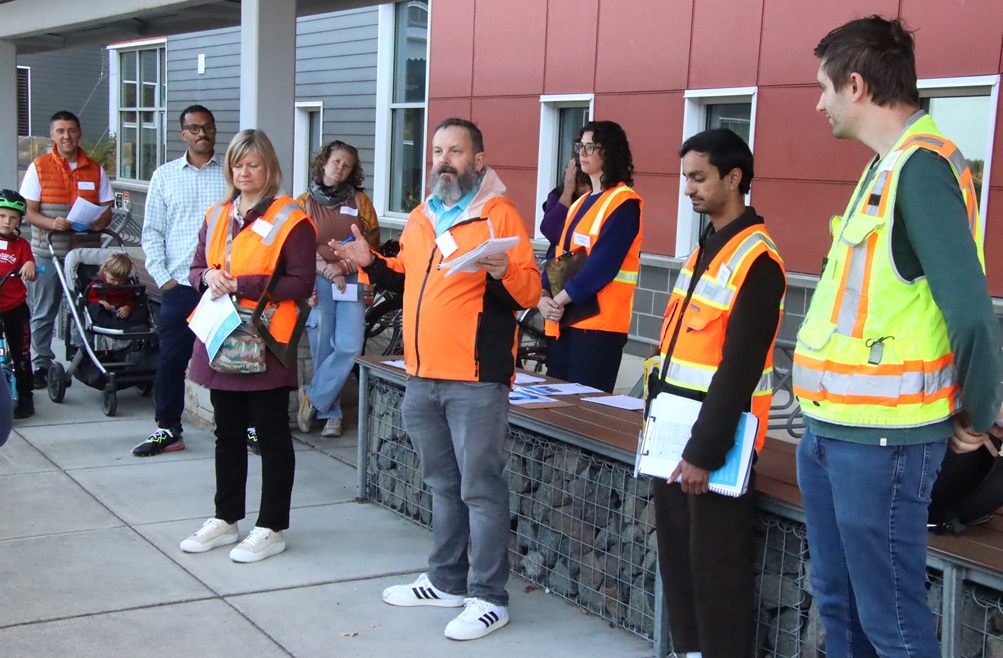
Dougherty and staff said the goal of the afternoon was to gather priorities for new sidewalks and walkability improvements funded by the transportation levy. Options for improvement include where to build sidewalks and walkways, plus related needs such as crosswalks, lighting, stop signs, and other traffic calming measures to improve accessibility and safety.
District 1 City Councilmember Rob Saka was also in attendance. He welcomed neighbors and thanked them for their participation, saying that the turnout was the largest crowd he’d seen at similar walks in the city:
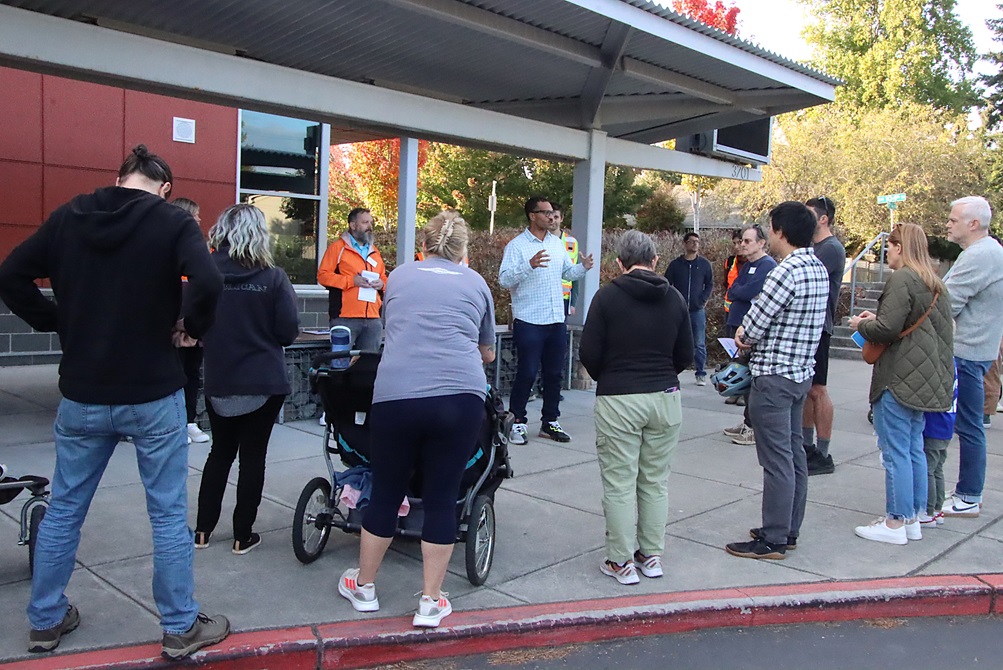
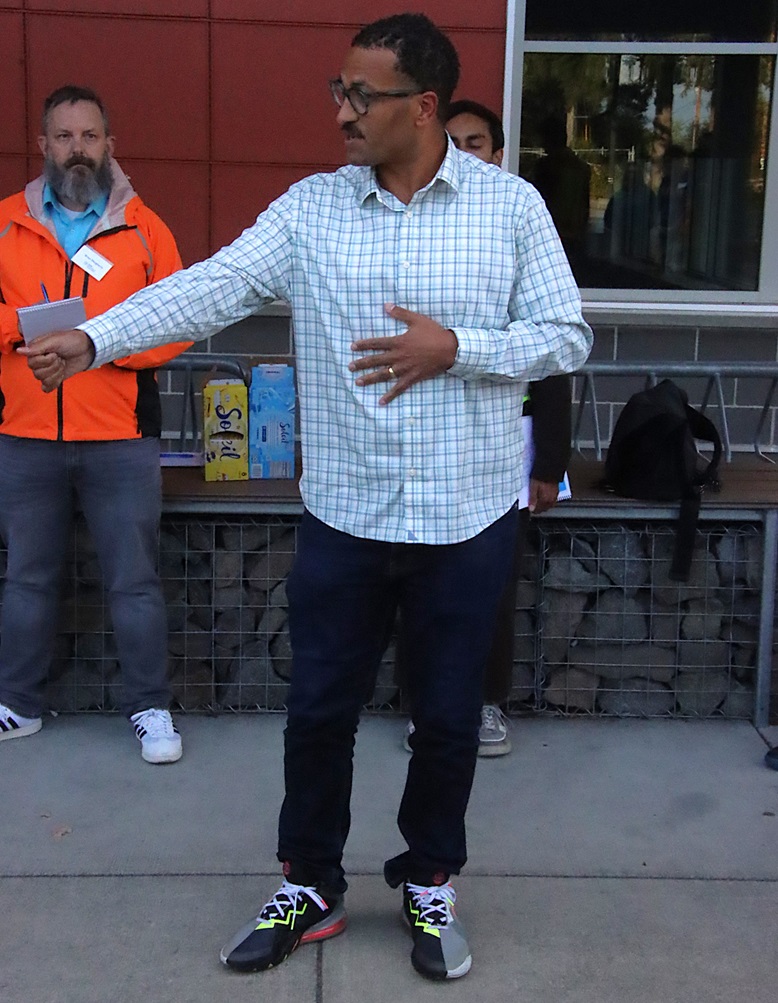
Saka chairs the council’s Transportation Committee, and cited the citywide sidewalk gaps: “27% of neighborhoods across this city do not have a sidewalk on either side of their street,” but he said that the current pace of adding sidewalks has been far too slow. Saka said that Mayor Bruce Harrell proposed a significant sidewalk investment in the transportation levy, and that Saka “doubled that amount during Council deliberations” about the levy. He emphasized gratitude to voters.
Saka said that at least 20-22% of new sidewalks in Seattle are designated for our district (West Seattle/South Park/Georgetown/Pioneer Square and vicinity), but based on criteria adopted in the Seattle Transportation Plan (such as Safe Routes to School, equity, and transit proximity), D1 may receive “even more than that minimum.”
Dougherty gave quick introductions of SDOT staff (wearing bright orange vests):
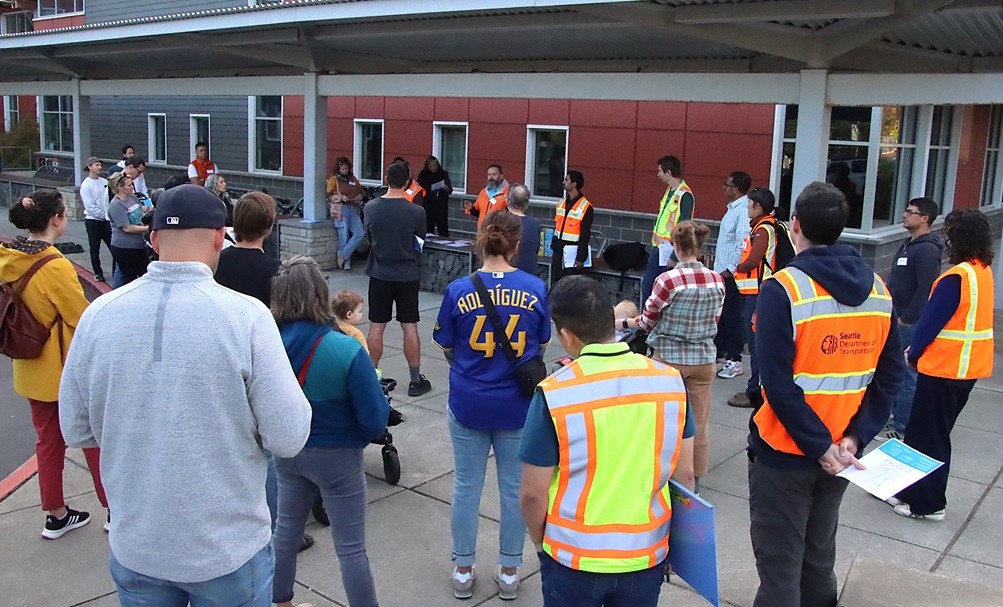
The team talked about how feedback will be gathered for the project during the walks, via printed comment cards as well as notes taken by SDOT staff. Some staff members also had measuring tape and other tools, and would be gathering information during the tour about width of streets and right-of-ways and other data points.
They also had requests for the community: If you were on the tour but have additional feedback, submit it here. If you were unable to join the tour but have questions or comments about the idea, take a look at the Sidewalk Development Program website to learn more, and contact the team at levysidewalks@seattle.gov or 206-900-8718.
SDOT staff will be merging community input with their own staff notes, to identify 10-15 priority blocks to work on for sidewalk plans, initiate preliminary designs, and then will publish a summary report describing the list of prioritized blocks “within one to two months.”
They also added that for any feedback they receive that isn’t directly related to sidewalks but is still of interest to the neighborhood (such as traffic calming), they will be compiling and routing those to the proper teams and personnel for consideration.
SDOT staff then asked attendees to divide into two smaller groups, to walk two different routes through the neighborhood:
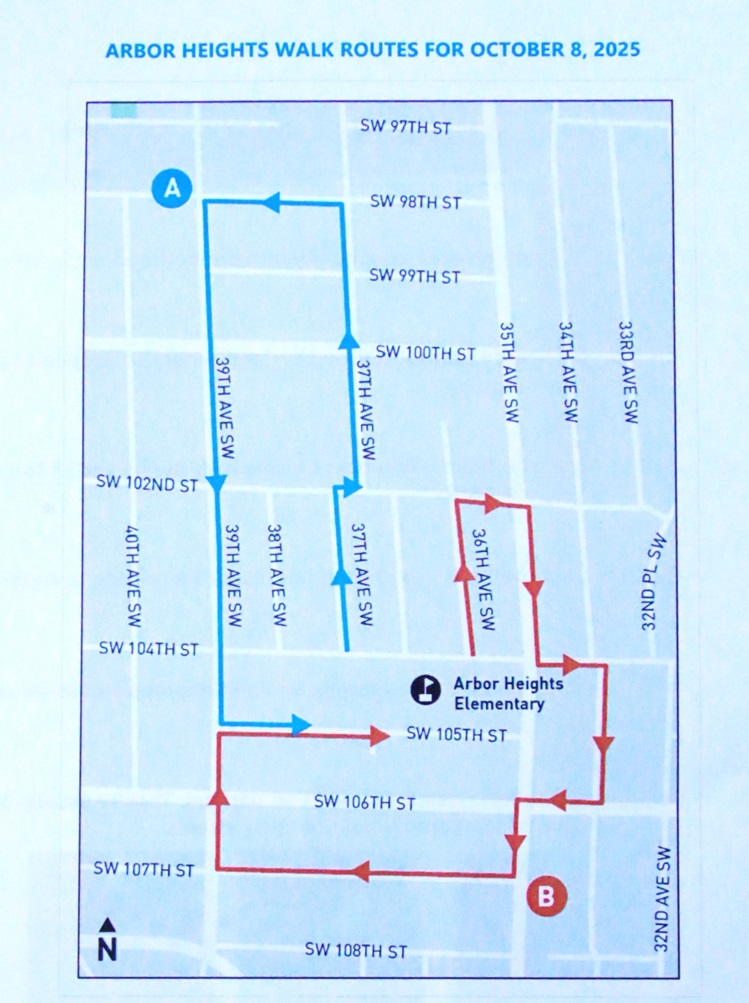
Staff emphasized that these were merely suggested routes, with flexibility to take detours based on resident requests, and they added that SDOT can return on later dates to assess additional locations, problem spots, bus-boarding areas on walkways, locations where asphalt walkways are being used for parking, and locations not reachable on this particular day for whatever reason (such as parked vehicles or construction). They also stressed that just because a block of Arbor Heights wasn’t included the tour’s walking routes doesn’t mean that it wouldn’t be under consideration for sidewalks/walkways — they chose the walking routes based on initial assessments and feedback, but are open to all ideas for all areas.
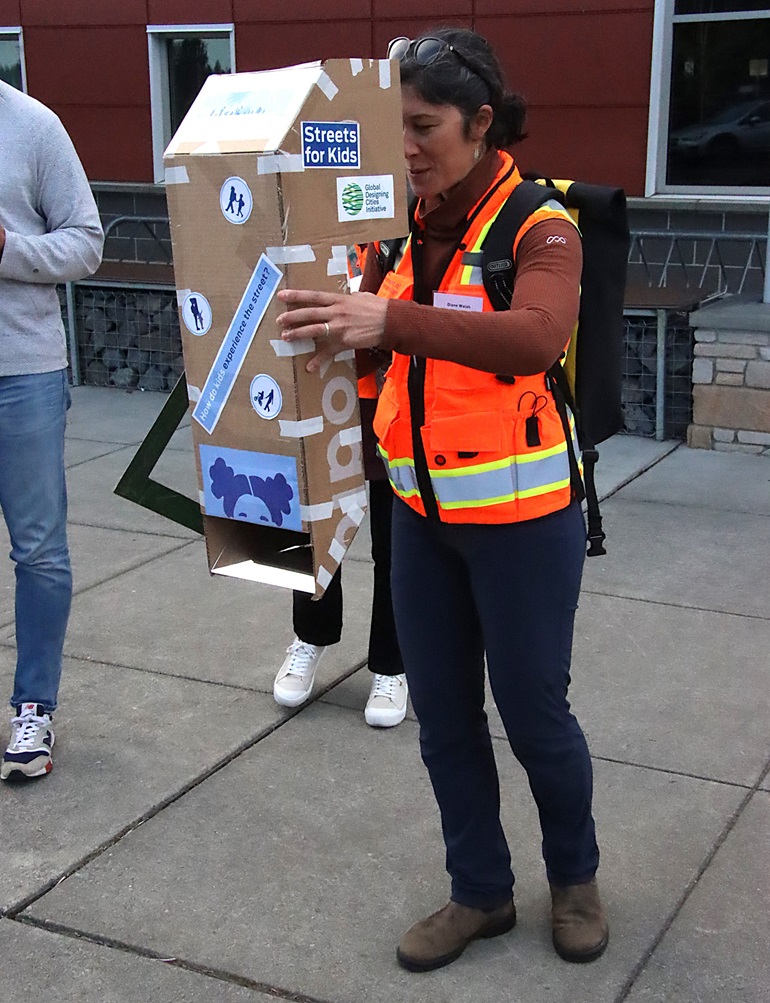
Each of the groups then gathered and went on their way. We started by tagging along with “Group B,” but before they departed, SDOT’s Diane Walsh, who works with the School Streets and Safe Routes to School programs, did a quick demonstration of tools that the team uses to capture on-site feedback, including a modified “periscope” allowing adults to get the perspective of young kids walking in the neighborhood and trying to navigate streets safely:
With that, Group B (which included Saka) was off and running (well, mostly walking, or on wheels) starting by taking 36th Ave north to SW 102nd St before looping east/south on 35th and 34th:
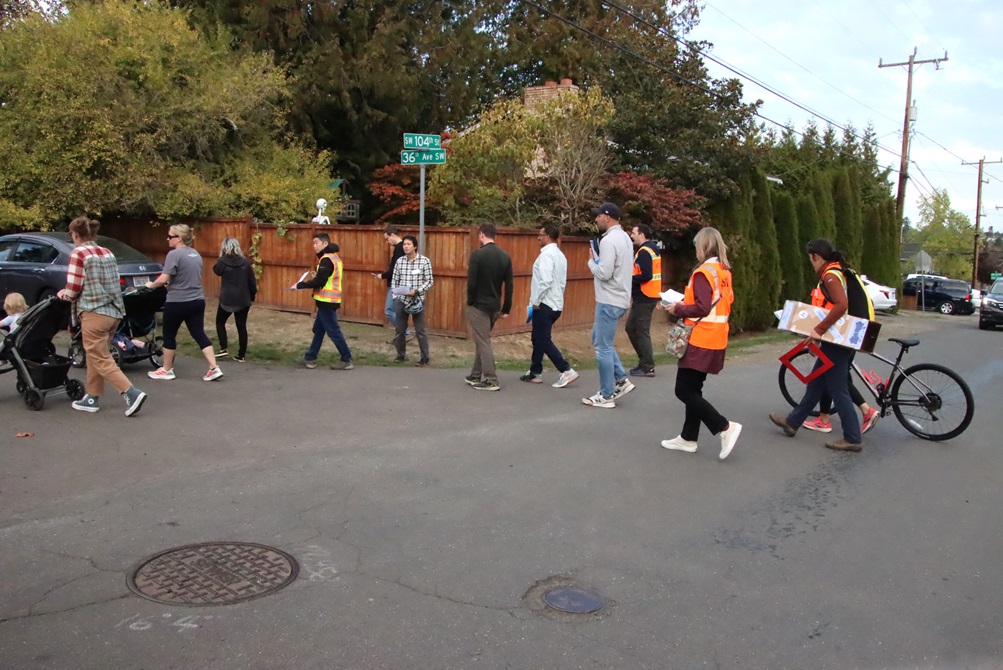
Kartheiser paused at various spots to talk about the city’s process for assessing the need and feasibility for walkways, including the factors that go into determining priorities:
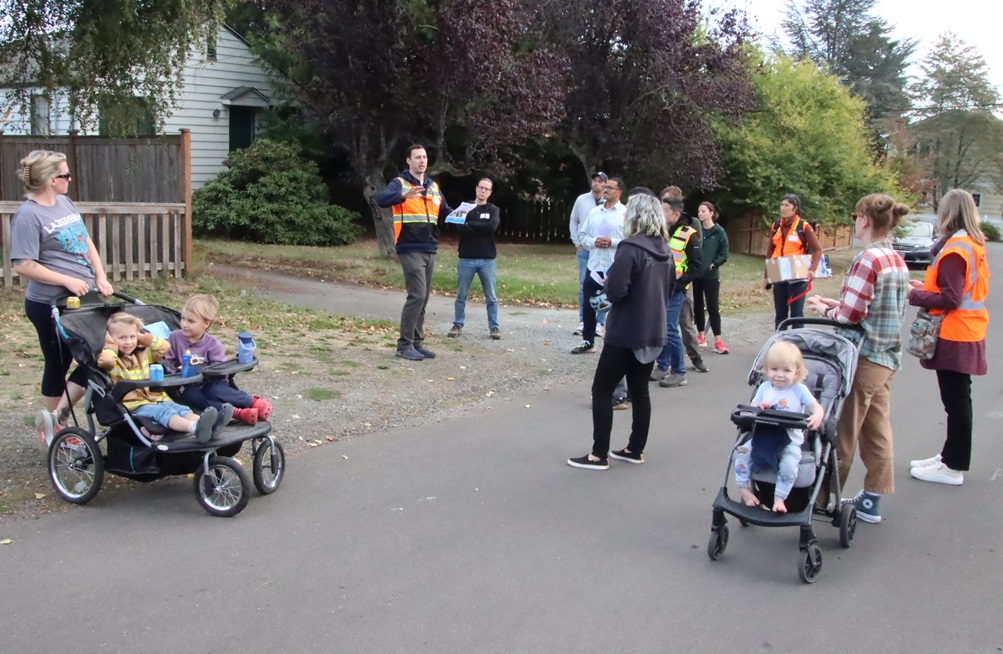
He said there are a range of treatments used citywide including traditional concrete curb-and-gutter sidewalks, at-grade asphalt walkways, gravel shoulders, painted walking lanes, and in some places no formal walkway. The actual design choices implemented in each area depend on site conditions (e.g., steep drop-offs, drainage).
Some notes from Q&A between Kartheiser and the “Group B” walkers:
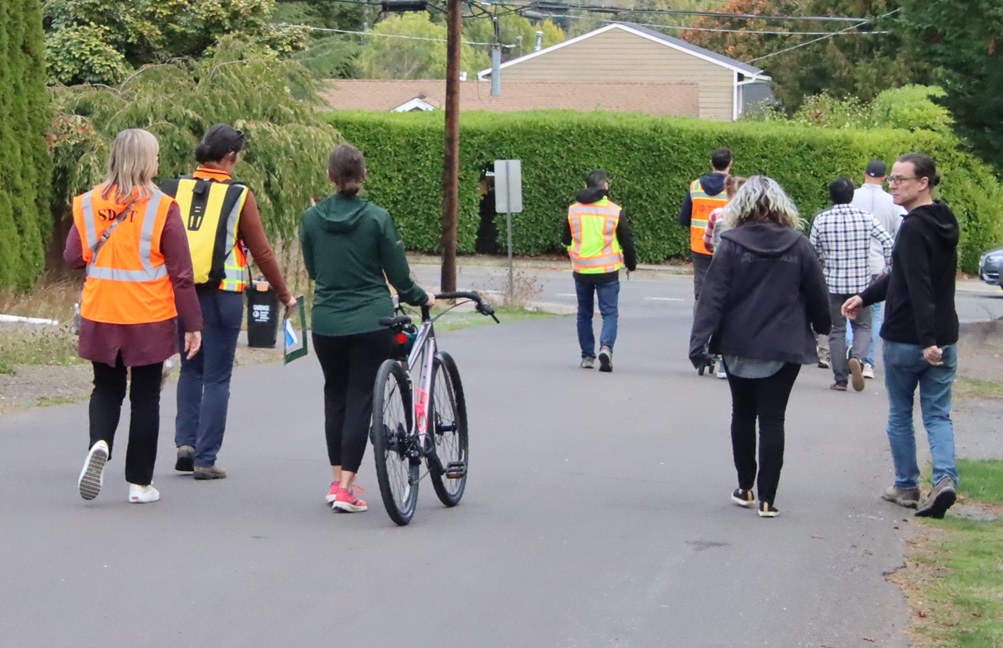
As Group B headed toward 35th, we hustled northwest to catch up with “Group A” on their walk, as they proceeded north on 37th, crossing the busy 100th St (which does have sidewalks in some stretches, unlike other areas of Arbor Heights, and serves a conduit for school buses and for Metro bus route 21/22).
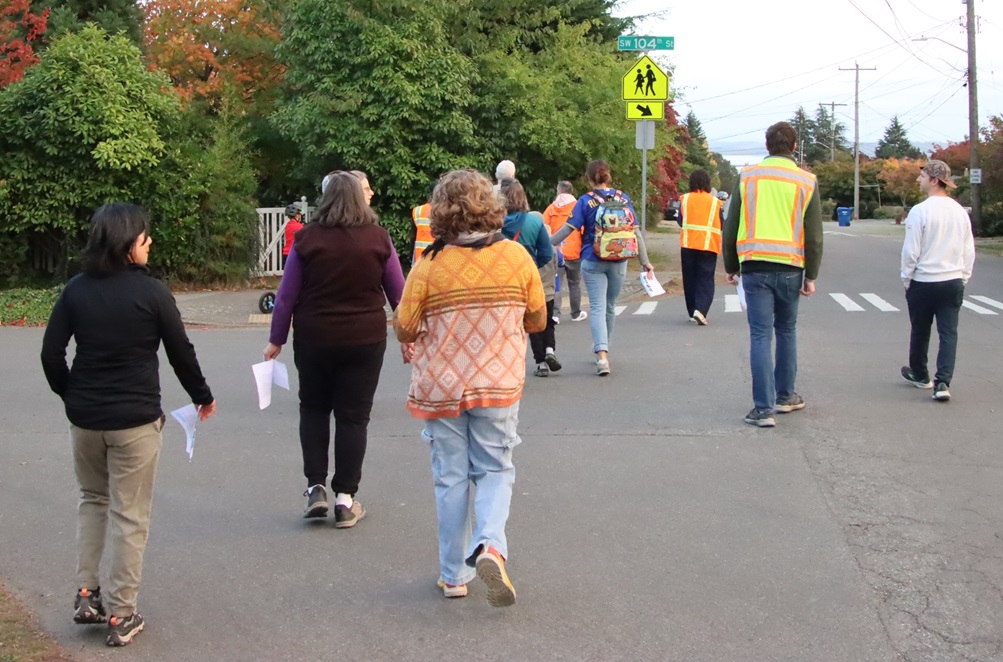
Group A made its way northwest to the intersection of 39th Ave SW and SW 98th St, before looping back south:
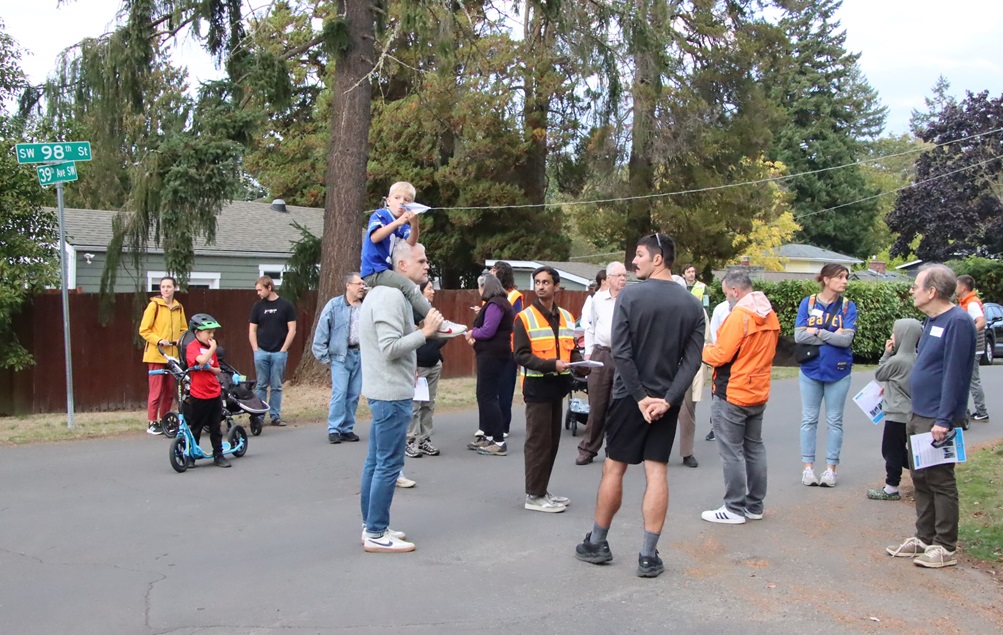
Some notes from discussions between Dougherty and other SDOT staff and neighbors on the Group B leg of the tour:
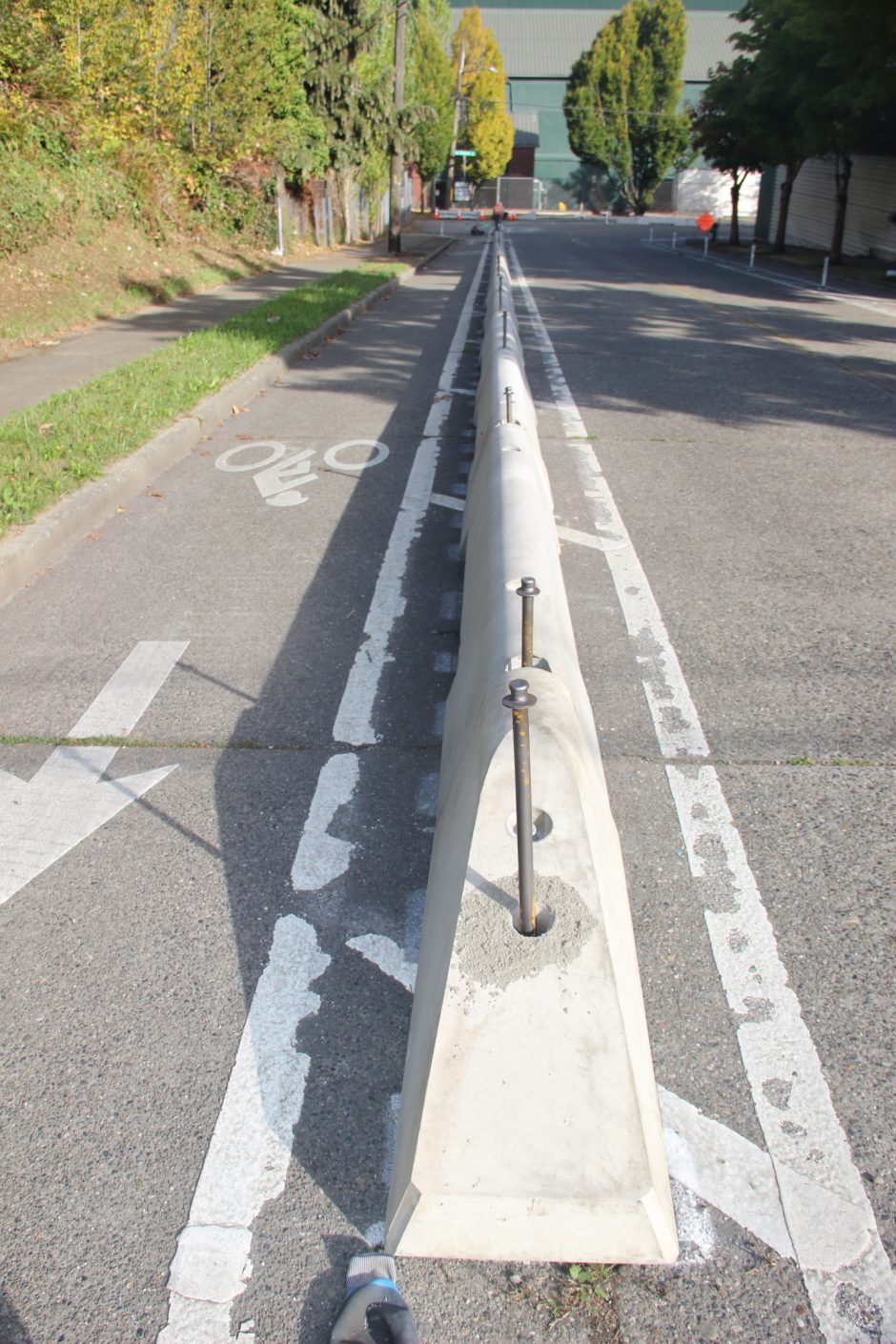
As reported here last night thanks to reader tips and photos, SDOT has just upgraded barriers on the Andover/28th/Yancy bike lane installed three years ago following a major RV-camp sweep. We followed up today as promised to ask if more work is ahead there – as the installation has some gaps – and to ask if any other West Seattle bike lane will get these barriers. Here’s the reply we received from SDOT’s Mariam Ali, accompanied by a photo:
The work you saw along Andover was part of our Better Bike Barriers (BBB) program — installing new wheelstop-style barriers to improve safety and comfort for people biking.
Our crews worked over the weekend to minimize weekday traffic impacts, and traffic control was in place. The Andover segment should wrap up within the next couple of days. You can find background and upcoming BBB locations on our public webpage: Better Bike Barriers Program.
SW Admiral Way from SW Spokane St to SW Olga St is included as a BBB project in your area, which we’re planning to deliver over the next year.
This is part of what the voter-approved Seattle Transportation Levy‘s $133 million for bicycle safety will cover over eight years. We’ve asked SDOT a followup question about the specific price tag for the barriers.
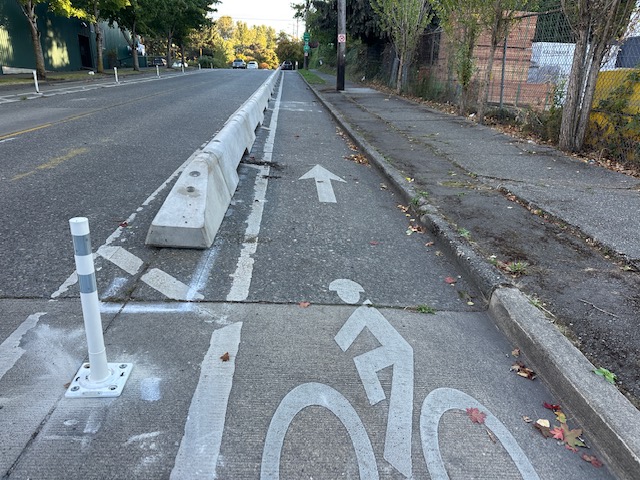
Thanks to Manuel for the photos! A reader asked us what SDOT workers were doing this weekend near 28th/Yancy, and his photos provide the answer – adding wheel-stop barriers to the bike lane installed three years ago.
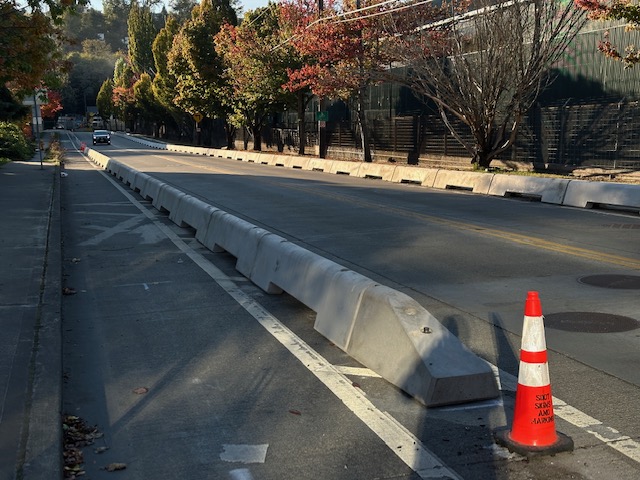
The bike lane was installed not long after the city swept a six-year, multi-block RV encampment along Andover and 28th.
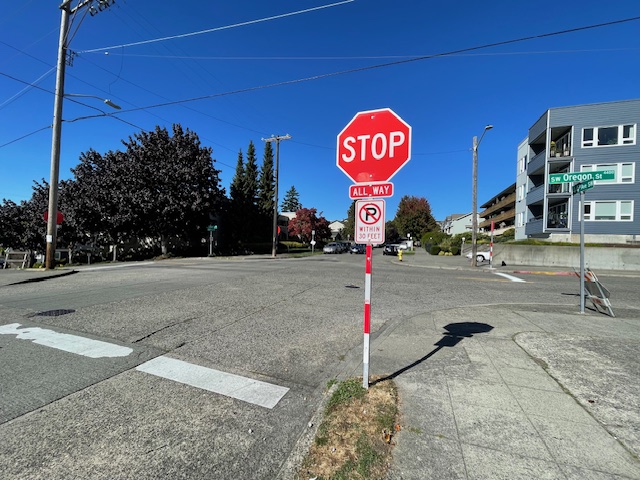
When we first reported September 24 on the all-way stop that appeared unannounced earlier that day at 44th/Oregon in The Junction, we promised to follow up with SDOT to ask what led to its installation, and if any others were on the way. Today we finally got the explanation from SDOT spokesperson Mariam Ali, who also acknowledges – as commenters had observed – that the signage was installed without accompanying alerts:
The City received strong feedback from community members concerned about pedestrian safety at this intersection, including a petition with 175 signatures in support of installing an all-way stop. After evaluating the location using our standard criteria — including traffic volumes, pedestrian activity, and proximity to the business district — it met the threshold for all-way stop control and was approved. Given the safety concerns raised and strong community support, we prioritized moving quickly once the intersection met the criteria.
The new stop signs were installed on Wednesday (9/24), and “Traffic Revision Ahead” signs were placed on Friday (9/26). We recognize the lag between installation and signage and are updating our process so that advance warning signs will be in place at the same time as new stop signs going forward.
No additional all-way stops are currently under evaluation in this area. However, SDOT welcomes community requests citywide — residents can use the City’s Find It, Fix It app or email 684-Road@seattle.gov to raise safety concerns at specific locations.
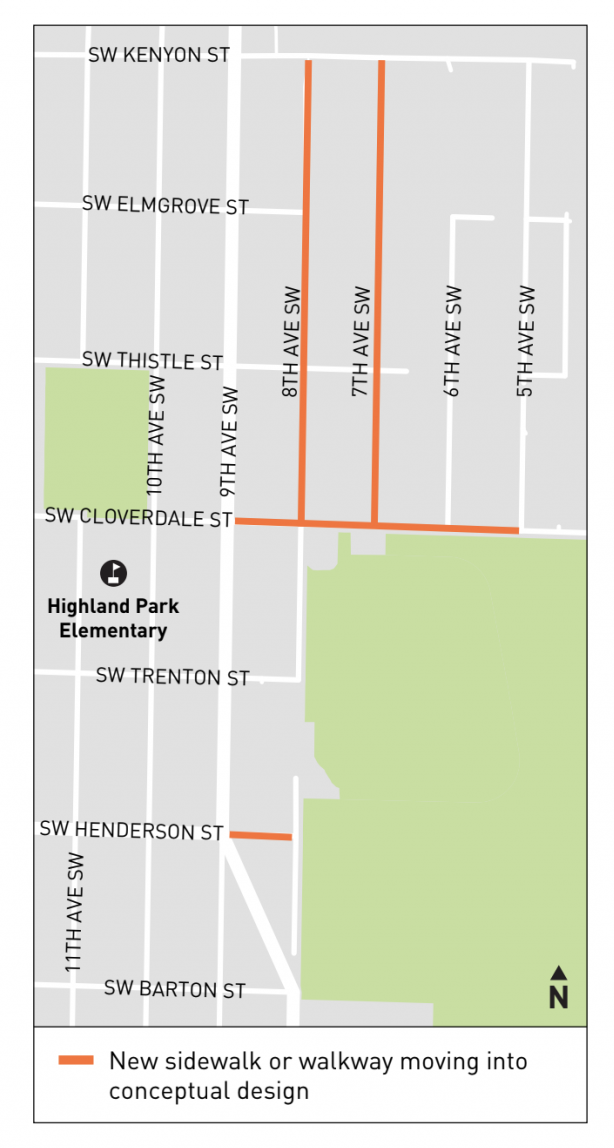
Back in May, SDOT held a walking tour in Highland Park (WSB coverage here) – one of several in West Seattle – to gather community input on where new sidewalks/walkways should be built with Seattle Transportation Levy money. Today, the department sent the results, in report format, including the map above, showing blocks that are going to “move into conceptual design.” The report explains:
In most cases, sidewalk or walkway will be designed on one side of the street. Sidewalks and walkways may be constructed from a variety of materials including paint, asphalt, concrete and barriers. Specific design treatments are decided based on factors including the space available on the street, drainage needs, existing infrastructure, impacts to parking, slopes, and estimated construction costs. Projects will be in construction between 2026 and 2029. We will be working closely with adjacent property owners as design progresses. Updates will also be provided on our project website. Project schedules will begin to be available as soon as the end of 2025.
They’re looking for feedback by next Wednesday (October 8) at LevySidewalk@seattle.gov – see the full report here.
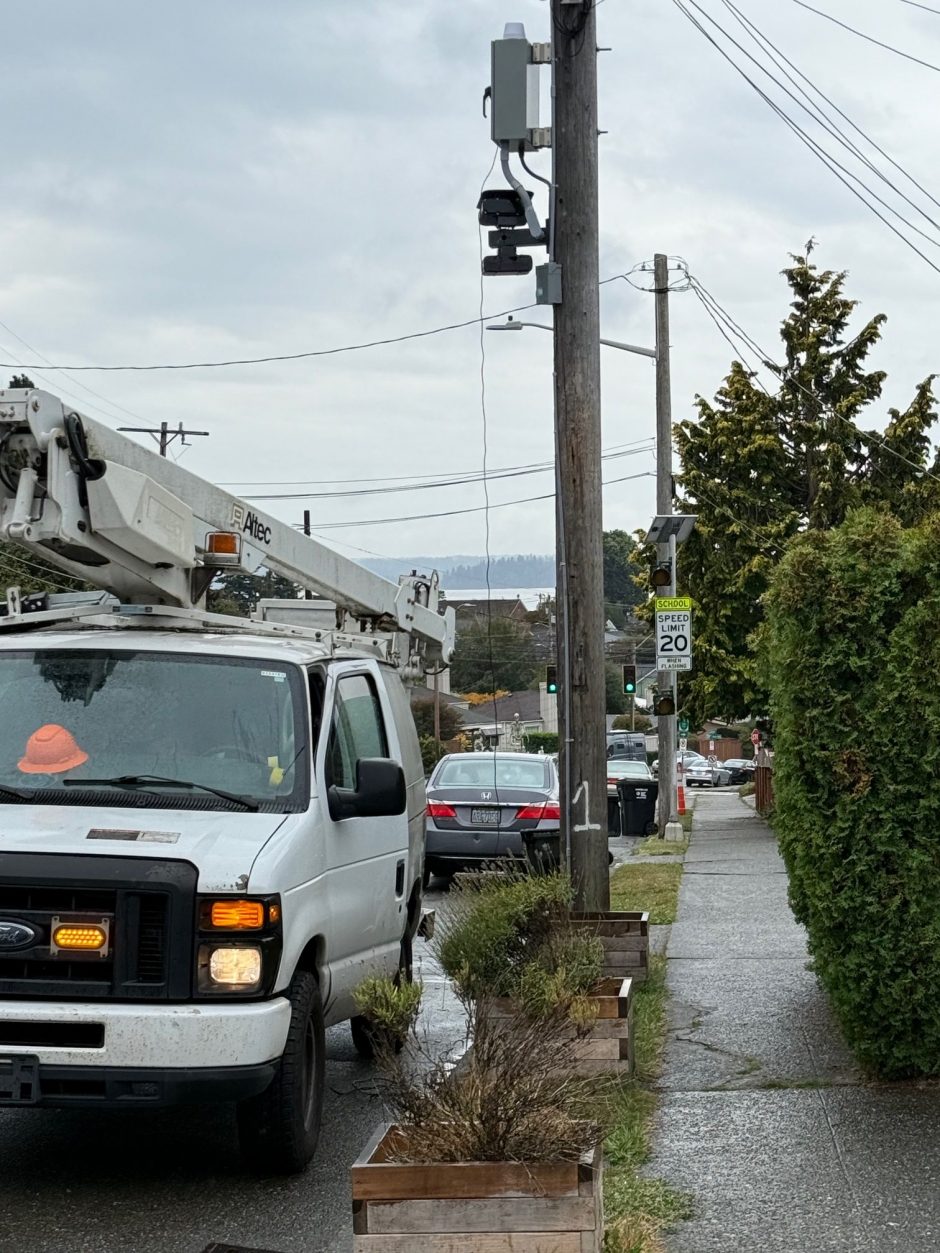
Don sent that photo Monday, after noticing installation of the new school-zone speed cameras on Admiral Way for the return next year of Alki Elementary, once its new building is complete. That led us to check in with SDOT for the status of the new school-zone speed cameras that have been scheduled to start operation this year, on California SW near West Seattle High School (not far from Lafayette Elementary, too). SDOT spokesperson Mariam Ali‘s reply revealed that they’re likely to start with the southbound direction only:
The new southbound school zone speed camera on California Ave SW near West Seattle High School has been installed and is in final testing. We expect it to be activated in the coming weeks, though the exact date is still being finalized. Once activated, the camera will issue warnings only for the first 30 days after activation, with citations beginning after that period. SDOT will share information with the community when the camera goes live. Notices will be mailed to drivers during the warning period.
A northbound camera is also planned for West Seattle High but has been delayed due to underground utility conflicts. Our engineering team is working on a solution, and we’ll share an updated installation timeline once available.
SDOT also verified that the Alki Elementary-related cameras on Admiral Way are in place (as shown above) “but will remain inactive until the new school building opens, currently expected in 2026.” Five other school zones in West Seattle have ticketing cameras, listed here. Getting a ticket from a school-zone cam could cost you more than $200.
One day after pulling the third boat from Fauntleroy-Vashon-Southworth because of a ferry breakdown elsewhere, Washington State Ferries says it expects that the Triangle Route “will be on the two-boat schedule for the next couple of weeks.” But starting this afternoon, WSF is adding back an unscheduled third boat, the 64-vehicle M/V Salish. (Check the Vessel Watch tracker to see when it’s officially on the run.)
Because of system shuffling forced by the breakdown of a ferry serving Mukilteo-Clinton, the Fauntleroy-Vashon-Southworth route is down to two boats and will officially use the two-boat schedule this afternoon. The alert from Washington State Ferries says, “The first sailings today on the two-boat schedule will be the 12:35 p.m. Vashon to Southworth on the #2 Issaquah and the 12:40 p.m. Vashon to Fauntleroy on the #1 Kittitas. ” The two-boat schedule is linked from the WSF alerts page.
| 0 COMMENTS