
West Seattle, Washington
20 Thursday
11:53 AM: As noted in today’s event list, the City Council‘s regular weekly meeting is at 2 pm. Today’s agenda includes an expected vote on Councilmember Eddie Lin‘s proposal to limit land-use appeals that he says are delaying housing development. District 1 Councilmember Rob Saka has proposed an amendment that he says would “preserve the public’s ability to appeal certain determinations to the Seattle Hearing Examiner.” His news release this morning about his proposed Amendment B says this is what it would do:
The underlying bill will eliminate Hearing Examiner appeals for environmental determinations associated with Comprehensive Plan changes and development regulations, while retaining judicial and Growth Management Hearings Board review. The City’s analysis found 28 relevant administrative appeals over ten years; 19 were dismissed or withdrawn, while three resulted in some form of remand or reversal.
Rather than eliminating administrative (Type V) SEPA appeals entirely, Councilmember Saka’s amendment offers a more balanced alternative.
–Prioritizes housing: Requires the Hearing Examiner to prioritize appeals involving Comprehensive Plan amendments or development regulations that facilitate housing.
-Accelerates timelines: Reduces the standard timeline for resolving these appeals from 120 days to 90 days.
-Preserves independent review: Keeps independent, pre-decision review of the City’s environmental analysis.
–Safeguards public input: Maintains the public’s ability to identify legitimate deficiencies before major land use decisions become law.
If you want to comment on this or anything else before the council today, the agenda explains how to do that, either remotely or in person.
6:12 PM: In a marathon council meeting that’s not over yet, the council has just passed the bill, 5-4 (“no” votes were Hollingsworth, Juarez, Rivera, and Saka); Saka’s amendment failed, with his vote the only one in favor of it.
 (WSB photo, last week)
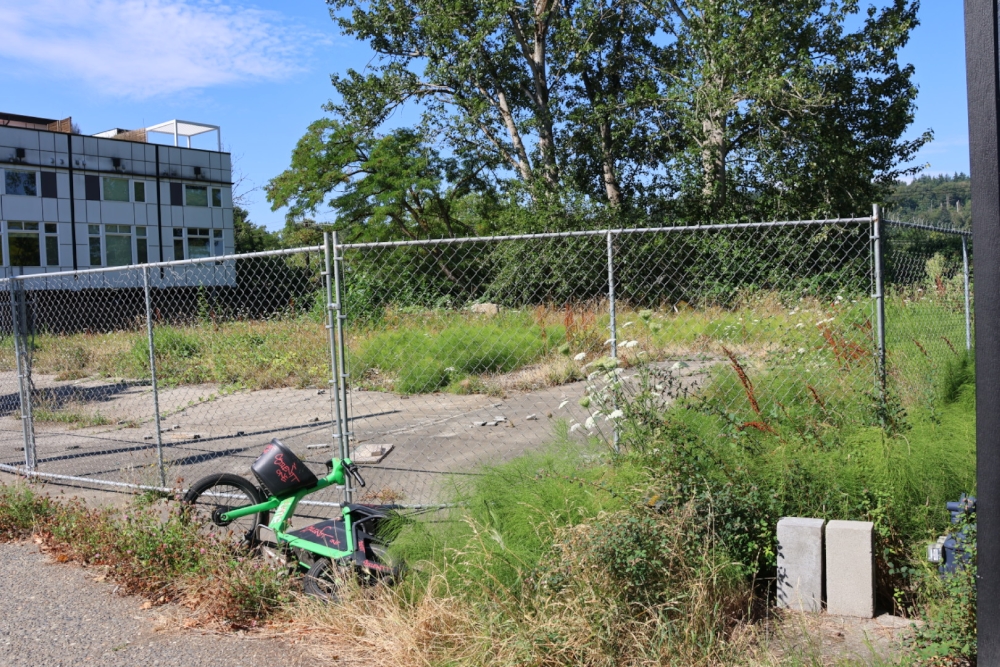
Five months after buying that empty lot in the 5000 block of Delridge Way SW, Habitat for Humanity is proceeding through the permit process for what’s described as a 29-unit, five-story “affordable for-sale” housing project. Documents in online city files say the project – official address, 5011 Delridge – will be a mix of two-bedroom and three-bedroom units. The name Puget Park Flats is in the permit system too. We have an inquiry out to the nonprofit in hopes of getting their current timeline. Habitat’s previous West Seattle projects include the six-home Highland Terrace in the 9000 block of 15th SW and four homes in the 2100 block of SW Trenton. Under previous ownership, our archives indicate, the 5011 Delridge site was proposed for half a dozen townhouses back in 2018, and once held a triplex.
 (WSB photo)
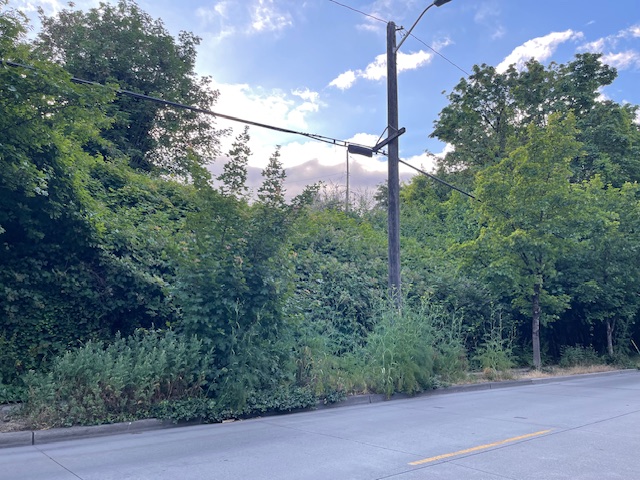
It’s been two years since we last mentioned the latest in a long line of proposals for 3257 Harbor Avenue SW [map] – which in turn was half a year after we first noticed it, and detailed the site’s history.
The developer behind that proposal, Bode, is still pursuing it, we’ve learned. We got more information on the current status of the project in an email exchange with Bode rep Rae Hendricks. Bode already has two apartment complexes in West Seattle, at 2222 SW Barton and 3050 SW Avalon Way, so this would be their third. Hendricks says the Harbor Avenue project turns on whether the city will grant a “street vacation for what is technically part of SW City View, “an undeveloped right-of-way that divides the site. This site is likely only feasible after vacating this street. … We have received positive community feedback and are optimistic about the request being granted.” (Street vacations, as you know if you remember coverage of some past West Seattle projects, ultimately require City Council approval.)
As for the current overview of what Bode is proposing: “We are expecting about 200 units total, with a mix of studios, 1-bed, and 2-bed types. This is still in flux as we work through the design and permitting processes. We do not have any off-street parking as of now, but we are aiming to support both cyclist and pedestrian infrastructure around the site. The project has a private bike storage space with ample bike parking spaces, as well as a public repair station, temporary bike parking, and water fountains for the community to utilize. We are also proposing to widen the sidewalk on SW Harbor Ave along the property to about double what it is now.”
If the street vacation is approved, Hendricks told WSB, “then we will move forward into building permitting” and construction would likely follow in a year to a year and a half.
With so many other projects on hold, we asked, why is this company able to keep building? Hendricks replied, “Living Bode is in a unique position because we are a vertically integrated firm that can mitigate cost through the entire process of developing, designing, building, and post-construction ownership. We also are working with enabling capital providers such as Amazon to help mitigate some of the risks in the current market.”
The company has more than 20 properties, according to its website. You can check in on the process for this one here.
City Councilmember Eddie Lin, who’s chairing the committee reviewing Phase 2 of the city Comprehensive Plan – aka “Centers and Corridors” – says it’s on hold until next year because of legal action related to environmental appeals. Lin announced the delay in a news release, saying that “a handful of homeowners and business interests are weaponizing State Environmental Policy Act appeals to challenge proposed zoning and development legislation, including that which would help protect the environment.” His news release also notes he is proposing legislation to “limit the type of SEPA appeals that can be heard by the City’s Hearing Examiner.” The council’s Land Use and Sustainability Committee will have a public hearing on that proposal when it meets at 9:30 am next Wednesday, July 1. The full-council committee reviewing the Comprehensive Plan proposal, meantime, will meet July 30, Lin says, and then will be off the calendar for the rest of the year. We reported back in January on the zoning changes in “Centers and Corridors.” You can use this map to see what, if any, changes are planned for specific areas.
 (South part of the site as shown on King County Assessor website photo)
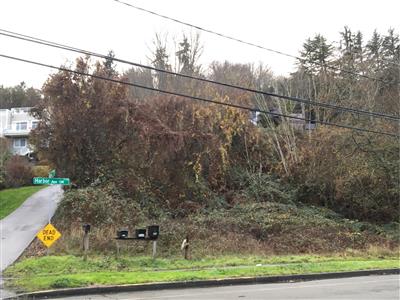
Residential-development proposals in West Seattle continue to be dominated by townhouses. One of the newest early permit filings is for 11 of them proposed on three vacant parcels in the 2200 block of Harbor Avenue SW [map], immediately southeast of the West Bay building (which has a separate non-townhouse proposal that’s been in the system a while). The preliminary site plan filed a few days ago for 2271 Harbor SW shows the townhouses in a single row facing onto Harbor Avenue. The online files say 11 parking spaces are proposed, and 44 “sleeping rooms,” which would suggest these will be 4-bedroom townhouses. Of note: One of the developers/owners listed on the site-plan document is Kathryn Kingen, co-proprietor of Salty’s on Alki, a few blocks north. Again, this is an early-stage proposal, so it’s not in the review/comment phase yet.
Two months ago, we first told you about an early-stage plan to replace the empty ex-clinic at 4550 Fauntleroy Way SW with a new clinic. The development firm working on the project still hasn’t disclosed which health-care organization would run it, but new documents in city files reveal more about the plan. According to this presentation document, zoning issues have forced the project team to move the location of the building on the site, which has streets on three sides (Fauntleroy Way north, 38th SW east, SW Alaska south).
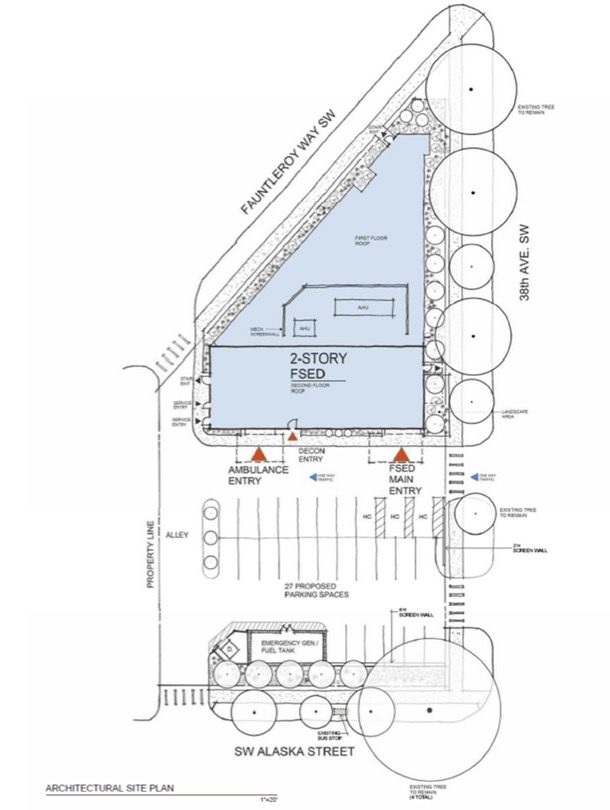
Though the 12,800-sf, 24/7 facility is not proposed to be a full-fledged hospital, documents say it would offer a higher level of emergency medical services than currently available on the peninsula – here’s the overview:
The proposed project is a medical and emergency services facility intended to address a documented gap in healthcare access within the West Seattle community. This gap is due to:
Single-chokepoint geography – bridge & tunnel dependent
All existing EDs [emergency departments] require 18-38 minutes in normal traffic
~100,000 residents with no walk-to or close-drive ED option
Fastest-growing 65+ population segment – highest ED utilization
No Level I or II trauma in the peninsula – ambulance must bridge
Public transit not viable for emergency situations
According to the presentation document, they’re looking for city clarification on 10 points, including whether the facility can be exempt from required “full street-level activation” because it’s a medical facility. The current building on the site has been vacant since Virginia Mason Franciscan Health moved almost a year and a half ago.
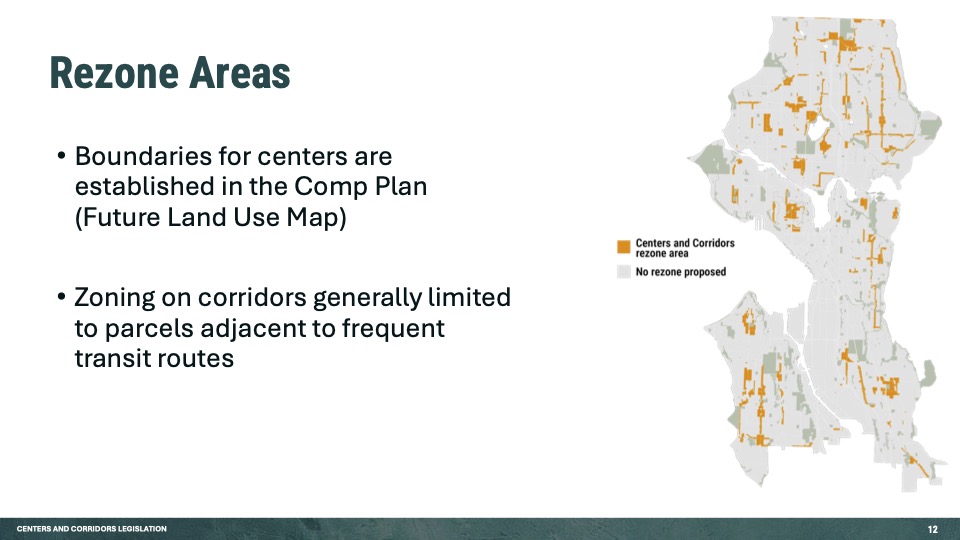
As we’ve been reporting, the City Council is reviewing the next phase of upzoning, the “Centers and Corridors” proposal. Mayor Katie Wilson says she wants upzoning to go further than currently outlined – “taller, denser, faster” – but that would start with Phase 3, while what’s before the council now is Phase 2. Whatever your opinion, tomorrow (Monday, April 6) is the next major all-day hearing, and you can comment in person or remotely. Here’s the council’s reminder with the basics on how to participate:
The Select Committee on the Comprehensive Plan, chaired by Councilmember Eddie Lin (District 2), will host the first public hearing for Phase 2 of the Comprehensive Plan on Monday, April 6, with separate sessions for remote and in-person public comment.
*Remote public comment will be at 9:30 a.m. Registration to provide remote public comment will be open from 8:30 a.m. – 10:30 a.m. The hearing will continue until all signups have had the opportunity to speak.
*In-person public comment will begin at 3 p.m. In-person public commenters can sign up outside of the Council Chamber from 2:30 p.m. – 6:30 p.m. The hearing will continue until all signups have had the chance to speak.
More information can be found on the agenda for the April 6 Comp Plan Public Hearing. Additional information can be found on the City Council’s Comprehensive Plan webpage.
To see what, if any, changes are currently proposed for your neighborhood (or elsewhere), you can use the city’s interactive map.
The next round of city upzoning – under the name Centers and Corridors – goes to the City Council for review starting tomorrow (Thursday, March 19).
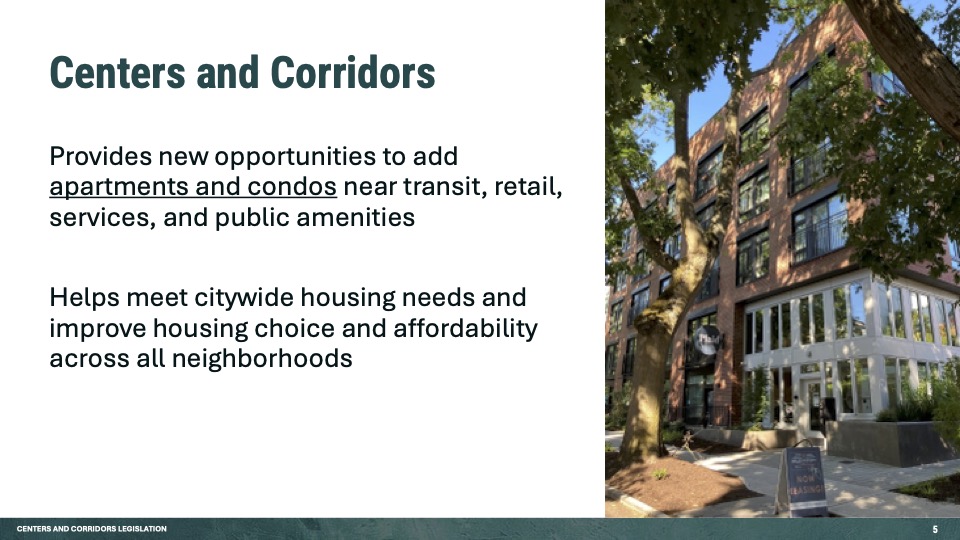
The council meets as the Select Committee on the Comprehensive Plan at 2 pm. Our most recent report on the proposal was last week, after hearing from a neighborhood that discovered two different zones for the two sides of its street. Their advice: Check this interactive city map to see what, if any, changes are proposed where you live. We also reported here when the Centers and Corridors legislation was announced in January. For an overview, see this slide deck prepared for tomorrow’s meeting; the agenda explains how to comment and how to watch – remotely or in person. A full-day public hearing is set for April 6; final votes are likely this summer.
By Tracy Record
West Seattle Blog editor
Whether you agree with their view of upcoming city upzoning or not, residents of one West Seattle neighborhood have advice for you: Find out what’s planned for where you live – don’t assume someone would have contacted you directly to let you know about changes.
The next round of upzoning involves what’s called the Centers and Corridors legislation, which the City Council will consider when it resumes meeting as the Select Committee on the Comprehensive Plan – next meeting 2 pm Thursday, March 19, with its first of two standalone public hearings set for 9:30 am April 6. The focuses include the areas that will become housing/business hubs known as Neighborhood Centers and areas that are considered “transit corridors”; the city says the legislation is meant to:
… implement the vision in the One Seattle Plan by increasing our capacity to build apartments and condos more widely in areas with access to transit, shops, and services. This legislation would rezone land in newly designated Neighborhood Centers, in new and expanded Urban Centers, and along frequent transit corridors.
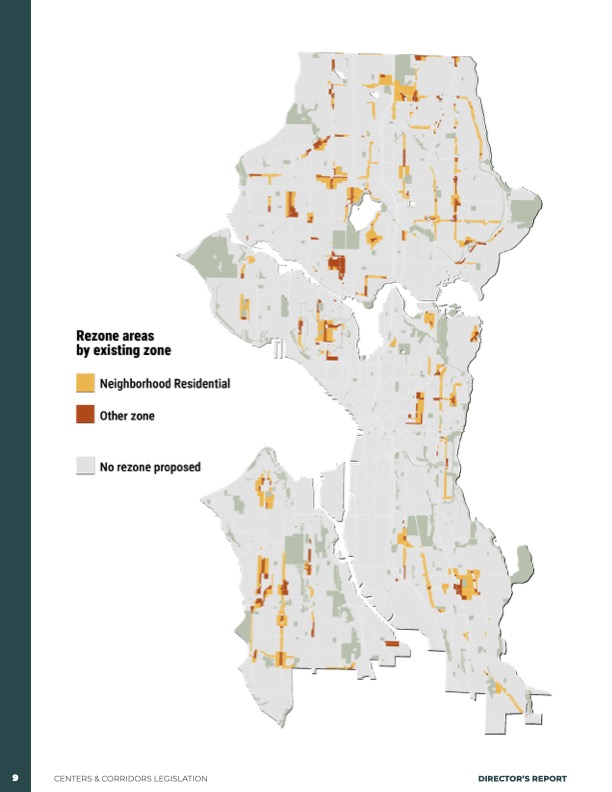
That’s the map included in a city report on the proposals, which we wrote about after the city released them in January. That story led residents of 39th SW north of Morgan in upper Morgan Junction [map] to look into what was planned for their street – using the city’s interactive map.
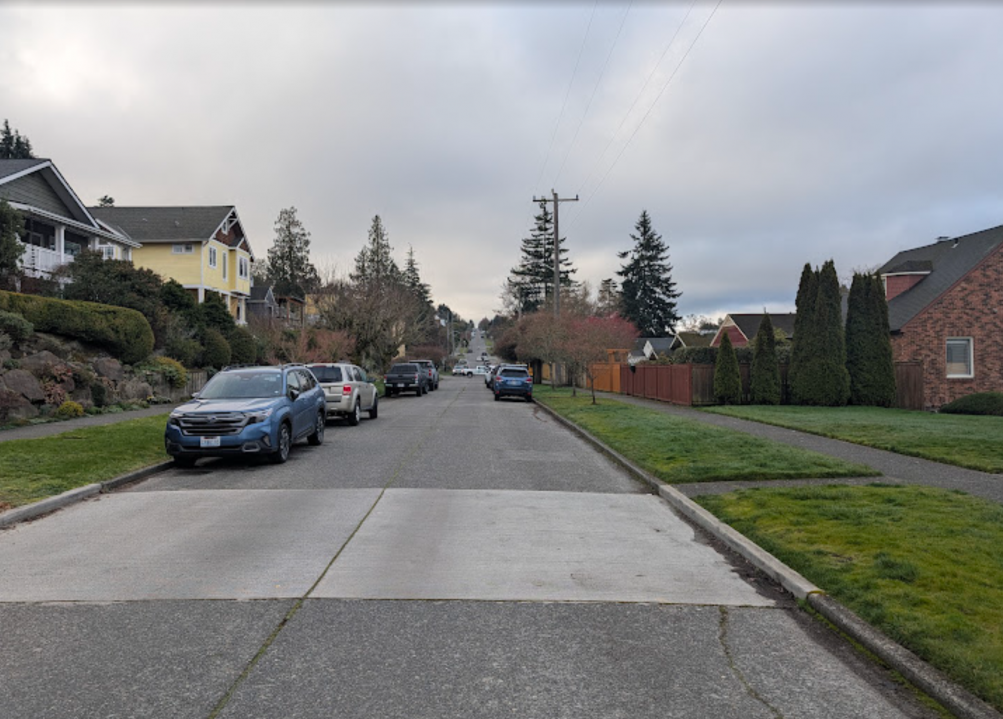
They discovered, Scott Roberts told us, a dramatic contrast between their side of 39th remaining Neighborhood Residential, and what the other side of their street would be zoned for, Lowrise 2. He provided these before and (potentially) after views to demonstrate what he called an “abrupt zoning edge”:
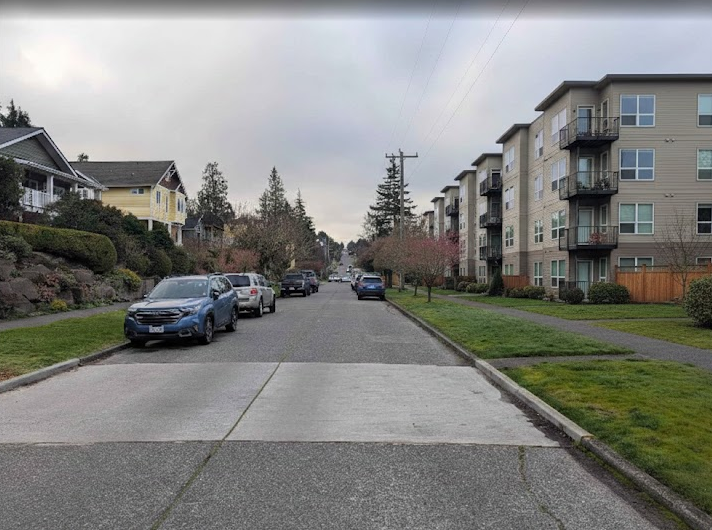
We talked with him and neighbors along their street recently, after one of those neighbors contacted WSB. Their blocks of 39th have many long-time residents; Roberts and his wife have been there 26 years; another neighbor who joined the conversation has been there 29 years; yet another has lived there more than 80 years. (Some newcomers too; yet another told us they’ve lived there three years.) The neighbors have dinners and take trips together and consider each other family. “We’ve put our hearts and souls into this neighborhood,” Roberts says, expecting to live in their 1912-built home for the rest of their lives.
They also expected it would remain a quiet, not-so-dense neighborhood. And they think the proposed zoning change on the west side of the street is based on a mistaken view of how the area fits into the future vision.
They say their street, a long stretch of 39th SW between Holly and Juneau, doesn’t qualify as a “corridor”; it’s just east of Fauntleroy, but buses don’t run there. The closest bus route is the 128 on the SW Morgan hill at the south end of their street. Roberts has done copious research; he and neighbors commented when the proposal was reviewed by the city Planning Commission last month. He’s contacted multiple city offices; so far, he’s heard back from Brennon Staley with the Office of Planning and Community Development, plus an offer to chat with District 1 City Councilmember Rob Saka during his in-district “office hours.”
In correspondence with Staley, Roberts noted it’s not just about height but also about other factors including a 50 percent reduction in required setback in Lowrise 2 – five feet, compared to ten feet for NR – compared to Neighborhood Residential, plus what he describes as “predatory developer pressure,” with property owners already being besieged by builders wanting to buy their homes, even before the rezoning is approved.
Staley’s replies included that the zoning difference was “fairly minor,” with four-story “stacked flats” actually allowable in both zones, plus the observation that the street is 60 feet wide, which he suggested provides “significant separation.”
If the zoning difference is “fairly minor,” Roberts countered to Staley via email, then why rezone at all?” What was “single-family” has already been upzoned, on this block and throughout the city, to at least four units on most if not all parcels, and some neighbors already have added “backyard cottages” (detached accessory dwelling units aka DADUs). Jeff, the 29-year resident, says he’s always been “excited about growth” and even recalled voting for the monorail expansion that once was planned to end at a station half a mile away.
Roberts and his neighbors also say they’re aghast that this change was proposed for their neighborhood – and other changes in other neighborhoods – without direct notification. They’ve been making flyers to circulate. And they’re hoping to convince city leaders to change the plan for their block, as they did with boundaries for some Neighborhood Centers, such as Endolyne before the proposed Centers and Corridors legislation came out.
The ultimate decision is up to the City Council, which starts the review next week and is expected to finalize the Centers and Corridors legislation in July. If you have anything to say about the plan, Roberts and his neighbors note, “Time is of the essence.”
HOW TO GET INVOLVED: Basic info on the Select Committee on the Comprehensive Plan, and its baseline meeting schedule, can be found here. When individual meeting agendas are set – usually a few days in advice – you’ll find them here. Don’t know how to contact councilmembers? Go here.
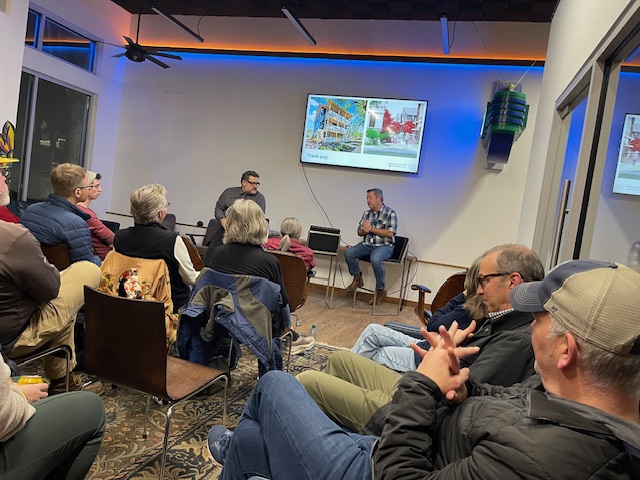 (WSB photo: Matt Hutchins and Kevin Broveleit at West Seattle Realty event)
By Tracy Record
West Seattle Blog editor
One of the most pointed audience questions during last night’s discussion of “Zoning Changes in Seattle” was whether everyone whose property has been, or will be, upzoned by those changes is aware of it.
All the discussion leader, local architect Matt Hutchins, could say was, in essence, if not, they should – this all has been years in the making, and it’s not over yet.”You can not like the outcome, but you can’t say this was done hastily,” he contended. (He’s had something of an inside view, as co-chair of the city-convened Planning Commission.)
More than two dozen people filled the seats at West Seattle Realty (WSB sponsor), whose proprietor Kevin Broveleit both hosted and participated. Here’s our full video of the event:
Though it was a full house at WSR, those were just two dozen out of hundreds of thousands – Hutchins’ slide deck included the projection that by mid-century, the city of Seattle’s population could hit 1 million. That’s why city, county, and state leaders have been changing zoning to accommodate more housing. And the city has just launched its next round.
Hutchins touched on many points in his presentation – including how replacement of older residential units with newer, denser buildings increases housing affordability, even if it’s the classic case of one older $750,000 house getting replaced with three smaller new homes selling for that or more. (His term for what happens: “Vacancy chains.”) He showed a multitude of examples of types of housing now allowed on some if not all single-family sites, including a phrase you might have heard, “stacked flats.” (Those buildings could hold up to 11 units and four stories, in certain cases, Hutchins said, or even 16 one-bedroom “deed-restricted, for-sale” units.)
He also explained why rezoning only means what can be done on a site, not what will, and discussed reasons why redevelopment hasn’t happened as quickly as it could have. According to Hutchins, one factor in Seattle is the Mandatory Housing Affordability component, requiring a builder either to include “affordable” housing in their project, or pay a fee that the city would apply toward funding it somewhere else. That fee currently must be paid before construction, Hutchins says, and that’s a dealbreaker for some builders who would be better able to afford the fee if it was collected afterward, when the units are sold.
In the meantime, a lot of building is being done with homeowners in the role of “developer” – Hutchins and Broveleit said “backyard cottages” are a surprisingly sizable percentage of home sales right now. With most lots now able to be developed into at least four units, Hutchins said this will “open the door to a new kind of competition among architects – who’s going to design the best backyard duplex.” He showed an example of a duplex that could be home to multiple generations of the same family.
And it’s not only about housing; he noted that corner stores and child-care businesses. Overall, “you’re going to see all kinds of variants” of projects because of the way the code (zoning) was written.
Bottom line, toward the end of the hour-and-a-half event, was a declaration that “density and affordability doesn’t have to be scary – (you have to) get people talking to each other.”
WHAT’S NEXT: This was a community-led event, not official, but plenty of official proceedings are coming up. Most importantly: The dates are set for consideration of the next phase of city rezoning, the Centers and Corridors proposals, as the council meets as the Select Committee on the Comprehensive Plan:
March 19 – 2:00 PM meeting
April 6 – Public Hearing 9:30 AM
May 29 – Public Hearing 9:30 AM
June 4 – 1:00 PM
June 18 – 1:00 PM
The Centers and Corridors proposal was unveiled a month ago.
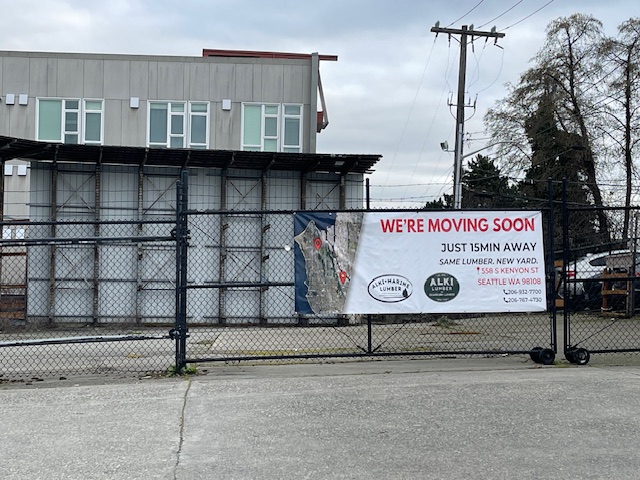
As reported here on Monday, Alki Lumber is moving from West Seattle to South Park, in a move that’s been in the works since the lumberyard’s founding family, the Sweeneys, sold the business four years ago. However, this does not mean the Sweeneys’ big two-building mixed-use redevelopment project for the lumberyard property [map] is imminent. We heard back today from family spokesperson Lynn Sweeney, who confirmed that they continue to await more favorable conditions, and also mused that the move means the end of an era:
The Sweeney Blocks projects are still in the same holding pattern as before. As you mentioned, it’s not a positive environment for development right now so we continue to wait for economic factors to improve with the hope of breaking ground just as soon as possible. But no specific date is on the table. With the Alki Lumber move to South Park, we hope to find some additional short-term tenants to fill our lots. We are using our imagination — a summer food truck court maybe?
Obviously we will miss Alki and it’s been emotional to see the shelves and racks vacating. I’m pretty sure some of that material even predates my dad when he took the helm in 1962!
As noted in our Monday coverage, the Sweeney Blocks project is planned for more than 500 apartments with ground-floor retail, and both parts of the project passed Design Review (as we reported here and here) about the same time the lumberyard was sold. The lumberyard’s owner, Marine Lumber, says the new South Park location is 558 S. Kenyon.
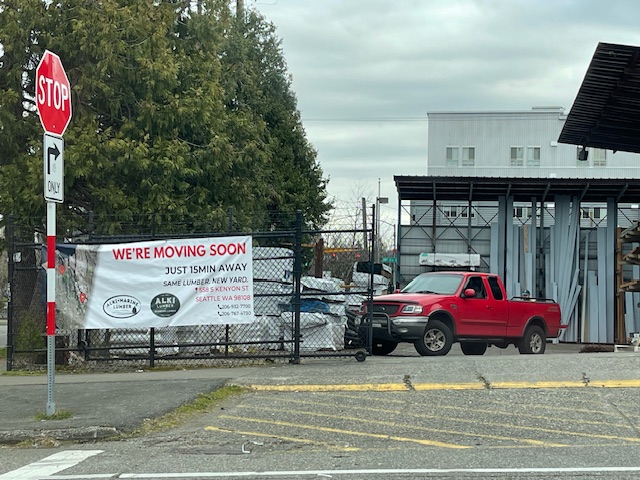
Thanks for the tips! “We’re Moving Soon” banners like the one in our photo have gone up around the longtime Alki Lumber yard in The Triangle. So, readers asked, how soon is “soon”? The exact date isn’t finalized yet but “very” soon, Alki Lumber tells us, likely within weeks, with more details expected shortly. As we first reported four years ago, Alki Lumber is owned by Marine Lumber, sold by the Sweeney family after a century. Its new location is in South Park – 558 S. Kenyon. It’s been seven years since the Sweeneys announced they were studying options for their Triangle property’s future; they subsequently made plans for two buildings on what became known as the Sweeney Blocks, with hundreds of apartments.
 (2021 rendering, with potential location for historic neon sign)
The projects finished going through Design Review in 2021 (as we reported here and here); some, but not all, major permits have since been issued.
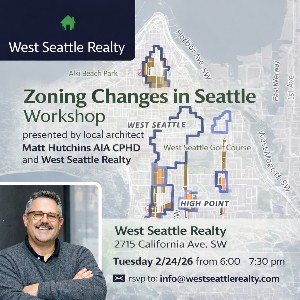 As we’ve reported, zoning changes are leading to neighborhood changes, primarily more housing, as “single-family” zoning no longer exists. The city has incorporated zoning changes as required by the state, and more are on the way, with the recent introduction of what the city calls the the Centers and Corridors legislation. Whether or not you’re a current or aspiring property owner, you might be wondering how all this could affect where you live or where you’re hoping to live. At 6 pm Tuesday (February 24), West Seattle Realty (WSB sponsor) in Amiral hosts a presentation and Q&A with longtime West Seattle architect Matt Hutchins, and all are welcome to come listen and/or ask questions. In addition to his work, Hutchins has also long been involved with community and civic projects, from Alki Statue of Liberty Plaza to the city-convened Design Review Board; he partnered with WS Realty in 2024 for a presentation on “middle housing,” which part of the newest zoning changes enables. It’s a free event; RSVP is requested at info@westseattlerealty.com – then on Tuesday night, go to the WSR offices and event space at 2715 California SW.
 )
)
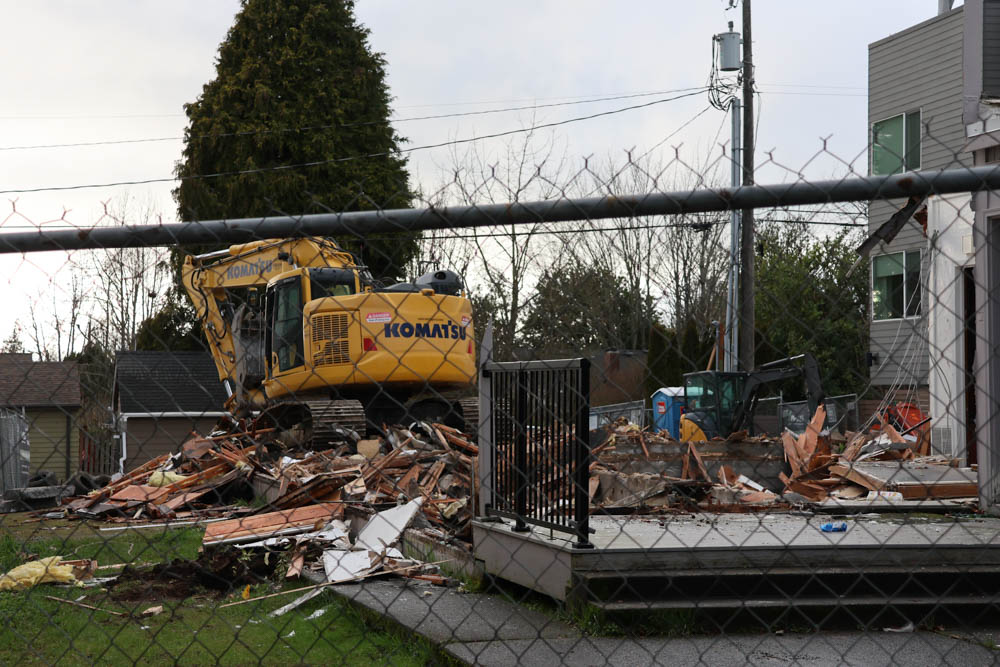
Demolition is under way at 5435-5437 California SW [map], where 12 townhouses will replace a business building. Former tenants in the teardown building included Canna West Culture Shop (which closed after two crash-and-grabs), whose parent store Canna West Seattle (WSB sponsor) is still very much open across the street, and the Filigree & Shadow fragrance studio that closed last fall.
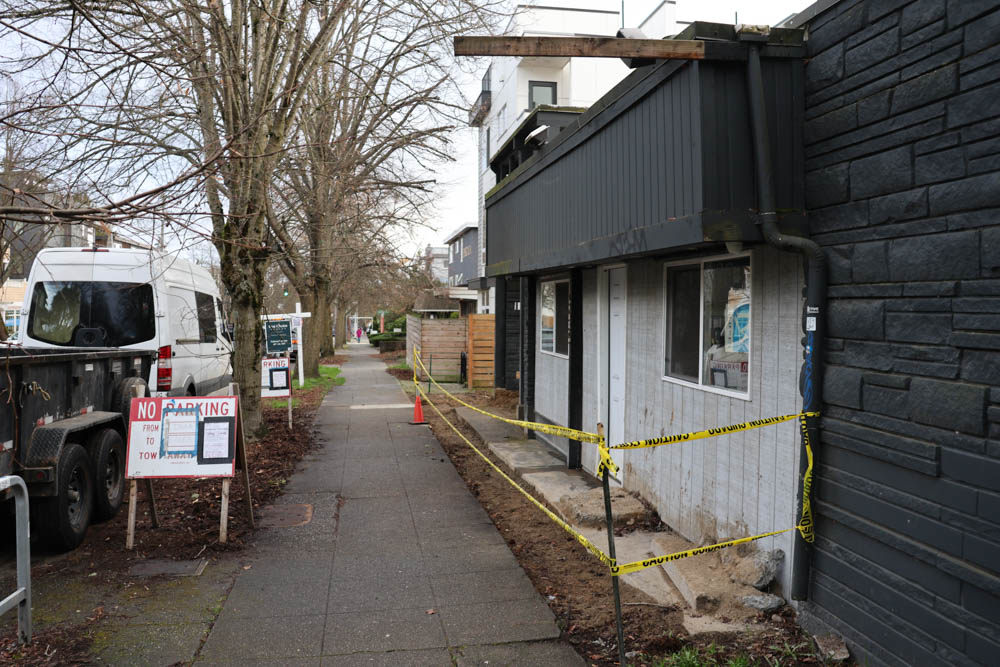
The site sold to a builder for $1.7 million three months ago, according to County Assessor records. The site plan shows the 12 townhouses will be built in two rows of six stretching west-east between California and the alley, where there will be six offstreet parking spots. Demolition work when we stopped for photos this afternoon was focused on the back of the site.
Mayor Wilson‘s announcement about the city’s response to federal immigration enforcement was not the only major announcement from her office this afternoon. The other has to do with rezoning related to the updated Comprehensive Plan (aka One Seattle Plan). The toplines are in this summary, with this overview:
This legislation described in this document, called Centers and Corridors, will help to implement the vision in the One Seattle Plan by increasing our capacity to build apartments and condos more widely in areas with access to transit, shops, and services . Specifically, this legislation would rezone land in newly designated Neighborhood Centers, in new and expanded Urban Centers, and along frequent transit corridors . It would also update development standards in Lowrise (LR) and Midrise (MR) zones including modifying height and floor area ratio (FAR) allowances in Lowrise zones, creating a new 6-story MR zone, updating setback standards in MR zones, removing maximum width and depth requirements in MR zones, and implementing minor changes to FAR measurement techniques and standards for screening parking.
Under the updated Comprehensive Plan, West Seattle has seven Neighborhood Centers and one expanded Urban Center (Morgan Junction. This would rezone those areas and “properties adjacent to frequent transit routes located in the Urban Neighborhood place type.” When the Neighborhood Centers – an entirely new area designation – were announced, the city said rezoning details would be worked out later, and that’s what this is about. The summary says:
These changes aim to increase capacity for apartments and condominiums throughout the city . Consequently, most proposed rezones would allow development of up to 5-6 stories, where construction of apartments and condominiums is considered more economically feasible . Building apartments and condominiums at a smaller scale is challenging given the higher requirements for energy efficiency, sprinklers, construction methods, elevators, accessibility, condo liability insurance, and solid waste.
The interactive map you can use to find out details about specific areas is here. The legislation with details needs City Council approval; its full text is here. No date announced yet for the first meeting at which this will be reviewed.
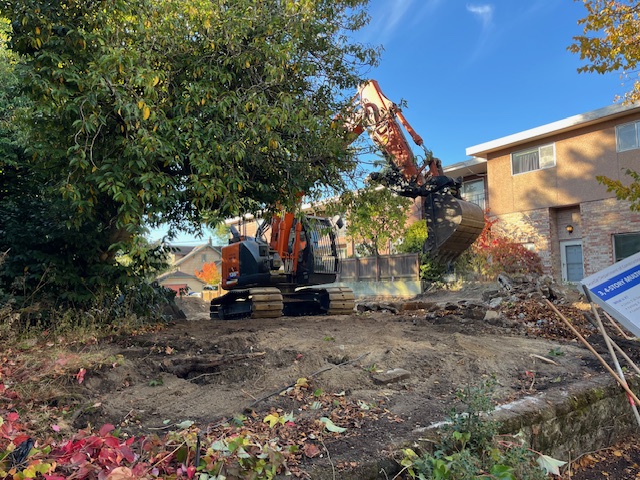
Six months after our most recent update on a townhouse/live-work project planned for 5617 California SW [map], the site’s just been cleared. Going by today, we stopped after noting the 113-year-old house that’s held small businesses on the site had been demolished. City records say nine units – with the three live-works facing California – and four offstreet-parking spaces are planned – here’s a rendering:
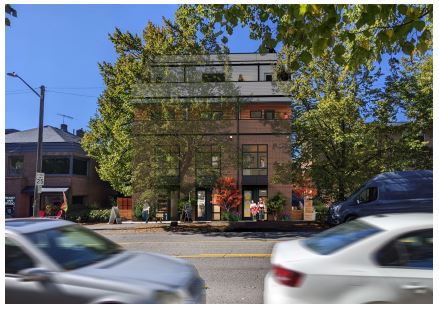
If you’re interested in full design details, see the design packet here. Side note from city files: Under the Mandatory Housing Affordability policy, the developer will have to pay a quarter-million dollar fee since none of the units will be officially “affordable.”
By Tracy Record
West Seattle Blog editor
The online public meeting for a development proposal at 2345 Hobart Avenue SW (backstory here) was meant for comments on the latest proposal for the site.
But the proposal was so new, city reps weren’t fully acquainted with it, admitted planner Joe Hurley, presiding over the meeting. A project manager for the proposal surfaced during the meeting, as a commenter, to talk about it. When the public meeting was scheduled, the plan had a duplex and a stand-alone house. Now the latter has been removed, and only the duplex remains.
All the same, neighbors are concerned that any development on the site, much of which is in an Environmentally Critical Area, will threaten the stability in the area. They requested a meeting to get their concerns more conspicuously onto the record as the Department of Construction and Inspections reviews the proposal to decide whether to allow part of the project to get an Environmentally Critical Area exemption.
Hurley said the public meeting was the result of nine comments calling for one, mainly concerns about slide risks and inadequate analysis of the site.
The project manager promised a “detailed stormwater analysis” was planned, and that the project would include repairs of the “Hobart washout.” She said the duplex that’s now the only building planned on the site is similar to what’s been approved for a neighboring site; both are owned by the same family, which she notes lives in the area. She suggested the site’s zoning meant they could build more than they’re seeking to. She also said the site holds some “unhealthy” trees but that rather than being removed, they’ll be “snagged” so their roots remain to aid with soil stability. Finally, she said the plan would have two offstreet-parking spaces for each unit (that too had been a concern, more cars than spaces could lead to onstreet parking in an area where the road is already narrow).
One commenter wanted clarity on the percentage of the site’s ECA that could potentially be built over; the meeting’s purpose was to record comments, not answer questions, so that went unanswered.
Others who spoke included a lawyer for some of the property owners, who said they understood that the city couldn’t place an “undue burden” on a property owner by ordering that an entire site be left undeveloped, but, they asked, would allowing one unit instead of two be enough to relieve that burden?
A nearby resident also cited a policy saying that granting an ECA exemption shouldn’t be “injurious” to those nearby, and she thinks this would be – putting her and neighbors at risk. That was echoed by another neighbor, who said the project could be at best an inconvenience but at worst do harm.
The concerned neighbors also got some support from regional tree advocate Sandi Shettler, who called out a deficiency in the site report, saying it didn’t list the existing trees’ species.
Though they didn’t all speak, the meeting drew more than 20 attendees, according to the counter on the video software.
Next step, the city will continue reviewing the project and will make a decision on the exemption request, with the decision open to appeal.

The only West Seattle project to have had a Southwest Design Review Board meeting this year, ~86 apartments at 3010 SW Avalon Way [map], now has its official design decision. The official report was released by the city today; see it here. This opens a two-week period for appeals, as explained in this notice. As we reported when the project went before the board in March, the project is proposed as an eight-story building with no offstreet parking. As for whether it’s on track to be built any time soon – since the development market has been fairly slow around here – that’s hard to tell from the document files, and of course the West Seattle light-rail project likely looms large in that area’s future.
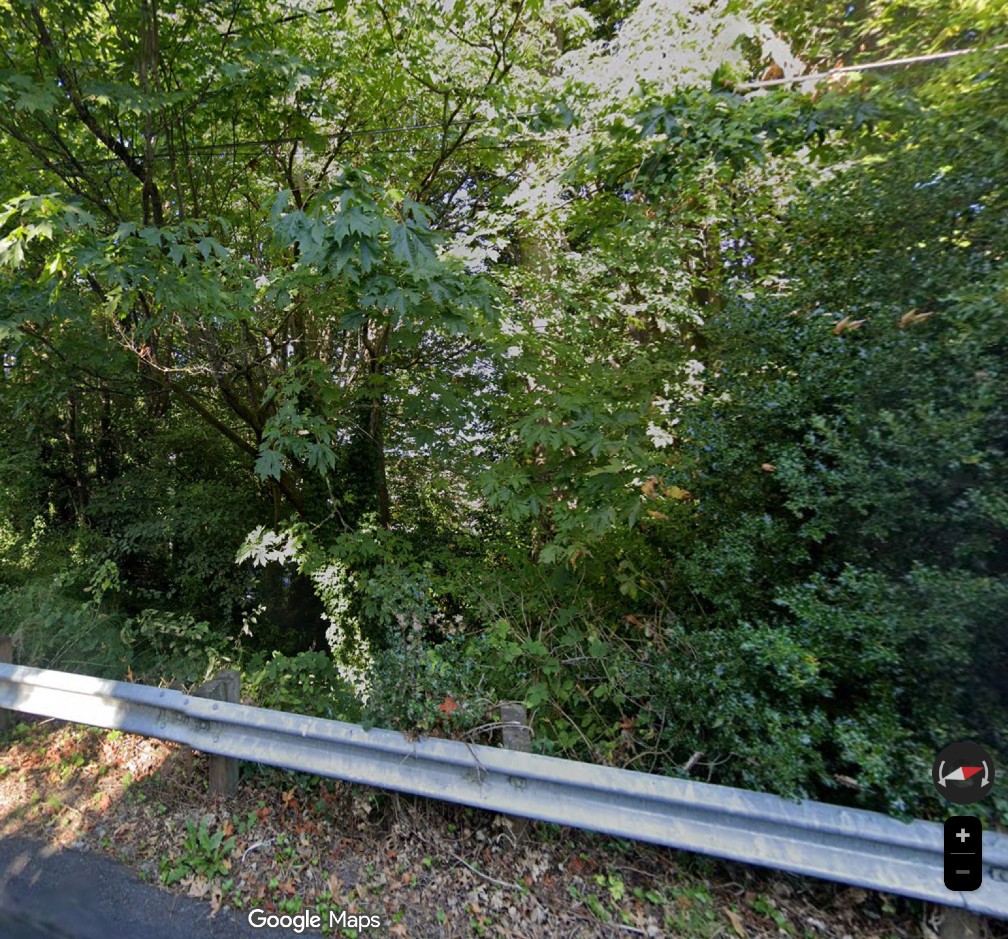 (Google Street View image of 2345 Hobart SW, from this past August)
City-convened public meetings about development sites are few and far between these days; not only has development slowed down, but design review has largely became a staff function, and that program had been the major reason for community meetings. Next week, though, a West Seattle development proposal is the subject of an online community meeting, and a neighborhood group is explaining why.
The site is at 2345 Hobart Avenue SW in Upper Alki [map], and the proposal is for one three-story house and one three-story triplex, plus six offstreet-parking spaces. The community meeting, online at 5 pm Wednesday, October 15th – requested by neighbors, per the comment file – is to address the project’s request for a variance because of the Environmentally Critical Area that’s part of the site.
Neighbors have formed a group called the Friends of Bonair Place, and a spokesperson told us, “The site proposed for development has a history of landslides, sinkholes and infrastructure issues going back to 1934 – 1935.” They note a WSB story covered a utility problem there in early 2009. “We are doing what we can to ensure that there is broader awareness of this public meeting for several reasons: 1) due to the unique conditions of this steep slope wooded site and the wider impact it could have beyond Hobart Ave, 2) because many neighbors near us were not sent the attached notice, and 3) because last year SDCI granted an ECA variance for a project adjacent to the proposed site. The variance was granted without a public meeting and is managed by a different Land Use Planner, David Sachs. (2349 Hobart Ave SW)” (Joe Hurley is the planner listed as working on the subject of next week’s meeting.)
The city’s file says the site originally went into the system in 2020 with a proposal for five townhouses. That followed various other proposals in previous years, according to city files, including one for eight units. The current proposal includes this site plan showing the developer’s calculations of how much of the Environmentally Critical Area the project would encroach on; it says the site totals 11,532 square feet, that 8,971 sf of that are ECA, and that they believe 1,315 sf of their buildings’ footprint would cut into that.
To participate in (or just watch) the 5 pm October 15 meeting, here’s the link; you can sign up here to comment during the meeting. The meeting notice also has a phone number and access code for participation.
By Tracy Record
West Seattle Blog editor
In a week and a half, the City Council will listen to what might be hundreds of speakers at the last major public hearing on the first phase of the Comprehensive Plan – aka One Seattle Plan – which is meant to guide the city’s growth for the next 20 years.
Upzoning has been the focus of what’s working its way through the system, dating back to the unveiling of proposed maps last October. The plan details included new terminology for new types of zones, including Neighborhood Centers envisioned as hubs of businesses and denser housing. We first reported, after that unveiling, on seven West Seattle areas proposed for the Neighborhood Center designation – north to south:
*Delridge (centered on Delridge/Dakota)
*Brandon Junction (centered on Delridge/Brandon)
*Fairmount (centered on California/Findlay)
*High Point (centered on 35th/Morgan)
*Holden (centered on 35th/Holden)
*Upper Fauntleroy (centered on 35th/Barton)
*Endolyne (centered on 45th/Wildwood)
We also noted in our initial report that the city had considered three other West Seattle areas as potential Neighborhood Centers but decided against the designation:
*Alki (would have been centered on 61st/Stevens)
*Sylvan Junction (would have been centered on Delridge/Orchard)
*Highland Park (would have been centered on 9th/Trenton)
Now, one of the 106 amendments that councilmembers have proposed for the Comp Plan/rezoning would resuscitate the idea of an Alki neighborhood center. And Alki neighborhood advocates say that shouldn’t happen without a chance for them to be part of the process – more than just having their say at the upcoming eleventh-hour public hearing.
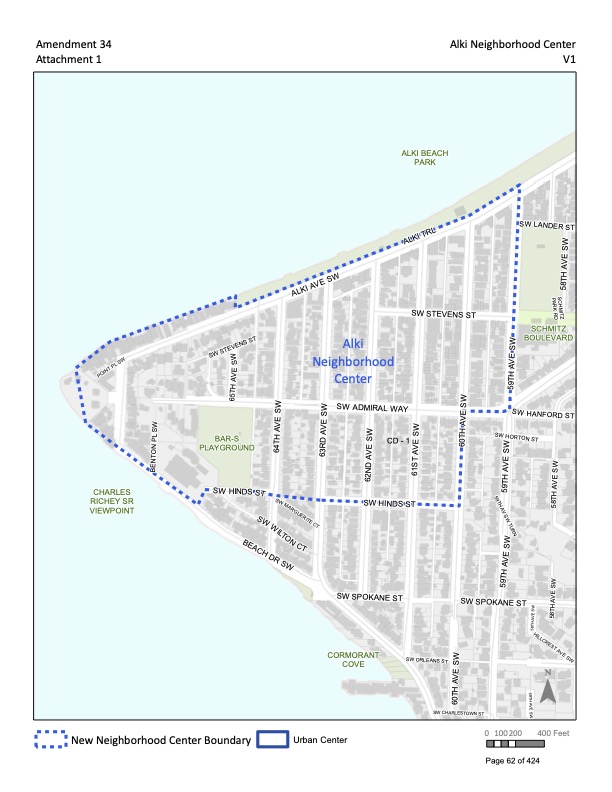
The Alki NC proposal is in the 34th amendment in this package of amendments, one of eight neighborhood centers that citywide Councilmember Alexis Mercedes Rinck wants to add to the plan (none of the other seven are in West Seattle) with support of a housing-advocacy organization. This amendment starts on page 56 of the 424-page document with all councilmembers’ proposals. Her amendment describes the proposed Alki neighborhood center as follows:
1. Alki (District 1)
This amendment would create a new Alki Neighborhood Center generally located west of 59th Avenue (SW), north of SW Hinds Street and south and east of Alki Avenue SW (Council District 1). It would encompass approximately 95 acres.
The area to be included in the Neighborhood Center includes a mixture of Neighborhood residential zoning, generally to the south, Lowrise 1, 2, and 3 zoning in the middle and west of the proposed center, and Neighborhood Commercial 1-40 zoning along Alki Avenue SW in the northeast corner of the proposed district. The area contains mostly single-family homes in the Neighborhood Residential zone, multifamily buildings in the lowrise zones, and a mix of commercial, mixed-use and multifamily structures in the Neighborhood Commercial zoned area. In addition to the section of commercial zoning proposed to be included in the neighborhood center, the commercial district extends three blocks east along Alki Avenue SW outside of the proposed boundaries. In addition, there are a number of parks in the area, including Alki Beach, Bar-S Playground and Alki Playground.
Bus stops for the 50 and 56 bus routes are located along SW Admiral Way, 63rd Avenue SW, 61st Avenue SW and Alki Avenue SW. The 775 bus route runs westbound along SW Admiral Way, north of 63rd Avenue SW, and eastbound along Alki Avenue SW. None of these routes individually meets the definition of providing frequent transit service. The areas farthest from the transit stops are approximately one half mile (2,640 feet) from the center of the proposed neighborhood center.
“Neighborhood center” was originally defined by the city as:
… places with a variety of housing options centered around a local commercial district and/or major transit stop (such as RapidRide). They typically serve as focal points within neighborhoods, offering shops, services, grocery stores, restaurants, and more. These places are suitable for residential and mixed-use buildings up to six stories in the core and smaller apartment buildings on the periphery. Neighborhood centers should generally encompass areas within 800 feet, or one to three blocks, of the central intersection or transit stop.
Councilmember Rinck’s amendment notes that some of her proposed additions (obviously including Alki) don’t fit the definition;
Many of the proposed boundaries of these Neighborhood Centers include areas that are significantly more than 800 feet from the central intersection of the center or a bus rapid stop. Consequently, the boundaries that would be adopted through this amendment are generally not consistent with Comprehensive Plan policy GS 5.4 which states: “GS 5.4 Determine the boundaries of Neighborhood Centers based on local conditions, but generally include areas within a 3-minute walk (800 feet) of the central intersection or bus rapid transit stop. ”
If the Council wants to adopt the boundaries for the new centers as proposed under this amendment, it should also amend this policy to allow greater flexibility in the configuration of neighborhood center boundaries.
While the originally proposed Neighborhood Centers around the city have been up for scrutiny and feedback dating to last October, the ones Councilmember Rinck seeks to add, including Alki, have not, and the Alki Community Council is voicing concern about that, sending the ACC mailing list an alert today, saying in part:
your voice will not be heard unless you message City Council that Alki deserves the same education, workshops, and outreach that the 30 other designated Neighborhood Centers received before zoning is approved. To compare public information in the 30 other Neighborhood Centers, here is a synopsis below from the city webpage. Alki deserves to be treated equally and fairly.
Outreach & Timeline in 30 Neighborhood Centers
Oct 16, 2024 – Dec. City launches One Seattle Plan zoning update website; 60-day public comment period opens.
Dec 20, 2024 – Public comment period closes.
May 2025 – Mayor introduces plan to City Council with 30 Neighborhood Centers (Alki still excluded after feasibility analysis).
July 31, 2025 – CM Rinck [proposes amending] plan to add back Alki and the other excluded neighborhoods, just weeks before the Sept. 19 vote — leaving no time for public education or feedback in Alki.
Aug 9, 2025 – CM Rinck’s staff holds a small unadvertised meeting in Alki to discuss rezoning.
If you aren’t on the ACC list and therefore haven’t seen it, you can read the full email, including information on how to comment, by going here.
(Regarding the “small unadvertised meeting” last month, we can confirm there was no media notification. One attendee, community advocate Steve Pumphrey, described it to neighbors in a message about the proposed rezoning, saying that he “attended a less than well-publicized (there were just four legitimate Alki residents that I could see) community meeting that was supposed to be for fact finding and community feedback. It was nothing more than a sales pitch.”
Councilmembers are scheduled to vote on the 100+ amendments, and the rest of the Comprehensive Plan’s Phase 1, the week after the September 12 public hearing, so that they can finalize it before spending more than two months focused on the budget, as happens every fall. In urging people to offer feedback, pro, con, or otherwise, ACC president Charlotte Starck says, “Your voice matters — no matter your opinion on how Alki growth evolves. What’s unacceptable is eliminating Alki’s voice altogether.” Testimony will be accepted in person and online during the two-session hearing on Friday, September 12 – 9:30 am and 3 pm; the agenda explains how to participate, as does the ACC email linked above. (Also on the agenda, links to everything that’s currently up for consideration.)
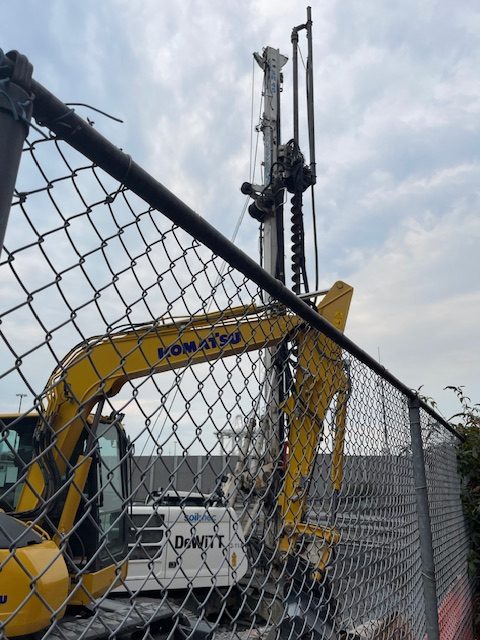
Multiple readers have asked about that big drill rig that’s appeared between ActivSpace and West Coast Self-Storage toward the south end of Harbor Avenue SW. A map check showed it’s parked on property belonging to West Coast Self-Storage (3252 Harbor Ave SW), so we checked in with WCSS’s manager Crystal this afternoon. She said the equipment is there as part of the work of completing their facility, which has been built in phases. She said the final phase includes one more building. The construction permit filed with the city shows the building at a new address, 3300 Harbor Ave SW, and having 3 stories with a mix of parking and storage, but does not have a count on the number of self-storage units. The storage facility on the site to the north has 852 units. Crystal told WSB there shouldn’t be any traffic impacts during construction aside from trucks entering and leaving the property. West Coast Self Storage has been open at the Harbor Avenue location since August of 2020.
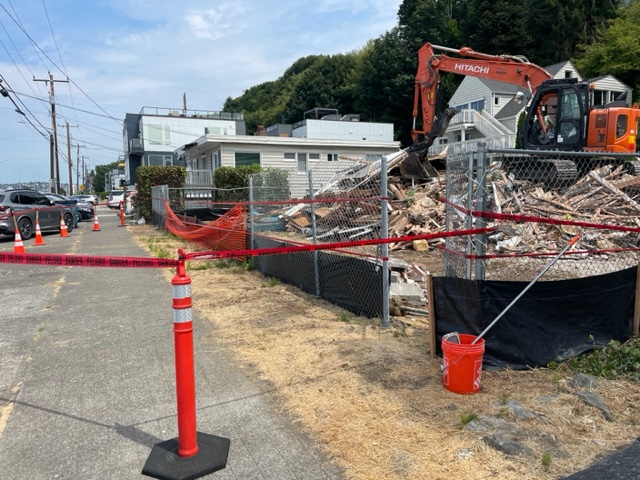
Thanks for the tip! Two weeks after the demolition permit was issued for small residential buildings at 1790 and 1794 Alki Avenue SW [map], circa 1910 and 1938, a backhoe has turned them into debris.
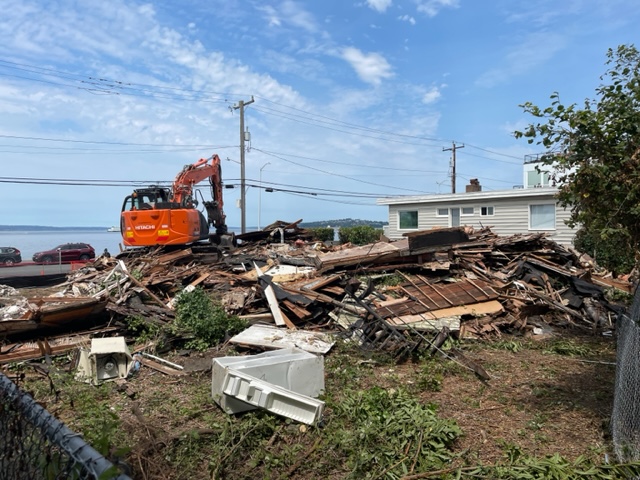
We last reported on the project proposed for this site in May 2024; it was going through the system at the time as a four-story, 12-unit building. County records show the parcels were sold four years ago for $2.3 million. City files, however, show the building permit hasn’t yet been issued.
 (WSB photo)
While STS Construction Services (WSB sponsor) and Housing Diversity Corporation continue construction on their project in The Junction, another of their West Seattle projects is approaching completion. This is Keystone at 9201 Delridge Way SW, and the development team tells WSB that it’s scheduled to celebrate its grand opening next month. Keystone is a mixed-use building and still seeking commercial tenants for its nearly 4,000 square feet of space – broker Susi Musi tells us, “Our ideal commercial tenants are an office tenant and a cafe, such as therapy, dental/orthodontist, professional services office. Key features are 12-foot ceilings, frontage on Delridge, abundant natural light, location, and demographics.” Here’s the leasing flyer she provided. As for the apartments, the building contains 74 units, also with high ceilings; more info here. (The site previously held an auto shop, and had other project proposals under different ownership before this one “stuck,” including a self-storage facility.)
| 22 COMMENTS