
West Seattle, Washington
18 Friday
5:04 PM: For the second day in a row, Gov. Inslee is gathering media (virtually) for a COVD-19 response update. Watch above, and read our as-it-happens notes below.
He opens by saying he’s extending the “stay-home order” through May 4th. (Its original expiration was to be April 6th.) He says it’s “morally necessary” because the full force of the virus hasn’t hit yet and modeling suggests at least 1,000 deaths, “and more will die if we stop now.” He says the percentage of positive tests is going up, so “we’re not out of the woods yet” and “we will not accept unnecessary deaths in our state.”
He acknowledges there are economic consequences and that everyone must find ways to support those who fall into financial hardship “through no fault of their own.” He reiterates that health recovery is vital for economic recovery. He quotes FDR about confidence and courage. “I have confidence in the courage of Washingtonians.” He stresses, “This is temporary. … All of us are leaders in this effort.”
While it’s OK to be outdoors, he extols “walks around the block” – but don’t, for example, go to Skagit Valley to see the tulips (which apparently some are doing even though the festival is canceled).
5:13 PM: Q&A starts with whether there might be another extension. “Ye, that is possible … but because Washingtonians are so committed to this, we are hopeful that will be the end.” But no guarantees. He also acknowledges that “rebuild(ing)” the economy “is going to take all of us.”
What will tell him it’s OK to lift the order? He says he is consulting many experts with lots of data, and we “have our destiny in our control” by continuing distancing.
Should people wear masks? The state health officer says that like federal experts, they’re evaluating that. She also says the peak is expected around Aprl 11th but “they are feeding new data into this model every day.”
5:37 PM: Q&A continues. The governor repeatedly stresses that social distancing must continue so we don’t “pull defeat from the jaws of victory.” He says the experts think person-to-person contact has been reduced by about 80 percent. He also reiterates the importance of mobilizing manufacturers to make PPE since we can’t rely on the federal government to mandate it. He says what’s happened to New York could have happened here if not for the measures taken. He also says Washington has “probably the second-highest per-capita testing” of any state.
5:41 PM: He wraps up with a Winston Churchill quote. The video window above should soon show the archived recording, so we’re leaving it up.
7:59 PM: Here’s the full news release from the governor’s office.
 (Looking east under the high bridge from Marginal Place)
By Tracy Record
West Seattle Blog editor
Ten days have now elapsed since the sudden, shocking news that the West Seattle Bridge was unsafe and would be shut down immediately. SDOT warns in a new online FAQ that “we anticipate a lengthy closure.” Monday’s City Council briefing suggested that means months, not weeks.
So, many questions remain.
We were able to ask a few of them in a brief conversation this morning with SDOT director Sam Zimbabwe (a West Seattle resident). Our allotted time was short so these are by no means all the questions that we (and you!) have – but it’s a start. (We also have questions, mostly technical, out to SDOT in writing.) Exact quotes are marked as such.
TR: What’s happening right now, today, regarding the work toward finding out what’s wrong and getting a temporary shoring plan?
SZ: “Our roadway structures division lead Matt Donahue has personally visited the bridge just about daily … we are still trying to understand what exactly is going on with cracking on the bridge … we are still inspecting every day after taking the live load off the bridge; we are still trying to understand what is causing the cracking to happen. Our repair and interim shoring plan has to respond to the structural issues that we are facing and so we still have to understand exactly what’s going on and make sure that our repair plan is responding to those issues. So we’ve got the same consultants [WSP] that have been part of this … going back to last year when we started analyzing this cracking in more detail have still been with us working on continuing to understand what’s been going on and what our repair strategy can and should be.” As for when they will know they have enough information to proceed with a temporary shoring plan, that’s dependent on their “modeling” matching “what we’re seeing in reality” during those daily inspections, to “understand where the stresses are appearing in the bridge and how we can address that.” The modeling involves analyzing how the bridge is reacting to forces including gravity, wind, load compared to how it “should be responding” to those factors, and what it can tell them about “where the bridge is going over time.”
TR: What has SDOT seen since the must-close-the-bridge-now discovery on March 23rd?
SZ: “We have still seen some crack growth.” They’re installing stress-monitoring instrumentation – real-time monitoring should be in place within a week – and are also “mapping” the cracks to see if they’re growing at the same rate as before the closure.
 (Signage at west end of lower bridge, a small part of the white sheet covering the old green sign)
TR: The low-bridge restrictions are being ignored. When will a decision be made on enforcement? And when will the signage be improved?
SZ: “We implemented the detour plan [on March 23rd] extremely quickly and there are certain things that we have limited capacity, especially right now in terms of our public-health emergency response … We are working to improve the signage over the next week or so and increase some of the size, make sure there’s better signage, and hope that that in part can lead to better behavior. … Enforcing the restriction is not necessarily an easy task, and what we have been working on over the last week with the Police Department is … there has not been active enforcement of the prohibitions but police have been out there at various points, observing, having a presence, but then also figuring out… how we could safely and effectively enforce the restrictions.”
 (Screengrab of SDOT camera, tweeted Sunday by @kazzmere)
TR: What about measures to keep people off the high bridge? We’ve received multiple reports of people seen walking, running, biking, skateboarding on it. Will there be better barricades (etc.)?
SZ: “There likely will.” Police were dispatched on Sunday to check out two reports of people on the bridge. “It is not … open to pedestrians, it is closed because it’s unsafe to be up there right now, for anybody; we don’t want anybody up there at all, it really is a hazard to people … We recognize that we may have to upgrade the fencing to make sure that people aren’t up there … we’ll do that as we need to.”

From there, we went back to the high bridge’s condition:
TR: Which side of the bridge are the worst cracks on?
SZ: “Both … the south side of the bridge [eastbound] is in a little bit worse condition … that’s potentially because it’s getting more solar exposure … hotter from the sun … but again, we don’t know exactly what all the causes of the deterioration are, but that could be one part of it.”
TR: Given the unique nature of the bridge, have you been in contact with anybody involved in building it?
SZ: Not sure about that but knows they’ve “reached out to folks who were part of SDOT over the years” and they’re also talking with WSDOT “and some of their bridge experts.” Part of what led to the discovery of this problem was consulting firm WSP bringing in some experts – “I believe from Toronto” – and some “academic bridge experts … so we’ve got a lot of eyes on it, and we’re looking for all the best advice and thoughts that we can get … Building a bridge like this, maintaining it, repairing it … there’s no one way to do it, and we’re looking for the best ideas of how to do it effectively.”
We were over our allotted window by then, but SDOT had indicated they wanted to clarify the pre-closure timeline a bit, so we asked about that last.
SZ: “The late February notification was an indication that we needed to think about reducing the number of lanes on the bridge by the end of 2020 – over time. It wasn’t an immediate ‘hey, do this right away’. March 19th was more of a ‘hey, this is a big issue'” and recommending full closure. That led to Donahue going to the bridge daily over that weekend and then Monday (March 23rd) morning, when he “went back inside the bridge – and a lot of this you can only see from inside the bridge – that takes some effort to actually (get) inside the bridge, make sure people can get in and out safely – so when he went back in with the WSP consultant and another one of our bridge engineers, that’s when he confirmed the growth of the cracks and also recommended full closure.”
TR: So the February 21st “think about reducing lanes by the end of 2020” wasn’t a life/safety matter?
SZ: No, and they knew what an effect even lane reductions would have on West Seattle, so they were talking about implementation, mitigation, “starting that conversation” but “in a month in the middle of our public-health emergency we had not been able to have a lot of those discussions that we would need to have to be able to implement even a lane reduction … and then it became a public-safety concern very quickly.”
As noted above, we have other questions pending with SDOT, and have requested an interview about the traffic plan – from monitoring of the detour routes to strategies that might be deployed when “stay-home” time is over and traffic starts getting back to something resembling a normal level. So watch for more followups.
Our ongoing coverage is all archived here, newest to oldest. SDOT’s project page is here, including the new FAQ.
This morning, we published the Seattle Police report about a woman beaten in West Seattle and the arrest of her boyfriend. The SPD information included a mention that domestic violence calls are up 21 percent in the past month citywide. Following up on that, here’s a message from SPD’s Victim Support Team:
1) Home is not safe for everyone. While national and local leaders have encouraged us to stay home to stop the spread of the pandemic, we also know that staying home may not be safe for many adults and children experiencing domestic violence. Community resources may be harder to access, and existing anxiety and fear will be compounded by this new global crisis.
2) Domestic violence thrives behind closed doors. Social distancing can magnify the feelings of isolation that domestic violence survivors may already be experiencing. This is an important time to encourage friends, family and neighbors to reach out and support each other in new and creative ways. Reaching out to let someone know they are not alone, can be incredibly helpful to break isolation.
3) Help is available. The Seattle Police Department is working alongside local community and national partners to ensure victims have access to the support they need to keep their families safe. If you or someone you know is experiencing violence in your relationship, please call the The National Domestic Violence Hotline, (24 hours everyday), 800-799-7233 or 800-787-3224 (TTY).
4) Call if you can, text if you can’t. When attempting to call 911, an already dangerous situation can intensify if an abusive partner tries to interfere with the call, or the violence escalates. The King County Text-to-911 technology offers survivors of domestic violence an added resource when they are unable to call for help. People who use this service must remember to text their exact location and type of assistance they need in their first message, so the call taker can begin to dispatch law enforcement response immediately.

12:43 PM: Thanks for the tips. Three small tents labeled as “COVID-19 Testing” have gone up in the parking lot behind the Neighborcare Health clinic and High Point Library off SW Raymond east of 35th SW.

They don’t appear to be in use yet. Neighborcare’s website says, “Neighborcare is doing limited testing for COVID-19. … We are working to set up outdoor testing at multiple sites that ensures the safety of our staff and patients.” The notice asks patients to “call 206-549-5710 to talk to a nurse or medical provider before coming to a clinic.” We have a message out to the organization to ask about the High Point plan, and will add anything we find out.
1:27 PM UPDATE: Neighborcare has responded to our inquiry:
As of Friday, 4/3 Neighborcare Health at High Point will have outdoor COVID-19 testing and exams available for current Neighborcare Health patients by appointment only. Conducting tests and exams for patients with COVID-like symptoms outside in tents allows us to keep our patients, staff and the community safe. This model has been used by other health care systems in the area.
Neighborcare Health patients with respiratory illness symptoms, such as a cough, fever or shortness of breath, should call 206-548-5710 to make a phone appointment with one of our medical providers. We are asking patients not to come to the clinic, but to call first. Based on guidance from the Washington State Department of Health and the patient’s situation, the medical provider will determine if a patient should get tested and/or be seen in-person for an evaluation.
Our health care teams are also still available to help patients with other health care needs during this time. To help protect patients, staff and the community, we are temporarily scheduling most appointments by phone, including medical, behavioral health and nutritionist visits. If someone needs urgent or emergency dental care, they should call 206-548-5710 to schedule a phone consultation with a dentist before coming to a clinic.
In all cases, a health care provider will determine if a patient needs an in-person appointment. Interpretation services are available for in-person or phone appointments. For in-person visits, we put extra safety measures in place to protect patients and staff, such as screening all patients and visitors coming to the clinic, and limiting the time patients are in the waiting area.
As reported here on Wednesday, Gov. Inslee is asking Washington manufacturers to turn their expertise and capabilities to items desperately needed to deal with the COVID-19 pandemic. We learned that one local company already has jumped in – Nucor Steel in West Seattle is making face shields with 3D printers – 20 so far, and gearing up to be able to make 100 a week. We spoke Wednesday afternoon with Nucor’s Patrick Jablonski, who has just sent photos and more information.
They are doing it with “both on-site and employee-owned additive manufacturing (3D printing) capability. Nucor Seattle engineers who specialize in additive manufacturing researched “needs, tested designs, and optimize Nucor-owned hardware in addition to their personal 3D printers at home. Currently, the effort is focused on producing National Institutes of Health-approved face shields for medical workers and frontline caregivers. Nucor is now printing holders for these face shields and has purchased plastic and straps under the guidelines issued by the NIH. Nucor is also researching and designing various forms of respirator components that can be fitted with household media such as coffee and vacuum filters.”

Once they came up with the idea, Jablonski told us, it only took about a week to formulate a plan. Now, they are working on optimizing production to 100 shields a week, and then might be able to increase the production rate.
The first 20 masks were donated to Providence Mount St. Vincent in West Seattle (which recently announced its first COVID-19 case). Jablonski says, “The Nucor Seattle team is continuing to reach out to local health care providers to learn about additional needs and design concepts.” Nucor also has donated extra PPE to local medical centers, including hundreds of N95 dust masks, and nitrile gloves.
Just in via SPD Blotter:
Seattle police arrested a domestic-violence suspect in Kent on Wednesday after his girlfriend was beaten and left in a wooded area of West Seattle last week.
Around 11:30 PM on March 24th, an injured woman walked up to a West Seattle home and asked for help.
The residents called 911, and police contacted the woman, who said she had been riding in a car with her boyfriend when he pulled over in a secluded wooded area. The man then reportedly pulled the woman out of the car and assaulted her, knocking her unconscious. The woman sustained significant facial injuries and had blood on her clothing following the attack.
The victim was transported to the hospital for further treatment.
Detectives from the SPD Domestic Violence and Major Crimes Taskforce obtained a warrant for the 26-year-old man and were able to locate him in Kent where, on April 1st, the SWAT team took him into custody.
Over the last month, the Seattle Police Department has seen a 21-percent increase in reports of domestic violence. If you, or someone you know, has experienced violence in a relationship or at home, please call or text 911 to get help from Seattle police and the Victim Support Team.
We’ve seen an avalanche of resource links for potential economic assistance related to COVID-19-ordered business closures and layoffs. If you have a business, Casie emailed to recommend a look at the Paycheck Protection Program. She suggested that we “remind small businesses in West Seattle to take advantage of the PPP program which is scheduled to start this Friday. This is the program that funds the payroll, rent and utilities of small businesses who have been impacted by the pandemic for up to 8 weeks. So many of us depend on our small businesses and I hope they and their employees can get some relief through this program.” The infopage describes the PPP as a Small Business Administration “loan that helps businesses keep their workforce employed during the Coronavirus (COVID-19) crisis.” Thanks to Casie for the note. (The West Seattle Junction Association and WS Chamber of Commerce also have been sharing resource info with their members, so if you’re on their lists, be sure to read the emails!)
5:44 AM: The high-rise West Seattle Bridge remains closed for the 10th consecutive morning.
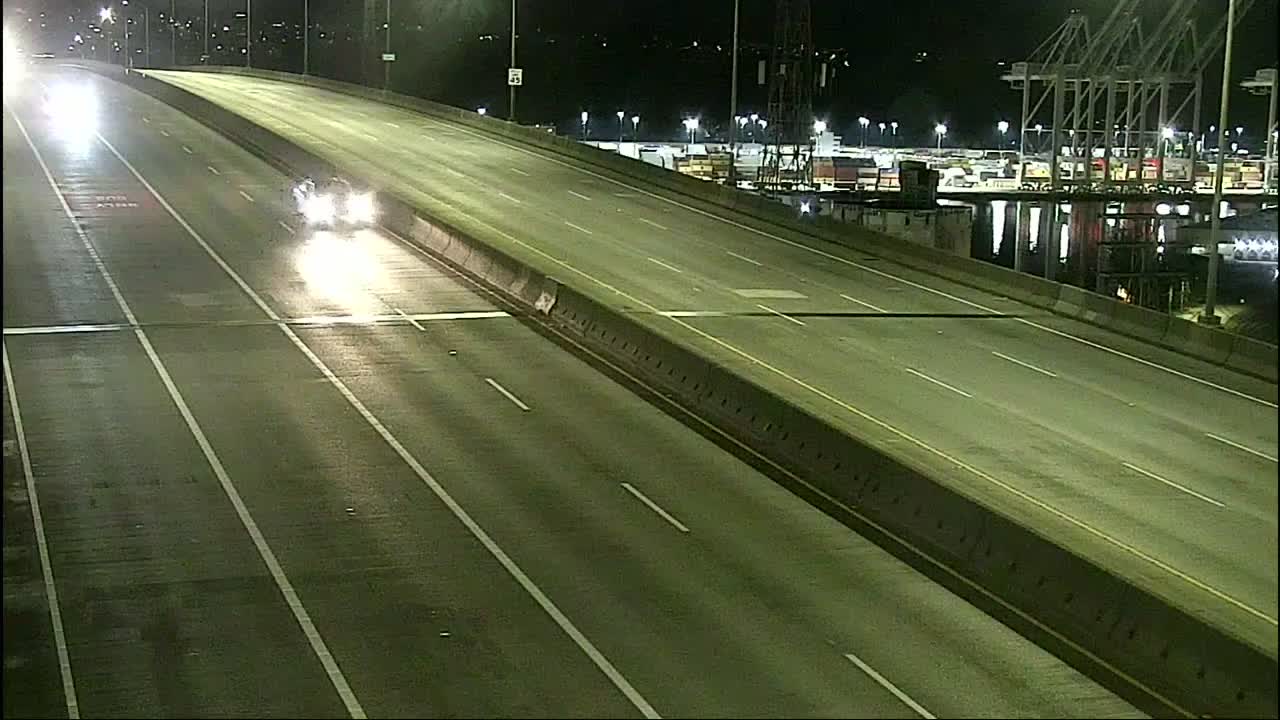
The low bridge is reserved for transit, freight, emergency response, and Harbor Island access – the city hopes you’ll honor that without the threat of police enforcement.
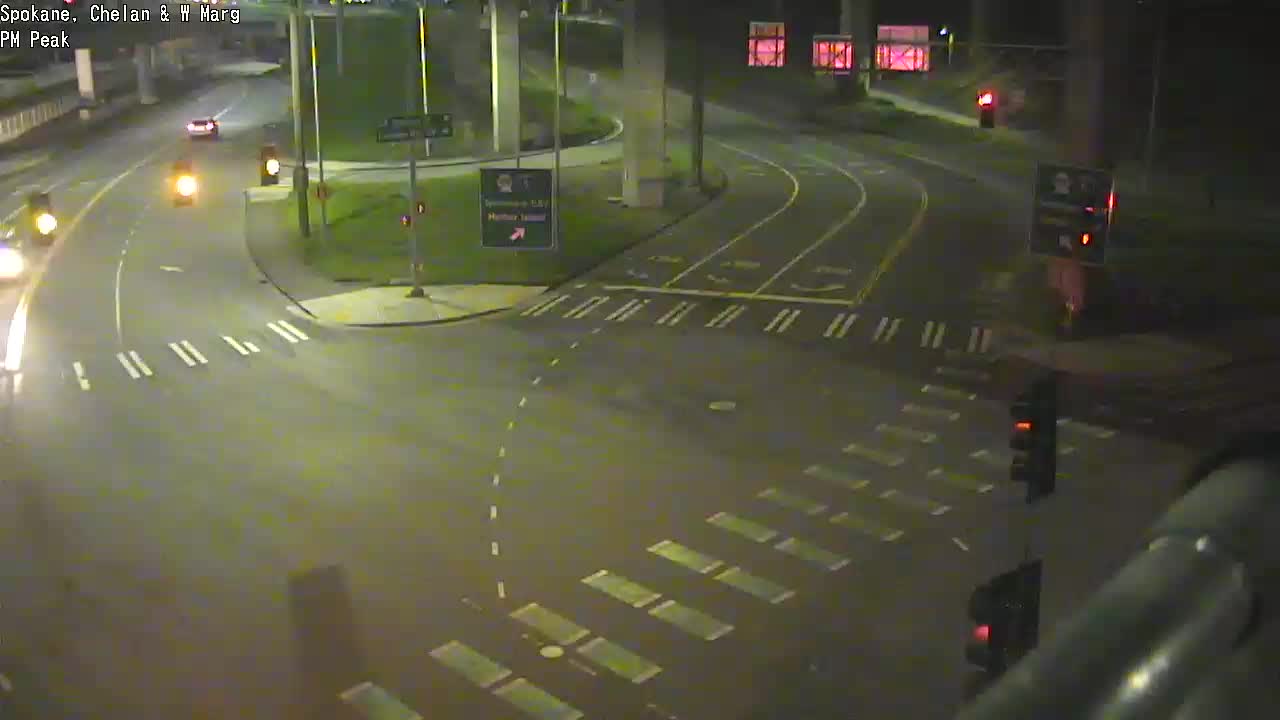

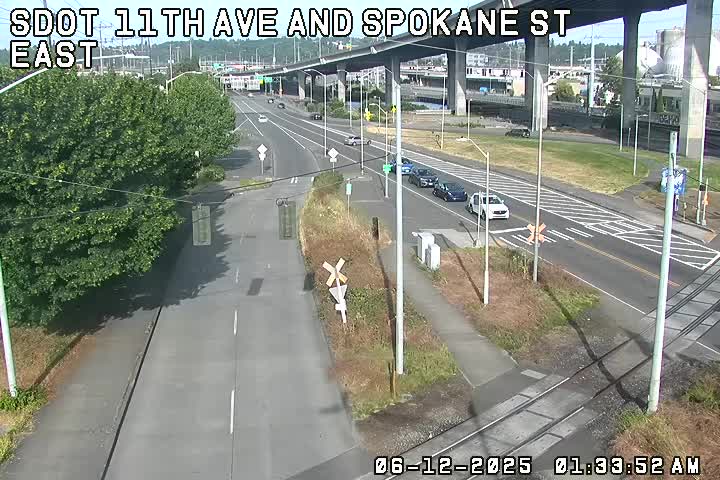
The main alternative across the Duwamish River is the 1st Avenue South Bridge (map) – that’s also how to get to I-5, cutting across Georgetown.
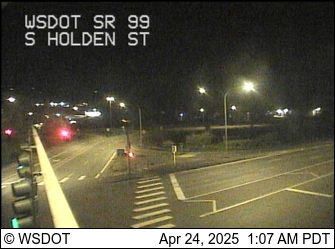
You also can cross via the South Park Bridge (map).
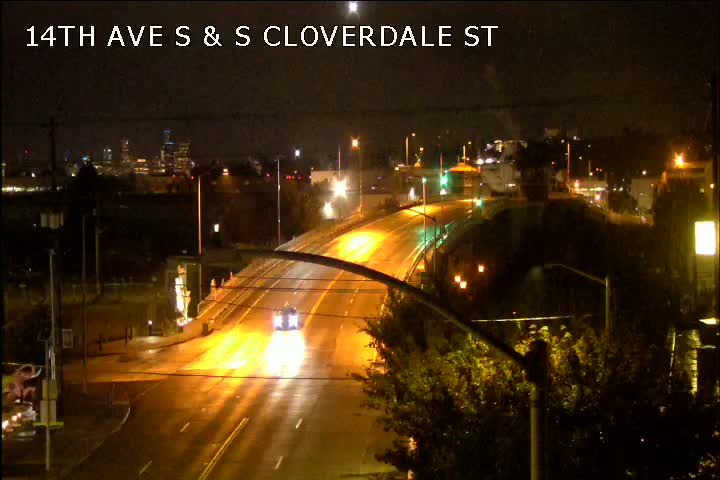
Check the @SDOTBridges Twitter feed to see if a bridge is opening for marine traffic.
OTHER LINKS
SDOT’s traffic map
Our traffic-cams page
Metro‘s canceled trips as the Reduced Schedule continues
Sound Transit Route 560’s Reduced Schedule
West Seattle Water Taxi schedule
Let us know what you’re seeing on your alternate commute – comment, or text (not if you’re at the wheel!) 206-293-6302.
While you’re out walking, be on the lookout for Chris‘s stolen bike:
My bike was stolen off the back of my car sometime last night. As it was locked with a cable lock onto my bike rack, the thieves cut the bike rack off and made away with the rack with the bike stuck on it. It is a woman’s bike, pale metallic blue with the model named Mia on it. It was stolen from the front of my house on 34th Avenue SW by Willow St . Due to health conditions, this was my main source of exercise.
It looks like this stock photo – plus fenders and a carrier. The theft has been reported to police.
 King County’s numbers report is back after a day away, and that tops tonight’s roundup:
NEWEST KING COUNTY NUMBERS: From today’s Seattle-King County Public Health news release:
2,496 confirmed positive cases (up 166 from Monday)
164 confirmed deaths (up 14 from Monday)
23 people are currently staying in King County isolation and quarantine facilities
To compare – one week ago, the numbers were 1,359 King County cases, and 100 deaths.
STATEWIDE NUMBERS: Still no new updates on the state Department of Health page, but they’re working on a fix, the governor said today.
WORLDWIDE NUMBERS: Find them – nation by nation – here.
NO EXTENSION DECISION YET: The governor had another media briefing today (here’s our coverage, with video) and said he’s “likely” to extend the “stay-home” order but not ready to make an announcement yet. (The current expiration date is Aprll 6th, next Monday.)
BE A MAKER: The governor also exhorted our state’s manufacturers to pivot to making things that the pandemic fight requires – PPE, test sample vials, etc. (At least one here in our area has already stepped up to help out – we’re working on that story for tomorrow.)
SHOULD YOU WEAR A MASK? You’ve probably heard that the federal government is mulling new guidance on this topic. SKCPH addressed the topic in today’s news release, saying, “Staying apart from other people is our best protection against COVID-19, but non-medical masks can be a supplement.”
GOT SPARE SANITIZER? Here’s a local collection drive.
GOT SOMETHING TO OFFER OR REQUEST? Remember that West Seattle Support is up and running now at westseattlecovid.recovers.org – co-coordinator Phil Tavel just spoke at tonight’s (online) District 1 Community Network meeting (full meeting report later) and said they’re continuing to ramp up, with dozens of volunteers ready to help, too.
GOT INFO? westseattleblog@gmail.com or text/voice 206-293-6302 – thank you!

After a week-plus of roaming to the south, The West Seattle Turkey is back in the area where it has spent much of the past near-year – Admiral. It was back at Rose De Dan‘s home today – she sent the photo above (and has shared sightings before). From the West Seattle High School area, Rob Braby sent this video:
And Mayra caught The Turkey climbing near 39th/Admiral:

During its recent meanderings, The Turkey was seen as far south os south Gatewood, and was even spotted crossing busy streets in The Junction. Thanks for the sightings!
Today is the once-every-decade U.S. Census day – so local leaders have sent this reminder for everyone to participate:
Mayor Jenny A. Durkan, Congresswoman Pramila Jayapal, Council President Lorena González, and Councilmember Teresa Mosqueda today urged Seattle residents to complete their 2020 Census form and help Seattle access much-needed federal resources. As of March 31, 2020, 42 percent of Seattle residents had completed their Census form, as compared to a nationwide completion rate of 34.7 percent.
From March 12-20, households received the first of several invitations to participate in the 2020 Census. This invitation included a unique ID code that can be used to complete the Census online. Seattle residents can go online today, with or without that code, and fill out their Census form at www.my2020census.gov. The Census form can be completed online, by phone, or by mail. A citizenship question is not included on the 2020 Census form.
Last week, Mayor Durkan sent a letter to the United States Census Bureau requesting that the Bureau extend the 2020 Census deadline from August 14, 2020 to September 30, 2020. The letter to the Census Bureau was co-led by Mayor Bill de Blasio of New York City, Mayor Lori Lightfoot of Chicago, and Mayor Sam Liccardo of San Jose. In total, 40 bipartisan mayors from across the country signed onto the letter calling on the Census Bureau to extend the Census deadline. The Census Bureau has not yet responded to the mayors’ letter.
You can read the rest of their news release here.

West Seattle’s only movie theater – the historic Admiral Theater – remains closed, but you can support its parent company Far Away Entertainment – a local group of small moviehouses – by watching a movie at home. The announcement:
Magnolia Pictures is offering THE WHISTLERS, ONCE WERE BROTHERS: ROBBIE ROBERTSON AND THE BAND, and SLAY THE DRAGON as part of a virtual cinema program designed specifically to support our movie theaters.
Through Thursday, April 2, 100% of net proceeds from tickets sold will go back to our theaters, and beginning Friday, April 3. Far Away Entertainment will receive a typical studio 50/50 proceed split.
Tickets will range from $6.99 to $12.00.
If you’re new – the Admiral is an almost-80-year-old moviehouse that’s still standing only thanks to some dedicated community members, including its ownership and management. Three years ago, it had a “grand reopening” celebration after renovations that turned it into a first-run fourplex.
 (WSB photo from last month, MV Doc Maynard at Seacrest)
During past traffic crunches, like Alaskan Way Viaduct closures and the Viaduct-to-Tunnel transition, the West Seattle Water Taxi has seen a surge in ridership. The high-rise West Seattle Bridge closure comes at a time when the COVID=19 “stay-home order” has already dramatically reduced ridership, but we were still curious how it’s affected WT usage, so we asked King County.
Spokesperson Torie Rynning provided the newest numbers (PDF). Ridership was actually lower last week than the week before – 167 morning riders total for 3/23-3/27, 196 pm riders, compared to 173/337 for 3/16-3/20. We don’t have the exact numbers for the same period last year but in a Monday post on the Water Taxi blog, Rynning wrote that ridership is overall down 90 percent. That post also addresses the question of whether WT service will be increased because of the bridge closure: For now, it’s clearly not needed, but, “We’ve already assembled a task force that is developing various plans to ramp back up and to add service when ridership demand increases.” In the meantime, the WSWT remains on its five-day-a-week, AM/PM-commute-times-only schedule TFN (in normal times, it would be on the 7-day-a-week spring/summer schedule by now).
2:11 PM: Just underway – Governor Inslee has gathered media by phone and videoconference “to provide an update on the state’s COVID-19 response.” The pre-event advisory adds, “The governor plans to focus on the need for manufacturers to step up and provide personal protective equipment (PPE) and other supplies in the fight against the spread of the virus.” We’re carrying it live so you can hear for yourself what he has to say; we’ll also publish as-it-happens notes, and we’ll leave the video window up since TVW usually makes the archived version available shortly after the event ends.
He reminds everyone that whatever the difficulties we’re all going through, we need to keep in our hearts the 200+ people who have died. He says now that it’s April, this could be the “decisive month.” He moves into the expression of appreciation for those working to make PPE available. He introduces business reps who have been working on this effort. The state has distributed more than a million pieces of PPE already, from “three supply lines.” But along with protection equipment, items for testing – like vials – are needed too, “What we have done so far is not enough.” Orders out to the feds aren’t being fulfilled quickly enough, so “We need to seize our own destiny,” as the state did in World War II. So he’s asking “all businesspeople, all skilled workers, all leaders” to ask themselves if they could “change what they’re making now” and instead make what’s needed. “This is a moment that counts.” If you can, go to coronavirus.wa.gov and sign up to help.
After a couple testimonials from business reps, the governor says even making part of a needed piece of equipment is important. He then moves on to another topic: He’s given “guidance” to mortgage companies to find ways to help mortgageholders. He also notes that 130 National Guard members are mobilizing to help food banks across the state, in many cases replacing volunteers who need to stay home because they’re in at-risk groups. He also says he’s concerned about reports of hate crimes – “all humanity ought to be respected in this fight.” Then he acknowledges encouraging reports about how social distancing is working in our state, even better than in some others. But he says we can’t let up now – so it will be likely the stay-home order will be extended, though he says he’s not ready to make that announcement now – more likely in the next few days.
And he reminds everyone to fill out their Census form “so we get treated fairly” with an accurate count of how many people are in the state.
2:31 PM: On to media Q&A. Asked whether his potential extension of the stay-home order would be for a full month, the governor said he hasn’t decided yet, lists the various factors he’s been monitoring, and says “we’re going to make the right decision … soon” because “victory … is the (only) option.” Other questions include potential additional duties for the National Guard – would they be used in enforcement? Highly unlikely, the gov says, especially given that they’ve announced other means of enforcement, such as the reporting/warning system now set up via the state.”The Guard is there to help us mostly with logistics … with some of the construction, delivery of food … life and safety issues.” Another question: Does our state have a ventilator shortage? If people obey the stay-home order, probably not, Inslee replies. … He’s also asked about the backlog in unemployment filings, and says he understands the frustration – “We’ve been hit by an avalanche of unprecedented claims” and the state is hiring 200 people to help process them “as fast as possible.”
2:58 PM: The governor wraps up. As noted above, TVW should have the archived version of the video turned around soon.

The photos and explanation are from Hal:
A neighbor left a nice note in my mailbox. I don’t know who left it but it was very nice. I drew a heart on a separate piece of paper and taped them both to my house’s front window, I thought maybe the person who wrote it might see that it was appreciated.
Thanks to the friend who suggested Hal share it with us, so we could share it with you!
This came out last night but we didn’t see it in time for the nightly roundup. Now that we’re ending the first week of the “Stay Home, Stay Healthy” order, Gov. Inslee‘s office continues to issue clarifications on what’s essential and what’s not. The original proclamation is here; the original list of essential businesses is here. The new guidance (see it here) starts with a reiteration that “Automotive repair facilities are deemed essential.” (WSB sponsors West Seattle Autoworks and Swedish Automotive both have no-contact methods of getting your car taken care of.) The guidance touches on a variety of other areas including “outdoor maintenance” – “Outdoor maintenance, including vegetation, is deemed essential only when necessary to prevent spoliation, avoid imminent damage, or address emergency repairs.” And there’s a mention of recreation, including, “Golf is not deemed essential.” (City golf courses including West Seattle are closed anyway.) As for enforcement – that’s explained here.
P.S. The governor has just scheduled a media briefing for 2 pm today. You can watch live here.

If you overloaded on hand sanitizer and have an unopened bottle to share, that donation bin is set up just inside the door at Easy Street Café (California/Alaska) in The Junction. As explained via Instagram, it’s for neonatal intensive care nurses. 8-ounce bottles of gel (not spray) preferred, not expired; the bin is accessible 7 am-noon daily through Sunday. (Easy Street remains open for takeout – as shown on our ongoing West Seattle list – and proprietor Matt Vaughan and son Archie have been delivering online-ordered music, too.)
The pandemic brought the usual schedule of monthly community meetings to a stop … but this month, some will regroup online, starting tonight with the District 1 Community Network. At 7 pm via Zoom, its agenda includes hearing from City Councilmember Lisa Herbold and discussing potential new initiatives for the group. Here’s how to watch/listen – this Zoom link, or join by phone:
Phone number: 669-900-6833
Meeting ID: 402-802-2236
Then enter # to join meeting as general caller
(Remember that meeting etiquette is to stay muted.)
5:40 AM: The high-rise West Seattle Bridge remains closed.
The low bridge is reserved for transit, freight, emergency response, and Harbor Island access – the city hopes you’ll honor that without the threat of police enforcement.
The main alternative across the Duwamish River is the 1st Avenue South Bridge (map) – that’s also the main route to I-5.
You also can cross on the South Park Bridge (map).
Check the @SDOTBridges Twitter feed to see if a bridge is opening for marine traffic.
OTHER LINKS
SDOT’s traffic map
Our traffic-cams page
Metro‘s canceled trips as the Reduced Schedule continues
Sound Transit Route 560’s Reduced Schedule
West Seattle Water Taxi schedule
Let us know what you’re seeing on your alternate commute – comment, or text (not while at the wheel!) 206-293-6302.
No, not The Turkey this time ….

SAFE CROSSING: Eric Shalit took the photo, and explains:
While out on bicycle earlier (Tuesday), I encountered a Seattle police officer rescuing a family of geese that attempted to cross Spokane Street under the West Seattle Bridge. In the attached photo, he has successfully herded all but one out of the road and is trying to shoo the last baby to rejoin its family in a safe place.
WILDLIFE HOURS? Ellie Vann spotted this owl in the Roxbury Safeway lot, perhaps waiting for its turn at the store:

Thanks for the photos! Always appreciated – westseattleblog@gmail.com or text 206-293-6302
The first full calendar month of the outbreak in King County is concluding. Here’s our nightly roundup:
NO NEW KING COUNTY/STATE CASE NUMBERS: Neither King County nor the state had new case numbers today. The former explains:
The Washington State Department of Health (DOH) is experiencing technical difficulties with their COVID-19 data, which is delaying the Public Health data report of new cases and deaths for 3/31/20. Public Health expects to update again on 4/1/20.
QUARANTINE UPDATE: The county’s daily update did note, “20 people are currently staying in King County isolation and quarantine facilities.” The one in Top Hat, east of White Center, has not opened yet but was projected to be ready in “early April.” We noted a few days ago that the additional modular housing had been moved onto the area where an old office building was demolished. We’ll get an update on its status tomorrow during the weekly phone-conference community meeting with county reps.
SOME PARKING ENFORCEMENT SUSPENDED, BUT NOT ALL: We had sent the mayor’s office a question last week, to date unanswered, on behalf of a reader who thought ticketing people in a 2-hour zone east of a mostly shuttered business district was a bit harsh, considering everyone is under orders to stay home. This provides something of an answer: The city reiterated today that while it’s changed some parking policies because of the COVID-19 pandemic, it’s still enforcing most parking rules.
COMMUNITY CLEANUPS CANCELED: The city says you should still keep watch on the area outside your home, but it’s calling off Adopt-A-Street, Spring Clean, etc., TFN.
CONFUSED ABOUT THOSE FEDERAL PAYMENTS? Are you getting one? How will you get it? The IRS has a FAQ page.
GOT A RUMOR TO CHECK? We’re partial to Snopes, but we noticed today that even FEMA has a rumor-checking page.
LOTS OF SCAMS, TOO: We mentioned again in West Seattle Crime Watch today that scammers continue their evildoing. Here’s yet another page with numerous warnings to heed.
AND PRICE-GOUGING: State Attorney General Bob Ferguson has sent letters to five online retailers telling them to stop or else, and expects he’ll be sending moe.
LOTS OF GOOD OUT THERE, TOO: This morning we spotlighted Highland Park Improvement Club‘s new “Through the Windowpane” neighbor-to-neighbor program.
LAST BUT NOT LEAST: Just got this from Stewart L. – seen from Harbor Avenue SW:

GOT INFO? westseattleblog@gmail.com or text/voice 206-293-6302 – thank you!
 (West Seattle Bridge cracks, from sdotblog.seattle.gov)
As reported here last week, West Seattle/South Park Councilmember Lisa Herbold had questions for SDOT after the sudden bridge closure was announced – a surprise to the council as well as to everyone who uses the bridge. Tonight she has published an update including answers from SDOT. You can read her update in its entirety here (including a recap of Monday’s briefing, which we covered here). Below, the questions (in bold) and SDOT answers that are part of her update:
SDOT Answers to Council Questions
SDOT has answered some of the questions sent by my office and the City Council. Here’s a link to responses from SDOT so far. Below are highlights:
Has SDOT received word from the Coast Guard about flexibility re: times the bridge can remain open w/o or with limited closures?
The Coast Guard has broadcasted a notice to non-commercial vessels with a request to time transit and requests for openings during non-peak commute times. We are making a deviation request for am/pm peak close periods that, if they are not objected to by local mariners, can last for 180 days. Additionally, we can request an official rule change for a close period, but that is a 6-month process and subject to any objection from the local maritime community.
Can SDOT allow vehicle traffic on the lower bridge overnight? I have heard from more than one person whose work shift begins at 3 a.m., when traffic is lighter.
We understand the inconvenience the closure of the High Bridge poses to the West Seattle community. In light of the current public health emergency, our top priority is emergency access to hospitals and protecting the supply chain, so we are reserving access to emergency vehicles, freight, and transit, and working with our partners at SPD, SFD, the Port, and Metro to determine the extent of the access limitations. Detour signs are posted and SPD officers are stationed at either end of the Low Bridge to direct GP traffic away from the bridge. We are monitoring traffic on the Low Bridge 24-hours a day from our Transportation Operations Center. As new traffic patterns develop, we may be able to adjust access.
I have heard from several COVID-19 first responders (firefighter, ER nurse) who must leave the peninsula for work, and from an immunology researcher at UW working on COVID-19. Could the lower bridge be opened for them?
We acknowledge it is critical for doctors, nurses, researchers and first responders to get to their jobs. At the same time, we must reserve access to the Low Bridge to emergency vehicle transporting critically ill patients. Many people who live and work in West Seattle serve many kinds of essential functions – we need to maintain equity for all of them. The Low Bridge is currently open to essential workers who get to work by taking transit, walking, and biking. It’s also open to essential workers who need access to Harbor Island and T-5 and people using emergency vehicles and transporting freight as part of their jobs. For essential workers who are driving private vehicles, they are directed to the 1st Ave S Bridge.
Please explain SDOT’s procedures for providing information the Council regarding ongoing inspections for potential significant problems that could lead to closure of major roadways or structures.
SDOT regularly conducts inspections of bridges in keeping with Federal requirements. These inspections are programmatic in nature, and generally identify preventative maintenance and repair actions, while also tracking the evolution of the bridge structure over time. The load rating project for the West Seattle High-Pass Bridge started in 2019 indicated that the cracking problem was more serious than originally reported in the consultant study we commissioned in 2014 after cracking at post-tensioning anchorage points was first discovered in 2013. We performed an in-depth analysis through the consultant doing the load rating work. As part of this analysis we needed more accurate mapping of the cracked bridge sections near the anchorage points so we inspected the bridge via Under Bridge Inspection Truck (UBIT), interior inspections of the box girders at the anchorage points and additional exterior inspections in October and December of 2019 and again in March of 2020. As the analysis was coming to a conclusion in March 2020 it indicated that there was a serious load carrying capacity issue with the bridge, we simultaneously noticed that the rate of cracking was increasing at a concerning rate just within the month of March 2020. This rate of increase was unexpected compared to previous months and gave us reason to close the bridge for safety.
The closure of the bridge, while abrupt, followed SDOT’s commitment to transparency and timely communication with the Mayor, City Council and the public on all issues that will or are quite likely to negatively impact their constituents. What led to the short window of time between alerting the Council and the public and the closure of the bridge on March 23 was the rapid acceleration of cracking within an extremely short period of time.
Please provide a timeline of SDOT’s inspections of the West Seattle Bridge that lead to this decision.
We regularly inspect our bridges. The events of the past few days is a notable example of why those efforts are critical and why we take this responsibility so seriously. During a 2013 routine inspection of the West Seattle Bridge, our bridge inspectors discovered four sets of cracks in the bridge support structure. We’ve inspected the bridge every year since then; twice as frequently as required by federal guidelines. Since then, we’ve closely monitored and managed the cracks. In 2014, we installed real-time data collection equipment to aid in these efforts, which allowed us to remotely monitor the width of existing cracks on the bridge. At this time, we also began conducting more frequent inspections and implementing best-practice maintenance and repairs. Those annual inspections did not indicate a need for repairs that would significantly disrupt standard use of the bridge. During a 2019 assessment of the bridge’s ability to carry heavy loads, our structural engineering consultant mapped the cracks in the bridge and discovered that they had grown since the previous year’s inspection. We and our engineering consultant continued to closely monitor these cracks and carry out critical maintenance by injecting epoxy into them to protect the steel reinforcements. In late February 2020, our engineering consultant recommended that the rate of deterioration made it necessary to consider traffic restrictions to ensure public safety. As we came to the same conclusion late last week, while we were drafting a lane-reduction plan and preparing to initiate conversations with City leaders and the community, our structural engineering consultant notified us that they had conducted new analysis raising larger concerns. We conducted several observations over the next few days and on Monday, March 23, we found significant new cracking. This confirmed that cracking had rapidly accelerated to the point where there was no other option but to immediately close the bridge.
(in response to a question about 2013, 2016 and 2019 changes to federal bridge load rating standards):
Federal guidelines require that bridges in the National Highway System be inspected every two years (see National Bridge Inspection Standards in 23 CFR 650C). During a 2013 routine inspection of the West Seattle Bridge, our structural engineers discovered four sets of cracks in the bridge support structure. We have been closely monitoring these cracks since then, installing real-time data collection equipment in 2014 allowing us to remotely monitor the bridge condition, and began conducting more frequent follow up inspections in 2014, 2015, 2016, 2017, 2018, 2019, and 2020.
In an unrelated process, the FHWA issued new requirements in 2013 that DOTs reevaluate all bridge load ratings by 2022 due to the growing use of heavier trucks for specific kinds of emergency response and construction vehicles. This required SDOT to re-evaluate the maximum vehicle weight that 69 bridges could safely support. We began these load rating revaluations in 2015 and started the West Seattle Bridge reevaluation in mid-2019, according to our planned schedule.
Please provide the most recent list of SDOT’s assessment of Seattle’s bridges (including ratings).
Each year Roadway Structures updates their Project Rating Criteria List based on the previous years’ bridge condition data and rating factors that prioritize local concerns including equity and transportation system impact. The 2019 Project Rating Criteria for SDOT’s bridge inventory is being updated and will be ready the week of 3/30.
Can traffic signals at the 5-way intersection at West Marginal Way, Spokane Street, Delridge Way be adjusted to better serve new traffic patterns? One constituent said they had to wait through 5 light cycles to get to Spokane Street from West Marginal during the afternoon with relatively light traffic.
We know the 5-way intersection has been a challenge even prior to the High Bridge closure. The current intersection design is intended to maintain all potential movements and separates each leg to remove potential conflicts. With increased demand on the intersection as a result of the High Bridge closure, SDOT will re-evaluate the intersection to see whether any design or operational changes can help address congestion while maintaining safe operations.
This signal is on our high priority emergency list to be upgraded so that the signal system is interconnected to our central system. This will allow for us to adjust signal timing actively based on new traffic patterns. These upgrades also include improved detection to better facilitate new priority movements. This work will be prioritized after our work on Highland Park Way & Holden and our target is to complete it within the next 2-3 weeks.
What was the original design vehicle and what would we use today?
The bridge was originally designed for a design live load commercial vehicle designated as HS-20 (like a large commercial tractor-trailer truck but slightly less axel load than an articulated bus). Since the bridge was brought online in 1984, the size and loading of commercial vehicles have continued to increase as indicated by the much larger HL-93 design loading that is used to design new bridges today. Note that HL-93 loading is not a specific commercial vehicle type, but rather a requirement to choose the worst load combination presented by combining either an HS-20 or Heavy Tandem Trailer with a distributed lane load. The ‘93’ refers to the year that this loading type was adopted as the governing load combination for bridge load rating calculations. This load combination captures the loading of the larger articulated buses that are in use today.
Looking at the full Q&A document linked above, this one is of particular note:
The November 2018 Move Levy Workplan (i.e. levy “re-set”) noted 16 bridges scheduled for seismic improvements from 2019 to 2024; the 2020-2025 SDOT CIP “Bridge Seismic – Phase III” item noted the 16 bridges. Why was the West Seattle Bridge not included in the 16 bridges?
There is a very significant need for seismic retrofit throughout SDOT’s bridge inventory. The list of 16 bridges chosen for the current levy was based on bridge assets with the most significant seismic vulnerability and highest degree of impact if a failure under seismic loading were to occur for each region around the city. The live load capacity issues we are seeing with the WSHB are distinct from potential seismic vulnerabilities that were intended to be addressed with the Move Seattle Levy. Note that the repairs that we will need to make to return vertical live load capacity to the bridge will not necessarily address other components in the bridge that are vulnerable to lateral seismic loading.
As part of the City of Seattle’s efforts to invest in transportation infrastructure and public safety, the Move Seattle Levy is funding the replacement of the Fairview Ave N Bridge and the seismic reinforcement of 16 other bridges. The Levy is also funding replacement planning studies for 10 additional bridges to help us better understand the size of Seattle’s maintenance backlog, assess and manage roadway structure maintenance needs, and maximize future investments (for example, this includes the recently completed the Magnolia Bridge Planning Study and Ballard Bridge Planning Study currently underway).
Here are a few examples of upcoming / ongoing bridge projects funded by the Move Seattle Levy:
• Fairview Ave N Bridge Replacement Project: This South Lake Union bridge was built over 65 years ago and is the last wood-supported bridge on a major road in Seattle. The timber piles which hold up the western half of the bridge are decaying and the concrete girders which stabilize the street on the eastern half of the bridge were cracked. While safe for travel, the bridge was structurally unstable and vulnerable to earthquakes needed to be replaced. We closed this bridge in late September and construction is expected to last approximately 19 months.
• Cowen Park Bridge Seismic Retrofit Project: This Ravenna bridge was built in 1936, prior to the modernization of the seismic design code. Seismic improvements are needed to reduce the bridge’s vulnerability to earthquakes. Construction on the Cowen Park Bridge began in fall 2019 2019 and will last approximately 6 months.
• W Howe St Bridge Project – Seismic Retrofit: The bridge over 32nd Ave W in the southern portion of Magnolia was constructed in 1946 to provide access across a steep ravine. The all steel structure is tall and slender and was identified as seismically deficient. Construction began on this project in late 2019.
Our bridge-closure coverage so far is archived here.



| 113 COMMENTS