
West Seattle, Washington
13 Saturday
 One more transportation-related meeting of note has just been confirmed for tomorrow: The West Seattle Transportation Coalition is on its new every-other-month schedule, and the year’s first meeting is Thursday (January 26th), 6:30 pm online. Major topics are the West Seattle low bridge and the Fauntleroy ferry-dock replacement project. For the low-bridge update, they’re expecting a guest from SDOT – remember that though the bridge is back to surface use as well as maritime use following its three-week closure, it’s not back to normal yet as one turning cylinder is being overhauled and three more will follow, with other projects in the works that already were planned for this year. You can attend the meeting online here or by phone at 253-215-8782, meeting ID 819 3711 6466, passcode WSTC.
 (Metro photo – RapidRide station work on Delridge)
After years of delays, RapidRide H Line – the conversion of what’s currently Metro Route 120 – is locked in for March, on the day of the bus system’s twice-annual service change. In this case, that’s Saturday, March 18, confirms Metro spokesperson Jeff Switzer. (The conversion originally was expected to happen in 2020.) Recent developments have included confirmation that the H Line will follow the 120’s current pathway in downtown Seattle, ending at Third and Virginia, while promising to “assess the feasibility of extending RapidRide H Line to South Lake Union in the future.” According to the latest email update, some of the finishing touches along the route will be some work on SW Roxbury as well as installation of transit lanes starting in the next week or so “along 16th Ave SW between SW 107th St and SW 116th St [in White Center], and on Ambaum Blvd SW between SW 128th St. and SW 148th [in Burien].” If you have construction-related questions, the project team’s next online drop-in Q/A session is tomorrow (Thursday, July 26th), 5-6 pm, online (meeting ID: 228 271 1759) or by phone (253-215-8782). The H Line will be West Seattle’s second RapidRide line, after the C Line, which launched in September 2012.
 Metro continues canceling some trips and temporarily suspending some routes. Last week, we reported the number of buses that needed to have a steering defect fixed was higher than first disclosed – more than 200, about 10 percent of the fleet; Metro said on Thursday that 61 were still awaiting repairs. But what about the other half of the equation – the driver shortage?
Metro spokesperson Jeff Switzer explained, “Metro has an ongoing recruitment campaign for part-time operators, which is the primary way we increase our transit operator ranks. From there, we promote to full-time, which allows operators to deliver more service each day.” Currently, they have 2,513 operators (drivers) – 1,971 full-time, 542 part-time. How many do they need? According to Switzer, “Metro estimates it needs 99 full-time equivalent transit operators, which can be a varying combination of part-time and full-time operators. This could be in the neighborhood of 102 part-time operators and 38 full-time operators.” Last year, Metro “trained and hired 167 part-time transit operators and promoted 152 full-time transit operators.” They have training classes for both categories, with four part-time classes and three full-time classes scheduled this month and next.” Need a job? Switzer has a pitch for you: “We encourage people to consider joining our world-class organization, either as a transit operator, vehicle maintenance staff or other open Metro positions posted on King County’s jobs page.” Here’s the link for transit openings; part-time driver is listed at a range of $26.57 – $37.96 hourly.
11:28 AM: Even before the three-week closure of the West Seattle low bridge (formally, Spokane Street Swing Bridge) ended last Friday afternoon, the City Council’s Transportation and Public Utilities Committee had scheduled a briefing on the situation. That just happened during the committee’s meeting this morning.
SDOT‘s Meghan Shepard led the briefing, starting with a brief explanation of how the low bridge works, and a recap of what went wrong, resulting in its three-week closure to street/path traffic.

In addition to the leaking and electrical problems, SDOT found and fixed valve problems too:

(Here’s the full slide deck.) If they kept operating it with the leaky turn cylinder, they ran the risk of a “catastrophic failure” of other parts, Shepard said. It was reiterated that all four of the turn cylinders were scheduled for refurbishment this year anyway – this just moved up the schedule. They’ll all be removed and replaced sequentially. However, SDOT’s bridges/roadway structures leader Matt Donahue said – in response to a question from West Seattle City Councilmember Lisa Herbold – they’re not sure yet how long that’ll take, because they need “more time to determine everything that went wrong” with that cylinder, and to integrate technology upgrades. So with no timeline yet for all the cylinder repairs/overhauls, there’s no timeline for how long the bridge will be in the one-less-turning-cylinder, slower opening/closing mode. Herbold also asked how the resulting longer wait times are being communicated to bridge users; that too is a work in progress, Donahue said.
The briefing also included recaps of how SDOT quickly implemented a temporary protected bike lane – the 1st Avenue S. section has since been dismantled but the West Marginal Way one will stay indefinitely since a permanent PBL is already planned there; Shepard said the PBL was important because an average of 450 people bicycle across the low bridge daily. She also noted the week during which free bus/Water Taxi rides were made available, but said they don’t yet have metrics for how many people took advantage of the offer.
ADDED 12:45 PM: Here’s Seattle Channel video of this morning’s meeting – the low-bridge briefing starts 45 minutes in:
ADDED 8:41 PM: SDOT replied to our followup question seeking more information about the potential timeline. From spokesperson Ethan Bergerson:
We will overhaul four cylinders (two on each side of the bridge) before the bridge is once again opening and closing at the normal speed. At this point, we are considering replacing each cylinder one at a time in order to reduce the risks of more complications to bridge operations. This will be sequential as you described, but we haven’t determined the exact order.
We don’t have a time estimate yet, and it may take us several months to overhaul the entire set. We will continue to provide updates as the timeline becomes more clear. There are a few reasons for this uncertainty:
Our contractors and vendors are developing the scope and schedule for repairing the first cylinder. This will inform the overall schedule for all four cylinders, which will have to be aligned with the other improvements planned for the low bridge this year.
We won’t know the full extent of repairs needed for each of the other cylinders until after they have each been removed and dismantled so that we can see inside.
The time to obtain the necessary parts is still unknown. Many of these parts are unique and must be specially ordered or manufactured for this project, and potential supply chain issues are difficult to predict.
We will need to work with the US Coast Guard to schedule future cylinder removal and replacement activities in advance.

12:03 PM: Three weeks after closing to street and path traffic because of mechanical trouble, the West Seattle low bridge is about to reopen. Joseph sent that photo showing workers removing fencing from the east side of the low bridge a little while ago; we had moments earlier asked SDOT for a status update; they’ve just confirmed that reopening is imminent:
Seattle Department of Transportation has completed emergency repairs to the Spokane St Swing Bridge (low bridge), and the bridge will reopen this afternoon (Friday, January 13). Crews have already begun removing fencing and traffic control equipment around the bridge, and expect to finish removing signs and barricades by 2 p.m.
Since removing a leaky turn cylinder last Sunday night, they’ve been testing bridge opening/closing without that cylinder, which they warn will mean that opening for maritime traffic will take longer. SDOT has more info here, including the plan for the road sections that had been converted to temporary bike lanes (in short, 1st Ave. S. will be removed, W. Marginal will not); meantime, watch the low-bridge camera for reopening:
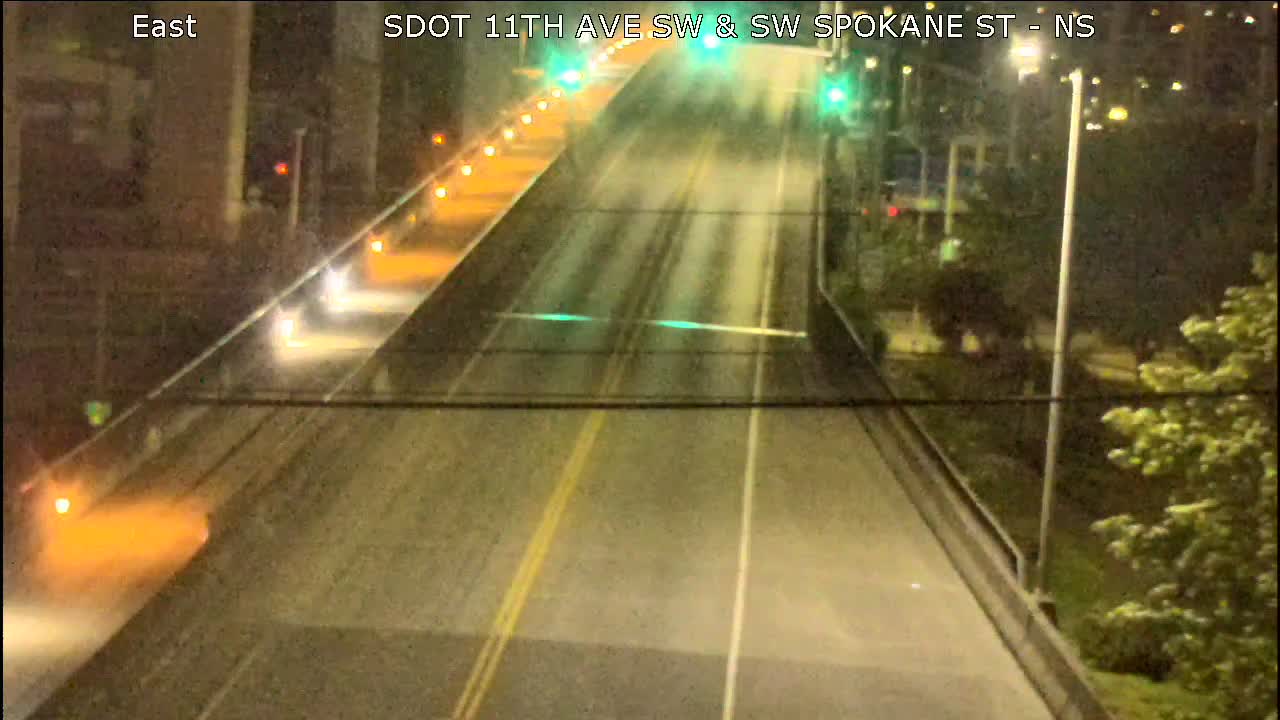
2:25 PM: Just reopened.
Tomorrow marks two weeks since the West Seattle low bridge closed to street/path traffic. Two notes tonight:
 (SDOT photo)
CYLINDER TROUBLESHOOTING: The leaky turn cylinder removed from the bridge last Sunday is undergoing diagnostic work at an offsite shop. SDOT tweeted photos today including the one above, saying, “Spotted already: a failed main seal!” While the cylinder is being repaired, SDOT hopes to be able to open and close the bridge without it – which, as we’ve reported, will take longer – and continued testing along those lines today.
BRIEFING PLANNED: The City Council’s Transportation and Public Utilities Committee has scheduled a briefing on the low-bridge situation for its meeting next Tuesday, 9:30 am. You can go to City Hall (600 4th downtown) or watch via Seattle Channel; the meeting also has a public-comment period – see the agenda for more on that.
We’ve been asking Metro for a week about updated numbers regarding how many buses have been returned to service, one month after a reader tip led us to first word that a steering “defect” had required them to pull 126 from service. We finally just got that information: First, Metro says that after additional repair, it actually needed to make the repairs to 208 buses. As of this past Tuesday, 147 of those have been returned to service, and 61 are still waiting for repairs. The work is expected to “continue through the end of February unless [manufacturer] New Flyer experiences a supply chain delay.” The buses’ removal from service has helped exacerbate the ongoing situation with trip cancellations and route suspensions.
By Tracy Record
West Seattle Blog editor
Washington State Ferries‘ staffing shortage isn’t just about difficulty in hiring.
WSF says it’s also having trouble holding onto workers, WSF says, for reasons including abusive customers.
So, WSF managers said today at the first of two online community meetings, they’re trying something new: Violate the Code of Conduct, and you’ll get handed a yellow card. Rule violations could even lead to WSF calling in the State Patrol to have you “trespassed” – ordered to stay away from WSF vessels/facilities. Here’s what the card will say on its two sides (printed on yellow stock, WSF says):


Ferry riders will hear announcements about this soon. The new effort is needed, WSF says, because its employees are subject to abuse including threats and racist and sexist insults. “We can’t rebuild this workforce if employees don’t feel it’s safe or if they feel we aren’t supporting them.” Will line-cutting be included? asked one meeting attendee. No, WSF says, as most of that happens off WSF property.
Here’s what else the hour-and-a-half meeting – which will be offered again at 6 pm Thursday – touched on:
BACK TO THE STAFFING SHORTAGE: As was explained at the last round of ferry-system community meetings six months ago, WSF is short on people, and that’s a major factor holding up full restoration of service on many routes. (The Fauntleroy-Vashon-Southworth route has been on two boats instead of three for many months.) So WSF leaders including top boss Patty Rubstello and chief of staff Nicole McIntosh exhaustively explained training and recruiting efforts, after detailing the shortage:

They’re also working on accelerating training programs aimed at moving employees up the ladder: “In essence, we’re growing our own.” Once they have more qualified crew members, they’ll be more able to fully restore routes. Another six-week training program starts this weekend. In some cases they’re also trying to make the positions more attractive – offering more full-time work, for example.
SPEAKING OF RESTORING ROUTES: WSF is currently testing restored full service on the Edmonds/Kingston route, and once that’s declared a success, it’ll be on to testing restored full three-boat service on the Fauntleroy/Vashon/Southworth route. No projected date, though.
VESSEL SHORTAGE: Having enough boats is also vital, along with having enough crew. Part of that involves maintenance and repair of the current fleet; WSF says three boats that would otherwise be retired soon will have to be kept in service – Yakima, Kaleetan, Tillikum. It’s also working toward building five new hybrid-electric ferries, though the first won’t be ready before mid-2027; M/V Wenatchee is being converted to hybrid-electric and will be back in service on the Seattle/Bainbridge route early next year.
FAUNTLEROY TERMINAL PROJECT: WSF offered quick updates on projects including this one. Rubstello noted that more than 700 community comments have been received in the past year. Next milestone is completion of the Planning and Environmental Linkage study by year’s end. (That appears to be a timeline slip, as the project website lists midyear for completion.) She reiterated that two options are now under consideration – either rebuilding the dock/terminal at its current size or expanding it, in the current location, to 124 to 186 cars. Later, in Q&A, someone asked if a second slip was under consideration. WSF’s David Sowers said it’s not currently in the plan but wouldn’t rule it out if it were shown to have “a significant operational value.”
ONE MORE NOTE: Toward the start of the meeting, Rubstello offered some toplines from the past year:

A recording will be posted to the WSF website, but in the meantime, you’re invited to see/hear the same content presented at 6 pm tomorrow night (with written Q/A accepted during the meeting) – register here to get the link.
P.S. Here’s the full slide deck from the meeting.
(SDOT time-lapse video of Sunday’s cylinder removal)
As we reported on Sunday, SDOT has removed the leaky turning cylinder from the West Seattle low bridge (aka Spokane Street Swing Bridge) and is now doing testing that will help determine how soon it can reopen to street/path traffic. From SDOT’s update this afternoon:
Bridge engineers are continuing to work to reconfigure the eastern span of the bridge to run on one turning cylinder and continue testing to verify when the bridge can safely be reopened. …
Bridge engineers have reprogrammed the computer system which controls the bridge equipment, and are now working to reconfigure the hydraulic system to function with one cylinder. Technicians are replacing the valves and hoses on the hydraulic power unit pumps which send fluid to the cylinders that open and close the bridge. During testing this week, engineers determined that several of these valves were broken and needed to be replaced to ensure the bridge operates safely and reliably.
Once the hydraulic power unit pump valves and hoses have been replaced, bridge operators will continue testing the bridge systems to determine when it can safely be reopened to the public. People may see the bridge moving as we open and close the bridge for these tests.
Once the bridge reopens, the eastern span of the bridge will operate on the one remaining turning cylinder while the broken cylinder is being refurbished. During this time, opening and closing the bridge for passing ships will take about 10-15 minutes longer than usual.
The low bridge has been closed to drivers, riders, and foot traffic since December 23rd. SDOT says the leaky cylinder and others were planned for overhauls anyway – and the breakdown forced the process to accelerate. The cylinder removed Sunday is now at a hydraulic-repair shop.

We photographed that crew working today at 35th/Avalon, and already had an inquiry out to SDOT after a tip Monday from Jon. Today, SDOT spokesperson Ethan Bergerson gave us this outline of what’s changing there – and nearby:
Our traffic signals crews are currently working to replace signal-control equipment and make operational improvements at three nearby intersections. If all goes well, we expect the work at all three signals will likely be completed by the end of the day:
35th Ave SW & SW Avalon Way: We are replacing signal-control equipment and adding a northbound right-turn arrow at 35th Ave SW and SW Avalon Way. This improvement was requested by King County Metro to help with transit operations.
35th Ave SW & Fauntleroy Way SW: We are replacing signal-control equipment and adding a leading pedestrian interval (also sometimes called a pedestrian-first walk signal) to the intersection of 35th Ave SW and Fauntleroy Way SW. This is a safety improvement that gives people walking across the street a few seconds head start before cars get a green light, making pedestrians more visible to people driving. Citywide collision data indicates there has been a 50% drop in pedestrian turning collisions at the intersections where we’ve added this safety feature.
SW Avalon Way & Fauntleroy Way SW: We are replacing signal-control equipment, but there will not be a noticeable change to the way the signal operates from the public’s perspective.
Note: We already added leading pedestrian intervals to the other two intersections a few months ago. We have also recently readjusted the signal timing to give pedestrians more time to cross the street at all three locations.
 (SDOT photo, Sunday night)
On Sunday we told you about the removal of a leaky 7 1/2-ton cylinder from the machine house of the West Seattle low bridge, now in its third week of closure to surface traffic. SDOT says it’s now testing “how the bridge works with a single cylinder,” and that means you might be seeing some bridge movement. This testing, according to SDOT, will enable them to “make an educated estimate of how much longer repairs will take.” The cylinder itself is to be overhauled at a hydraulic-repair shop.
 (SDOT photos)
12:16 PM: SDOT has just sent photos from inside the West Seattle low bridge (aka the Spokane Street Swing Bridge), with word that the next major step in repair work is happening right now. Crews are removing the bridge’s leaky cylinder – after which, SDOT has said, they’ll be able to estimate how long it’ll take to get the bridge back to full service.

This is what SDOT said last week will be done next:
The cylinder will need to be temporarily removed and overhauled off-site. Over the past 10 days, we built and assembled some of the equipment necessary to move the massive cylinder. Once the cylinder is removed, we will re-engineer the bridge’s eastern span to temporarily operate on the single remaining turning cylinder. This work requires reprogramming the control system and testing it to ensure the new configuration is reliable and safe. While the eastern bridge span is running with one cylinder, opening and closing the bridge for passing ships will take about 10 minutes longer than usual.
The bridge has been closed to street and path traffic since December 23rd.
P.S. SDOT director Greg Spotts is play-by-play posting about the removal on Twitter.

2:11 PM: Another photos added from inside. – above, what Spotts describes as “the ‘cradle’ that will receive the cylinder.” SDOT says this is pretty much a day-long operation – when the cylinder comes out, it’ll be on the east side of the “machine house” at ground level, possibly visible via this camera.
2:36 PM: They’re getting closer to cylinder removal:

5:36 PM: They’re still working on getting the 15,000-pound cylinder out. As of about an hour ago, it was secured in its cradle:

6:39 PM: Almost there:

7:33 PM: It’s out:

Now it’ll be taken to an SDOT facility, and then to a hydraulic-repair shop.

While looking for transit-related information, we happened onto a Metro survey – in this case, a survey that’s being used to find participants for a study seeking feedback on “trip-planning tools like maps, schedules, and alerts.” The deadline for the survey is tomorrow; its questions involve demographics and transportation habits. They’re offering incentives – drawings for $100 gift cards among people who take the survey, and $150 compensation for respondents chosen for the study. If you’re interested, you can answer the survey here.
 As promised, SDOT has gone public before week’s end with details of how you can ride the West Seattle Water Taxi and/or Metro buses fare-free for the duration of the low-bridge closure. As SDOT reps told West Seattle Bike Connections on Tuesday, the plan uses the Transit GO app, so if you’re interested, you have to download that if you don’t have it already. Here’s what happens from there, as explained by SDOT:
-Click on “Rewards” and enter code LOWBRIDGE23 to get 1,500 points for your next ride. Please note: there may be a slight delay in these points appearing.
-Tap “Redeem” and then select the free ride of your choice (King County Metro bus or West Seattle Water Taxi).
-Go to “View Ticket” and then confirm your order (required).
-Then, activate your ticket and show it to your transit operator.
-Once your ticket has been used, you’ll automatically be rewarded with another 1,500 points for your next ride. You’ll continue to earn free tickets while this rewards program is in effect.
As for how long that’ll be – how long the low-bridge closure will last – no new info on that. Meantime (as also noted on Tuesday), the funding for the bus/Water Taxi rides is coming from the voter-approved Seattle Transit Measure, a .15% sales tax (15 cents on a $100 purchase).
Tomorrow marks two weeks since the West Seattle low-bridge breakdown left it out of service to street and path traffic. Here’s the latest:
 (SDOT photo)
That’s SDOT director Greg Spotts visiting the low bridge today for a firsthand look at the repair work. (He chronicled his visit in this Twitter thread.) No new estimates of how long the bridge will be closed, though. We asked today if there’s a date yet for removing the leaky cylinder, which SDOT says has to be done before they can estimate a timeline for repairs; spokesperson Ethan Bergerson replied, “We’re continuing our preparations, such as securing all the necessary equipment, and haven’t scheduled the exact day and time yet.” (Back on Tuesday, he said they hoped to remove it within a week.) We also asked how long until they announced details of the plan to offer free Water Taxi and bus rides; Bergerson said, “We are currently working with King County Metro to finalize everything in order to offer free transit. We hope to be able to make an announcement tomorrow.” SDOT reps told West Seattle Bike Connections on Tuesday that the free rides – funded by city dollars – would be available to everyone, not just bike riders, whose only alternative to the low bridge is a lengthy detour about which riders have raised safety concerns.
The low bridge broke down on December 23rd, with SDOT blaming multiple issues, most significantly an “intensified” leak in one of the four 15,000-pound cylinders that open and close the 31-year-old bridge for vessel traffic.
ADDED 10:23 AM: While we await full details, SDOT wants to reiterate what we reported Tuesday night – that the free-ride offer will be available via the Transit GO app, so if you’re interested, you’ll need to download that in advance.
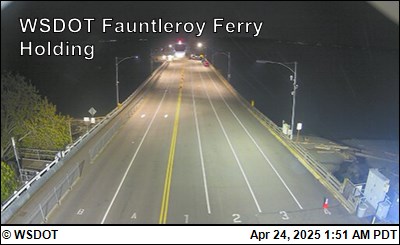
According to Washington State Ferries‘ most-recent Service Restoration Plan update, “Early in 2023, WSF will begin trialing full, three-boat service on the Fauntleroy/Vashon/Southworth route.” How early? The plan is on the agenda for WSF’s winter community meetings, which will be held online next week, as explained in the announcement:
At 12:30 p.m. Wednesday, Jan. 11, and 6 p.m. Thursday, Jan. 12, WSF staff will discuss the ferry system’s service restoration progress, ongoing efforts to address workforce challenges as well as updates on key projects. WSF Assistant Secretary Patty Rubstello will lead the meetings in coordination with the Ferry Advisory Committees, appointed representatives of ferry-served communities who advise WSF.
Both events will cover the same material and are designed to give participants the option to join the Zoom meeting that best fits their schedule. Meeting participants will be able to ask questions and provide comments.
You can register for one or both meetings via links on this page. Meantime, given that vessel availability is a factor in service restoration, we asked WSF today about repair progress on M/V Cathlamet, out of servive since the Fauntleroy crash last July. WSF spokesperson Ian Sterling says it’s expected back in service by the end of March.
Hours after SDOT‘s most-recent update on the West Seattle low-bridge closure, department reps were guests at West Seattle Bike Connections‘ monthly meeting. Among the new information that emerged – more on the plan for free cross-Duwamish travel during the closure:

In response to questions during the online meeting, they clarified that the free rides would be available to everyone interested – not just people with bicycles in tow. As the slide above shows, though the Water Taxi and buses are operated by King County, the city will cover the cost. Since they hope to launch this by the end of the week, watch for details within the next few days.
Another major topic of discussion was the bicycle-detour route SDOT is suggesting, and the refinements they announced this afternoon, such as temporary protected bicycle lanes on sections of West Marginal Way SW and 1st Avenue South. Installation of the cones and other markers will start tomorrow, first on 1st, and may continue into Thursday if they can’t finish tomorrow. Meeting attendees brought up concerns about route conditions – one showed video of a harrowing attempt to navigate a rutted section near the 1st Avenue South Bridge; SDOT said they have engineers working on that section.
As for the repairs themselves, most of what was presented duplicated what was in this afternoon’s update, with an additional emphasis on long-planned work that’s also coming up, beyond the unexpected repairs:

Toward the start of the meeting, SDOT’s Meghan Shepard pointed out that the low bridge was, if not one of a kind, close to it, and that its cylinders all had to be replaced within a year of its 1991 opening – those replacements are what’s lasted the ensuing 30 years, until now,
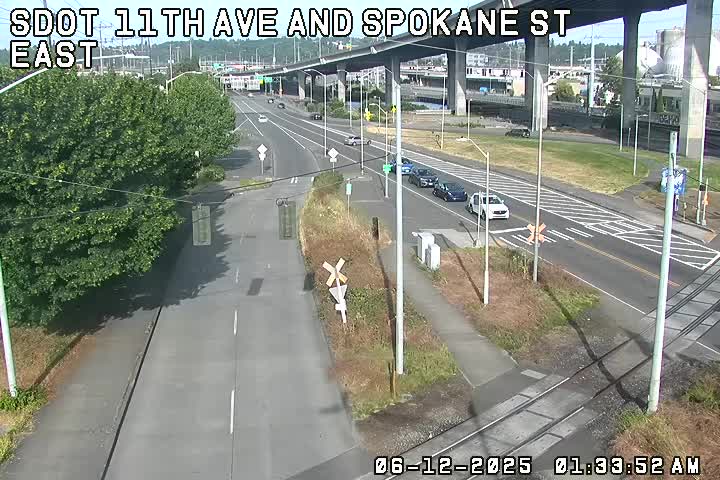
(‘Live’ image from SDOT traffic camera)
More updates this afternoon from SDOT on the West Seattle low bridge, a week and a half after mechanical trouble closed it to drivers, riders, and pedestrians. Still no estimate, though, on how much longer the closure will last. First, key points from the repair-related update, followed by the detour-related update:
We have made significant progress on repairs, including replacing 500 feet of damaged underground high-voltage power cable. However, there is still a lot to do as we prepare for the mammoth task of removing a significantly damaged 15,000-pound hydraulic turning cylinder, one of the two cylinders responsible for turning the 14 million-pound eastern side of the moveable bridge. Last week we estimated that the bridge would be closed for a minimum of 2 weeks. We have made steady progress since then and will know more about the remaining timeline after we remove the cylinder.
Here’s what SDOT says went wrong:
1) A 15,000-pound hydraulic cylinder that moves the eastern side of the bridge is leaking fluid. We will need to remove and completely overhaul this cylinder as part of our repairs.
2) While we were addressing other electrical and mechanical issues last week, high tides and heavy rain flooded an underground power conduit causing an electrical short to over 500 feet of high-voltage power cables. (We completed repairing and replacing these power cables at 3 a.m. Saturday, December 31st).
The recent ice storm created a power outage to the bridge. After we restored power using the backup generator, we attempted to open the bridge and it was immediately apparent there was a problem. The eastern bridge span would only rotate a portion of the way and then stall, and we had to make several attempts to swing open the bridge. We soon discovered the cylinder had developed an intensified leak, and it could not safely operate in its current condition. …
We started preparations several months ago to overhaul all four hydraulic turning cylinders (including the damaged one) as part of our ongoing comprehensive bridge rehabilitation program. … The work we’ve already completed allowed us to jump into developing a response plan almost immediately after the damage occurred and will likely mean we’ll able to complete this rehabilitation faster than if we had started from scratch.
The cylinder will need to be temporarily removed and overhauled off-site. Over the past 10 days, we built and assembled some of the equipment necessary to move the massive cylinder. Once the cylinder is removed, we will re-engineer the bridge’s eastern span to temporarily operate on the single remaining turning cylinder. This work requires reprogramming the control system and testing it to
ensure the new configuration is reliable and safe. While the eastern bridge span is running with one cylinder, opening and closing the bridge for passing ships will take about 10 minutes longer than usual. Over the coming months, there will be additional bridge closures to reinstall the cylinder and to complete other projects in our comprehensive Spokane St Swing Bridge Rehabilitation Program. Occasional bridge closures were already planned for 2023 to complete proactive refurbishment and repair work planned this year.
As for the bicycle detour, SDOT says it’s taking these major steps:
This week, we are converting sections of W Marginal Way SW and 1st Ave S curb lanes to temporary protected bike lanes using cones, barrels, paint, and signs. The temporary bike lanes will remain until the Spokane St Swing Bridge reopens. We continue to procure traffic control devices and finalize the traffic control plan. We expect to complete the bike lane installation by the end of the day on Wednesday, Jan. 4. …
While the temporary bike lanes are in place, 1st Ave S will have one general-purpose traffic lane in each direction, a center turn lane, and one bike lane in each direction. As possible, existing on-street parking will remain but be restricted near driveways to help people biking and driving more easily see each other. In two instances at the north and south ends, people on bikes will have to use the sidewalk-see map above. You may wish to get off your bike and walk it through these areas with pedestrians.
We will also convert the southbound general-purpose travel lane at the northern segment of West Marginal Way SW to a temporary protected bike lane. We expect this to have a minimal impact on people driving, as this is not a through-lane.
We will check the detour twice daily to reset cones, barrels, or signs that may have shifted while the temporary bike lanes are in operation.
As noted in our daily preview, the detour will be discussed at tonight’s 6:30 pm online meeting of West Seattle Bike Connections.
ADDED 4:15 PM: SDOT also says it’s working toward “temporary free transit rides on the bus & West Seattle Water Taxi.”
ADDED 6:37 PM: We asked SDOT on followup how soon they expect to remove the cylinder, since they won’t have a full timeline until after that: “Our goal is to remove the cylinder within the next week. We are currently working to identify suppliers for all the parts and equipment necessary to move the massive cylinder and to reprogram the control system to operate with one cylinder.”
(‘Live’ image from SDOT traffic camera)
The West Seattle low bridge is now in its ninth day of closure to street and path traffic, with no estimate yet on when it will be repaired and reopened. We continue to ask SDOT for updates; here’s what spokesperson Ethan Bergerson tells WSB:
Crews have been in the bridge every day since the recent incident, and will continue to work on repairs over the weekend. We are actively repairing what we can now, as we also continue to work to understand the full scope and cause of the damage and to estimate the timeline to complete repairs. At 3 a.m. this morning, electricians completed repairs to a flooded underground power conduit, replacing 500 feet of damaged power lines. We are continuing to assemble the equipment necessary to overhaul the damaged hydraulic cylinder that lifts the moveable bridge.
These are some of the other repairs that we have been working on over the past week:
-Reprogramming electrical components and analyzing the machine programming
-Conducting comprehensive inspections on all hydraulic bridge components
-Building and assembling the equipment necessary to move the 15,000-pound cylinder
-Working with our contractors and suppliers to order necessary parts and equipment
We asked if Kraemer North America, which had the contract for previously planned low-bridge work as well as the high-bridge repairs, will have this work added onto their contract. Here’s Bergerson’s reply to that:
We already had planned to overhaul the broken hydraulic pump in 2023 as part of our comprehensive repair project. Several contractors are involved with different aspects of our comprehensive rehabilitation project. Kraemer was responsible for the already-completed structural strengthening work (carbon fiber wrapping and epoxy injections), not for the hydraulic cylinder rehabilitation. SDOT has blanket contracts for certain specialized services as needed, including a contract with GCC for hydraulic system work. We have been working with these companies for the past several months, which enabled us to begin working with them to create a response plan almost immediately after the problem occurred.
Last but not least, our latest round of questions included the concerns commenters raised about SDOT’s suggested bicycle detour, and why a shuttle hadn’t been quickly implemented as it was during the 2018 repair closure:
In addition to the bridge engineers and technical experts working to repair the Spokane St Swing bridge, we also have a team working to address further the impact the closure has on people who bike, walk and roll.
We are working on possible measures to make the bike detour route as intuitive and comfortable as possible. Because the bridge closure could last a minimum of two weeks, we have placed “no parking” signs along sections of First Ave S in case the space is needed to improve the bike detour route. Our approach is to move sequentially and intentionally while we balance a large number of demands. We’ll know more when the repair plan and schedule are available.
Our bike team consists of professional transportation planners with experience planning, designing, and building bike lanes throughout Seattle and are also bike riders. While the current route is not an all-ages and abilities, it is an acceptable short-term detour. We have spoken to representatives from bicycle advocacy groups and will continue to do so as part of our ongoing commitment to open communication and transparency during this time.
We have been actively looking into the feasibility of other ideas like the shuttle you mentioned and working with King County Metro to understand options to make transit and the water taxi an even easier choice for people.
Tomorrow will mark one week since mechanical trouble closed the West Seattle low bridge to road and path users. Tonight, some updates, starting with a map for the bicycle detour:

“This is a long detour,” SDOT acknowledges in this post about options for getting around while the low bridge is out of service, adding “We have been working this week to clear recent windstorm debris from the route, install detour route signs, and review the asphalt condition to see if spot improvements can be made to support riders.” Also of note, SDOT says, “Should the closure extend much beyond two weeks, we’ll consider other options for enhancing travel without a car.” (Back during an emergency low-bridge closure in 2018, a shuttle was implemented.)
So how long might the closure last? Still no estimate. SDOT spokesperson Ethan Bergerson told WSB today, “Crews have been in the bridge every day since the recent incident, working to create a repair plan and timeline. We haven’t finished our analysis yet, but this is a high priority and we are working to fix the bridge as fast as we can.” SDOT also has published a recap of work that had already been done on the bridge, and what was planned – including this photo of work back in October:

Most of the low-bridge work was part of the same contract under which Kraemer North America repaired the high bridge. Looking into our archives, this July report projected that much of the low-bridge work was at the time expected to be done by year’s end.
Saturday, for New Year’s Eve, many transit services around the region will be fare-free, including the West Seattle Water Taxi. The annual announcement just arrived – here are the Seattle/King County highlights:
*King County Metro: Buses will operate on their regular Saturday schedule and be fare-free from 3 a.m. Saturday, Dec. 31, through 3 a.m. Sunday, Jan. 1. Other Metro services operating fare-free include DART, Via to Transit, Ride Pingo to Transit, Community Van, and Access service. Please note Via to Transit will only operate until 2 a.m. Sunday, Jan. 1.
*King County Water Taxi: The water taxi will operate fare-free on Dec. 31 but will be out of service on Jan. 1. and Jan. 2.
*Sound Transit: Link light rail and Sound Transit Express buses are fare-free from 4 a.m. Saturday, Dec. 31, to 2 a.m. Sunday., Jan. 1. Sound Transit will operate extended Link light rail service on New Year’s Eve, with 15-minute, late-night service. The last southbound trip will leave Northgate Station at 1:58 a.m. The last northbound train will leave Angle Lake Station at 1:41 a.m. For more information go to the Sound Transit website.
*Seattle Streetcar: Both streetcar lines will operate Saturday service hours. The South Lake Union Streetcar will operate on New Year’s Eve until 12:30 a.m. to accommodate fireworks viewing downtown.
Note that the Water Taxi will run its regular Saturday schedule – no late-night sailings in fall/winter. And note that exceptions to the fare-free plan include the Seattle Monorail, which the announcement says “will collect regular fares and is scheduled to operate from Westlake to the Seattle Center until 11 p.m. on New Year’s Eve. After the evening’s events at Seattle Center, service to Westlake will run from 12:30 a.m. to 1:00 a.m.”
We’re adding this info to the WSB West Seattle Holiday Guide, where we’re also building a list of local NYE/NYD events – not too late to add one – westseattleblog@gmail.com – thank you!
 (SDOT camera image, looking west from east end of low bridge)
SDOT is finally commenting on what’s wrong with the West Seattle low bridge (Spokane Street Swing Bridge), four days after it was closed. According to SDOT, the bridge won’t reopen for at least two weeks because crews need “to repair mechanical issues that intensified after a power outage during the ice storm on December 23.” They’re still working on a “repair plan and schedule.” Here’s their explanation of what’s wrong:
The problem initially appeared to be associated with a computer issue that occurred while the bridge was powering back up after a power outage. Once the computer issue was resolved, engineers found previously identified minor issues with the hydraulic system that moves the bridge had intensified.
SDOT completes regular inspections of the Low Bridge and had existing plans to repair these aging components in 2023. However, after the power outage, it was discovered that previously manageable small-scale issues had escalated into more severe problems. Until these components are fixed, the bridge cannot be reliably moved without risking more severe long-term damage.
SDOT engineers are working as quickly as possible to analyze repair options. While there is not yet an estimate for how long bridge repair will take, SDOT expects the closure to last for at least two weeks.
Based on the evaluation results, additional Low Bridge closures for repairs may be needed in 2023, along with closures associated with planned capital improvements to the bridge next year.
In the meantime, the low bridge is being kept open for maritime traffic, but closed to vehicle, bicycle, and foot traffic. The bridge is 30 years old.
Metro says it’s going to change its service plan to the Emergency Snow Network on Friday. From the announcement just sent::
With ongoing freezing temperatures and a widespread freezing rainstorm forecast for the region, King County Executive Dow Constantine directed Metro to shift bus service to the Emergency Snow Network starting Friday, Dec. 23. The move focuses service on 65 core bus routes operating on snow routes that the City of Seattle and other jurisdictions prioritize for snow and ice removal. The Emergency Snow Network (ESN) will be effective at 4 a.m. Friday, Dec. 23, until 4 a.m. Saturday, Dec. 24.
This approach delivers transit service for the most riders and on streets and highways that are more reliably treated during adverse weather. Customers will be able to board service on 65 core bus routes and shuttles prioritizing higher ridership routes, avoiding steep hills and primarily serving key arterials and transit centers. The routes were developed in coordination and collaboration with jurisdictions, including the City of Seattle.
Metro will continue to operate all service on snow routes Thursday, Dec. 22, until switching to the ESN early Friday morning.
Routes operating as part of the ESN will serve core centers around King County, via RapidRide A, B, C, D, E and F lines, routes 3, 4 (between Seattle Center and Downtown Seattle only), 5, 7, 10, 21 (local service only), 24, 27 (snow shuttle only), 31, 32, 36, 40, 44, 45, 48, 60, 62, 65, 67, 70, 75, 90 (downtown Seattle/First Hill snow shuttle) 101, 105, 106 (between Renton Transit Center and Mount Baker Transit Center only), 120, 124, 128, 131, 132, 148, 150, 160, 161, 165, 168, 181, 184, 230, 231, 239, 245, 250, 255, 271 (between University of Washington and Eastgate only), 331, 345, 348, 372, 522, 545, 550, 554, 631 (if road conditions allow) 773/775 (if Water Taxi is running), 903, 906, 907 and 930.
Metro staff will be monitoring the performance of this network and making adjustments as needed to improve operations. Customers in outlying areas and neighborhoods should prepare for reduced or temporarily unavailable bus service due to inclement weather, difficult travel conditions and topography.
For the rest of today, Metro continues on snow routing, with cancellations/suspensions as announced.
| Comments Off on Low-bridge update @ West Seattle Transportation Coalition meeting Thursday