
West Seattle, Washington
01 Wednesday
SDOT sent an update today on the Highland Park Way/Holden project – paving is done, installation of the art piece is weeks away, and the new signal will follow:
(SDOT photo, west side of Highland Park Way SW)
We recently finished pouring concrete and asphalt for the Highland Park Way SW and SW Holden St Safety Project. There are now new sidewalks, curb bulbs, and ADA accessible ramps along Highland Park Way SW between SW Holden St and SW Portland St. These improvements will make this intersection safer and more accessible for people living, working, and traveling through the area. …
Last week, we moved most of the equipment and materials out of the area. We also hydroseeded the new topsoil, a process where we spread a mixture of grass seed, fertilizer, mulch, and water. You should see grass sprouting soon. We will return briefly over the next few months to complete the following:
*Remove old roadway markings and paint new ones. This is tentatively scheduled for late October but could shift based on weather.
*Install a new public art piece in early November. (Artist Matthew Mazzotta‘s rendering of “Where’s the party?” is a larger than life Steller’s jay that will perch at the SW corner of Highland Park Way SW and SW Holden St.)
*Install permanent metal traffic signals and poles at the Highland Park Way SW and SW Holden St intersection in December or January. You’ll notice there are orange barrels at the four corners of the intersection. These are protecting the exposed anchor bolts for the future poles.
The permanent signals will replace temporary signals that were hastily installed right after the West Seattle Bridge’s sudden shutdown in March 2020, after SW Holden and Highland Park Way SW became a major detour route to get to the 1st Avenue South Bridge. Community members had been lobbying for safety improvements to the intersection for many years before that.
 (Photo by Mark Dale, July 28, 2022)
Thanks for the tips. Fourteen and a half months after the state ferry M/V Cathlamet hit an offshore structure at the Fauntleroy terminal, the National Transportation Safety Board has announced the results of its investigation. First, here’s the NTSB summary:
Fatigue and complacency led to a Washington State Ferries passenger and car ferry striking a mooring structure, or dolphin, at a Seattle ferry terminal last year, the National Transportation Safety Board said Thursday. The contact resulted in $10.3 million in damages to the vessel and $300,000 in damages to the dolphin.
The Cathlamet had crossed Puget Sound with 94 people on board and was approaching the Fauntleroy Ferry Terminal on July 28, 2022, when it struck the ferry terminal dolphin. One minor injury was reported.
The master did not take any action to correct the ferry’s course, slow down or sound the alarm before the contact. He also did not recall what happened and seemed unaware of how the ferry ended up striking the dolphin. Investigators found these events were all consistent with incapacitation from a microsleep, a brief period of sleep lasting a few seconds, due to fatigue.
“Fatigue affects all aspects of human performance, including decision-making, alertness, and reaction time,” NTSB investigators said in the final report. “Mariners should understand the performance effects of sleep loss and recognize the dangers of fatigue, such as microsleeps. When affected by fatigue, mariners should arrange for a qualified watchstander to serve in their place and avoid being on duty when unable to safely carry out their responsibilities.”
The NTSB also found the Cathlamet bridge team exhibited complacency by not complying with Washington State Ferries’ policies when undocking and docking the ferry. The Cathlamet quartermaster did not actively monitor the master as the ferry approached the dock, as required by company policy. Had he done so, he could have quickly taken the helm when the master became incapacitated.
“Complacency occurs when operators repeatedly complete a task without consequence, desensitizing them to its inherent risk,” the report said. “To combat complacency, operators should comply with procedures, such as operating checklists, that are in place to prevent single points of failure, and companies should train operators on the importance of following procedures.”
The full 18-page investigation report is here. It includes this:
Coast Guard Investigators interviewed the master on the day of the casualty. When asked if he felt rested when he arrived at the vessel on the morning of the casualty, the master said, “Well, I don’t know if I’d call it 100% rested … I mean, it was hot out, very hot, you know, trying to sleep.” (At the time of the casualty, there was a heat wave occurring in the Seattle area.) The master informed investigators of a family member’s medical condition and overall health, which had been deteriorating, and that the situation had been bothering him. The master told investigators, “I got engagement, and the next thing I know I hit, I hit the dolphin. That’s all I know.”
The master retired from WSF the day after the casualty, surrendered his Coast Guard credential, and would not provide any additional information to investigators.
Washington State Ferries released its own report back in March (WSB coverage here), as the repaired ferry was finally returning to service. The federal report lists a higher cost ($10.6 million) for the ferry and structure damage than WSF cited ($7.7 million) back in March
 (SDOT photo, via Twitter/X)
When the cylinder that has just been returned to the West Seattle low bridge was removed last January, SDOT explained that the bridge’s maritime openings would take longer. So we asked today whether those times will return to their previous shorter durations. Spokesperson Chris Miller says no:
The time required for opening the bridge under a one-cylinder operation remains unchanged.
This weekend, in addition to reinstalling the cylinder that was removed earlier this year from the east pier housing, we undertook the task of removing the other cylinder for refurbishment. Both cylinders were originally put into service simultaneously, and the early indicators of failure observed on the first cylinder are also apparent on this one. While we initially had plans to overhaul both cylinders, the failure of the first one has now made the rehabilitation of these cylinders our top priority. Our current plan is to refurbish the second cylinder removed from the east pier housing. Once that cylinder is reinstalled, we will conduct the same process to refurbish the west pier cylinders.
The extended opening times will continue until all the cylinders are refurbished and reinstalled.
That timeline is still being worked out.

Reminder that the West Seattle low bridge – aka the Spokane Street Swing Bridge – remains closed for a week of work following the return of the cylinder removed nine months ago for repairs. SDOT director Greg Spotts announced via Twitter/X tonight that today’s work to bring in the rehabilitated cylinder “went very well!” He added, “Tomorrow work continues on reinstallation.” The work is expected to continue until next Saturday afternoon (October 14th). In the meantime, as explained toward the end of this SDOT post, you can use the Transit GO app for a free daily round trip on Metro, either bus or West Seattle Water Taxi. (If you choose the latter, though, note two things: The WS Water Taxi will be on a Sunday schedule for the Indigenous Peoples’ Day holiday Monday, and next Saturday it won’t be running at all because of maintenance work to prepare for winter.)

Thanks to Mark for the photo. The state ferry under tow in Elliott Bay is M/V Walla Walla, headed for the Vigor shipyard on Harbor Island. This is the ferry that ran aground on Bainbridge Island in April. That problem was attributed to contaminated fuel. But that’s not why it’s going in for repairs. This is because of recent propeller damage, Washington State Ferries spokesperson Ian Sterling tells WSB. The most-recent WSF weekly update explains:
Following a significant shudder felt aboard Walla Walla Friday, we sent divers to inspect the ferry’s propellers and they found damage to one of them. The vessel will need to go into dry dock so the prop can be replaced. If no other issues are found, the boat is expected to be out of service for up to four weeks. Until it returns, plan for reduced vehicle capacity on some routes.
Also currently at Vigor is M/V Wenatchee, for conversion to hybrid-electric.

Just unveiled this morning – the new look for the new electric buses Metro puts into service. According to the announcement:
… The new design is the first major change for the look of Metro’s fleet since 2004 and is intended to be a visual reminder of the transition away from Metro’s hybrid (diesel-electric) buses to the zero-emission fleet. There will be two separate designs: a color mix of blues, yellows, and greens across the top of Metro’s standard fleet, and the color purple joining the familiar red that represents Metro’s RapidRide fleet across the top of those buses. Metro’s original zero-emission fleet, the electric trolleys, will continue sporting purple. … The new liveries will be phased in as the new battery-electric buses start going into service, which is scheduled to begin in 2025. The new design will be painted at the factory for new vehicles as they replace the hybrid fleet.
This is just for new buses – it will NOT be painted on any of the ones already in the fleet, Metro’s Al Sanders confirms.
 (SDOT photo, January)
SDOT announced today that it’s set the date for a surface-traffic closure starting October 7th and lasting “approximately one week” to reinstall the cylinder removed last January. From the announcement:
… The next step in the maintenance process is to reinstall the turn cylinder that was removed from the low bridge’s east pier housing last winter for refurbishment. When the east pier’s cylinder was removed last December, preparations to overhaul all four of the bridge’s hydraulic turning cylinders were actually already underway as part of our comprehensive repair and maintenance effort. When the unexpected damage to the cylinder occurred, the planning work we had already completed enabled us to quickly jump into developing a response plan and likely allowed us to complete repairs sooner than if we had been starting from scratch.
The turn cylinder overhaul work will replace or repair these parts so that they can continue to function as originally designed, and can be readily replaced if needed, as part of our ongoing preventative maintenance work on this bridge.
From Saturday, October 7 through Saturday, October 14, 2023, crews will reinstall the repaired turn cylinder inside the east pier housing that was removed in early 2023. The remaining three turn cylinders will also be rehabilitated in the future. This operation will require us to close the low bridge for people driving, biking, and walking for approximately one week. Our work will be vital to keep the bridge reliably in operation for today and the future.
The announcement also says that free Transit GO credits will be provided so you can take a daily bus or Water Taxi round trip at no charge. (Metro had previously announced that the Water Taxi will be out of service October 14-15 for winter preparation, so we’re checking to see if the low-bridge closure is expected to end by October 14, or whether some overlap is possible.)
 (SDOT camera image, this morning)
Multiple readers messaged us earlier this week after noticing that the Walk-All-Ways intersection at California/Alaska in The Junction had reverted to its previous signal sequencing, almost half a year after SDOT changed it. We asked SDOT about it, and received this explanation today:
Our team at SDOT initially changed the sequence as part of our work to decrease overall delay at the intersection for people traveling into and through this part of the neighborhood. After giving drivers some time to adjust to the change, we observed the intersection performance and discussed the change with our partners at KC Metro. We learned that the original sequence worked better for bus reliability, so we changed the sequence back while retaining 5 seconds of additional time for pedestrians to cross the intersection. The walk time was increased by 2 seconds and the flashing don’t walk time was increased by 3 seconds.
P.S. Reminder that an extra block of California SW in The Junction will be closed for this Sunday’s Fall Festival, south of SW Alaska, which will remain open to traffic during the festival and Farmers’ Market.
 (September 2020 photo by Tony Welch – bridge with stabilization-work platforms)
No commemorations are planned that we know of, just the daily drumbeat of vehicles making the crossing, but we wanted to note that today marks one year since the West Seattle Bridge reopened. The city closed it with just a few hours’ notice March 23, 2020, after cracking left engineers concerned about collapse risk. Stabilization work ensued, followed by repair work, and finally after 2 1/2 years, the bridge was reopened to traffic just after 9 pm Saturday, September 17, 2022. Our coverage of how those 2 1/2 years unfolded is all archived here (reverse-chronological order, as per our publishing format).
Tomorrow’s the day that advocates of the “no-build alternative” lead a walk along much of the potential West Seattle light-rail route. Organizers, now under the banner Rethink the Link, have an update on what they plan to discuss. As laid out here:
-You will pass businesses likely to be demolished or affected adversely in some way.
-There will be explanations of the environmental impacts on Pigeon Point, the Duwamish Greenbelt, and Longfellow Creek.
-The Walk will pass where we THINK the route and Delridge Station will go. Walkers will be able to get an idea of the scale of the structure.
-You’ll cross Avalon Way and look back to see where the proposed route will weave its way through the various Transitional Resources buildings.
-At the top of the hill, you’ll see where the proposed route transitions from an elevated track, to tracks at grade, into a “retained cut.”
-You’ll also get a general idea of where the Avalon Station will be, if it remains part of the plan
Organizers say they have one change from the list of speakers mentioned here – Longfellow Creek will be discussed by Pamela Adams of BeaverInsights. Walk participants are meeting at 11 am tomorrow (Sunday, September 17th) at Ounces (3809 Delridge Way SW).
 (WSB photo, Thursday evening)
12:22 PM: Thanks for the tip! The residents’ group that’s been long campaigning for changes on Harbor and Alki Avenues is getting another of their requests granted: SDOT has started installing “No Parking 11 pm-5 am” signs on Harbor. The request was reiterated at a community meeting with city officials back in June (WSB coverage here), and one of the group leaders, Mike Gain, says he’s been in continuous contact with the city in the ensuing months. According to his correspondence with SDOT, the department sent notices of the impending sign installation to 500 residential/business addresses “along the Harbor Avenue SW corridor” in late August. Gain says SDOT plans to put up the signs in four “segments” and what’s up now, toward the southern end of Harbor, is just the start. He says, “Hopefully this will eliminate the overnight parking of the RV’s, trailers, and vehicles that have been parked and lined up on Harbor Avenue for years.” (Last time we checked, just a few remained.) We have an inquiry out to SDOT to find out more about the signage plan, including locations – in his collaboration with the city, Gain had recommend the signs be “strategically placed.” We’ll add whatever we hear back.
8:18 PM: Here’s the postcard SDOT says it sent to nearby addresses. It says the restrictions won’t affect areas adjacent to commercial/residential properties but does not specify exactly where that’s referring to.
 (WSB photo, September 7th)
You might not notice it today, now that it’s raining, but we’ve long been wondering about that chronically wet spot on California SW at SW Edmunds, as have some readers. After no signs of change, we sent an inquiry to SDOT and Seattle Public Utilities last week, and today SPU spokesperson Sabrina Register replied, “We have (or will be soon) sending a crew to investigate. It appears to be a water issue (not drainage/wastewater issue).” So if you see a city crew at that intersection, that’s what they’re looking into. And if you have any knowledge of an earlier report to the city and/or investigation, please let us know. It seemed like if this went on much longer, we’d be running into the season where the wet spot would become an ice patch.
Just in from Washington State Ferries: “For Friday, September 8, due to a shortage of crew, the route will be operating on one-boat service for start of the service day on the #1 sailing schedule.” Schedule links are on the alert page, which is where to check in the morning to see if the one-boat plan really happened or not – lately some of these announcements are followed by “never mind” after WSF manages to find the crew member(s) needed.
6 AM: And indeed, WSF solved the problem and is back to 2 boats.
 ORIGINAL THURSDAY REPORT: Three and a half weeks after SDOT announced it would install a bus-lane-enforcement camera on the West Seattle Bridge, installation is scheduled for this weekend. SDOT just sent word that crews will be working on the bridge Saturday (September 9th) “between about 7 am and 5 pm to allow for installation of the camera as well as warning signs and Seattle City Light inspection.” After that, there will be a 30-day grace period before SDOT activates the camera. This is part of a “pilot program” in which the city also has transit-lane and “block the box” cameras downtown. The first violation will get you a warning letter; the second, a $75 fine.
P.S. The installation is the second project that’s likely to affect eastbound traffic on the high bridge Saturday – the ramp to southbound I-5 will be closed from late Friday to early Sunday.
ADDED FRIDAY AFTERNOON: Much discussion below centers on whether you’ll be ticketed simply for crossing the lane. We asked SDOT to clarify. Here’s what spokesperson Mariam Ali sent:
Here is a clip from the design plans that shows the detection zone in yellow-green:
Anyone mistakenly in the exit-only lane will have ample space to change lanes to the thru lanes before the exit gore.
 Last week, we reported on the city’s release of the draft Seattle Transportation Plan – an outline of goals and actions laying out a potential path forward on how people will be getting around for the next 20 years, and what projects/policies/funding it would take to get there. The first big announcement was that the city wants your feedback. Now, three more notes:
CITY COUNCIL COMMITTEE BRIEFING: Tuesday (September 5th) at 9:30 am, the City Council’s Transportation and Public Utilities Committee meeting will include a briefing on the draft plan, which eventually will require a council vote to be finalized. No vote is planned at this meeting, but there is a public-comment period at the beginning. The agenda explains how to comment and/or how to watch/attend, online or in person – and if you just want to graze the toplines, it also includes this slide deck prepared for the briefing.
WEST SEATTLE BIKE CONNECTIONS: We just got word today that he draft plan will be a major topic of discussion when West Seattle Bike Connections meets Tuesday night, 6:30 pm at High Point Neighborhood House (6400 Sylvan Way SW). All are welcome.
DRAFT ENVIRONMENTAL IMPACT STATEMENT: Along with the release of the draft plan itself, the city also has outlined its potential effects in a Draft Environmental Impact Statement, for which a formal comment period is open through October 16th. This is an entirely separate voluminous document, which you can find linked here, along with a summary and information on how to comment.
P.S. Reminder that there are two more midday “pop-ups” this week at West Seattle libraries where you can talk with SDOT reps – they’re at the end of our original story.
3:19 PM: Thanks for the tip. Washington State Ferries says M/V Issaquah had to go out of service for “necessary unscheduled vessel maintenance,” so the Fauntleroy-Vashon-Southworth route is currently down to one boat. WSF says that “engineers are on board (Issaquah) working on the issue.” Meantime, M/V Kittitas continues the #1 schedule; you can check Vessel Watch for its location.
3:41 PM: WSF now says it’s a “steering issue” and they’re still working on it.
6:16 PM: No ETA for a fix yet. WSF says the wait at Fauntleroy is now up to 3 hours for drivers

At noontime today at Delridge Library, SDOT reps hosted their first of four West Seattle pop-ups to talk about the newly released draft Seattle Transportation Plan. You probably haven’t read it yet. You might not even have heard about it. But the city’s intent on getting your thoughts about it.

The draft plan – more than 1,000 pages long – went public Thursday, ostensibly (among other things) a prelude to the next transportation levy, and “a 20-year vision for the future of Seattle’s streets, sidewalks, and public spaces informed by thousands of people who live, work, and play in Seattle.” SDOT says it incorporates 18 months of community feedback, and the lengthy document features many recaps of that feedback. They’re looking for more feedback now before finalizing the plan; they’ve set up an “engagement hub” from which you can read and comment on it in a variety of formats, including the in-person pop-up events that started today. More on those later. First, here’s what you might consider the overview – six overarching goals, and the toplines of how SDOT hopes to achieve them:
Lead with Safety
Goal: Prioritize safety for travelers in Seattle, with no serious injury or fatal crashes
• S1: Reduce vehicle speeds to increase safety
• S2: Concentrate safety investments at the most collision-prone locations
• S3: Make all journeys safer, from departure to destination
• S4: Provide safer routes to schools, parks, transit, community gathering spaces, and other common destinationsTransportation Justice is Central
Goal: Co-create with community and implement restorative practices to address transportation-related inequities
• TJ1: Center the voices of communities of color and underrepresented groups in planning and decision-making processes
• TJ2: Address inequities in the transportation system by prioritizing investments for impacted communities
• TJ3: Remove cost as a barrier so everyone can take the trips they need to makeClimate Action
Goal: Respond to climate change through innovation and a lens of climate justice
• CA1: Improve neighborhood air quality and health outcomes by promoting clean, sustainable travel options
• CA2: Green city streets with landscaping and street trees to better handle changing climate
• CA3: Foster neighborhood vitality and improved community health
• CA4: Support the transition from fossil fuel to electric vehicles for personal, commercial, and delivery trips
• CA5: Advance mobility management strategies to encourage walking, biking, and transit tripsMobility – Connect People and Goods
Goal: Provide reliable and affordable travel options that help people and goods get where they need to go
• PG1: Create seamless travel connections
• PG2: Make walking, biking, and rolling easy and enjoyable travel choices
• PG3: Create world-class access to transit and make service more frequent and reliable
• PG4: Enhance economic vitality by supporting freight movement and growth in deliveries
• PG5: Manage curbspace to reflect city goals and prioritiesLivability – Streets for People, Places We Love
Goal: Reimagine city streets as inviting places to linger and play
• PP1: Boldly reallocate street space to prioritize people while preserving access for goods delivery and emergency response
• PP2: Transform community and mobility hubs into welcoming places
• PP3: Co-create and enhance public spaces for playing and gathering to improve community health
• PP4: Activate and maintain public spaces to create a welcoming and age-friendly public realmMaintenance & Modernization – Streets that Work, Today and in the Future
Goal: Improve city transportation infrastructure and ready it for the future
• MM1: Transform city streets for safety and sustainable travel choices through optimal timing of asset maintenance and replacement
• MM2: Reduce neighborhood disparities in the quality of streets, sidewalks, public spaces, and bridges
• MM3: Ready city streets for new travel options and emerging trends and technologies
We grazed through all 1,000 pages looking for West Seattle specifics – or, at least, items of particular local interest. The most local components of the draft STP are maps used to illustrate numerous sections – from transit routes to bike routes to “high-collision” areas, and more. It does get into some specific proposals, especially regarding bicycle and pedestrian connections. In Highland Park, the plan envisions a “multi-use trail on the west side of Highland Park Way” as well as protected bike lanes on SW Holden. Heading further east, a multi-use trail is envisioned on Sylvan Way, and there’s a mention of a Junction connection to light rail via California and Alaska.
Also of West Seattle interest is a freight-lane pilot for the “South Spokane Street corridor,” including the low bridge, with a note that this would have to be suspendable if something on the high bridge required general traffic to use the low bridge.
The plan talks about how progress will be measured – for example, on page 103 of the first part, two major measurements will be moving toward zero fatalities – which has been the city’s stated goal for years now – and traveling “fewer vehicle miles,” with a higher percentage of trips taken using some mode other than cars. And new ways of evaluating streets are suggested, such as a “Pedestrian Crossing Level of Service.” The city’s need to improve pedestrian conditions is discussed in depth, including the observation that 26 percent of the city is missing sidewalks (there’s a map for that, too, and plan readers are also shown where existing sidewalks are too narrow).
The draft STP talks a lot about transit, though most of those services are provided by other governments/agencies – Metro, Sound Transit chief among them, even envisioning where light rail might be expanded beyond the current Seattle plan (West Seattle in 2032, Ballard in 2039).
And the plan talks about that thorny transportation topic, vehicle parking – at the very least, expand street parking, it suggests, also suggesting that RPZs be reviewed – with the thought of removing some altogether or modifying them. There’s even the idea of charging for all residential street parking, via a “resident vehicle fee,” which the plan says Chicago has.
When it gets to “emerging technologies” such as self-driving vehicles, the plan has a fairly sunny view, saying they could be less polluting, more safe, more affordable.
That’s just a bit of what you’ll find in the plan. If you want to go through it raw, here’s part 1 and here’s part 2 (the second part isn’t as long as it looks – the “elements” in the back include repeats of sections found earlier). Or you can graze it chapter by chapter at the Online Engagement Hub, where myriad ways to comment are offered too. If you check out all the tabs on that page, you’ll even find one with the maps we mentioned earlier.
If you want to comment and/or ask questions in person at SDOT’s upcoming pop-ups – here are the three yet to come in West Seattle:
*Thursday, August 31, 11 am-noon, West Seattle Library (2306 42nd SW)
*Tuesday, September 5, noon-1 pm, High Point Library (3411 SW Raymond)
*Wednesday, September 6, noon-1 pm, Southwest Library (9010 35th SW)
SDOT says the plan will be updated this fall after this round of community feedback – set to continue until October 23rd – and the plan eventually will go to the City Council for adoption late this year or early next year. As for what follows its adoption – that’s up to mayor/council budgeting as well as the next transportation levy; the current one, passed in 2015, expires next year.
 (Cruise vehicle in San Francisco – photo courtesy Cruise)
ORIGINAL TUESDAY STORY: Probably not the first self-driving car tested in West Seattle, but it’s the first one we’ve heard about: Craig emailed to say, “Spotted a Cruise self-driving car on Harbor Ave today. It caught my attention for its ‘sudden stops’ warning.” He notes that GeekWire reported on Cruise beginning its Seattle testing on Monday; its story notes that Cruise is the third autonomous-vehicle company to get a testing permit from SDOT. The permit requires that a human ride along at all times just in case of trouble. So far, Cruise’s self-driving cars serve as “robotaxis” in San Francisco, Phoenix, and Austin. Autoweek says Cruise’s testing is a prelude to doing that here too.
THURSDAY UPDATE: We received this clarification today from SDOT spokesperson Mariam Ali:
Cruise did not submit a permit application and did not give prior notice to the City regarding their operations. The City became aware on the morning when Cruise’s operations commenced. Upon learning of Cruise’s activities, SDOT initiated communication with the company. During this communication, Cruise informed SDOT that they will be conducting manually driven mapping operations from August 28 to September 1. SDOT’s understanding is that following September 1, Cruise will withdraw vehicles from Seattle. SDOT intends to collaborate with Cruise to gain a better understanding of their forthcoming plans and the schedule for their testing activities in Seattle.
Cruise does not need a permit for manually driven mapping. Cruise will need to obtain a permit from SDOT prior to testing their autonomous driving system, and will also be required to obtain a permit if they choose to self-certify with the Washington State Department of Licensing’s autonomous vehicle registration process.

SDOT says it’s expecting to keep that section of sidewalk, on the west side of Highland Park Way SW between SW Holden St and SW Portland St., closed through Friday, September 8th. The notice says they’re rebuilding the sidewalk, with new curb ramps and a curb bulb, as part of the Highland Park Way/Holden Safety Project, which won’t be completely done until early next year.
Updates today on three West Seattle stairways, present and future:
BONAIR/HALLECK WORK: Thanks to Desiree for the tip on this. If you use this stairway in upper Alki, note that tree/vegetation work is set to start Wednesday.
 (SDOT photo)
The stairway will be closed during the work, according to the official construction notice. It’s expected to last up to two days. SDOT‘s Greg Funk says this is prep work before the stairway is rebuilt (which is also awaiting a separate project – Seattle City Light needs to move the pole at the bottom of the stairway).
BRANDON CONSTRUCTION: This under-construction stairway between 21st and 23rd, a block east of the Delridge Library, has caught a lot of attention:
 (WSB photo)
This isn’t an SDOT project – the developer of an adjacent house-building project was required to build it as a condition of the project permit. But, SDOT’s Funk tells us, it will be turned over to the city when complete. One feature that not all stairways have: As requested by at least one community member, this will have “runnels” so that bicycles can be pushed up/down the stairway. As for its status, Funk says, “The bike runnels have been formed and poured and the contractor is working on forming and pouring stair treads. No ETA on completion but October for concrete work and then another month for rail.”
CALIFORNIA DRIVE: This stairway project in Fauntleroy “is almost complete,” Funk says. “SDOT crews are installing the permanent rail this week.”
 (WSB photo, last week – crane is for repairs from last year’s Cathlamet crash)
1:42 PM: Thanks for the tip! A reader noticed over the weekend that the website for the Fauntleroy ferry-dock/terminal replacement project had two major updates of interest to anyone watching the $100 million project:
First, almost a year after the last time Washington State Ferries convened the community advisory group for the project, a meeting is set for this fall: It’s not until October 25th, but you can sign up already for the link (which means you’ll get reminders). The signup link – as well as dates for October meetings of the project’s other two advisory groups – can be found on this page. For a refresher, Here’s our report from the group’s last meeting in September 2022, when WSF announced it had ruled out widening the dock when it’s rebuilt.
Second, the published timeline for the project also has been extended. Design/construction of the new terminal had long been projected for “the 2025-2027 biennium.” Now, that’s the time frame listed for formal environmental review, while design/construction isn’t expected before 2027-2029. We have followup questions out to WSF, including the reason for the delay, and we’ll update when we hear back.
4:02 PM: WSF spokesperson Hadley Rodero responded to our questions – first, what will the next round of advisory-group meetings address?
Since our last update, the WSF team has been working to develop detailed project alternatives and screening criteria, gather traffic data, and collaborate with partner agencies. The planning process is taking us longer than we anticipated when we last met with the CAG in September 2022, but we will have several updates to share this fall, including a review of the full set of project alternatives, draft screening criteria and updates on our planning process and project schedule.
We also asked why the timeline has been pushed back. Rodero’s reply:
As mentioned above, the planning process is taking longer than expected. Initially scheduled for completion in 2023, the PEL process will now be finished in 2025 and will include selection of a preferred alternative. The original project timeline came from the 2040 Long Range Plan that identified the 2025-2027 biennium as the start of project construction. Through the current planning process and alternatives development effort we’ve identified the 2027-2029 biennium as the estimated timeframe for completion of design and start of construction. This is reflected in current project funding. We are still fairly early in the process, however, so, depending on which alternative is selected, the project delivery method and permitting/approvals, the timeline could shift.
We also asked about a study discussed at the September 2022 meeting, regarding whether Good To Go passes might work at the new terminal. The timeline given then suggested the study should have been completed by now. It’s not, Rodero says; an in-progress update will be presented at the October meetings but the full study won’t be complete until early next year.
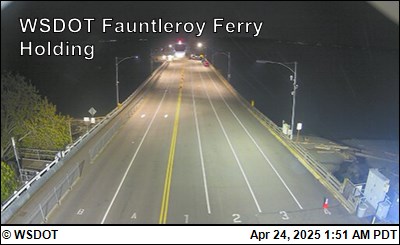
12:35 PM: The Fauntleroy-Vashon-Southworth ferry route has been down to one boat so far today due to what WSF describes as “a shortage of crew,” and Washington State Ferries has no ETA for the return of a second boat. If you’re going, note that they’re following the #1 boat schedule (linked in the ferry-alert roundup), and use Vessel Watch to check the boat’s location while you wait.
2:30 PM: WSF says it’s back to two boats. However, the South Vashon (Tahlequah-Point Defiance) run will go out of service starting late this afternoon, so that’s likely to put extra pressure on this route
We’ve heard from three readers about a hazardous “pothole” on the West Seattle Bridge, so we’re sharing the heads-up, in advance of checking with SDOT tomorrow about repair plans. Mike was first to describe it:
Heads up for drivers headed Eastbound on the West Seattle Bridge. There’s missing pavement in the right lane at the curve high above Avalon. It appears that this is occurring in the newly grooved pavement as you head to the Bridge proper. For now you can drive around it but since it’s on the curve the hazard comes up quickly.
There are multiple ways to report problems like this on city streets and structures – SDOT’s hotline is 206-684-ROAD; an online reporting form is linked here, as is the city’s map of what’s been reported and/or fixed recently – which shows work is “pending” on this one.


| 1 COMMENT