
West Seattle, Washington
05 Friday
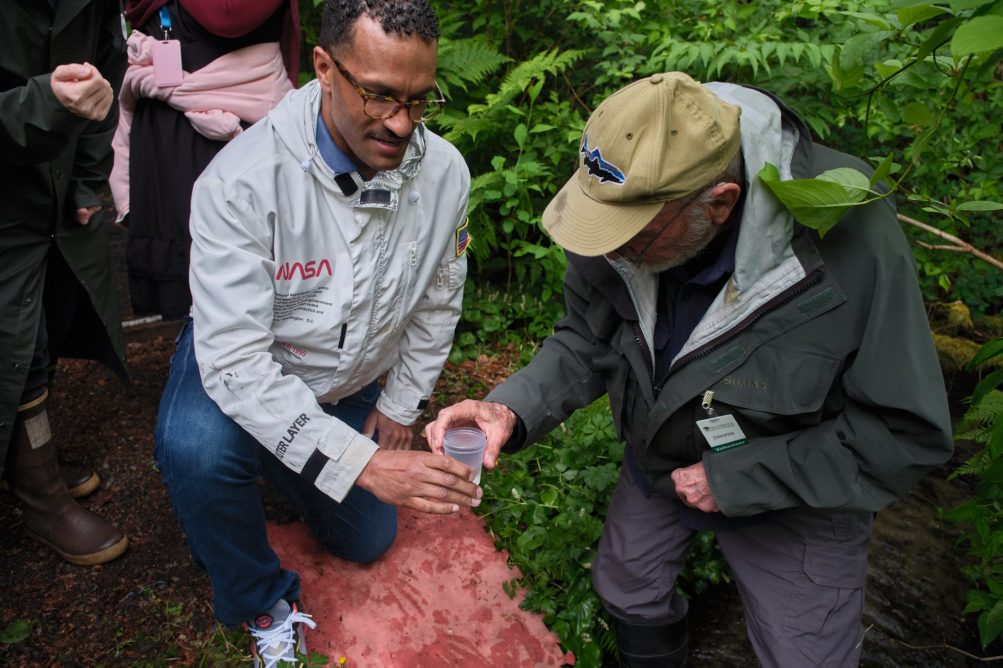
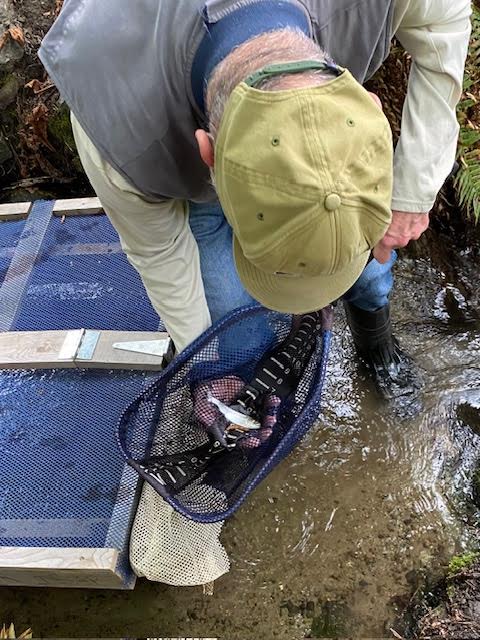 (Photo by Tom Trulin – Monitor Dennis Hinton with a healthy coho smolt)
By Judy Pickens
Special to West Seattle Blog
Volunteers have just capped a busy spring of comings and goings by coho salmon in West Seattle creeks.
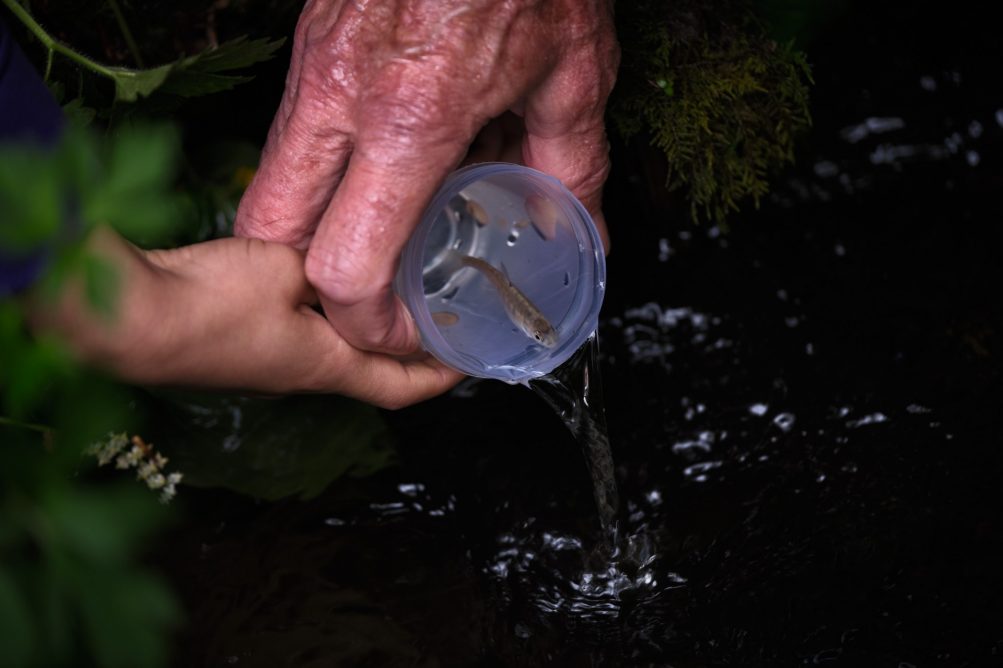
Because culvert construction has temporarily closed upper Fauntleroy Creek to Salmon in the Schools releases, volunteers organized by the Fauntleroy Watershed Council supported nine groups that put 634 fry into lower Fauntleroy Creek and another nine groups that put 920 fry into Longfellow Creek. A total of 686 preschoolers through high schoolers released fish and explored habitat.
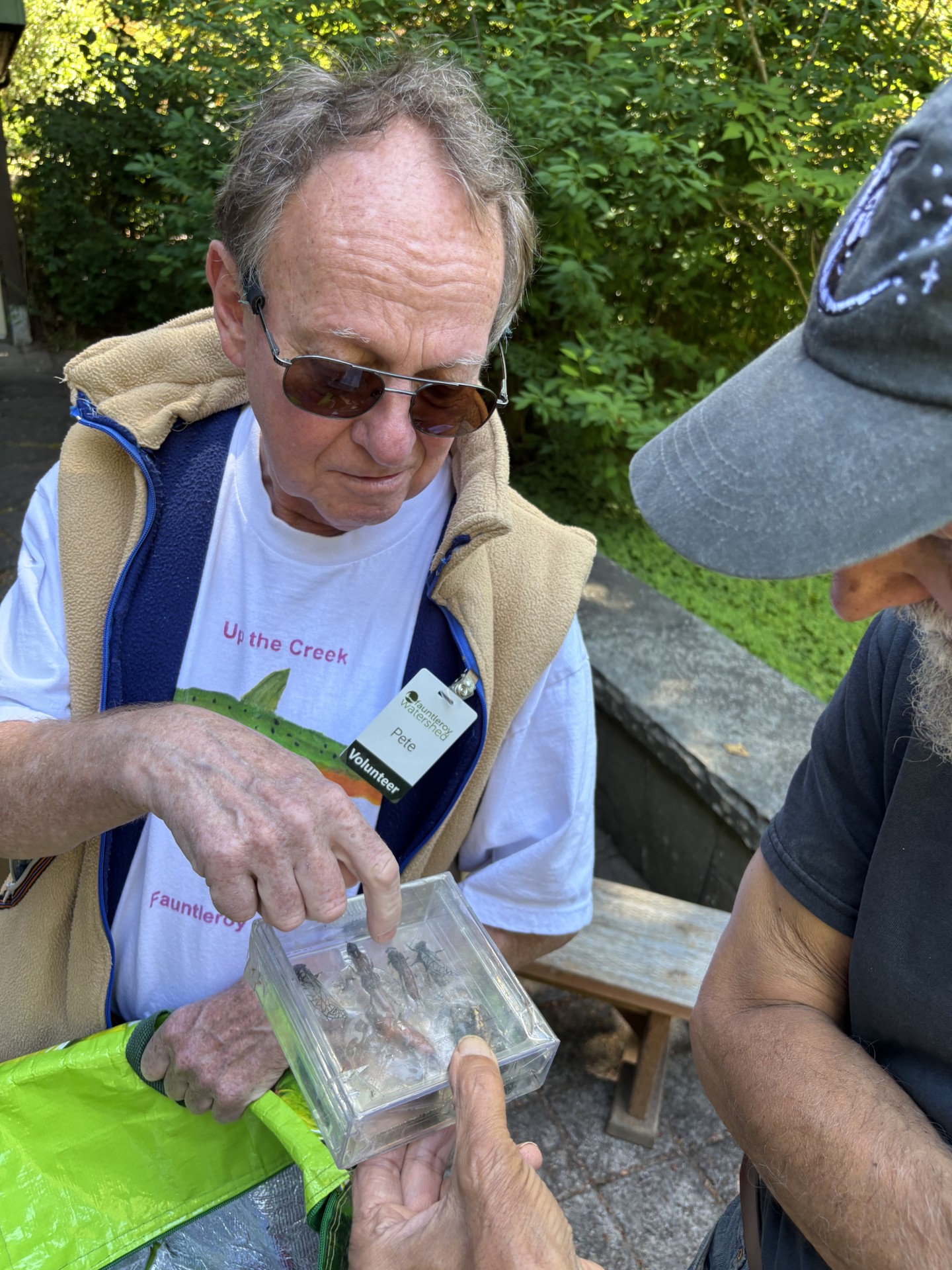 (Photo by Julia Chase – “Bug Man” Pete Draughon showing some of the aquatic insects juvenile coho will find to eat)
Spring is also when coho smolts leave freshwater for their two years in saltwater. To count these “teenage” fish, volunteers checked net traps in upper and lower Fauntleroy Creek at least twice daily from mid March to mid May. They documented 16 healthy smolts, for a five-year average of 24.
“These comings and goings attracted new volunteers and proved that we could meet new challenges,” said fish guy Dennis Hinton. “Thanks to Shannon Ninburg, we maintained ties to schools temporarily releasing in Longfellow and, by welcoming our first group of neurodivergent students, we increased our ability to support all kids who want to get out in nature.”
Thanks to AM for the video, recorded around 8 pm Friday toward the west end of Genesee Hill, near 56th/Dakota [map], where the coyote was seen between rows of parked cars. AM explained that the coyote was “NOT shy. Had my small dog with me and we went to the neighbors.” Other ways to react if you encounter a coyote – toward the goal of awareness, not alarm – are detailed in this tipsheet.
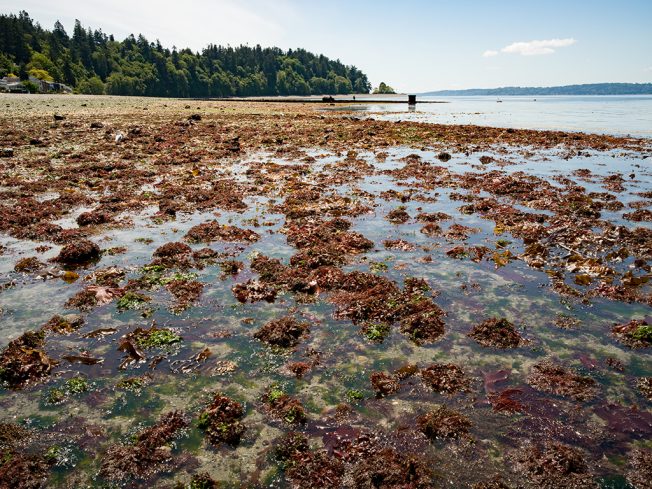
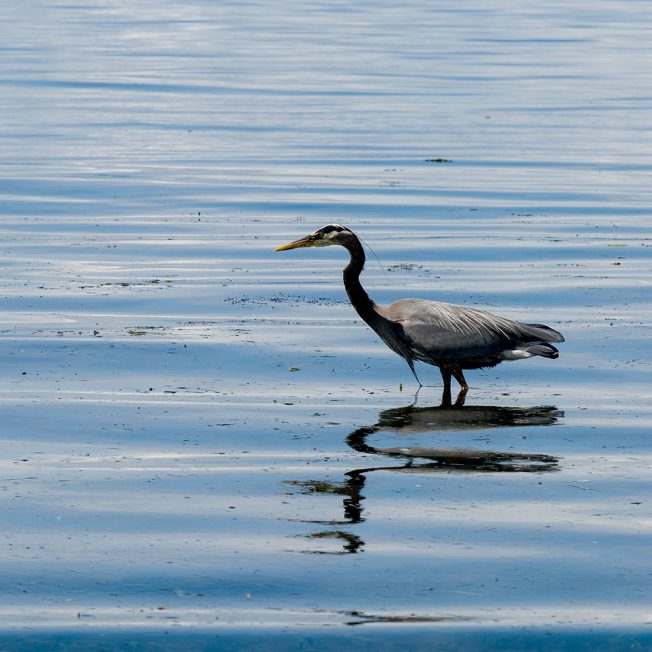
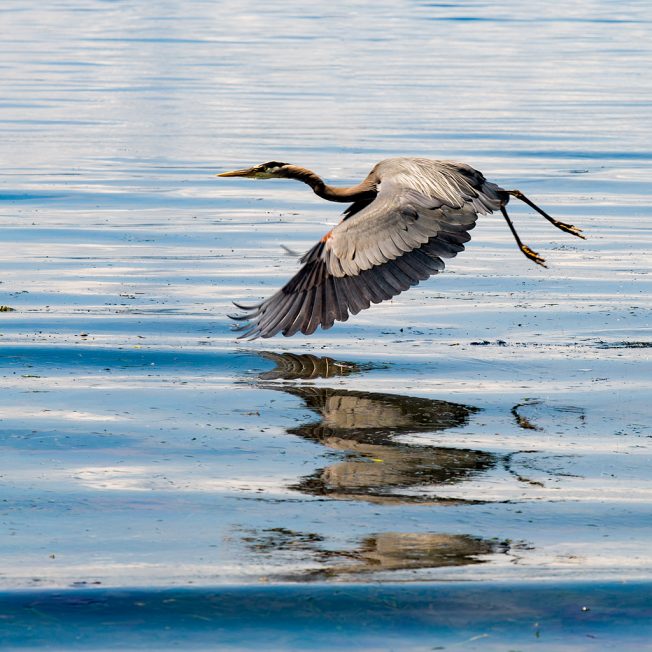
Another mega-low tide brought out the shore explorers this afternoon, and brought in more wildlife photos. The photo above, and the two of the Great Blue Heron below, are from WSB senior contributor Christopher Boffoli:
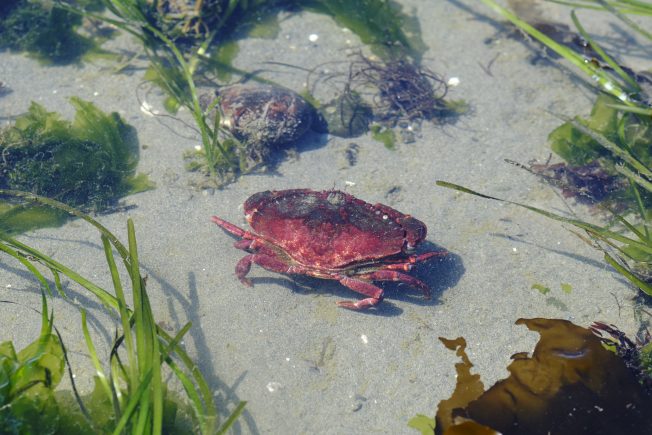
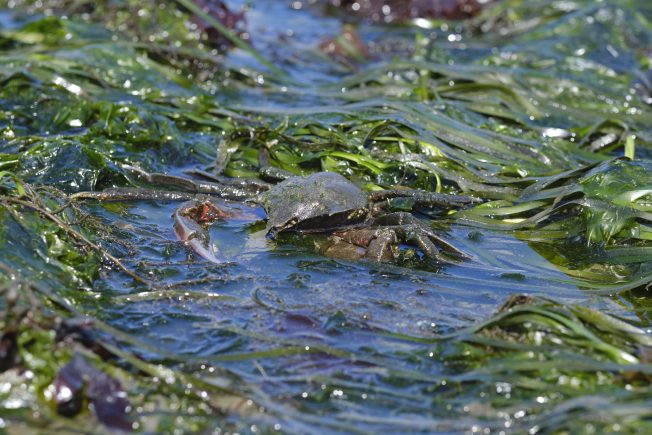
Amadeusz Wieczorek sent the next two photos after discovering crabs on the shore of Emma Schmitz Memorial Overlook:
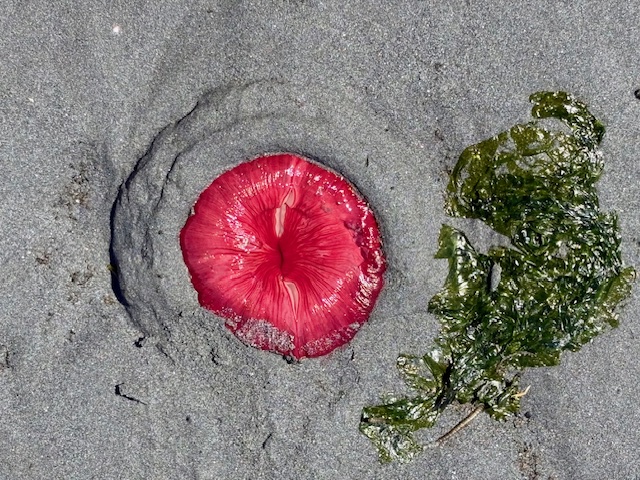
And from Curry Gibson, a strawberry anemone:
A sea pen:
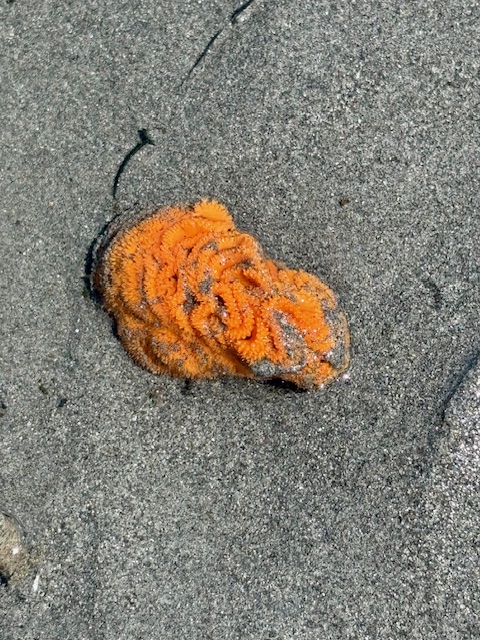
And another look at a heron:
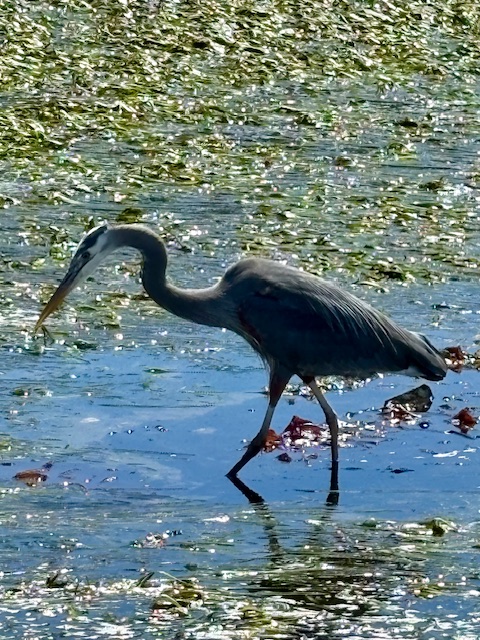
Tomorrow brings yet another mega-low tide – bottoming out at -3.8 feet at 1:25 pm.
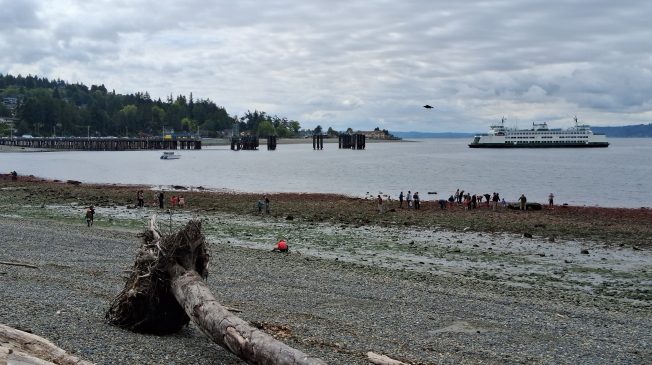
Thanks for all the photos! Mega-low tides these next few days have brought out shore explorers for a close look at wildlife. Bob Burns sent the top photo of the much-exposed Lincoln Park beach; that’s also where Brandy DeWeese photographed these creatures:
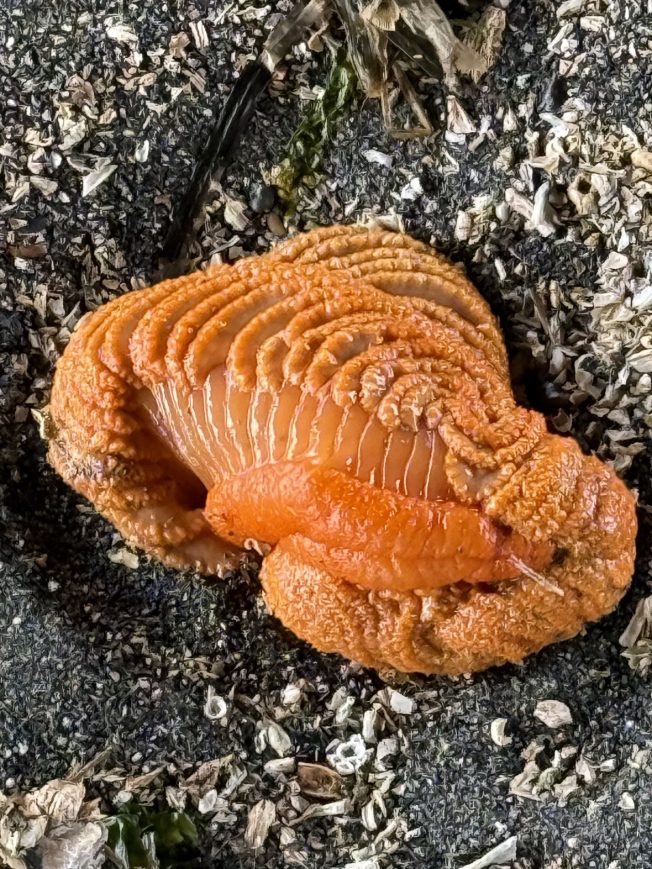
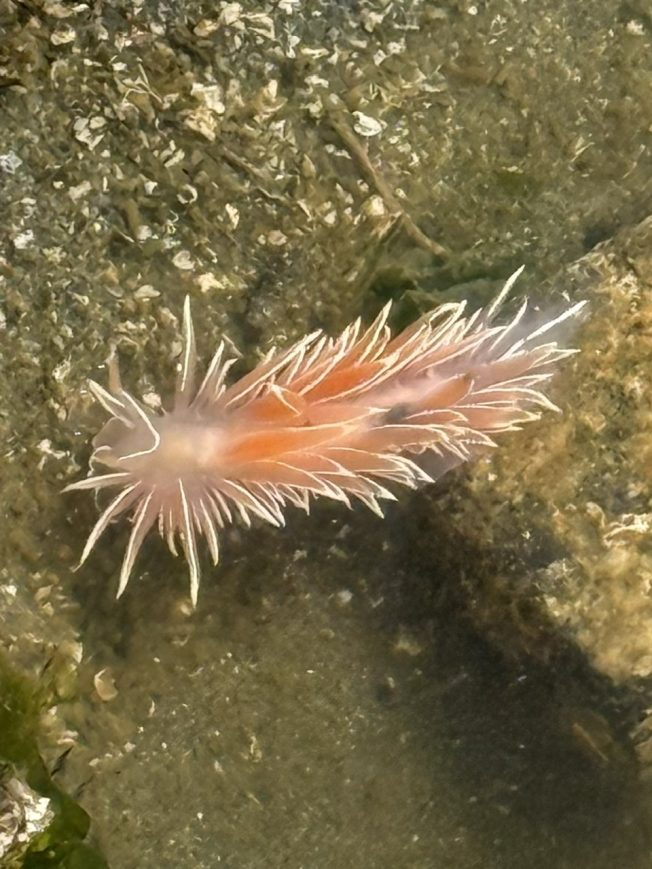
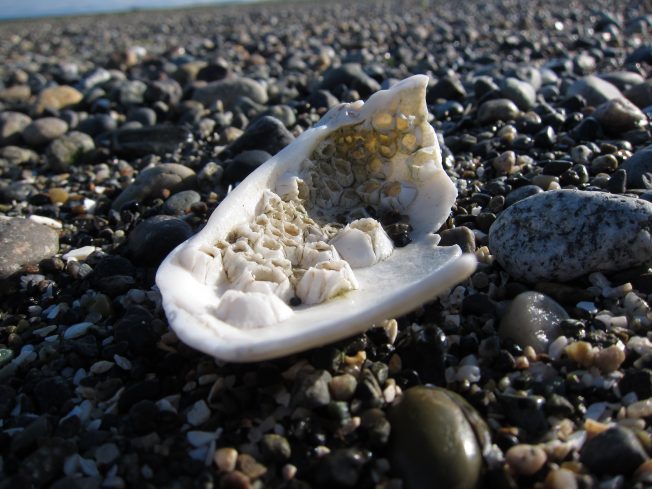
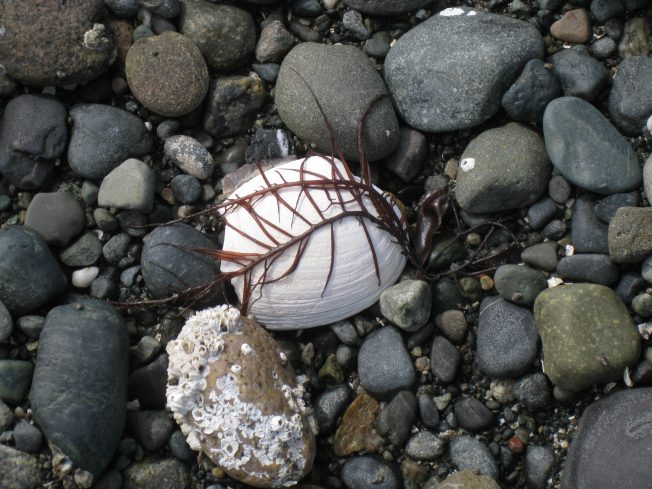
Janelle Otterholt sent these from Lowman Beach:
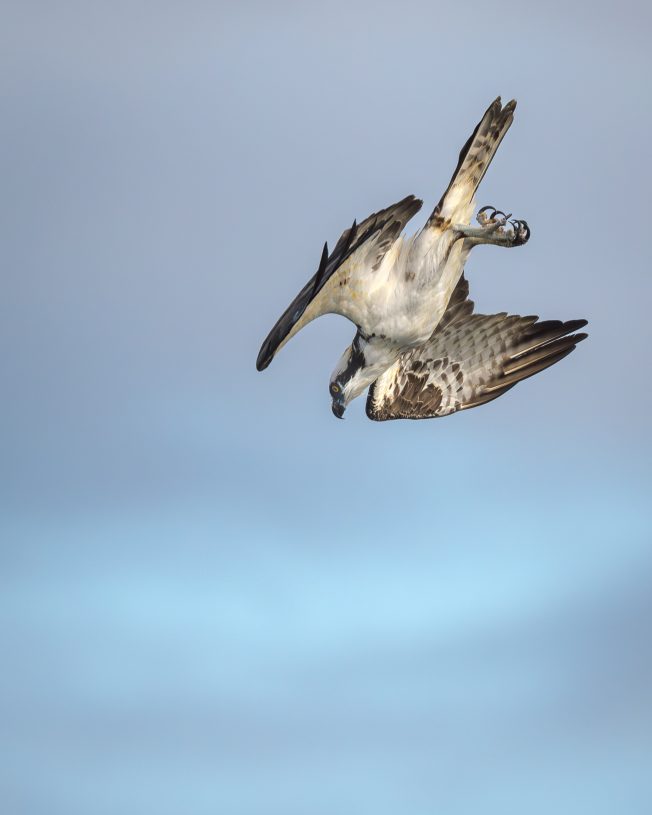
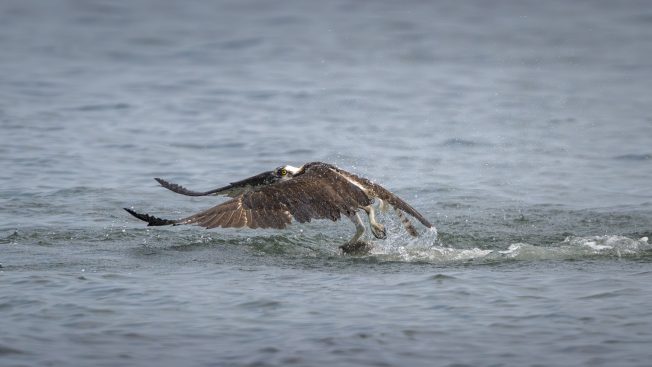
The mega-low tides can also be a boon to birds and others fishing for food – James Tilley caught an osprey in action:
The mega-low tide will be even further out tomorrow – -4.1 feet at 12:36 pm.
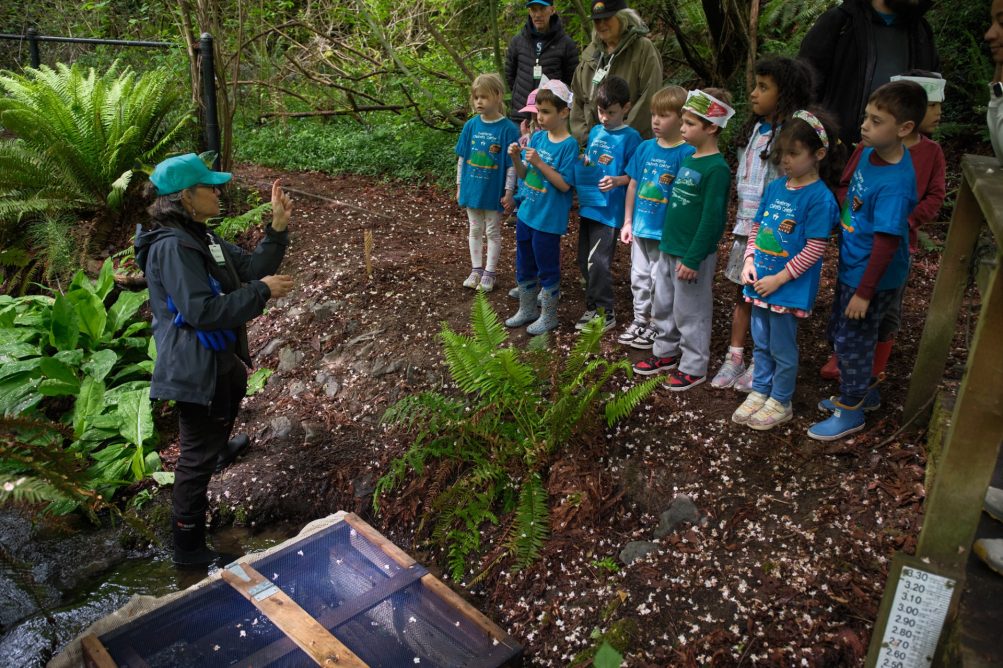 (Diana Spence explained how volunteers use net traps to count coho smolts leaving the creek for saltwater)
It’s the time of spring when students participating in Salmon in the Schools release their school-raised baby salmon into local creeks. One school was joined this week by an elected official. The report is from Judy Pickens of the Fauntleroy Watershed Council, with photos by Dave Gershgorn:
On Wednesday (5/13) 49 kids from the Fauntleroy Children’s Center came in waves to lower Fauntleroy Creek to release 160 coho fry they had been rearing since late December. City Councilmember Rob Saka joined them in putting fish in the water and exploring creek habitat.
(City Councilmember Rob Saka named the coho fry Dennis Hinton dipped for him after his children)
(Volunteers briefed Councilmember Saka about culverts and current concerns in the watershed)
Because culvert construction will be starting soon in the middle reach of the creek, West Seattle schools are not able to release fry as usual this spring and next in Fauntleroy Park.
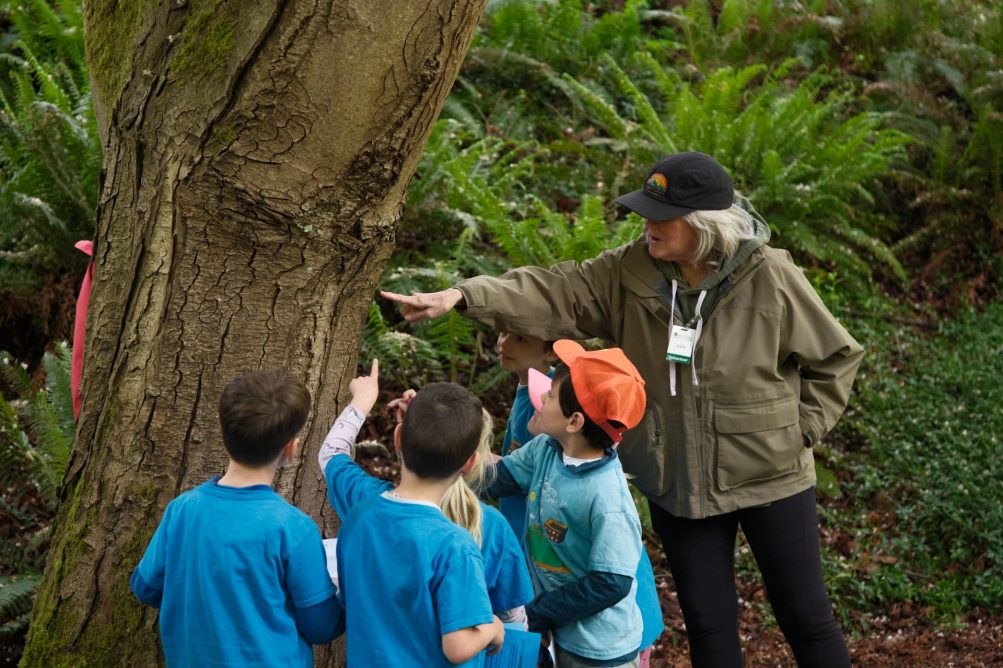
(Julia Stavnitski pointed out stonefly exoskeletons left behind on a tree near the water
Instead, volunteers with the Fauntleroy Watershed Council are hosting nearly 300 children and teens in the lower creek. Another 450+ students from nine schools are releasing in Longfellow Creek.
We covered one of those release events last month.
We’ve shown many coyotes over the years but seldom the littlest ones. A reader texted these images of coyotes at West Seattle Golf Course, including pups.
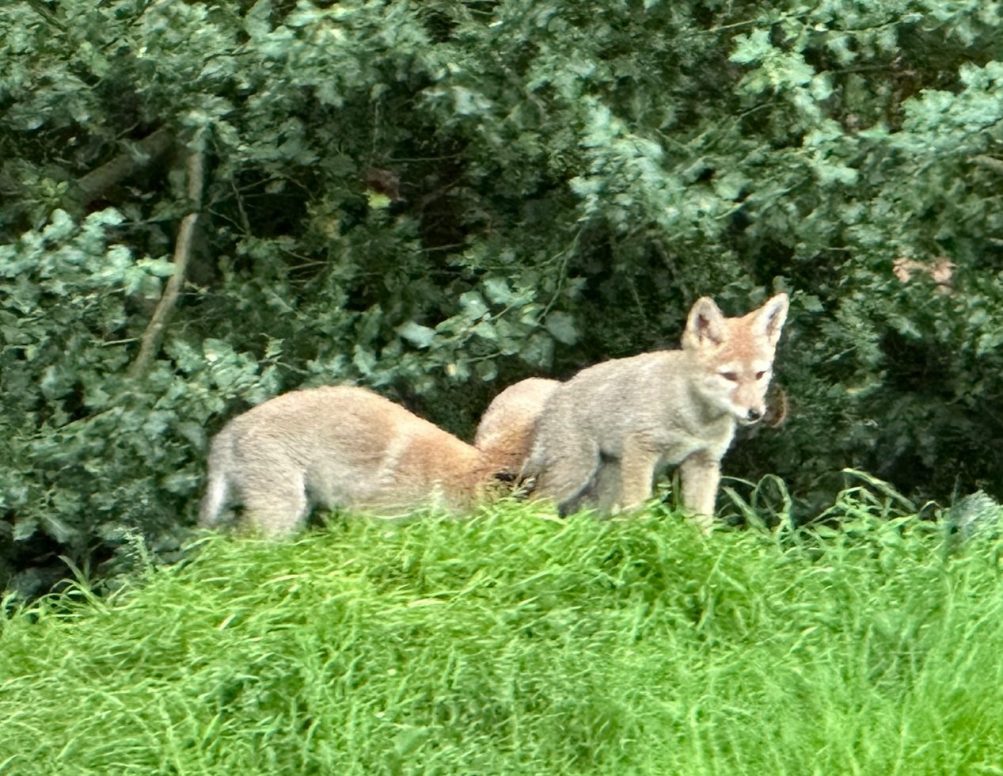
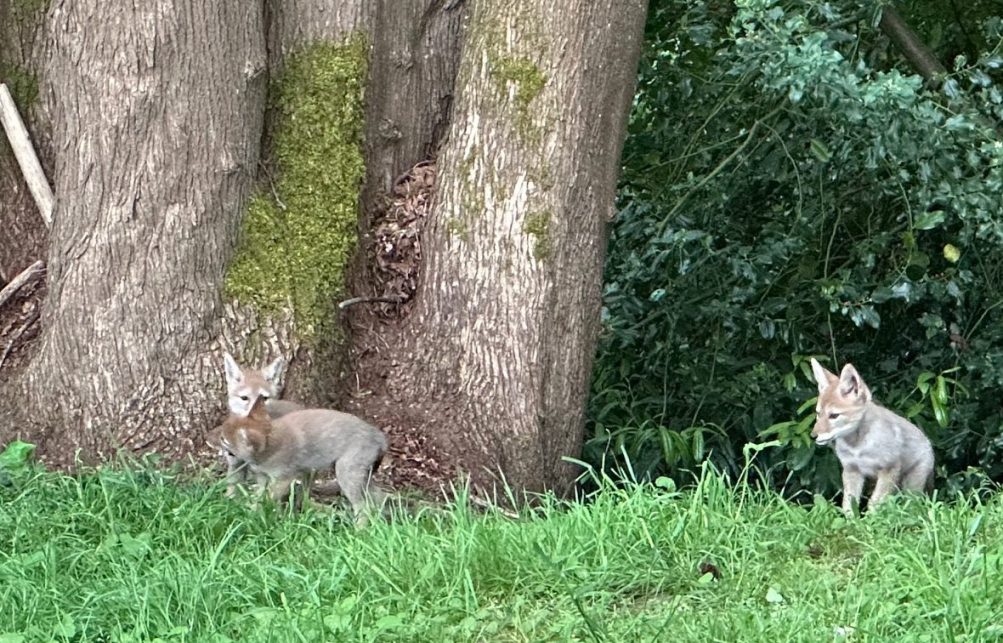
According to this info about coyote reproduction, the average litter is four to seven pups, and gestation is only two months.
Continuing our sea theme this afternoon thanks to Keri Watson for sending the video! That’s a sea lion “sailing” – often mistaken for an orca – off Lowman Beach. We’ve featured and explained this over the years – here, for example.
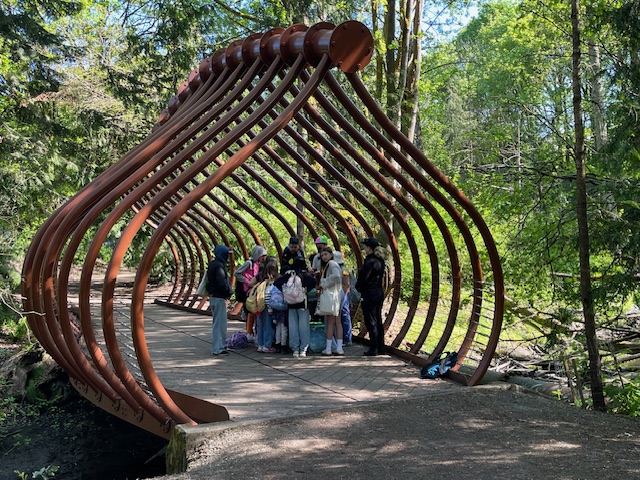 (WSB photos)
What a day for a field trip! More than 30 students from Pathfinder K-8 spent the morning at and near Longfellow Creek, starting from Dragonfly Pavilion in North Delridge.. They were split into groups for a variety of outdoor-learning activities, led by environmental educators from DNDA, and while the Salmon Bone Bridge (above) is the most scenic, that’s not where the major excitement was:
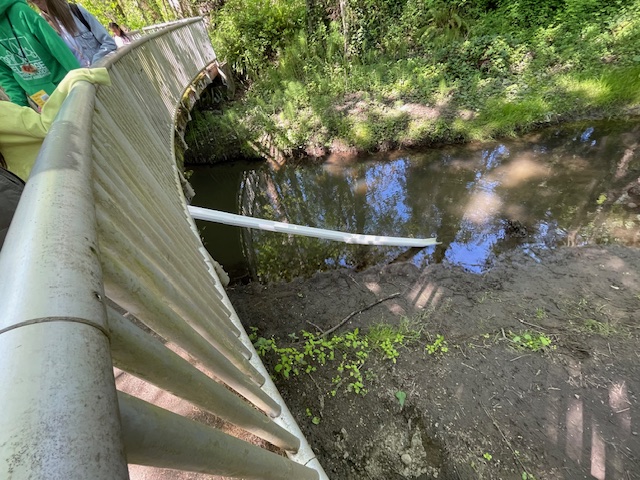
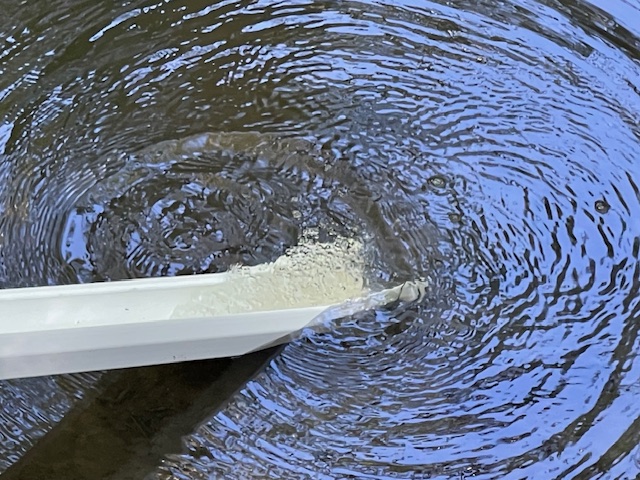
Another bridge a short distance south was set up with a sort of slide into which Pathfinder students released some of the coho they’ve been raising as part of the Salmon in the Schools program. That’s long been focused on Fauntleroy Creek, but as we’ve reported previously, culvert work starts this year so some of the release activities are moaving to Longfellow Creek instead. The release terrain isn’t conducive to getting close to the creek, so it’s down the chute with the fish:
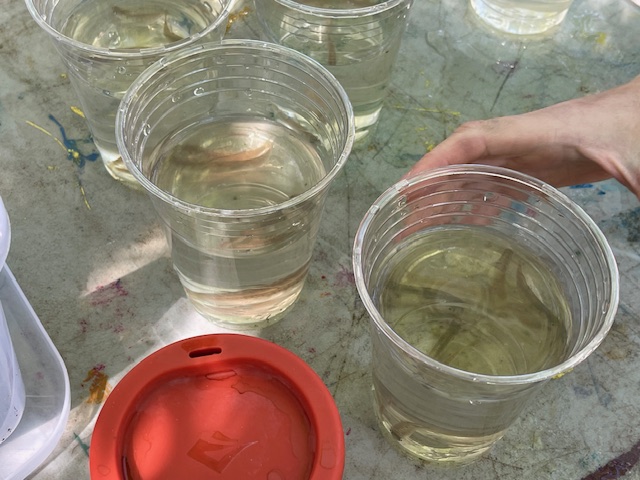
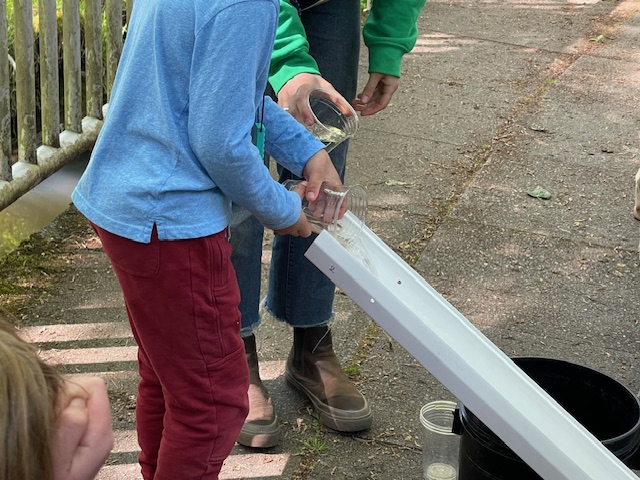
At other stations along the creek, the students learned today about how to making the water safer for salmon – hearing about pollutants like tire dust and fertilizers. DNDA’s environmental-education coordinator Mikaela Ebbeson tells WSB this was the third of four field trips as part of their pilot program. partnering with Salmon in the Schools and Seattle Public Utilities.
 (Volunteer Ann Dunbar helped students measure a torso in centimeters)
Story by Judy Pickens
Photos by Tom Trulin
Special to West Seattle Blog
Students from the Urban Nature Preschool got a taste of scientific research on Thursday when they did the annual survey of stonefly exoskeletons in lower Fauntleroy Creek.
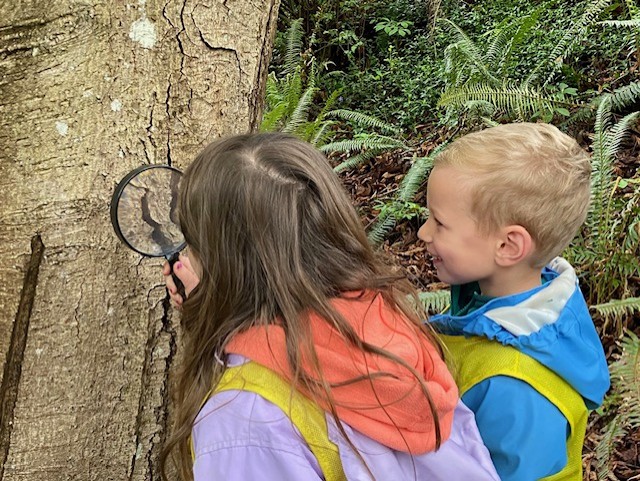
As nymphs, stoneflies are a major food source for juvenile coho. Mature stoneflies crawl out of the water in the spring and leave their exoskeletons behind as they take flight, and students have been counting and measuring them since 2000. Their findings are a way to track both quantity of food available to the fish and how clean the water is.
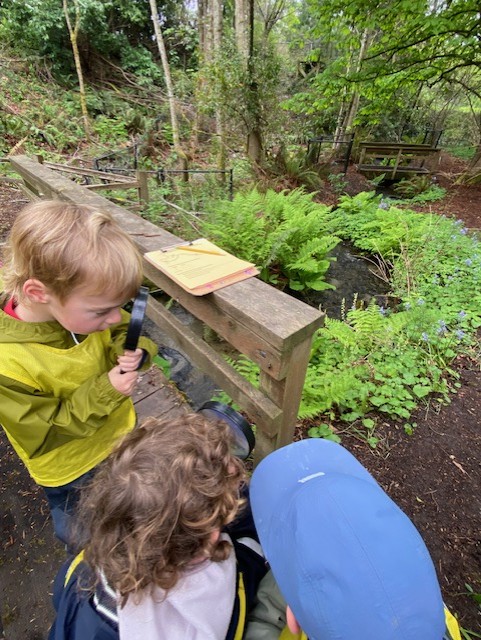 (Finding exoskeletons on bridges required close examination)
With the school’s outdoor focus, the four-year-olds already knew a lot about the creek and, with support from teachers and volunteers, they were up to the challenge of following study protocol. Three teams closely examined trees and bridges while a fourth measured torsos as adults recorded the numbers.
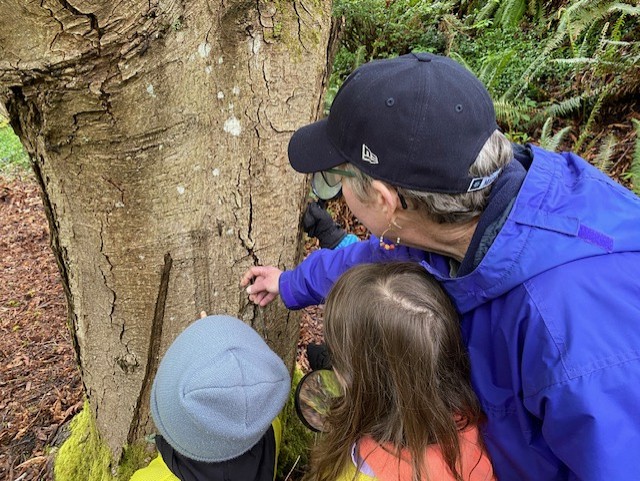 (Volunteer Ann Dunbar helped students measure a torso in centimeters)
After teams reported their findings, volunteer Alana Khayat added the numbers to line graphs so students could see how they compared to findings since 2015.
Thanks to Emily for sending that video of a river otter – that’s what we see in Puget Sound, not sea otters – on the shore at Don Armeni Boat Ramp this afternoon. Emily says, “I just saw the coolest thing … I was sitting here on my blanket hanging out when I noticed a couple looking at an otter that was just hanging out in the mud on the grass rolling around. It was about 20 feet from me. They kept backing up because it was where they were originally standing and it just popped out of the rocks to hang out for a bit. I got this video of it. So cool!!!” As we’ve noted before, river otters’ dens are generally onshore, even some distance inland, so you might see them crossing streets like Alki Avenue, Harbor Avenue, even Fauntleroy Way. Learn more about them via this “Living with Wildlife” fact sheet.
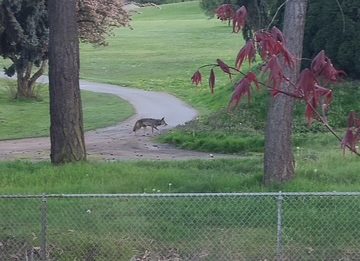
A texter saw that coyote on West Seattle Golf Course on Tuesday and sent the pic, one of three recent reports to share. Another report came in without a pic:
I am not sure that reporting a coyote has been around for a few days is blogworthy but sharing if so. It’s been trotting in and out of the yard for a few days; seen all hours of the day. We abut a city greenbelt so we believe that maybe its set up a HQ/den.
Its not causing any nuisance to us and it trots away when we have gone out to back yard to work on the garden. Looks and watches from a distance of 50-60′. And then leaves. Location is between 16th and 12th and Othello and Webster.
Last but certainly not least, Aaron sent this video from his neighborhood south of West Seattle:
Readers may enjoy this video of a coyote that has frequented our backyard several times, this time on Thursday morning. Thinking maybe there is a den near. Unfortunately it took our three chickens, though I don’t fault it for that. Our kids have surprised it once in broad daylight in the morning before school.
Now our standard reminder – we have shared coyote reports for 15+ years in the spirit of awareness, not alarm, and you can learn about coexisting with them via wildlife experts’ advice.
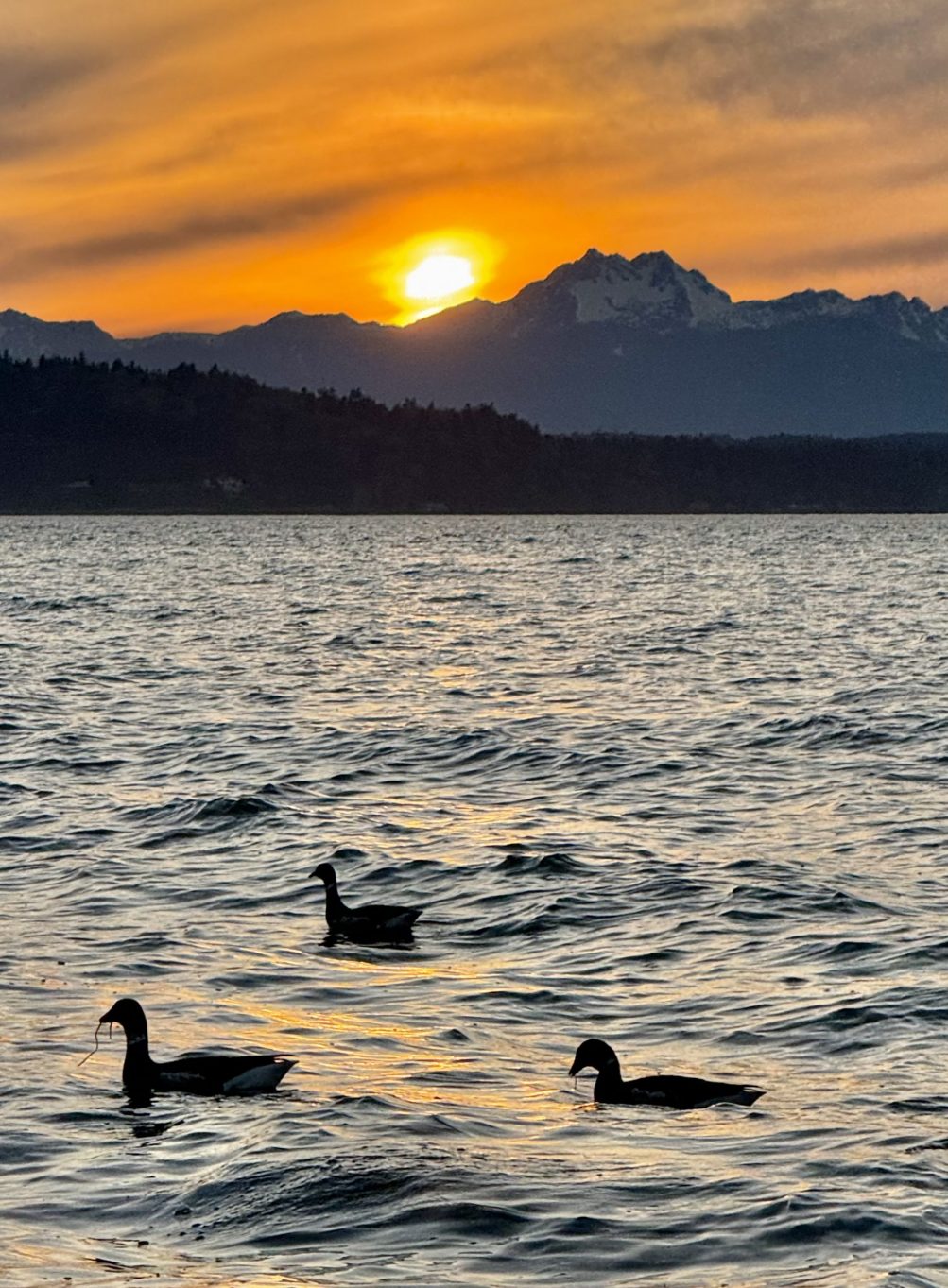
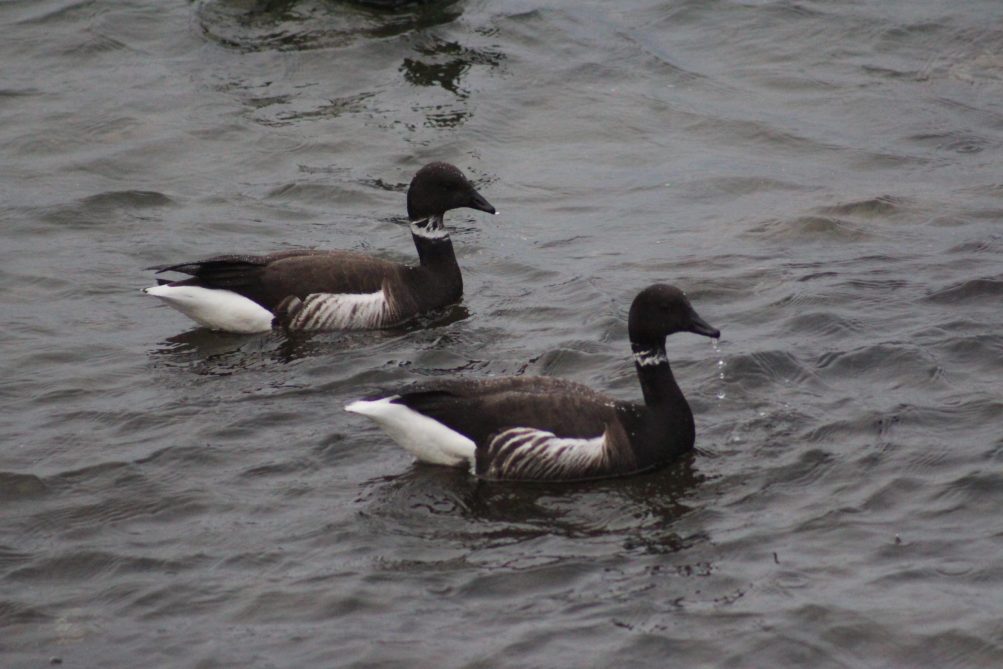
Thanks for continuing to send West Seattle bird photos! We’ve gathered a few for this gallery. Above, Dan Ciske‘s view of Brant in the sunset; below, Robin Sinner photographed them earlier in the day:
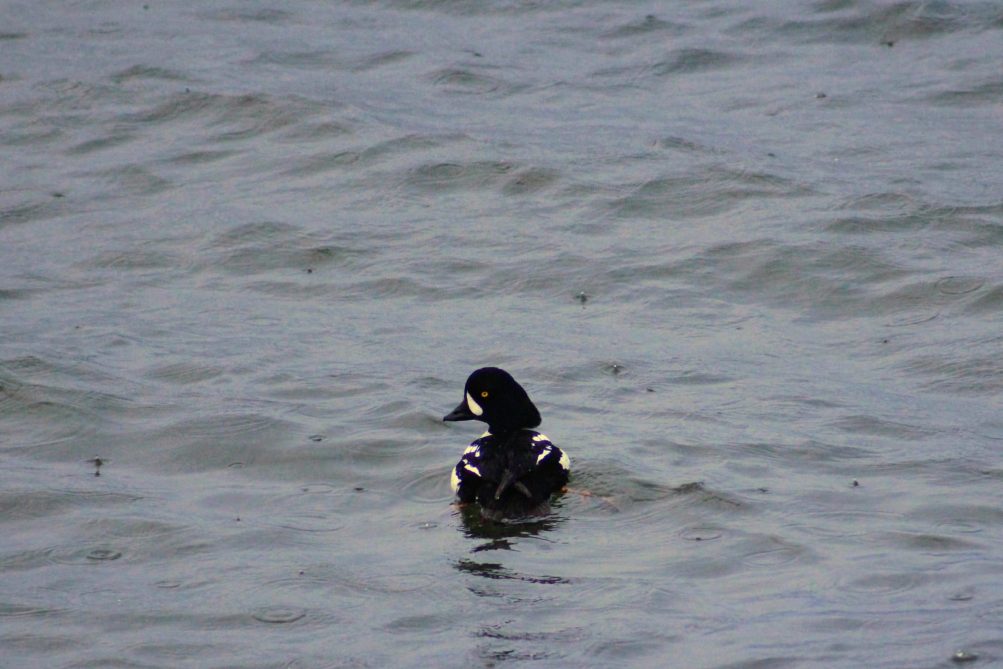
Robin also shared this photo of a Barrow’s Goldeneye:
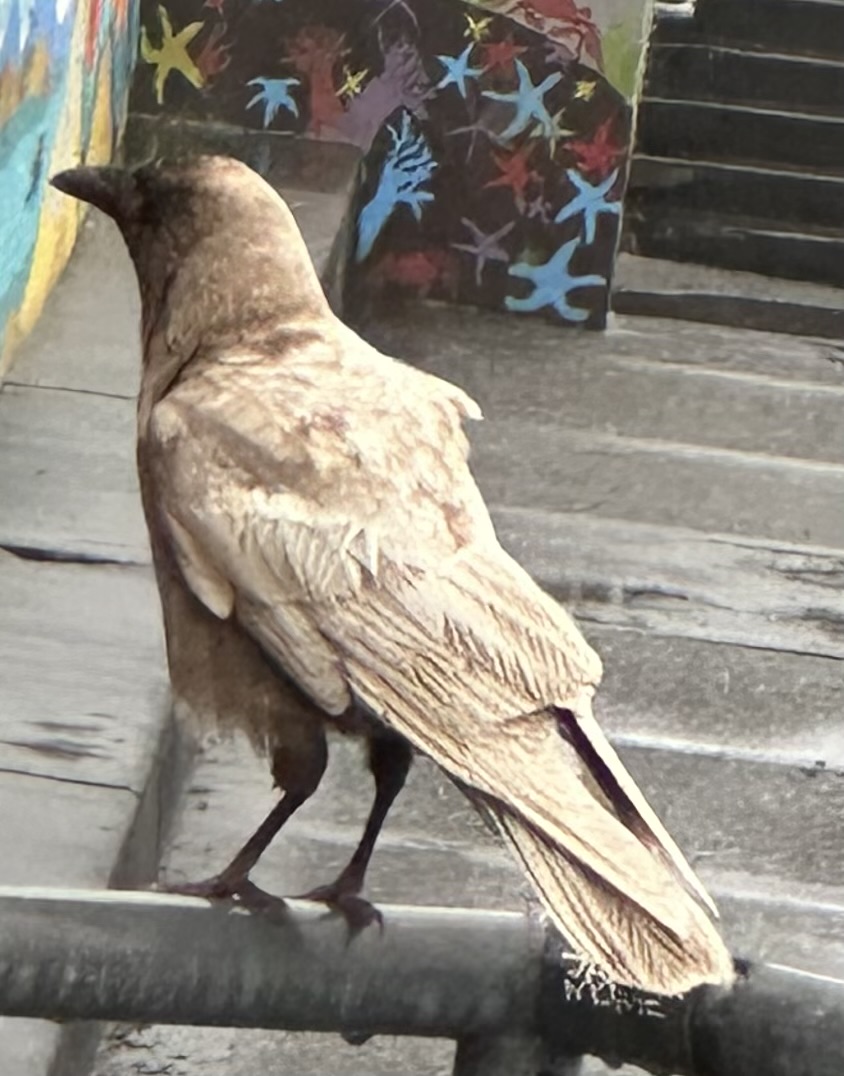
Leucistic (“caramel”) Crows turn up in West Seattle from time to time – Mark Rhea photographed this one:
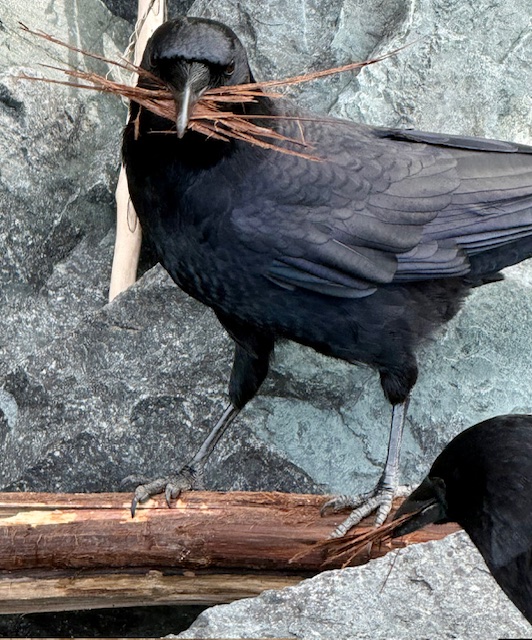
Here’s a more conventionally colored one, courtesy of K. Smith:
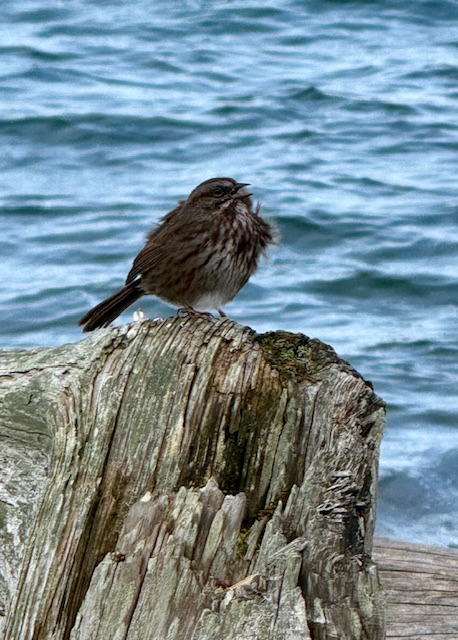
K. also sent this unidentified bird (do you recognize it?):
And we have more recent views of the baby Anna’s Hummingbirds that recently fledged at West Seattle Nursery (WSB sponsor) – from Suzanne Krom:
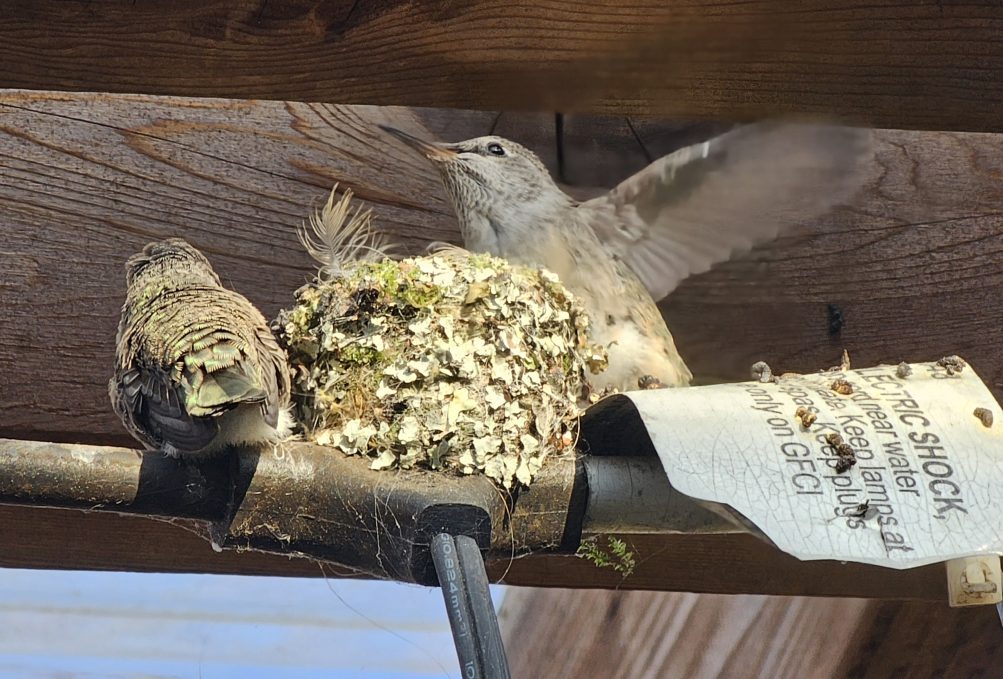
And from Jerry Simmons:
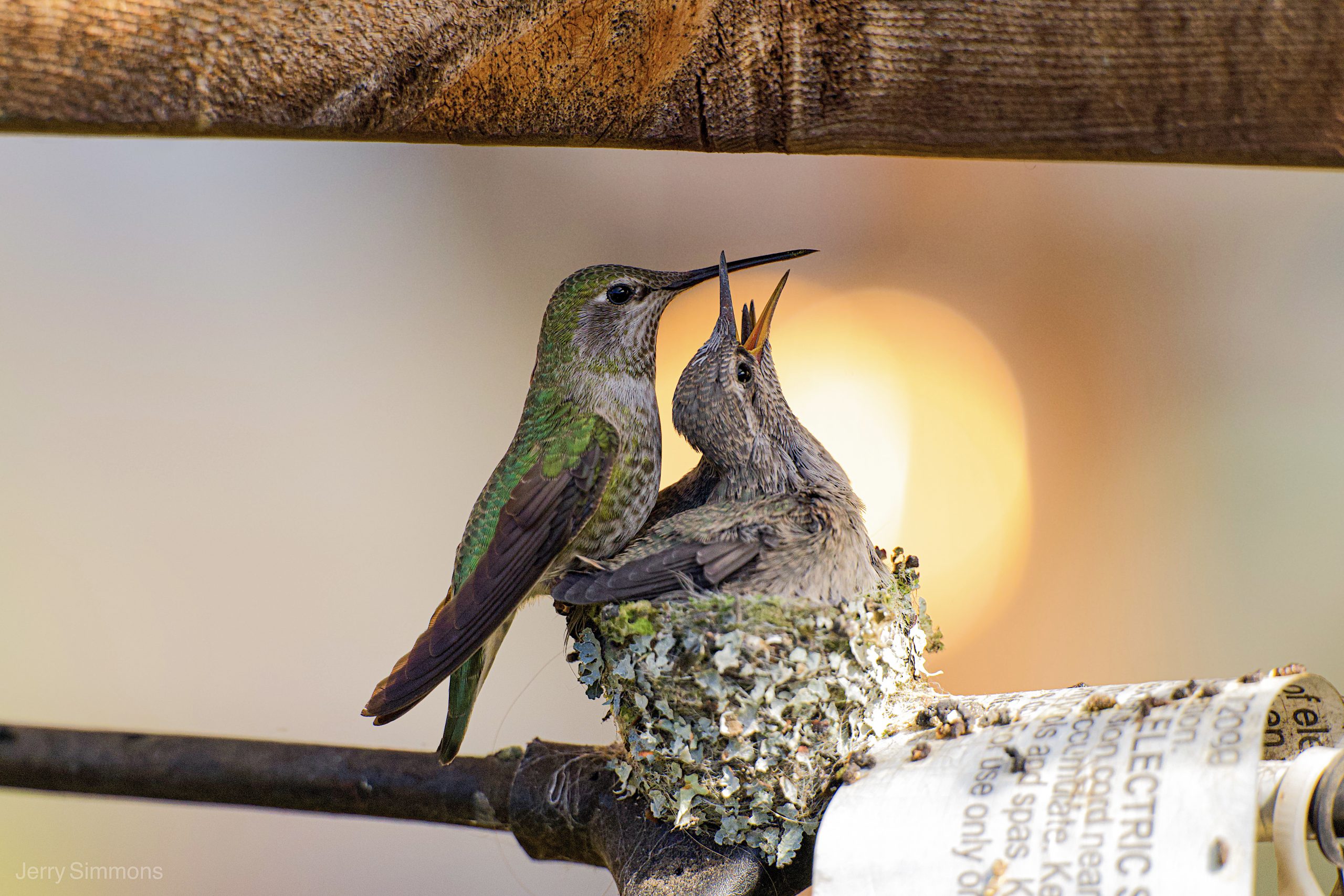
Again, huge thanks to everyone who shares photos, from birds to breaking news and beyond – westseattleblog@gmail.com or (when urgent) text 206-293-6302 – thank you!
Thanks to Steve for the video he sent Friday night after discovering his home security video had caught sight of coyotes outside his home early that morning:
(At 3:42 am Friday) we captured two coyotes trotting across our front yard. We live on 37th Ave SW between Lander and Stevens. Lots of bunnies up here, so I’m sure they’re hunting. I’m telling my neighbors to keep their cats indoors.
We have published coyote-sighting reports over the years for awareness, not alarm; be sure you know what to do, and not to do, to co-exist with them, as advised by this state Wildlife Department infosheet.
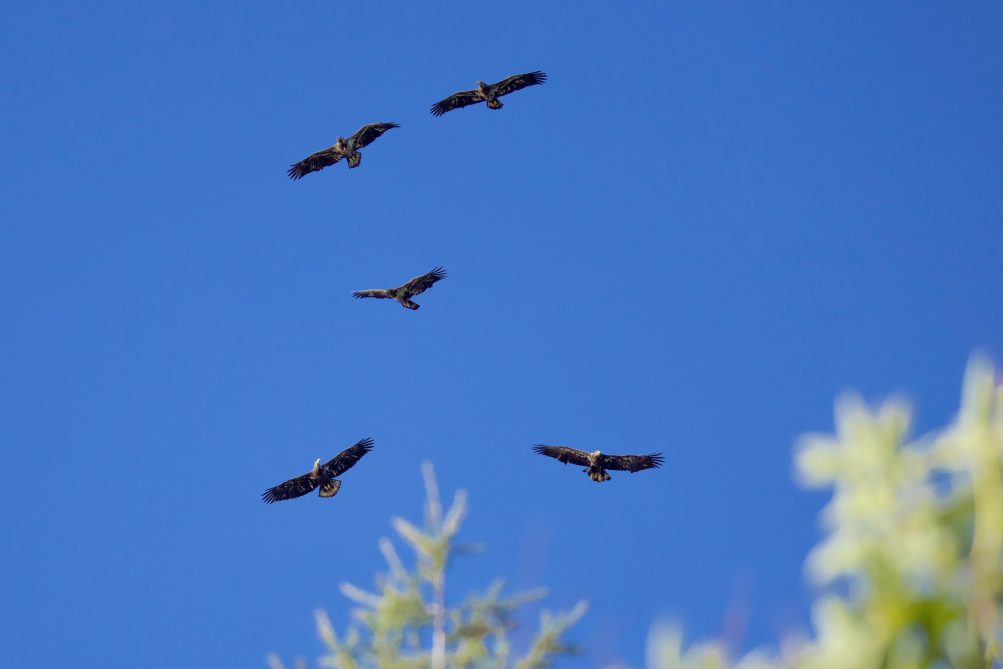
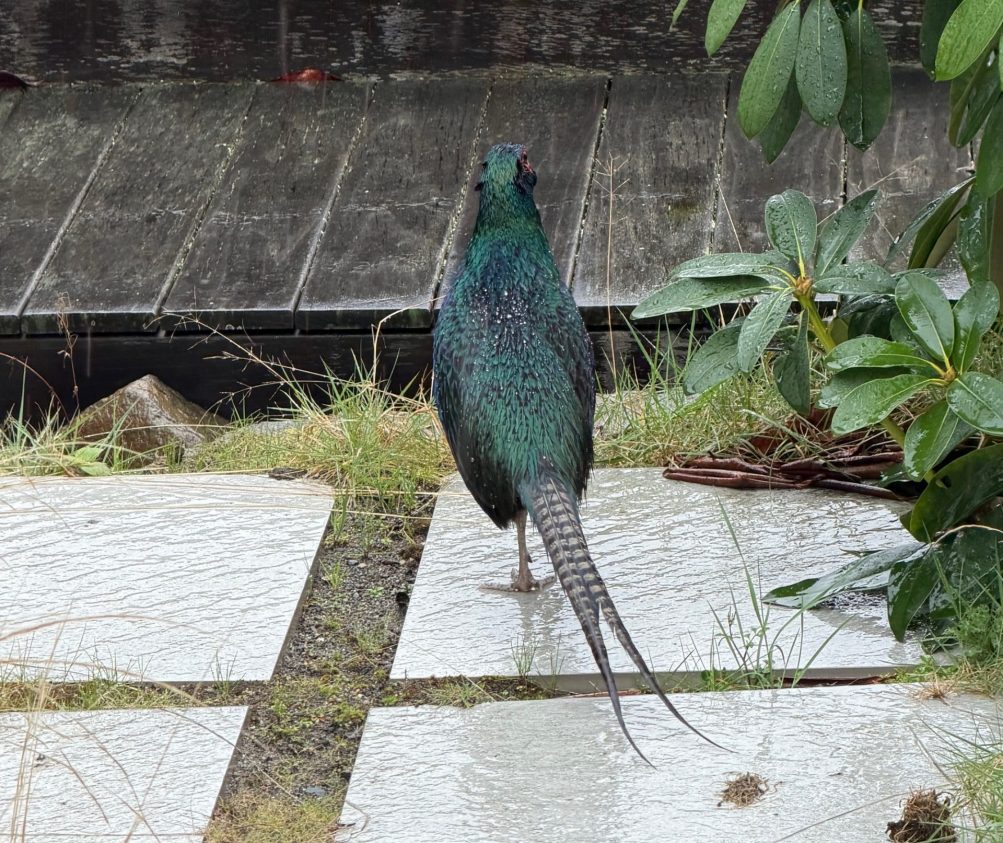
Thanks for all the bird photos these past few weeks! Time for a Sunday afternoon gallery. Above, five juvenile Bald Eagles in formation at Lincoln Park, photographed by Rainer Klett; below, a Pheasant – the photo is from Terry Blumer, whose daughter saw it in North Admiral:
Terry’s wife got this view of two Northern Flicker woodpeckers:
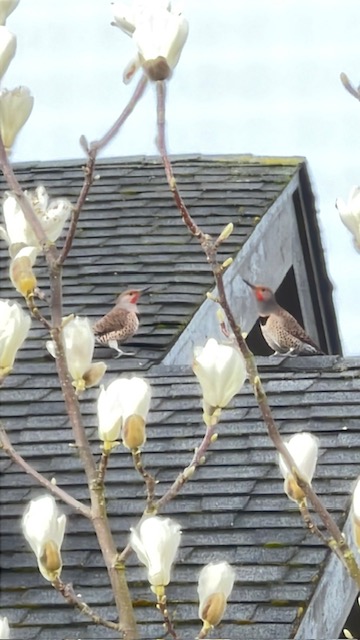
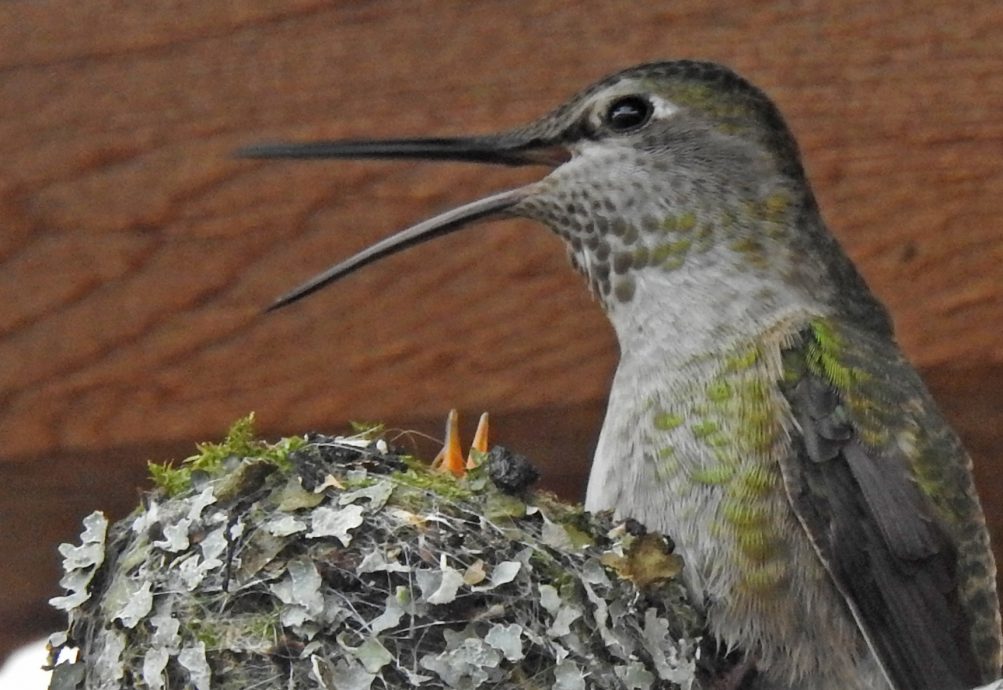
Remember the West Seattle Nursery (WSB sponsor) Anna’s Hummingbird eggs? Susan Whiting Kemp photographed the mom in view with babies’ beaks:
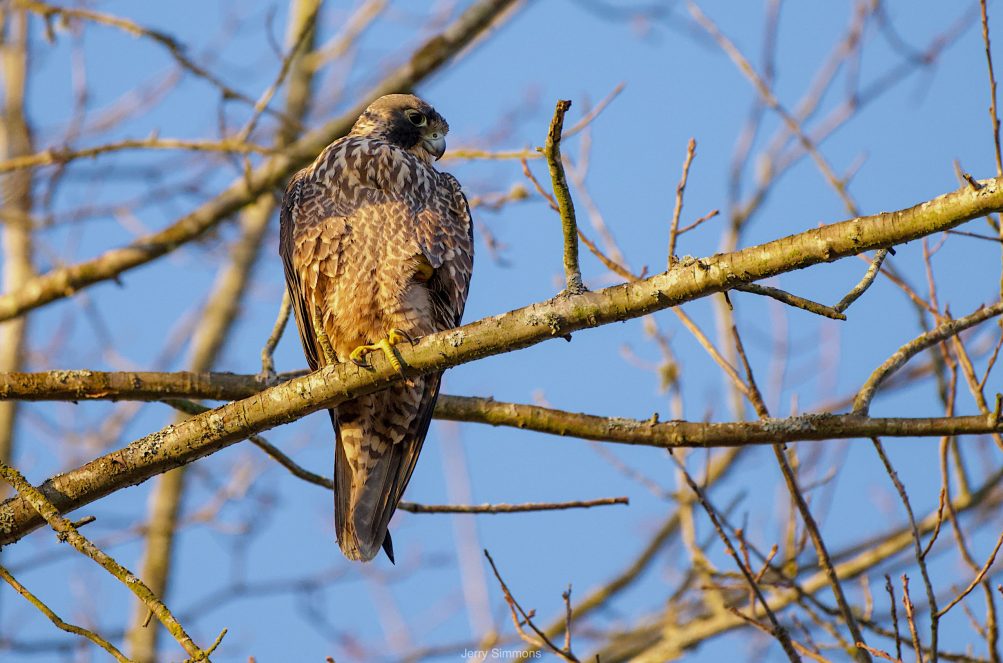
Jerry Simmons photographed a Peregrine Falcon:
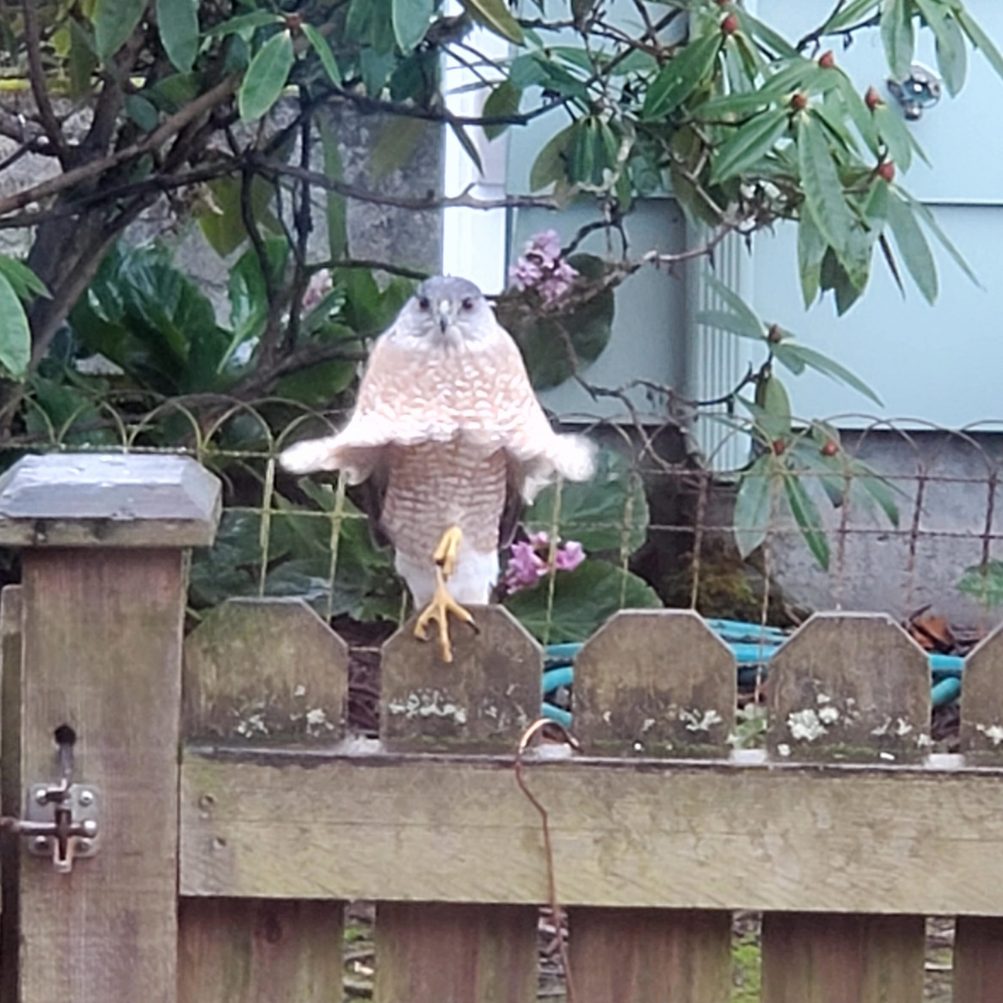
A Sharp-shinned Hawk, from Carol Christian:
This is from K Smith:
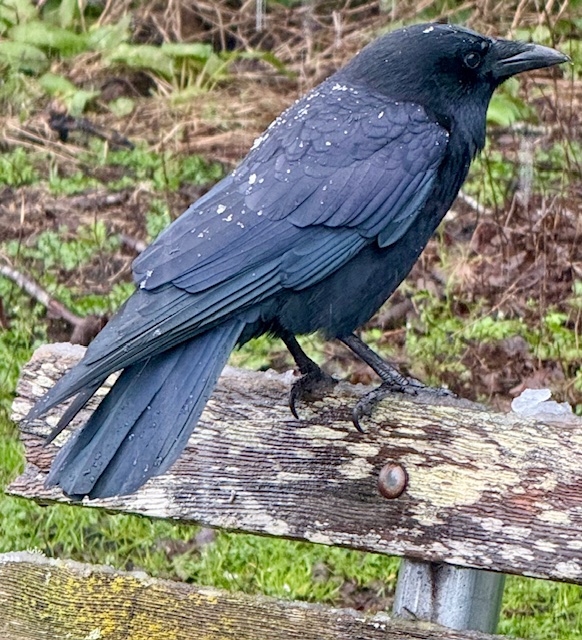
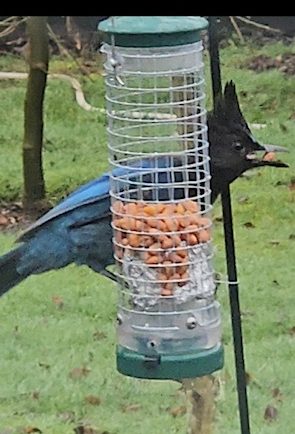
Another corvid – a Steller’s Jay at Al‘s feeder:
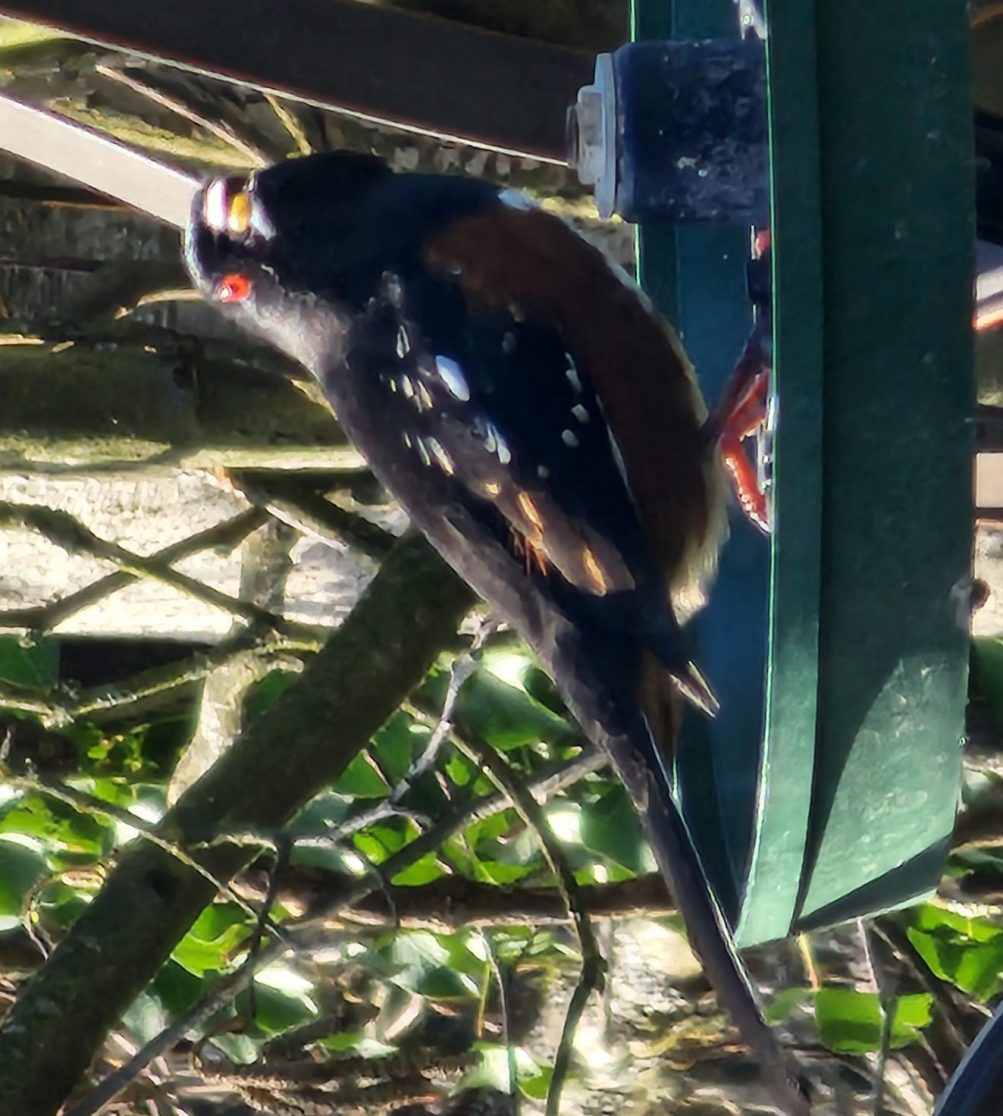
Jon Anderson spotted a Spotted Towhee:
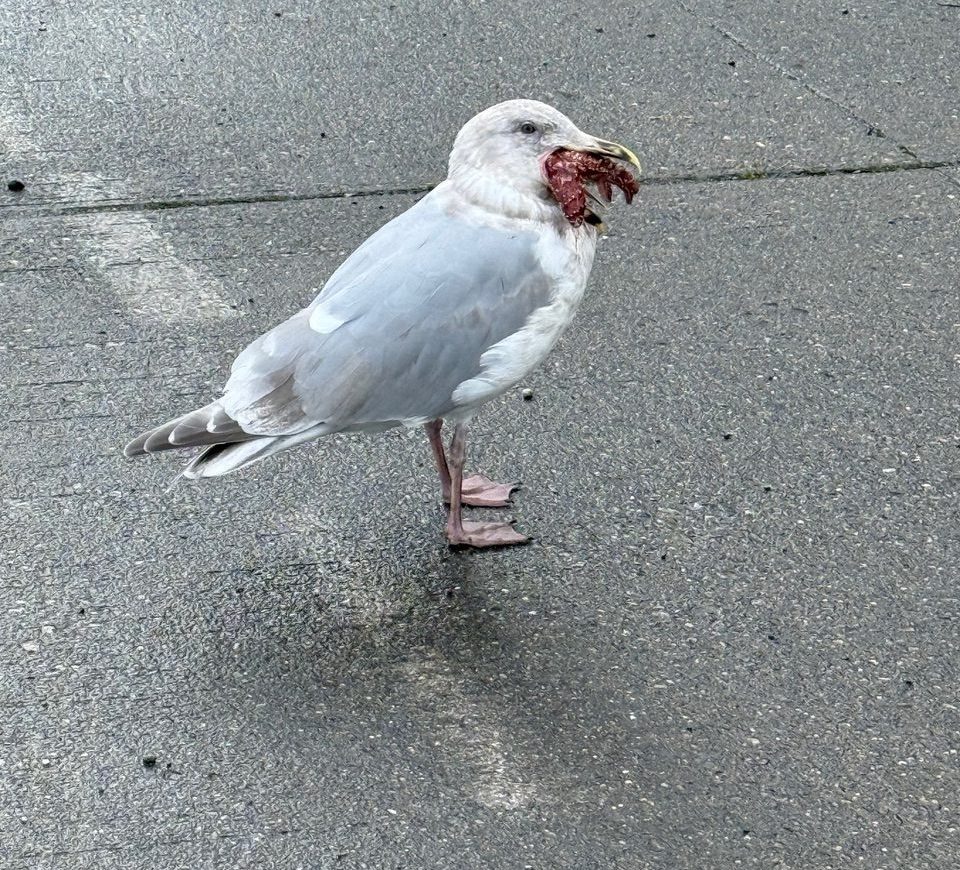
And Keri Watson caught a Gull with what appeared to be a snack:
Thank you so much to everyone who sends photos from around West Seattle – whether it’s a bird or breaking news, scenery or surprise sightings – westseattleblog@gmail.com or text to 206-293-6302 any time!
 (Photo by Dave Gershgorn)
By Judy Pickens
Special to West Seattle Blog
Coho “teenagers” (smolts) are about to leave Fauntleroy Creek for the big wide world of saltwater, and volunteer monitors are ready to count them on their way.
On Tuesday (March 10) members and adults from Scout Troop 284 installed two net traps that will enable volunteers to count smolts heading for Fauntleroy Cove, an annual study begun by the Fauntleroy Watershed Council in 2003. (Here’s a report on some of the work in 2024.) The young coho will fatten up in the cove before venturing farther afield for their two years in saltwater.
Monitors will be checking each trap twice daily through May to document how many leave from the upper creek and also from the middle and lower reaches.
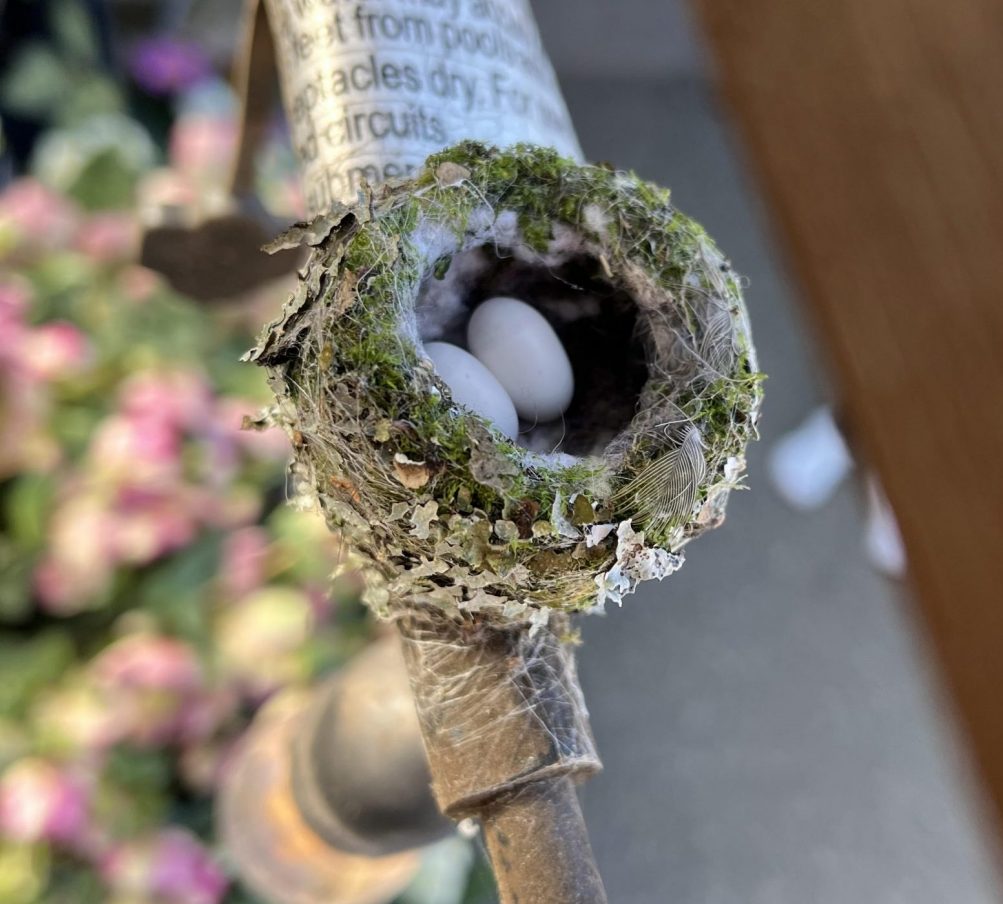
8:23 PM: We received that photo from Marie at West Seattle Nursery (WSB sponsor), who explains:
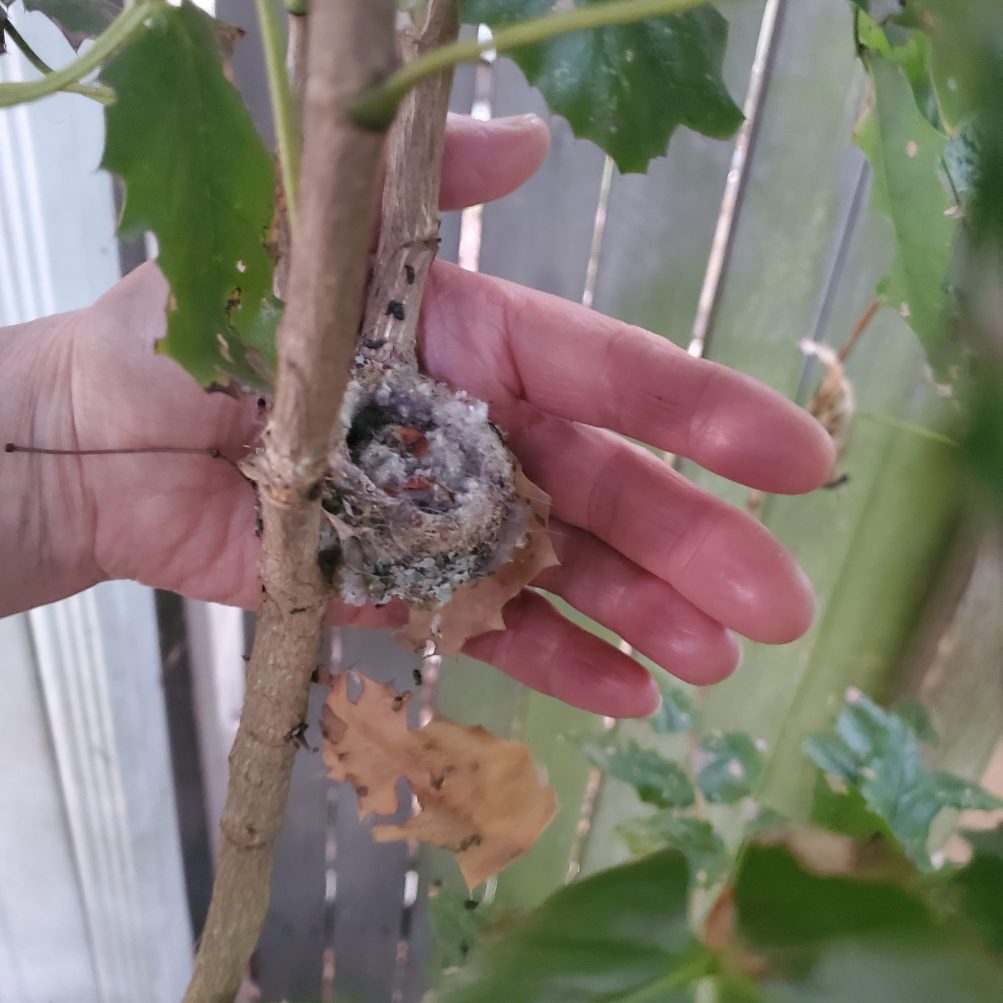
A hummingbird spent weeks building a nest on a cross beam in the shade structure. Then she laid her eggs. Clare Janetzki, one of our employees, climbed up and took this photo of them … Most of the time, you can see mama bird sitting on her nest, surveying the view. People have spread the word and now customers are coming by to see her. A sure sign of spring!
As we were reminded at this time of year in 2023, their nests are just an inch and a half wide … so be extra watchful if you’re doing yard/garden work!
10:22 PM: Suzanne, who sent us that alert three years ago, sent this photo tonight to show just how tiny the nest is:
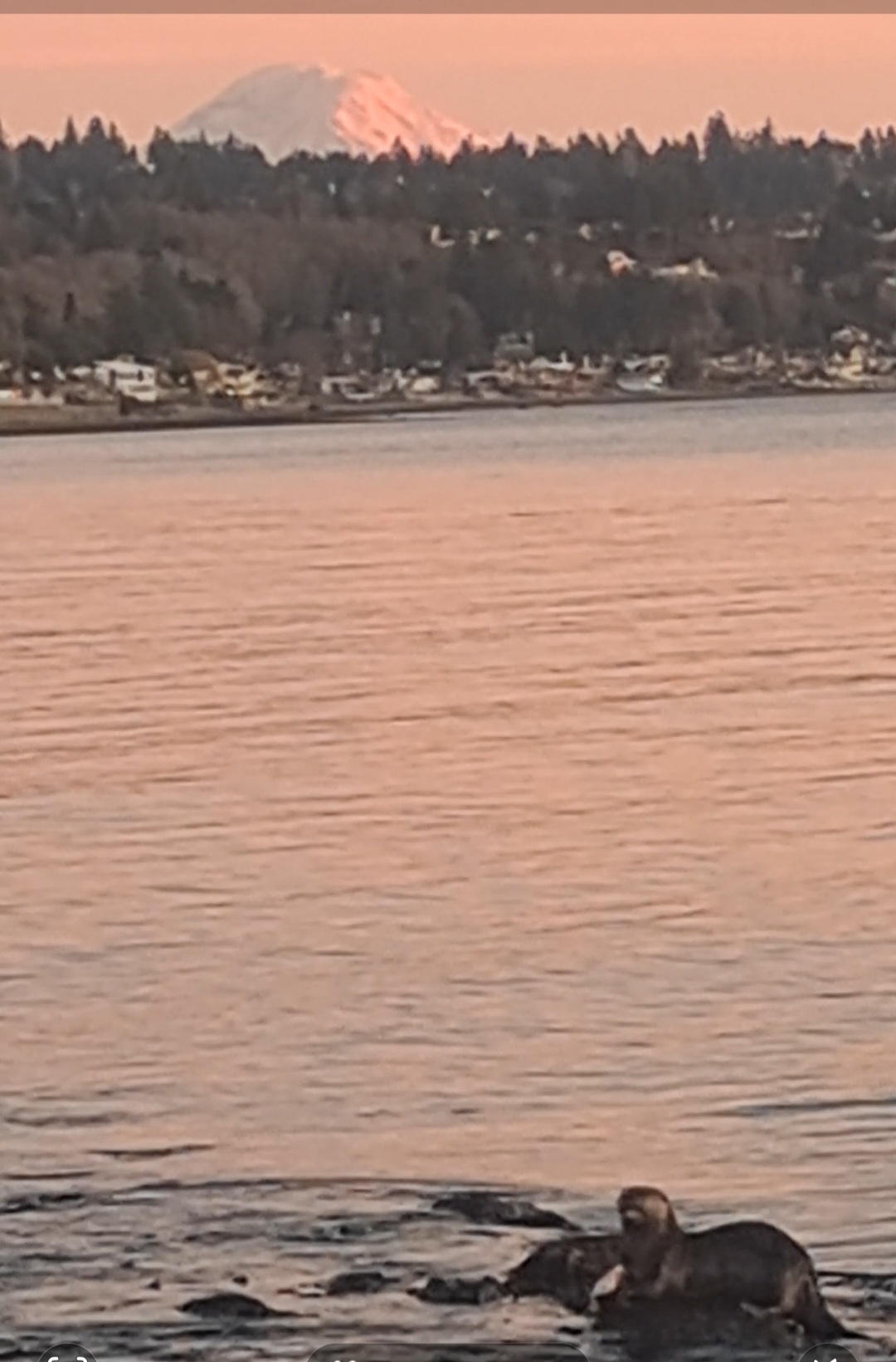
Thanks to the reader who sent that video recorded this weekend near Anchor/Luna Park. This otter, and almost all the otters that live in Puget Sound, are River Otters, not Sea Otters, and as this one is demonstrating, they spend time on land as well as in the water – sometimes getting to and from their dens requires a trip across roads like Alki Avenue, Harbor Avenue, or Beach Drive – that’s where Chemine Jackels got this photo of a River Otter off Constellation Park last week:
Learn more about River Otters via this one-sheet.
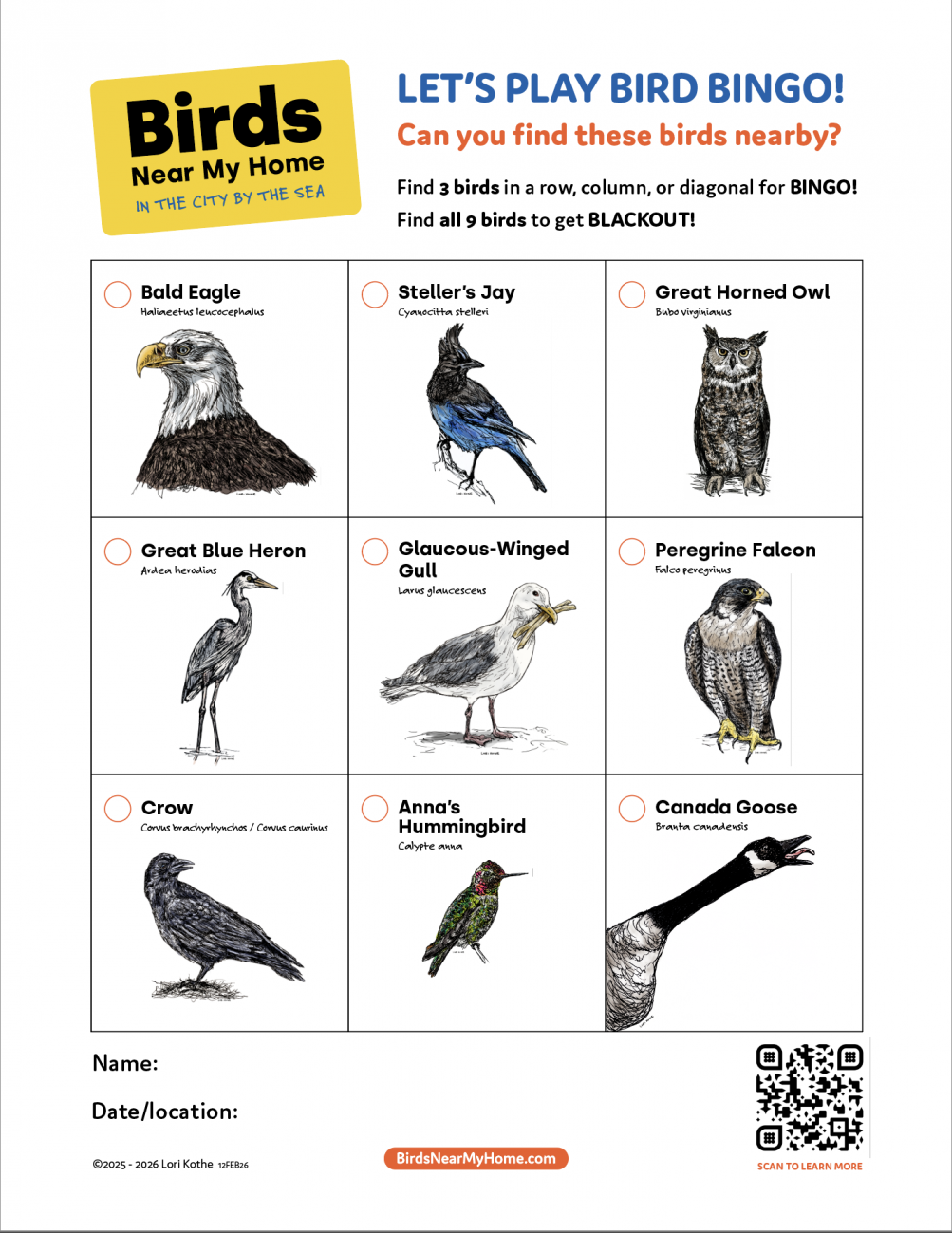
Those nine birds are featured in West Seattle writer Lori Kothe‘s book “Birds Near My Home in the City by the Sea” (and have been featured many times in photos here on WSB). Any sightings this weekend carry extra importance. Lori explains in this request she asked us to share with you:
I have an ask of everyone in West Seattle now through midnight Feb 16: Download the Merlin Bird ID app and participate in the Great Backyard Bird Count (birdcount.org) for at least 15 minutes. See if you can find all nine birds featured in my picture book! The GBBC is a global citizen science annual event currently taking place (Feb 13-16, 2026) where people report birds they notice near them, and their data highlights in real time on a map.
As the author/illustrator of Birds Near My Home in the City by the Sea, this year, I am challenging all of West Seattle to participate to discover our bird neighbors and show the world what birds live here, and have added a virtual event to the map at bird count.org. It is super easy to use the app and honestly has opened my eyes and ears to all the birds around us. When I wrote the book, I pretty much only knew nine birds. Now I have 27 on my lifer list. Merlin enables someone to just tap the record button, and in real time it “hears a bird” and suggests what bird it is with photos and info, and the prompt to say “that’s my bird” and add it to your lifer list. That’s all you need to do to have your bird data added during the count!
And… Saturday, Feb 14 (today) from (now until) 2 pm, the Environmental Science Center’s Bird Fest is taking place at the Burien Community Center. I’ll be there with my book set up in the park as a story walk to play Bird Bingo and Trivia, and offering a bird suncatcher art activity. There will be live raptors and loads of info and activities for families. It’s a free event.
You can participate in the Bird Count without downloading an app, by the way – this page explains how. Lori adds, “I would love if people would send you their bird sightings from the weekend and any stories about birds so readers could share and compare lists of all the birds spotted near our home.” (Comments are great too.)
By Tracy Record
West Seattle Blog editor
Beavers are beneficial – not a nuisance.
That’s a big message carried on their behalf by “Freelance Beaver Detective” Pamela Adams, who was featured speaker at this afternoon’s weekly lunch meeting of the Rotary Club of West Seattle (WSB sponsor).
She gave attendees a crash course in beaver biology, first explaining how she happened into her intense interest in urban beavers – particularly in eastern West Seattle’s Longfellow Creek, where she says five beaver families, 30+ beavers, are currently living. “This is becoming quite a bit of research.” She’s also now the subject of a film (watch the trailer here).
She’s found all sorts of other wildlife, including salamanders, and says the beaver dams have helped increase the Longfellow Creek coho because the water is cleaner near their dams. Beavers are “like a probiotic in our watershed” – and they’re on the upswing, after they were all but eradicated over the centuries by humans who didn’t want them around.
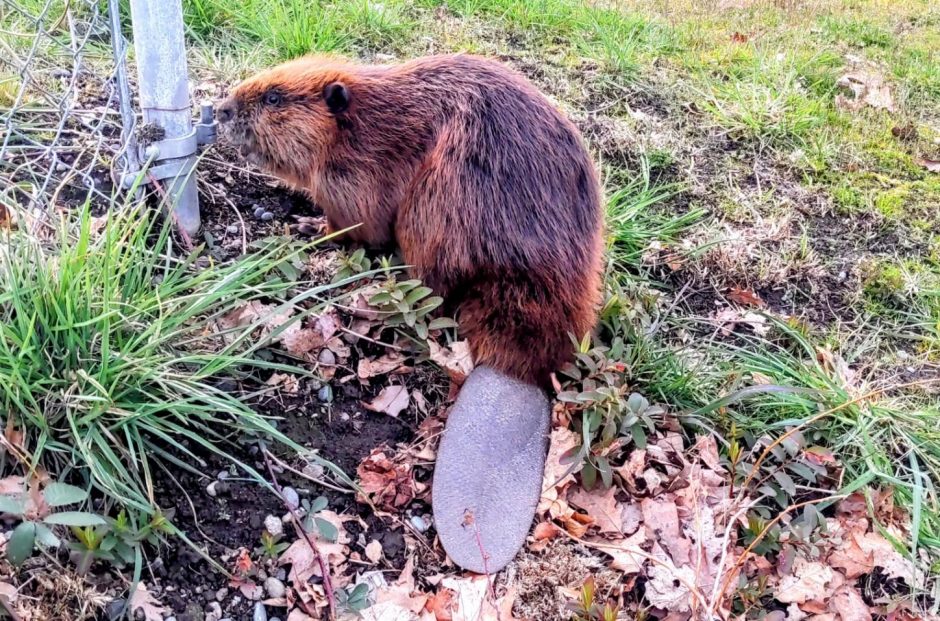
They live in family groups and are monogamous – they’ll mate for life. Two of the local families live on the golf course. They also prefer to stay in the water; they are “not always destroyers of trees,” she reiterated. “Their flat scaly trail stores their fat – and that’s their imprints.” Their tails include “a little vertebrae.” They slap their tails to communicate. Their construction includes many different structures and challenges. “They don’t usually live in the dams,” she noted, Most of the construction work is done by the females.
Longfellow Creek was devoid of beavers 30+ years ago, according to a city biologist report that Adams found, but then one was sighted at a creek celebration on April 15, 2000. Flash forward to last May, when she helped a biologist release a baby beaver that needed a new family. A few hours later, an adult beaver showed up and took it to join the rest of the family. “When you see them in person … it’s like you’re seeing a kind of divinity.”
She says she’s trying to get city departments to work together to stop destroying/displacing the Longfellow dams, given their ecological benefit. Beavers benefit birds too, she agreed after a Rotarian brought that up during the Q&A sections. Find out more about Adams’ work (and see videos – our clip above is mostly a chance to hear her short talk, as the projection screen was partly blocked) on her website.
Also at the Rotary Club’s weekly meeting:
EARL CRUZEN SCHOLARSHIP RECIPIENTS: Four students from the Automotive Technology program at South Seattle College (WSB sponsor) took turns at the podium to thank Rotarians for the tool sets that are at the heart of the scholarship, which one recipient said was “everything that I needed to get started in the automotive industry.” (Here’s the story behind the scholarship’s namesake, who died nine years ago.)
GAMBRIELL SCHOLARSHIP: Applications are open now – here’s the link. April 1 is the application deadline.
NEXT WEEK: The meeting next Tuesday (February 17) will have two guests – artist Saya Moriyasu and, just confirmed during today’s meeting, U.S. House Rep. Pramila Jayapal (who is a West Seattle resident when not in D.C.).
The Rotary Club of West Seattle meets at noon Tuesdays most weeks at the West Seattle Golf Course. Guests can inquire about checking out meetings – find out how here.
 (2023 photo by Kersti Muul)
One year after filling the room at a local community council meeting and explaining why people should be “less anxious” about beavers, Pamela Adams will talk to the Rotary Club of West Seattle‘s weekly lunch gathering this Tuesday (February 10). The self-styled “Beaver Detective” is expected, the WS Rotary (WSB sponsor) says, to give attendees “a guided journey through Longfellow Creek, home to five known beaver families, and share how beavers are reshaping this urban creek, the importance of thoughtful human stewardship, and a hopeful, science-grounded look at how cities and wildlife can thrive together.” The meeting starts at noon Tuesday at the West Seattle Golf Course (4470 35th SW); if you’re interested in attending, ws_rotary@yahoo.com is the email contact.
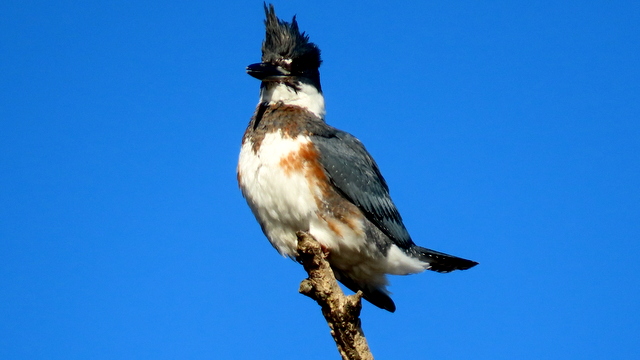
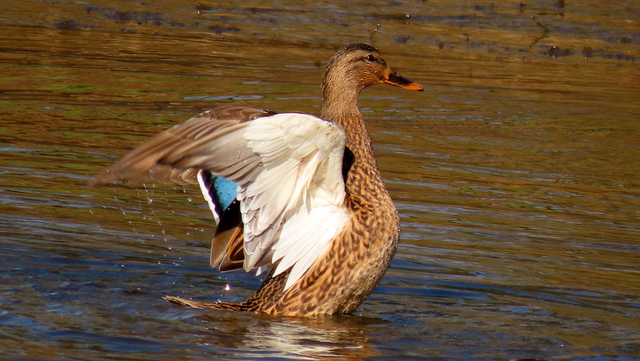
Sorry, no “Seahawk” (Osprey) or even Superb Owl in the lineup today, but we do have six more bird photos to share in the last game-day gallery of this football season, courtesy of readers! Above, a Kingfisher that Steve Bender spotted at T-107 Park; he also photographed the “dancing” waterfowl below, at Jack Block Park:
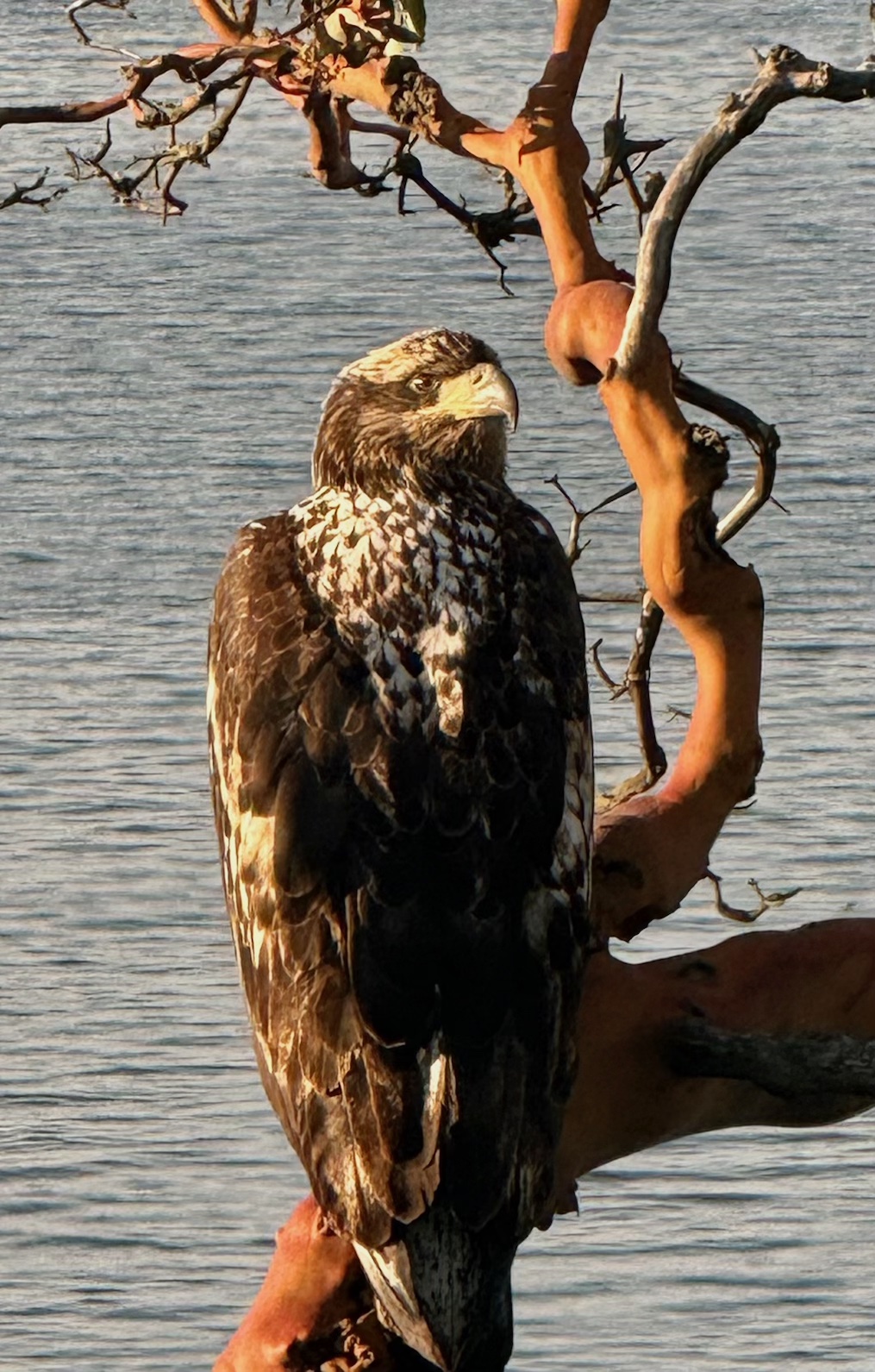
Yvonne Frankovich photographed this juvenile Bald Eagle:
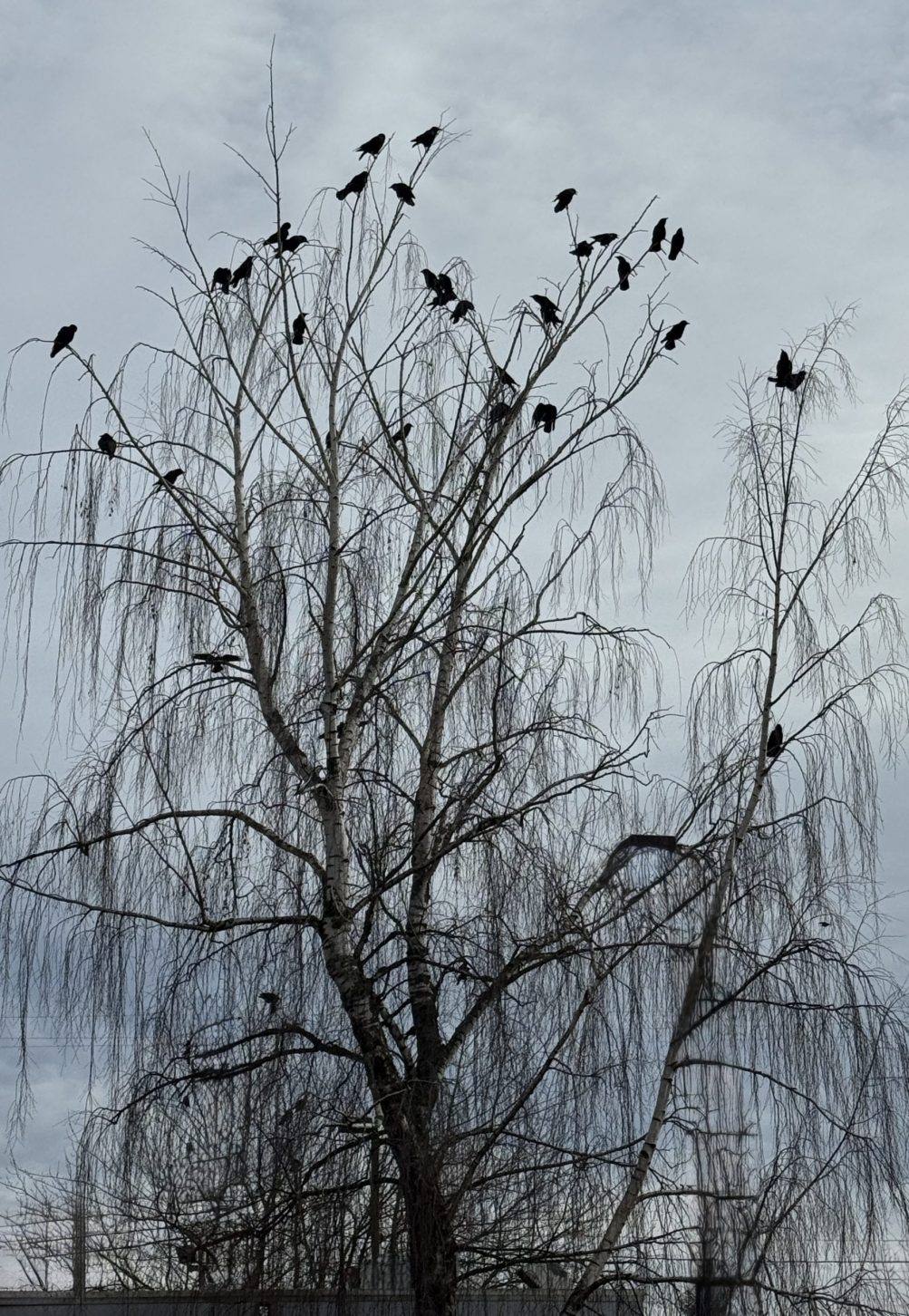
Also up in a tree with a view, these Crows, from Janelle Otterholt:
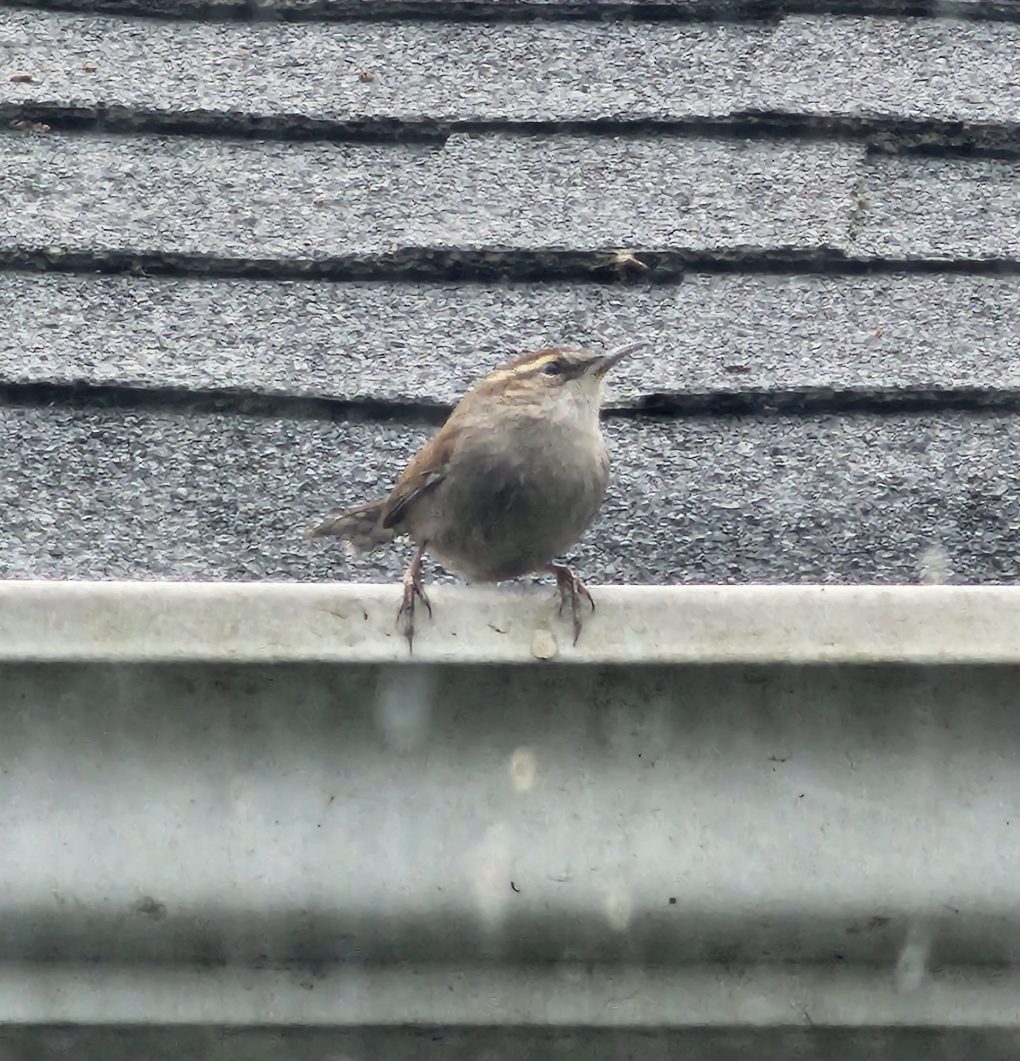
A Bewick’s Wren, from Jon Anderson:
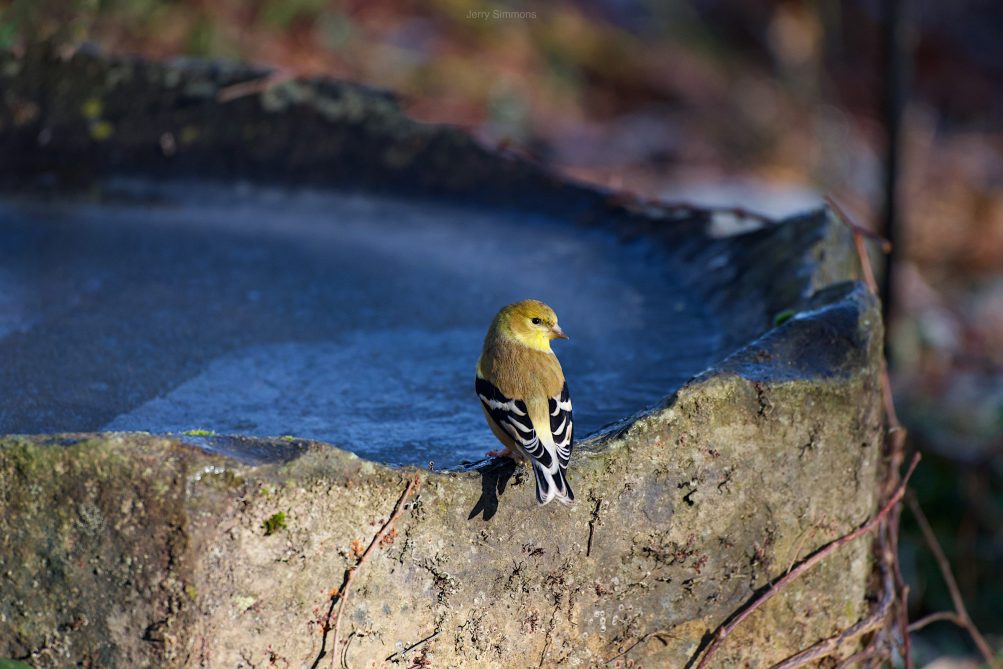
And Jerry Simmons contributes the American Goldfinch:
We of course publish bird photos the rest of the year too, including sometimes as the highlight photo on our event lists each morning – thanks to everyone for sharing bird and other photos – westseattleblog@gmail.com is the best way (unless breaking news, which can be texted to 206-293-6302) – thank you!
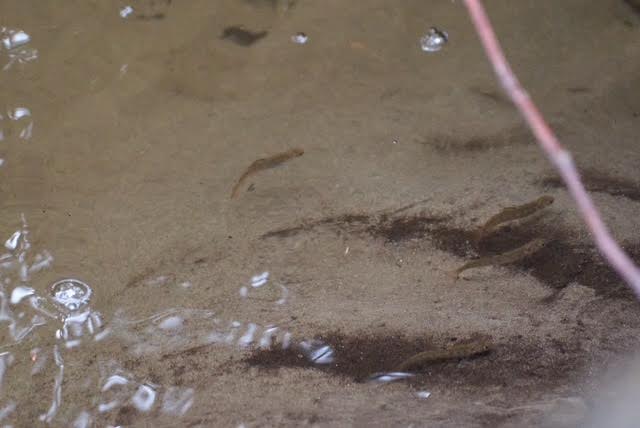
Fauntleroy Creek didn’t see many spawners during last fall’s coho-salmon return, but the first results have just appeared! Judy Pickens from the Fauntleroy Watershed Council shares the photo from Dave Gershgorn and report from Dennis Hinton:https://westseattleblog.com/blog/wp-admin/post.php?post=1141337&action=edit#edit_timestamp
We spotted the first tiny little coho emergents from the fall spawn today. Observed four little fry in the exact same spot where we saw the spawning pair, in the curve just above the fish ladder. Saw another eight just a few feet up the creek, below the first bridge. Dave got excellent photo proof, attached. So if you were desperately looking for a little good news today, here it is. New life on the creek. Heaven on this 60-degree, almost spring day.
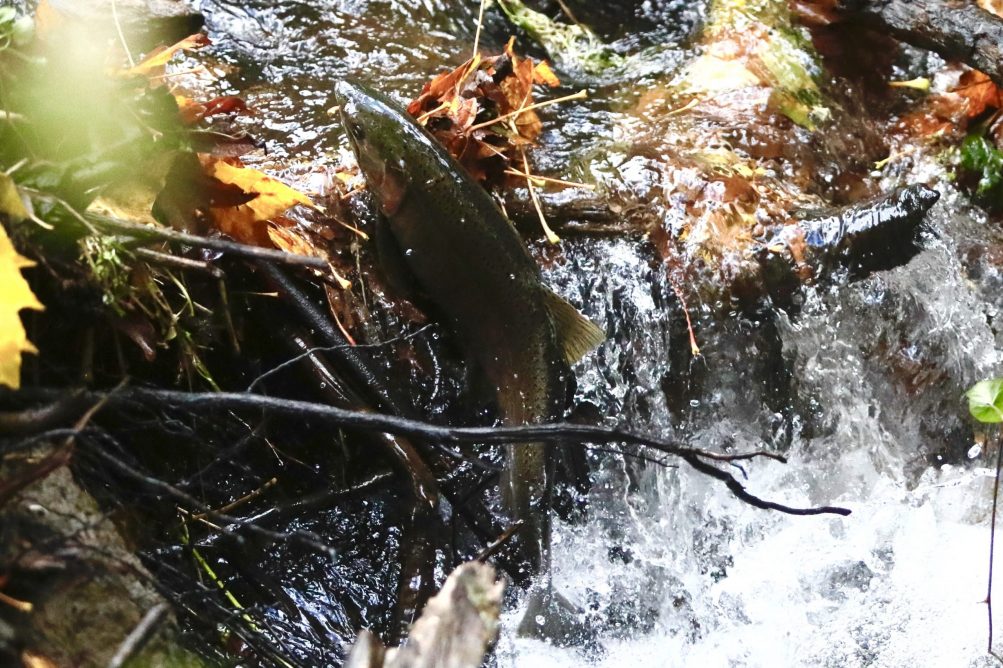 (October photo of salmon in Longfellow Creek by Manuel Valdes)
Puget Soundkeeper has released its full report on the fall salmon season in Longfellow Creek. It’s been monitoring coho salmon in the eastern West Seattle creek for a decade now, with a focus on gathering data about how urban pollution affects salmon survival. As its announcement explains:
For years, Longfellow Creek has been the epicenter of research studying the effects of 6PPD-quinone – a toxic tire chemical lethal to Coho salmon. Exposure to 6PPD-quinone causes a condition called Urban Runoff Mortality Syndrome (URMS), a disease characterized by symptoms such as disorientation and gasping for air, often killing Coho
within 24 hours. Furthermore, this chemical has been strongly linked to Pre-Spawn Mortality (PSM), where adult salmon die before successfully reproducing. Puget Soundkeeper’s annual Pre-Spawn Mortality Survey analyzes the spawning success of Coho salmon in Longfellow Creek to better understand the impacts of 6PPD-quinone.
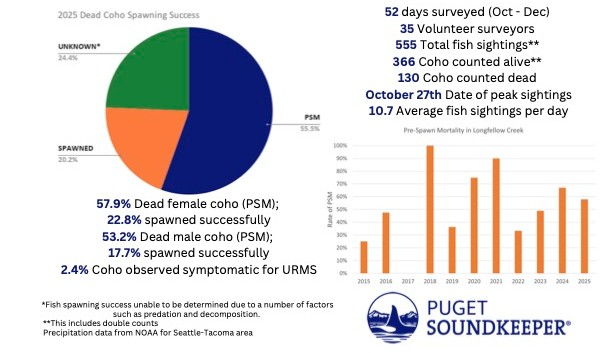
Here’s a one-sheet with results of this year’s survey, conducted from October through December. 55.5% of coho in Longfellow Creek died before spawning, and Puget Soundkeeper says that’s consistent with the data it’s been collecting since 2015 – some years up to 90 percent of the fish died before spawning.
So what can be done? Puget Soundkeeper says:
Fortunately, solutions exist. Green Stormwater Infrastructure (GSI) projects, such as raingardens or bioswales, can effectively remove toxins from runoff and prevent harmful chemicals from entering our waters. In addition to GSI projects, policy action is critical. A bill (HB 2421) aimed at removing 6PPD from tires was introduced to the Washington State House and Senate Environment Committees last week. Community members can help move this legislation forward by calling their representatives and voicing their support. [Here’s how]
Puget Soundkeeper will be recruiting the next cohort of salmon surveyors in August; stay tuned to our website for more information. Puget Soundkeeper thanks all volunteers, partners, and donors who make this project possible.
There are also volunteer cleanups during the season; we reported on one back in November.
| 0 COMMENTS