
West Seattle, Washington
27 Saturday
By Torin Record-Sand
Reporting for West Seattle Blog
The organization SR3 most often comes to Alki for the activities embodied in its name – Sealife Response + Rehab + Research.
At Alki Coffee Company on Saturday, the activities were education and outreach.
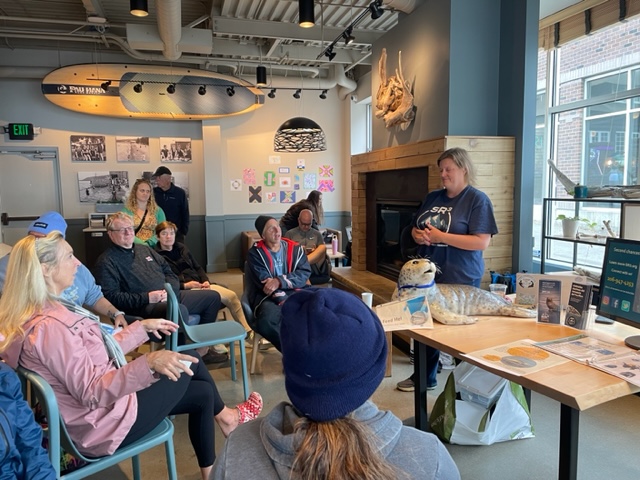
A group gathered at the coffee shop to listen to Casey Mclean, founder and executive director of SR3, which she launched in 2010 as a response to the lack of a marine mammal rescue group in the Pacific Northwest. She summarized her aim at the beginning of her presentation: “I was shocked there was nowhere for sick and injured marine mammals to go. I said, someone should do something about this, and someone said, ‘YOU should do something about this’.”
Mclean’s presentation went over the core tenets of their organization. She covered the ways in which they respond to marine mammal distress, how they rehabilitate marine mammals, and how they research the conditions of marine mammals in this region. She started with a summation of why the work matters: “All of these animals are apex predators, they speak to the health of our ocean overall. If they are sick, everything below them is going to be sick as well. Ultimately this affects all human life.”
The response efforts, she said, cover three main issues that cause serious distress in marine mammals: emaciation, disease, and direct human interaction (such as gunshots, unnecessary human touch, or interaction with domestic animals such as dogs). Their organization, she said, is ready to respond whenever. “We are ready 365 days a year, 24/7. Times aren’t necessarily convenient. The animals need you most right before dawn, right before it gets dark, and on holidays.”
 (WSB file photo)
They have both a dedicated ambulance and a truck ready to respond to incidents.
She said the number of reported incidents has increased since the 1990s. This represents a dual-edged sword: “There are more people who are spotting them, there’s more people who live here and we understand why the animals are important – so that’s positive.” but, she said, “There are also issues with the populations, the populations have grown because there is less hunting, so there are more animals now impacted by humans.”
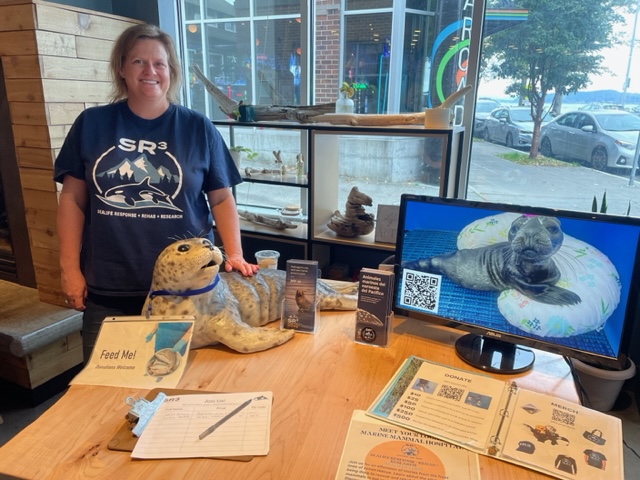
For the rehabilitation portion of the presentation, she went over the details of the SR3 facility in Des Moines, which has been operating since 2021. She provided some statistics: They receive around 600 calls a year, and currently are actively treating around 188 marine mammals. They actively teach students and volunteers in the marine veterinary field, in addition to their primary staff, they’ve taught around 45 students, and have 225 volunteers, who put in around 10,000 hours of volunteer work a year.
Primarily, they care for the marine mammal species most commonly encountered in the Northwest: Harbor seals and their pups, sea lions, and sea otters. But she highlighted that recent patients have included less-often-seen animals, such as a porpoise and sea turtles
The sea turtles, she said, represent the pace of the rapidly changing climate. “We recently treated loggerhead turtles. Only eight have been documented [in the region] throughout the past 25 years, but we had four over the past few years.” The reason, she said, was “Global warming causes new migration patterns. They just follow the warm water, then they get pushed into our cold water.”
For research, she went over their work in studying zoonotic disease outbreaks. “We’re trying to detect things before they happen. Avian influenza is an example. It went from birds to marine mammals, and we can detect that.” she said. The previously mentioned rare rescue of a porpoise also provided an insight to new research: “[They] had a parasite that we have never seen interact with the porpoise in this specific way, causing neurological damage.”
She also went over their work in studying and tracking orca pods from the air, with drones.
 https://www.justincaseplans.com/events
Mclean said frequently they have shared this information with government entities in both the United States and Canada, which has led to changes in regulation to help protect the whales.
She finished with details on how people can help SR3. She recommended looking at options to volunteer or donate to the organization, and pointed at the organization’s website for both. She said that while the organization is for the most part private, there are also ways for the public to interact with it, such as fundraisers, or their yearly open house. There will be another open house next April.
She shared one last highlight on something which she felt would have the most impact for the organization: contacting local legislators about state legislation. She highlighted that there is a current bill (HJM 4004), text available here, for the government to authorize the killing of seals and sea lions to protect local salmon populations. The bill has gone through one committee, but is still waiting for a House vote, which will likely occur in the nexxt session.
She feels that this bill will be incredibly harmful to the local marine mammal population. “This bill won’t help salmon or whales. If we kill the seals that are eating salmon, we will also hurt the whales that are dependent on seals as available prey.” She detailed that the population of harbor seals in the Pacific Northwest has remained steady since the 2000s, even while the salmon population has declined. “They [state legislators] have tried to do measures like this in some way since 2008, it does not change anything, salmon populations are still declining.” she said. She encouraged the group gathered there to contact their local legislators to encourage them to vote against the bill.
The audience was composed mostly of members from local open-water swim groups, including the Notorious Alki Swimmers and the Vashon Open Water Swimmers. Both groups were finishing up a swim that afternoon near Alki. We spoke to one swimmer about their interest in why they were there to attend the event: “We encounter the seals a lot when we swim, they have an endearing curiosity for humans, and come right up to us while we’re on the water. You develop a great respect for them.”
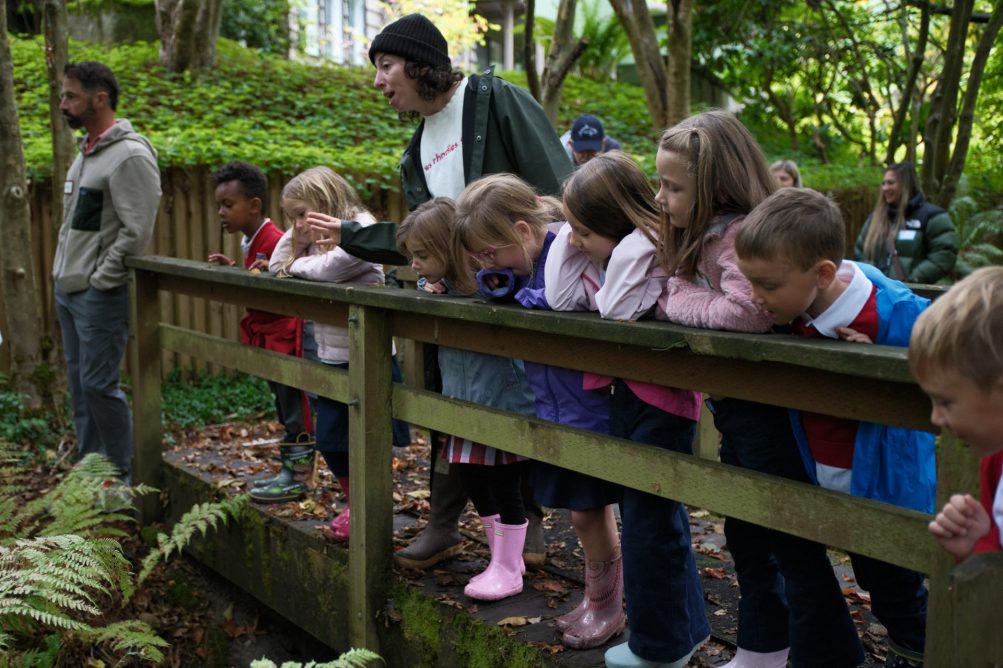 (Photos by Dave Gershgorn. Above, guide Alana Kayat points out where spawners can rest as they move up the creek)
It’s almost arrival time for Fauntleroy Creek‘s spawning salmon, but first, a school group arrived to learn about them. Judy Pickens from the Fauntleroy Watershed Council sent this report with a preview of what’s ahead onshore:
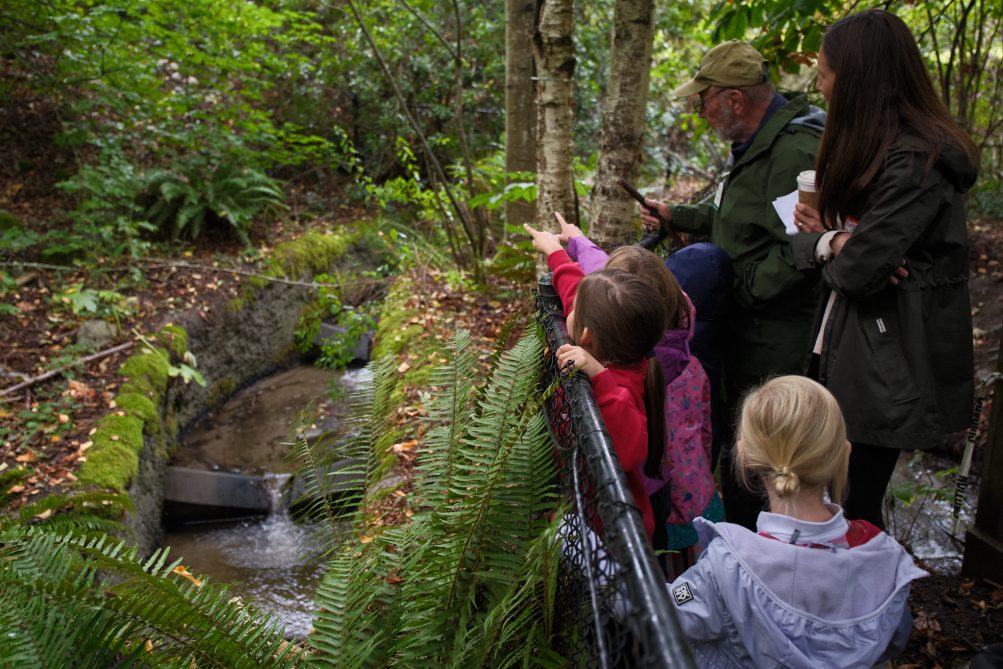
On Thursday, 44 kindergarten students from St. Francis of Assisi School in Burien came with two dozen teachers and parents to explore salmon habitat in lower Fauntleroy Creek. Volunteer naturalist Shannon Ninburg designed the experience to build on what the students had been learning about salmon in their classrooms. While escorting small groups along the channel, 10 volunteer guides shared their knowledge of what the students were seeing, hearing, and touching.
(Students, with guide Dennis Hinton, spot something of interest)
The field trip was just over two weeks before the annual drumming hosted by the Fauntleroy Watershed Council, which will kick off Salmon Watch 2025. The all-ages free event on Sunday, Oct. 26, at 4 pm will include drumming, singing, and an opportunity to welcome spawners when they come in from saltwater. Bring a drum or shaker of any kind or just yourself to circle at creek level behind the house below the fish ladder viewpoint (SW Director & upper Fauntleroy Way SW). Heavy rain will cancel.
The watch will likely continue to almost Thanksgiving; we will publish updates here, including word of a weekend “open creek” to which everyone will be welcome
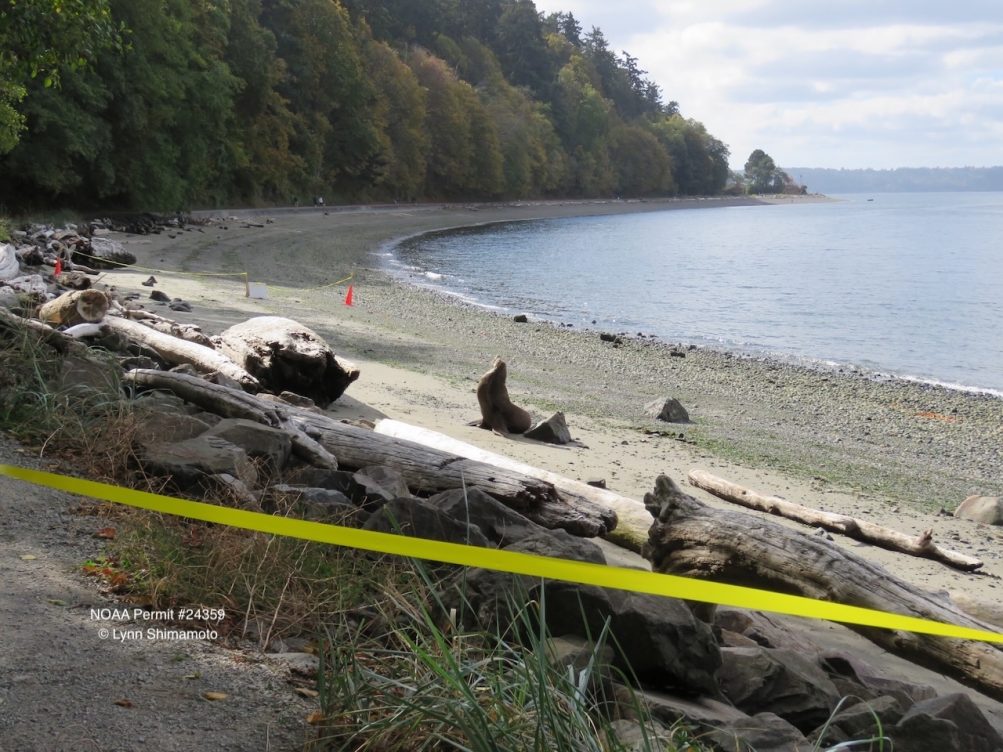
If this California sea lion turns up again on a local beach, Seal Sitters Marine Mammal Stranding Network hopes to hear about it. SSMMSN’s Lynn Shimamoto explains why in this report and photo from its appearance at Lincoln Park:
On Wednesday, Seal Sitters responded to a call about a California sea lion at Lincoln Park. Bree, the caller, was rightly concerned – Seal Sitters first responder found an emaciated and lethargic sea lion lying on the beach only 25 feet from the sidewalk.
Volunteers set up a perimeter to keep people and pets away, well aware that the sea lion may be suffering from a transmissible infection. Just before the sea lion swam away in the early afternoon, marine mammal veterinarian Dr Stephanie Norman arrived for a visual assessment.
Dr. Norman thinks the animal’s symptoms suggest leptospirosis, though the sea lion could also have cancer. According to our stranding partner SR3, California sea lions are currently experiencing an outbreak of leptospirosis. This zoonotic disease primarily affects the kidneys and is often fatal to sea lions. Humans and their pets can contract lepto through direct contact with urine or feces, or contaminated water or soil.
The stranding network hopes to test the sea lion and evaluate for treatment when it hauls out again. If you see a marine mammal on the beach, please call the Seal Sitters hotline at 206-905-SEAL (206-905-7325).
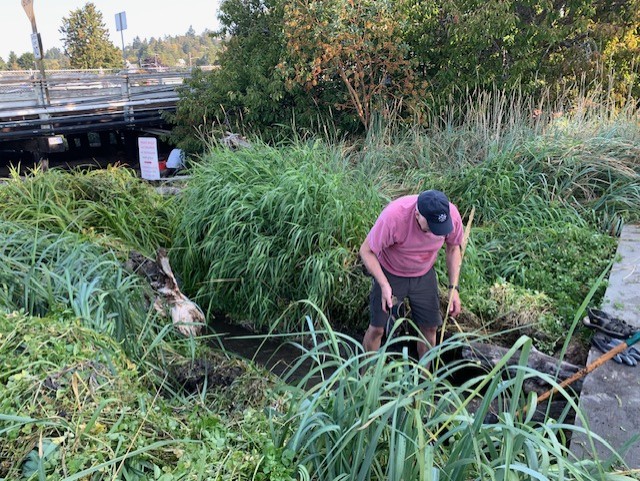 (Photo by Dennis Hinton: Gerry Goit finishes clearing channel so spawners coming in under ferry trestle can reach the creek’s mouth)
By Judy Pickens
Special to West Seattle Blog
Saturday’s work party to clear the way for coho spawners to reach the mouth of Fauntleroy Creek was mostly about weeding. A dozen volunteers moved a few drift logs mired in the sand, then turned to addressing beach vegetation chocking the channel. They had the way cleared an hour later but will keep an eye out to make sure it stays open through spawning season.
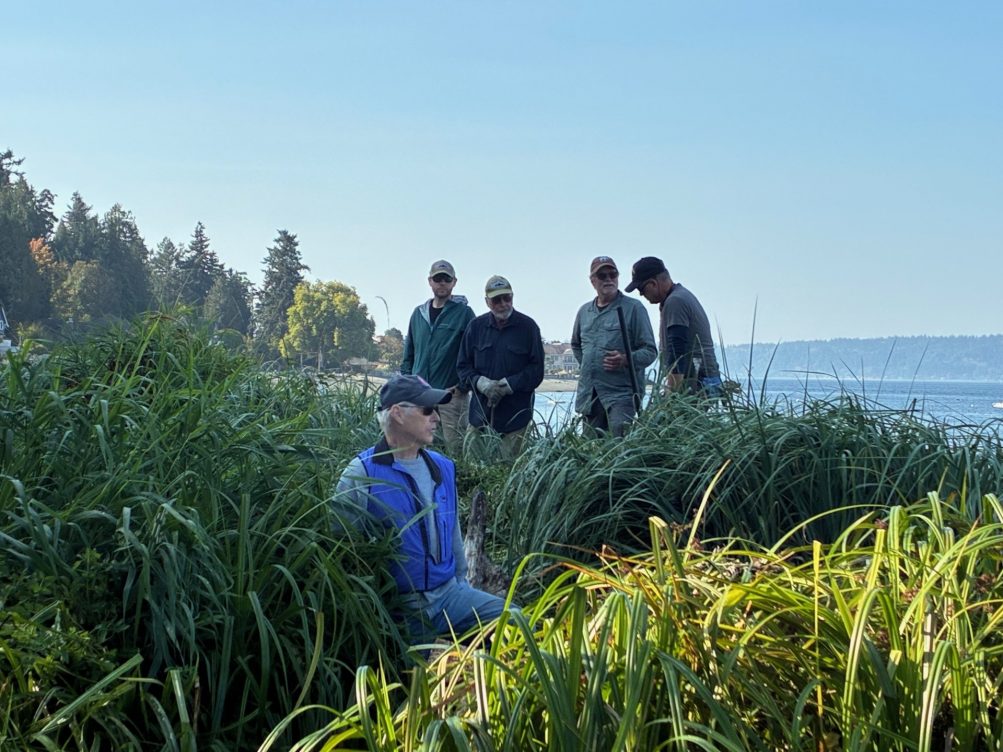 (Photo by Diana Spence: Fred Fleischmann and fellow volunteers survey magnitude of weeding task)
Salmon Watch 2025 will officially start with the annual drumming on Sunday, Oct. 26, at 4 pm at the house below the fish-ladder viewpoint (SW Director & upper Fauntleroy Way SW). A few volunteers will get a head start by monitoring Fauntleroy Cove for schooling spawners, then two dozen watchers will begin checking the spawning reach daily.
The first spawners in modern history came into the creek in 1994. Since then, 20 has been typical for this small urban creek. Last year was anything but typical, however, when a record 347 had come in by Nov. 24.
If spawners come in, the Fauntleroy Watershed Council will host a weekend open creek for the general public and we’ll announce it here.
The football game’s over but not too late for a game-day bird gallery! Let’s start with some real-life hawks:
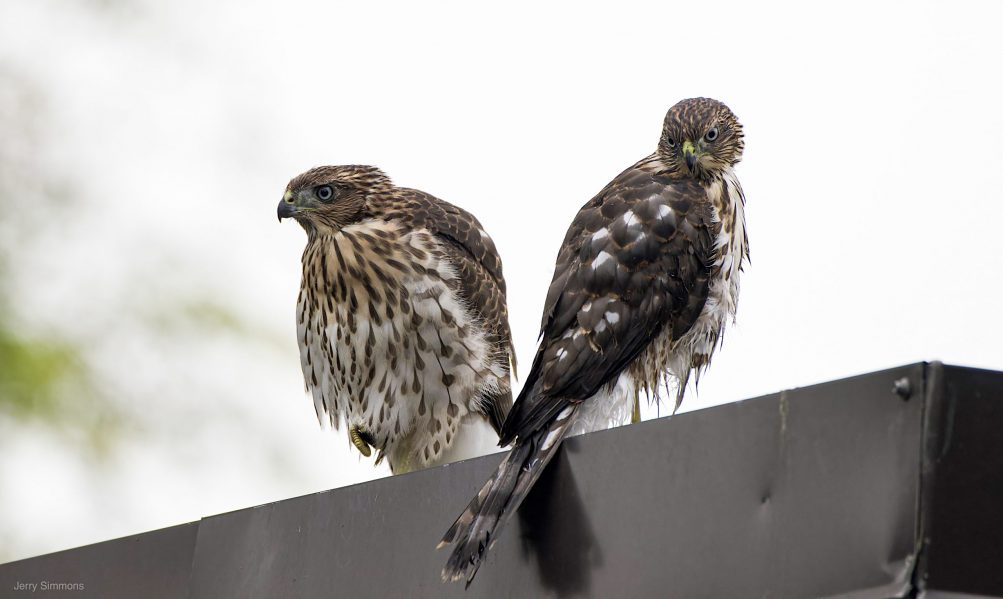
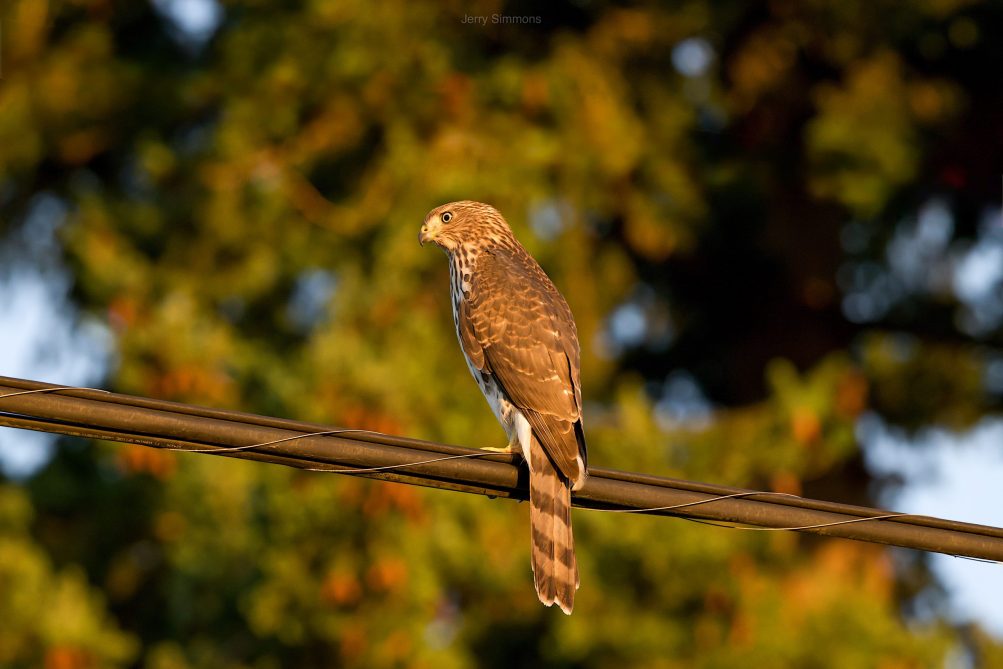
Jerry Simmons photographed those two juvenile Cooper’s Hawks – and this non-juvenile, bathed in sunrise light, too:
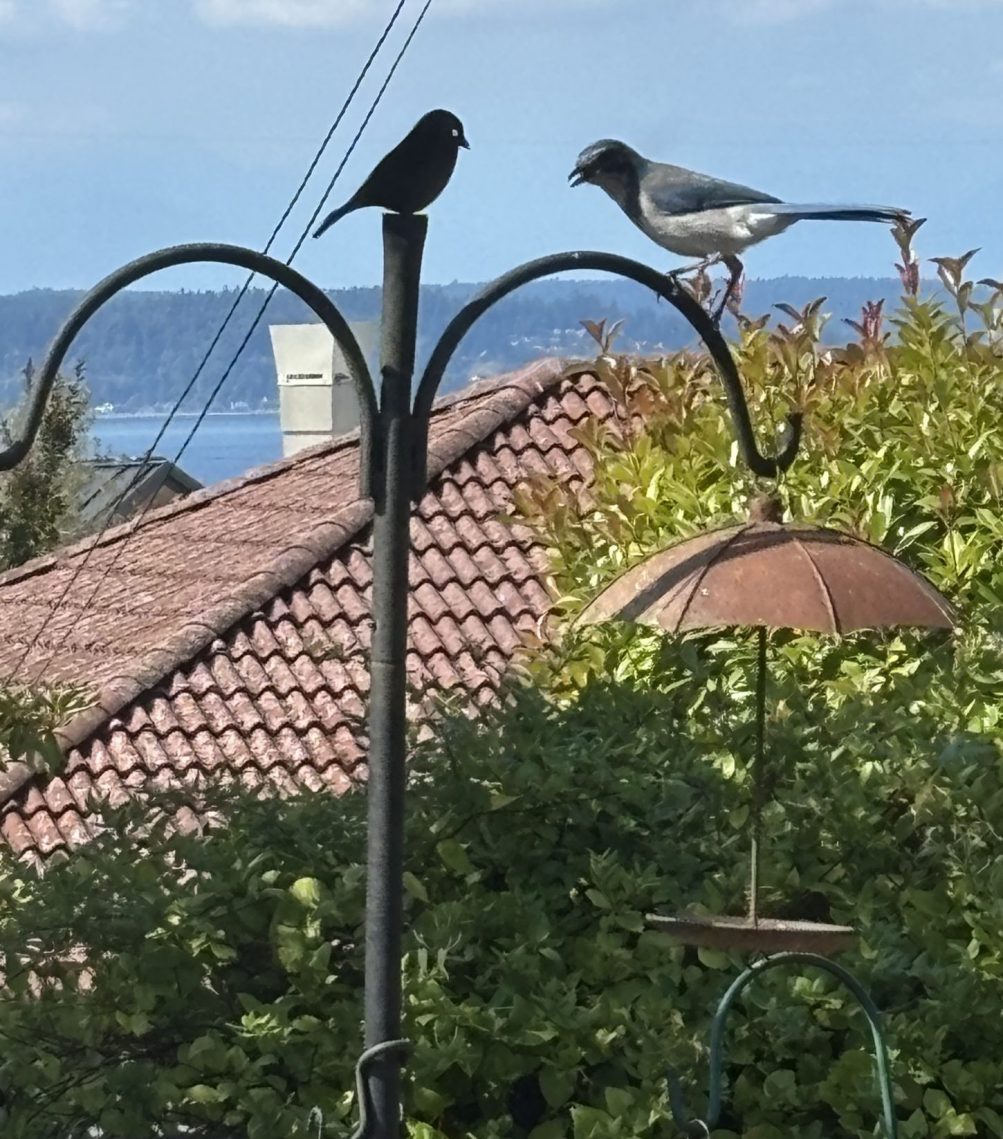
Lorabeth Lawson shows us a California Scrub-Jay examining a bogus bird:
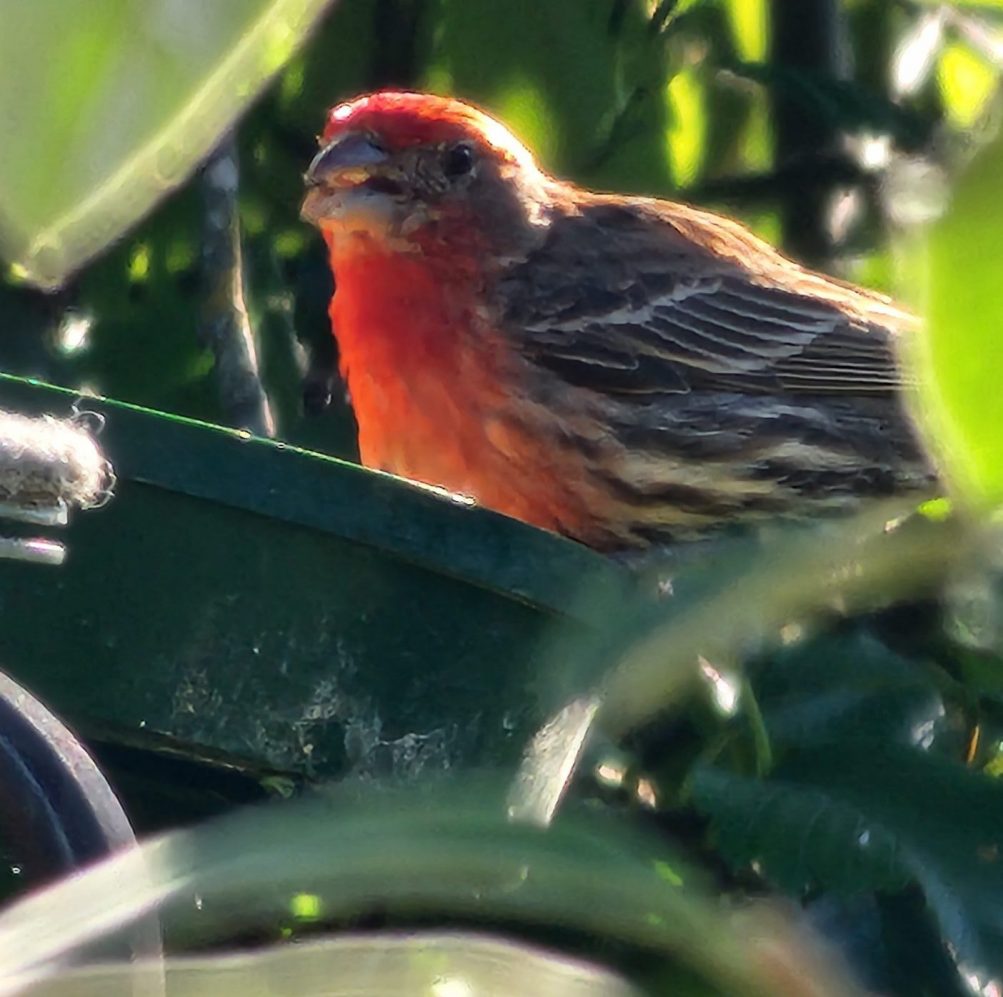
Jon Anderson sent this House Finch photo much earlier in the summer, but hey, beauty is timeless:
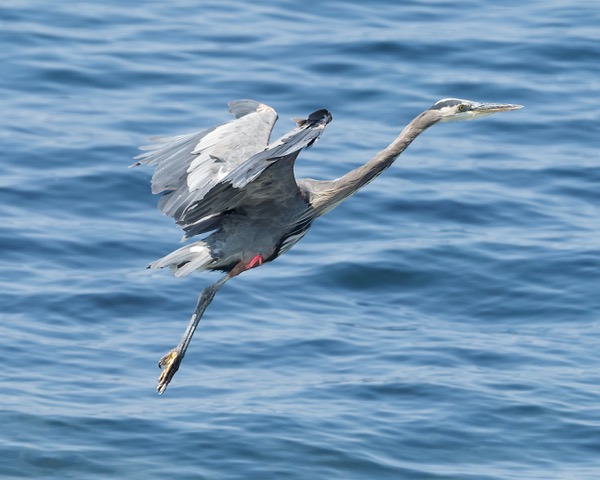
Look closely for the burst of color from the prey this Great Blue Heron photographed by Gary Jones is holding:
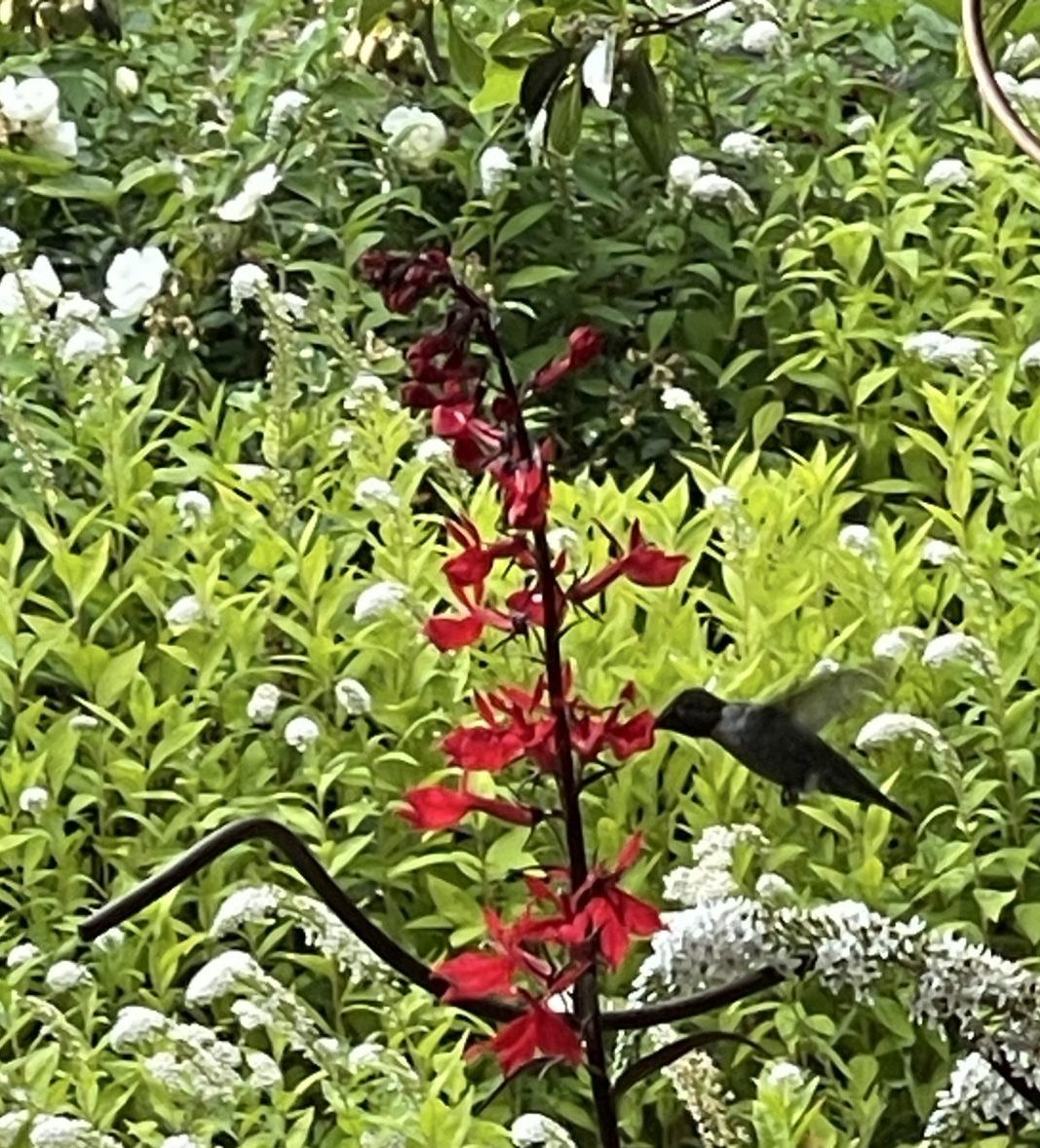
Kim Petram caught a Hummingbird at work:
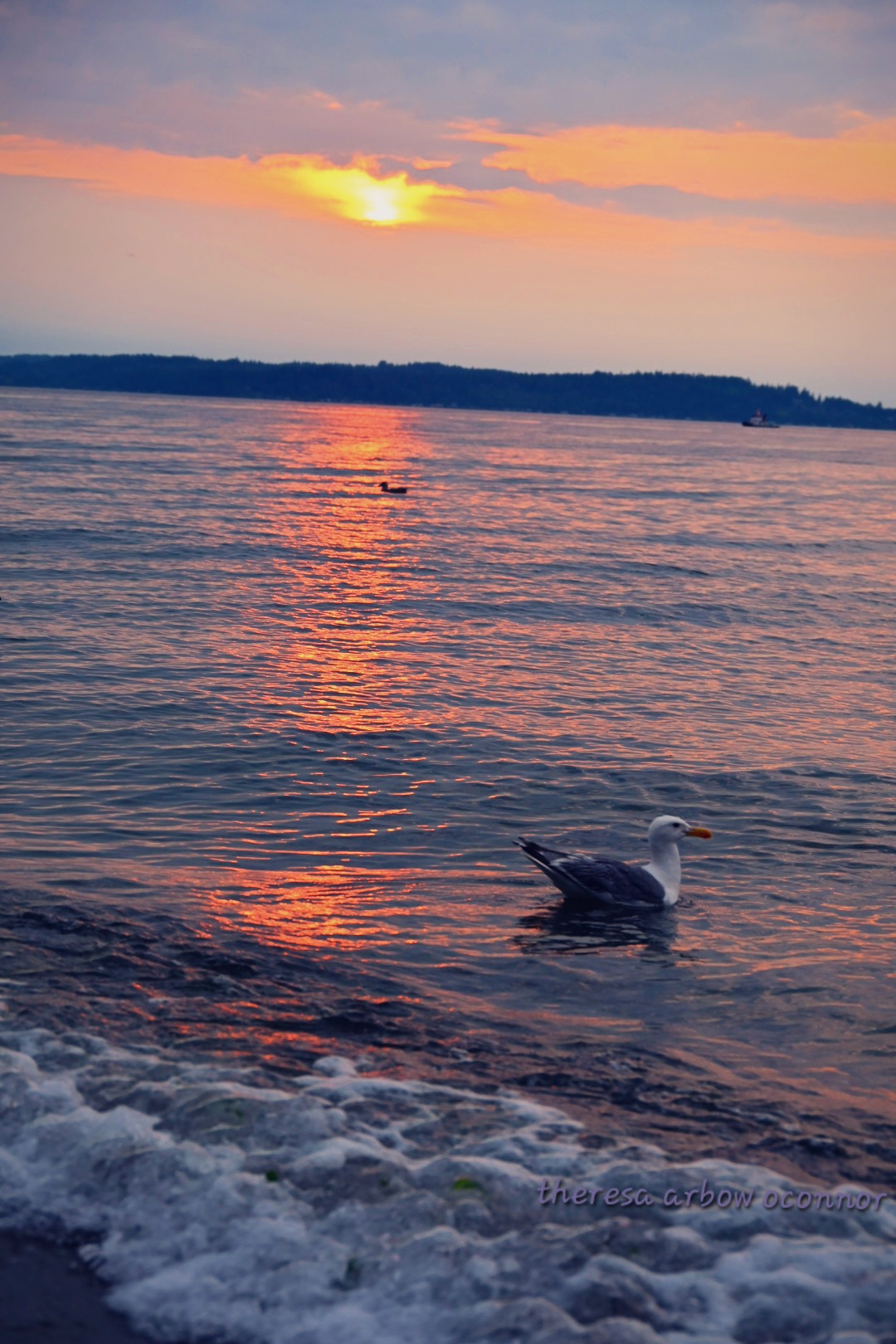
Even an everyday Gull can look noble in the sunset glow – Theresa Arbow-O’Connor sent this photo:
Big thanks to everyone who kindly shares photos so we can share them with you, from birds to blossoms to breaking news! westseattleblog@gmail.com unless it’s urgent, in which case you can text 206-293-6302 – thank you!
Many coyote videos are fairly fleeting. Not this one. It was sent by Jordan, who explains, “We discovered some large animal scat in our small fenced front yard (Friday) morning (and) found that it was a coyote, captured on our security camera around 1 am. We have a small dog and we’re fortunate the coyote wasn’t there when we were out there earlier (that night).” Jordan adds, “We live at the corner of Lander and Walnut, the NE corner of Hiawatha. The back of our house is the Fairmount Ravine.” But coyotes turn up far from greenbelts, too; here’s what you need to know in case you encounter one.
Thanks to everyone for the photos and video! These three sightings were along the Alki shore:
Above and below, Caroline Weeks sent short clips of three otters enjoying breakfast on the rocks Friday.
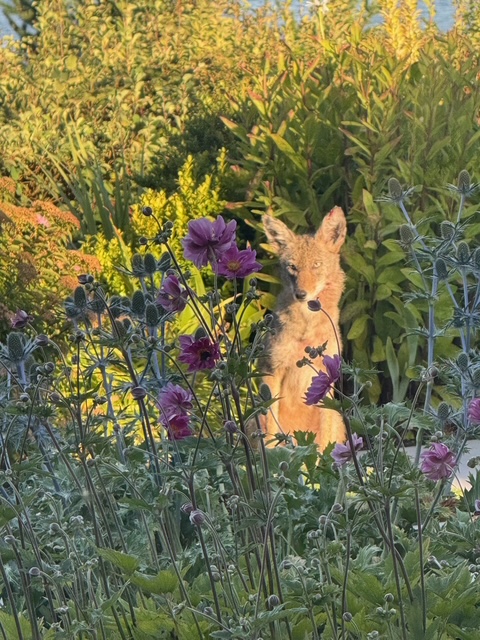
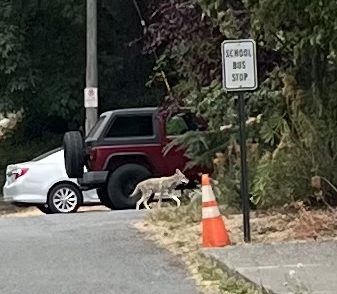
Near Alki Point Lighthouse, an anonymous texter saw this coyote around 7 am today:
(Read a coyote-coexistence infosheet here.) And though it’s not low-low tide , today’s low tide was enough for this view photographed by Doug Eglington:
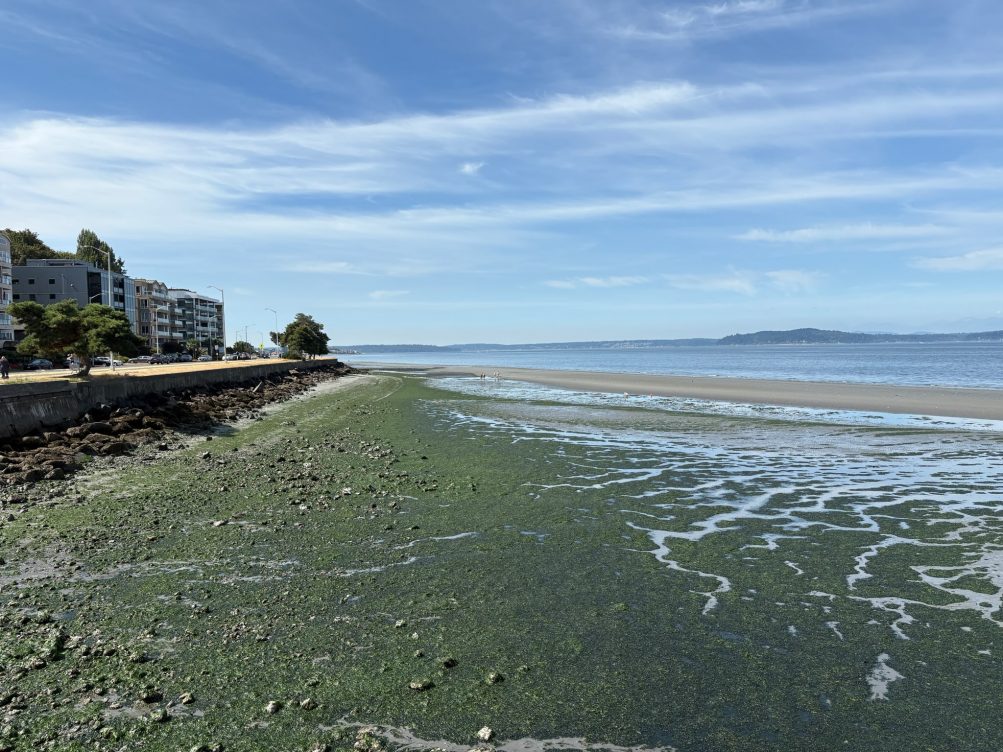
That was a -1.9-foot low tide; tomorrow’s lowest tide will be out to -1.6 feet at 12:17 pm.
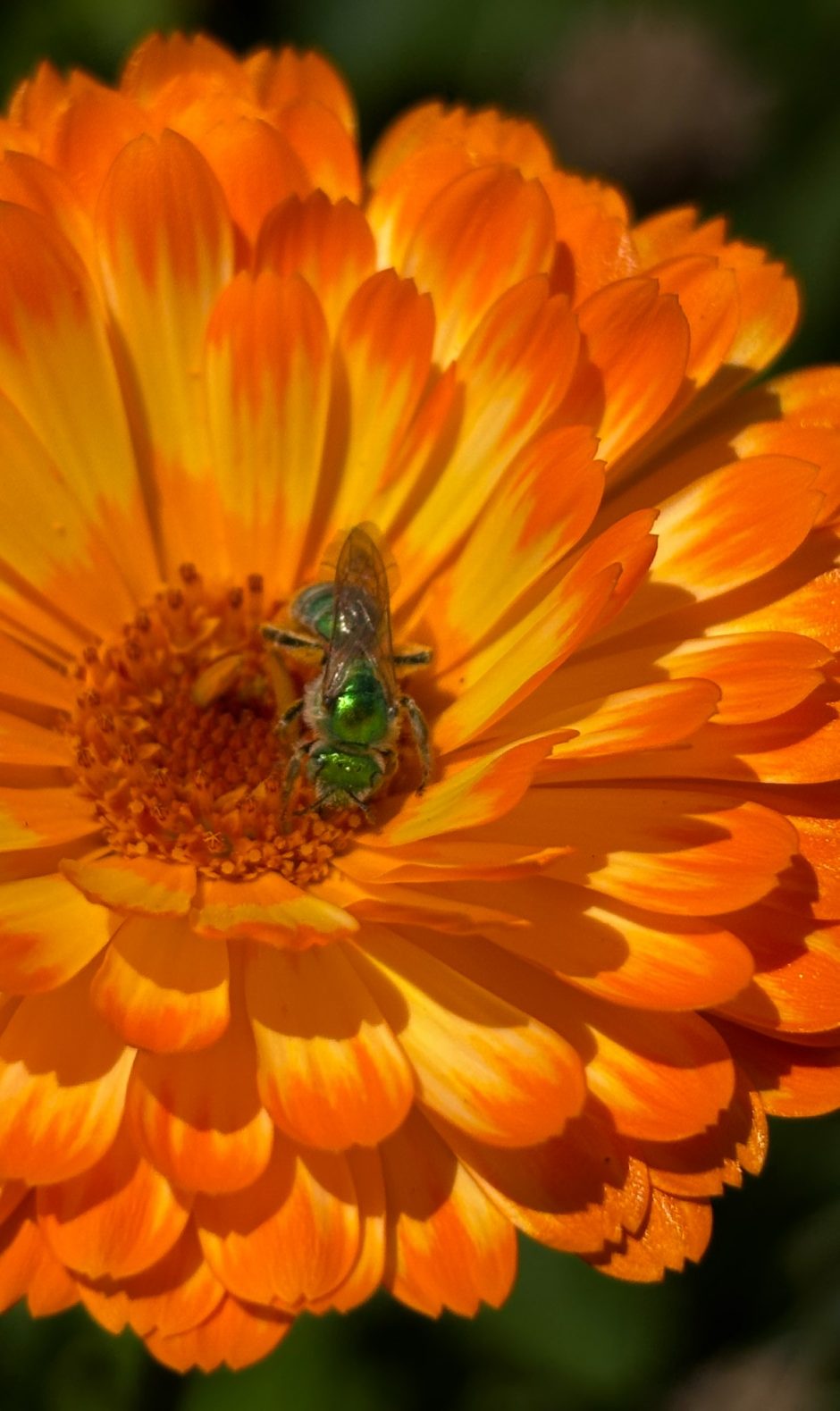 (Sweat bee on calendula, photo by Rosalie Miller)
Not all bees are created equal. The Washington Bee Atlas‘s mission is to identify and map our state’s wild bees, and they’re looking for more volunteers to join in, You’ll be able to talk with some of them – including West Seattle photographer/gardener Rosalie Miller – this Sunday (August 10) at West Seattle Nursery (5275 California SW; WSB sponsor). They’ll be tabling 10 am-2 pm, so you are welcome to drop in at any time during that window. WSN’s announcement invites you to “learn more about local pollinators, how you can get involved, and why wild bees are so important to our ecosystems.” Find out more about the Washington Bee Atlas here.
Two coyote sightings reported to us so far today:
FAUNTLEROY: From an anonymous reader:
Saw a coyote while walking my dogs just before 11:00 this morning. It was behind me on 46th Ave SW and turned up Tillicum once I noticed it and stopped to watch it. A pretty big one — about the size of a German Shepherd.
GATEWOOD: Olivia emailed before 11 am to report, “I just spotted a coyote running around my neighborhood around 36th Ave and Othello Street about ten minutes ago. There are a lot of dogs out today and want to give others a heads up.”
If you’re not sure what to do if you see one – or how to encourage them to keep their distance – here’s an infopage you’ll want to read.
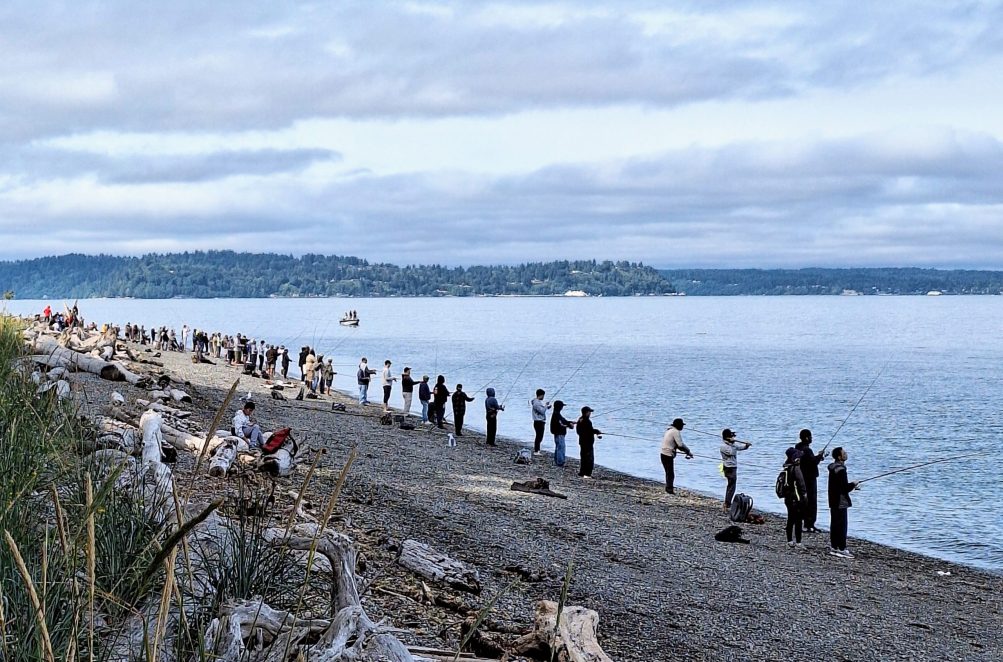
Thanks for sending the photos! It’s a sight you’ll only see every two years – people fishing almost elbow-to-elbow on Lincoln Park‘s north shore, in pursuit of pink salmon. The photo above is from Mike M. today, busier than this scene captured by Steve Pumphrey on Thursday:
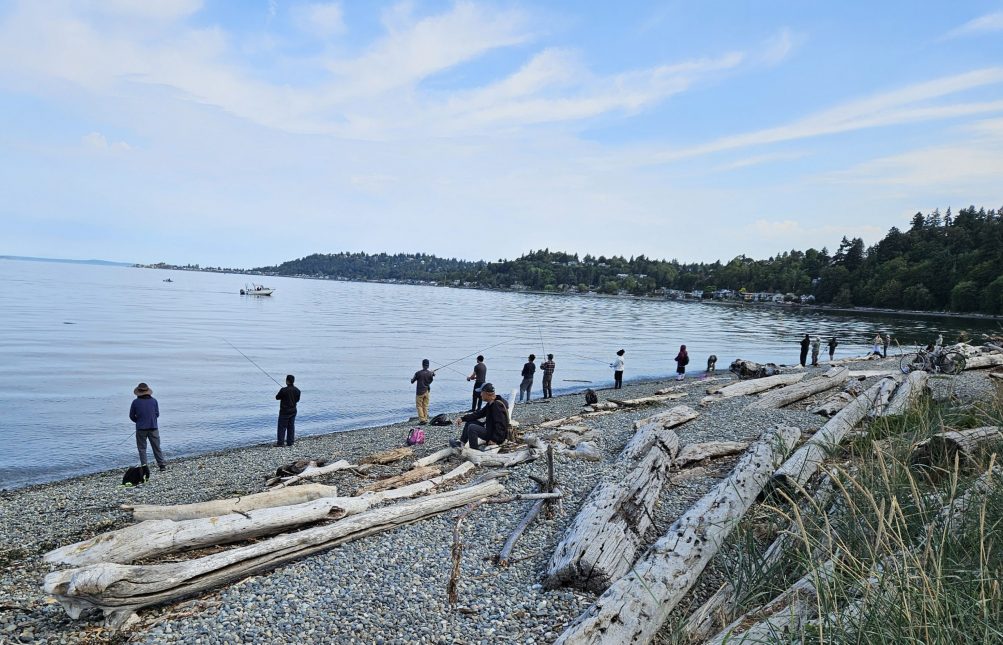
The run is an every-other-year phenomenon, and the state Department of Fish and Wildlife says this year’s run is huge:
The 2025 Puget Sound pink salmon forecast is 7.76 million — up 70% from the 10-year cycle average — and predicted to be the third largest total return on record (up from a 2023 forecast of 3.95 million and an actual return of 7.22 million).
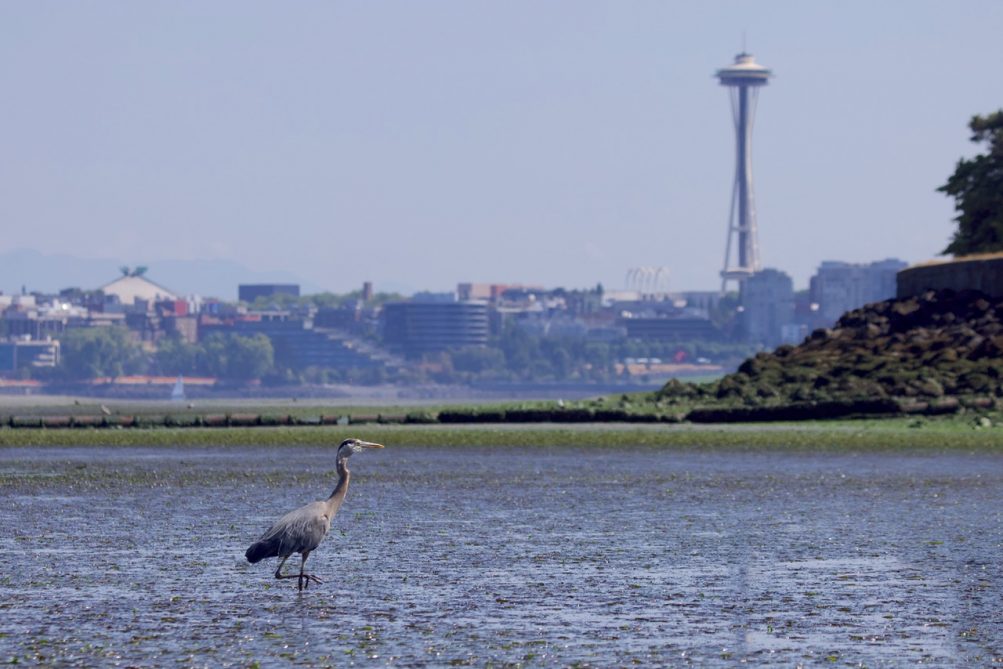
Thanks for the photos from today’s low-low tide! The ones above and below are from Rainer Klett.
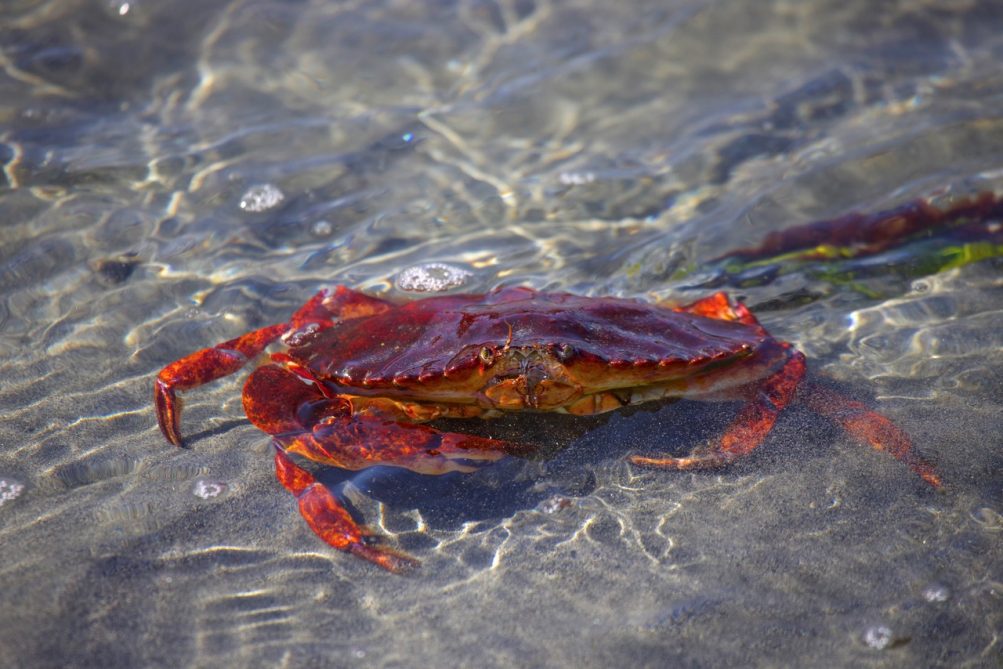
And the next four are from Rosalie Miller, who included ID’s – first, an Anemone and Ochre Sea Star:
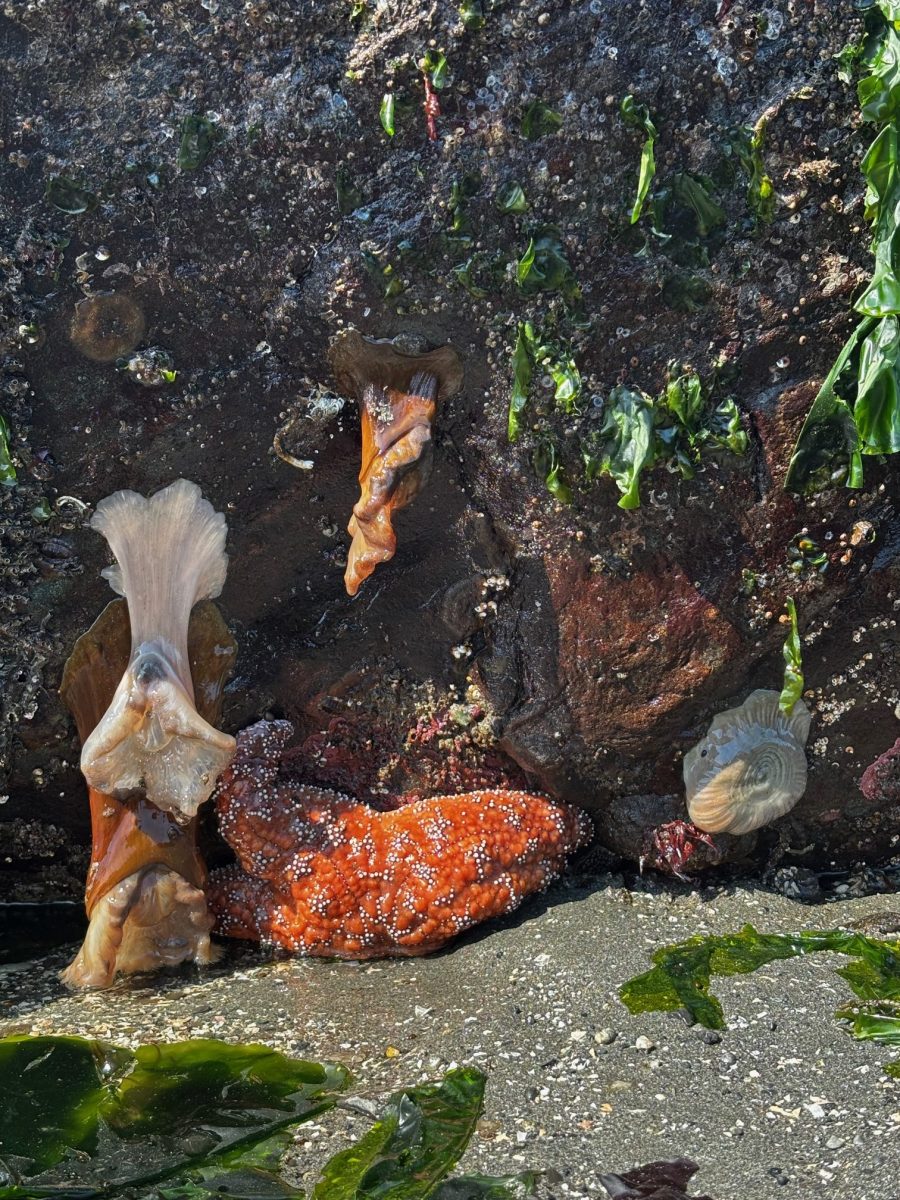
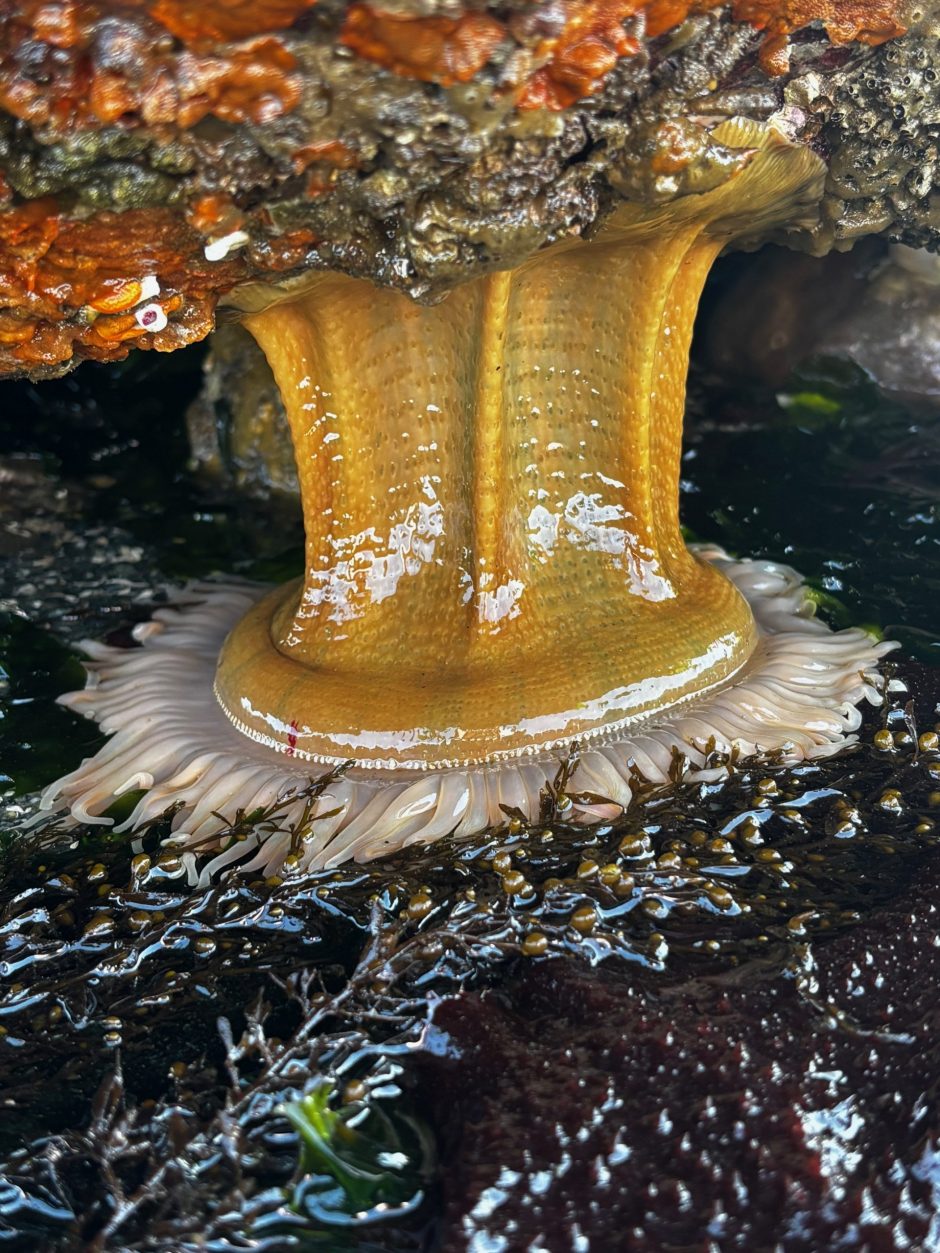
A Painted Anemone:
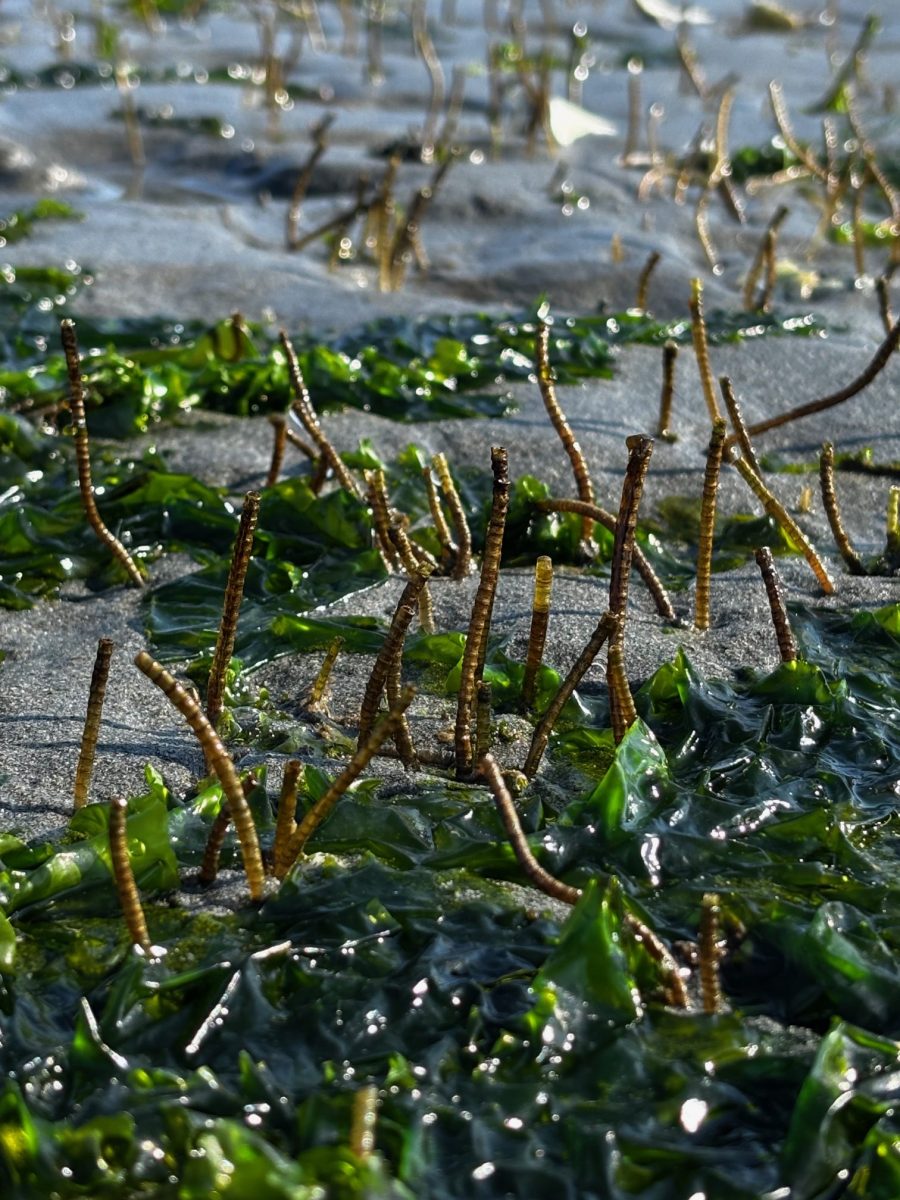
A Glassy Tubeworm:
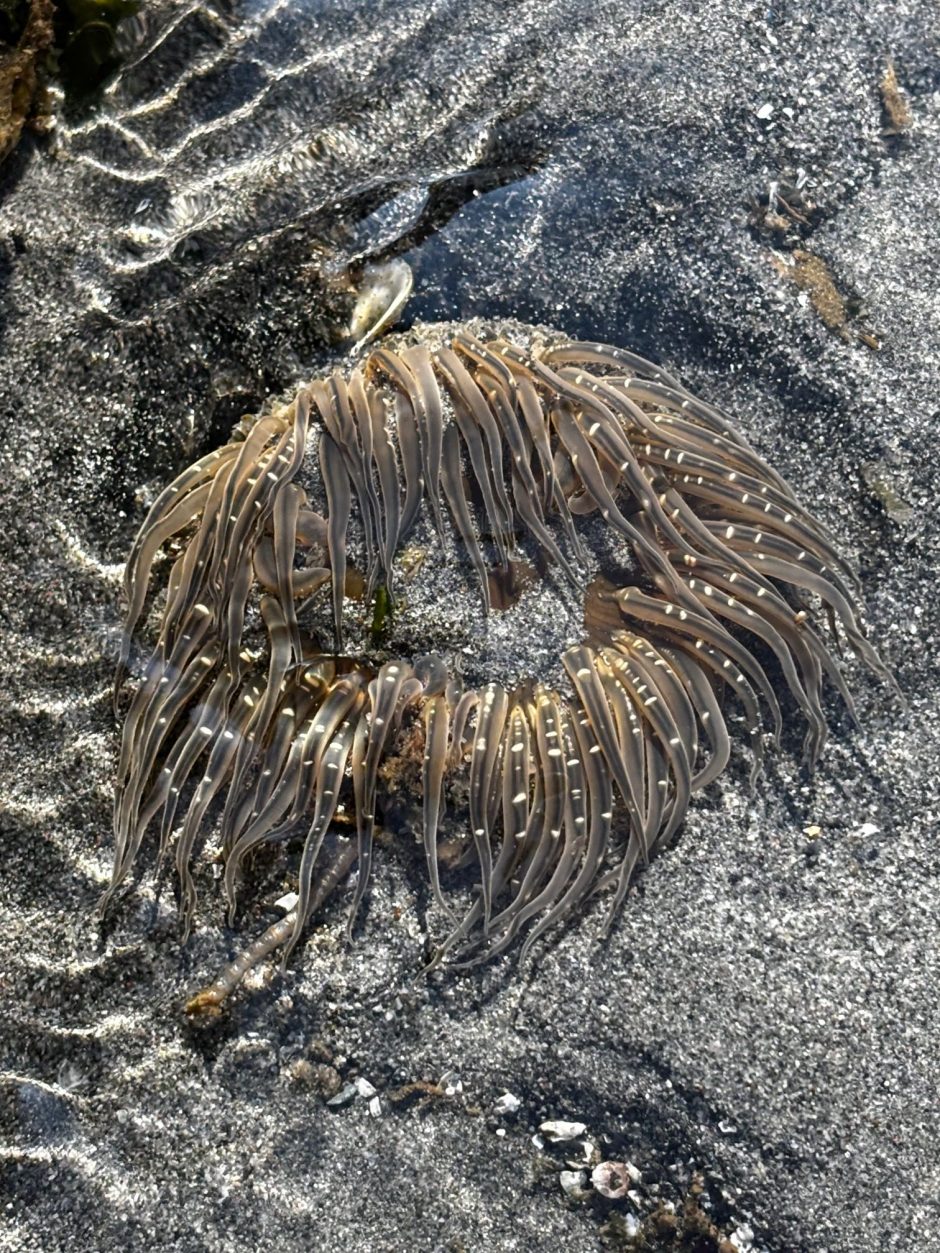
And a Moonglow Anemone:
Tomorrow’s low-low tide will be out as far as today’s was, -3.0 feet, at 11:07 am.
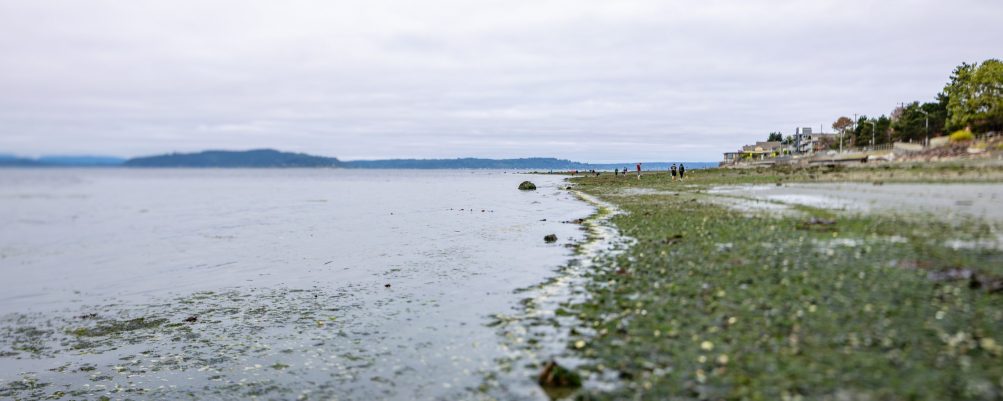
As we’ve mentioned, this week brings the final daytime low-low tides of summer. Thanks to Jamie Kinney for the photos from Constellation Park today.
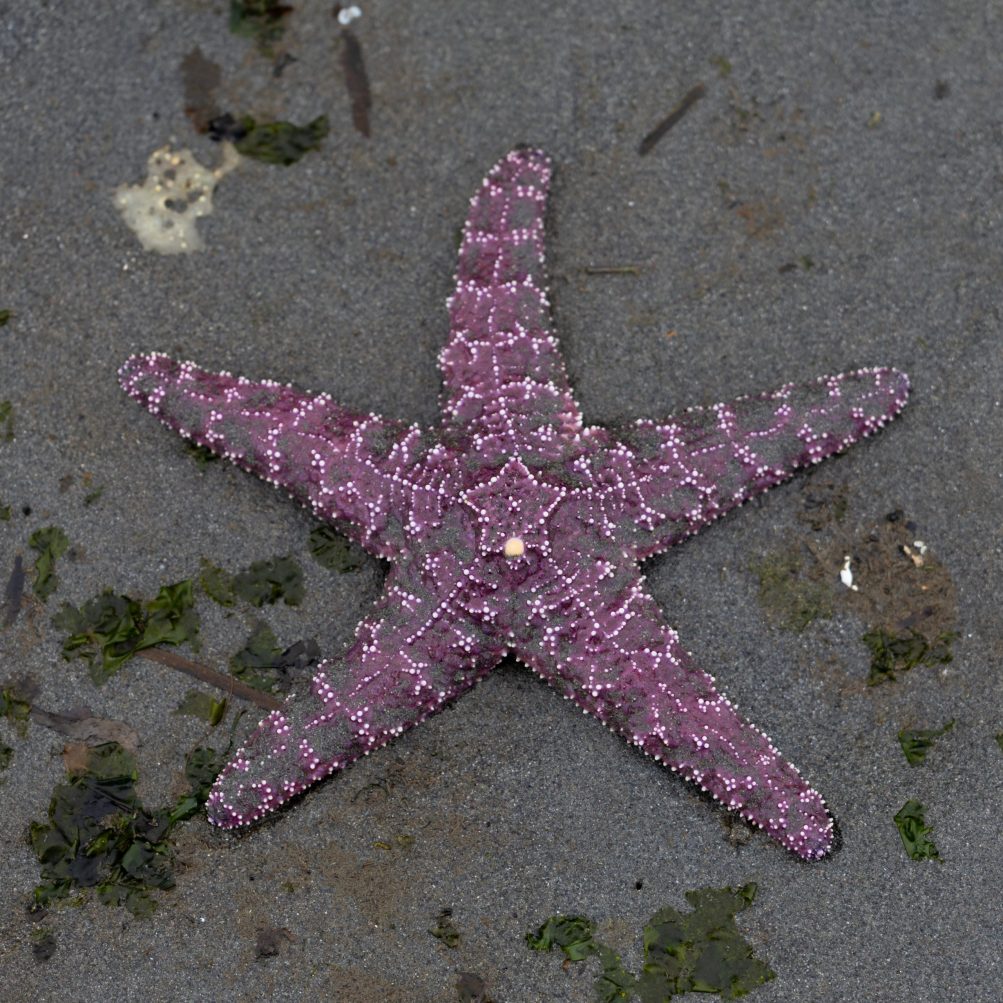
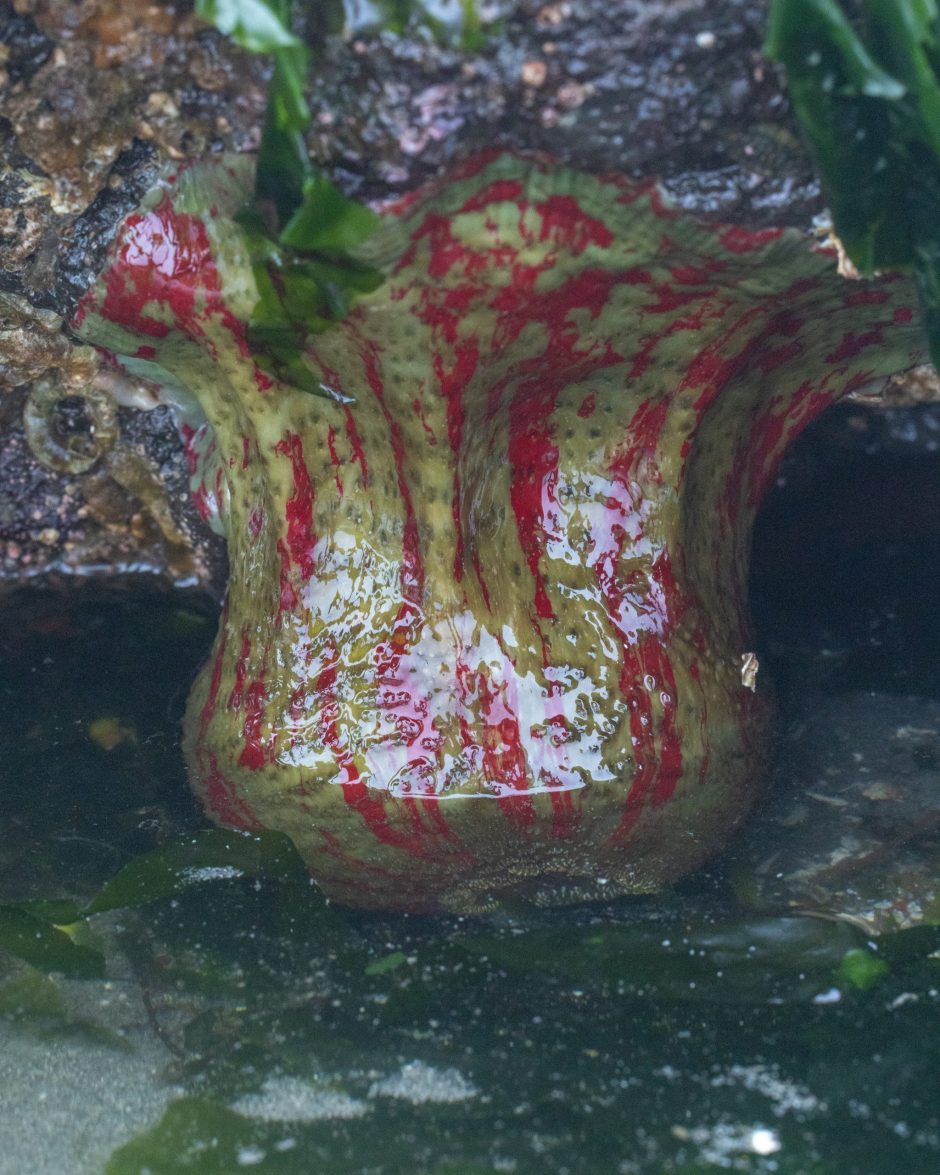
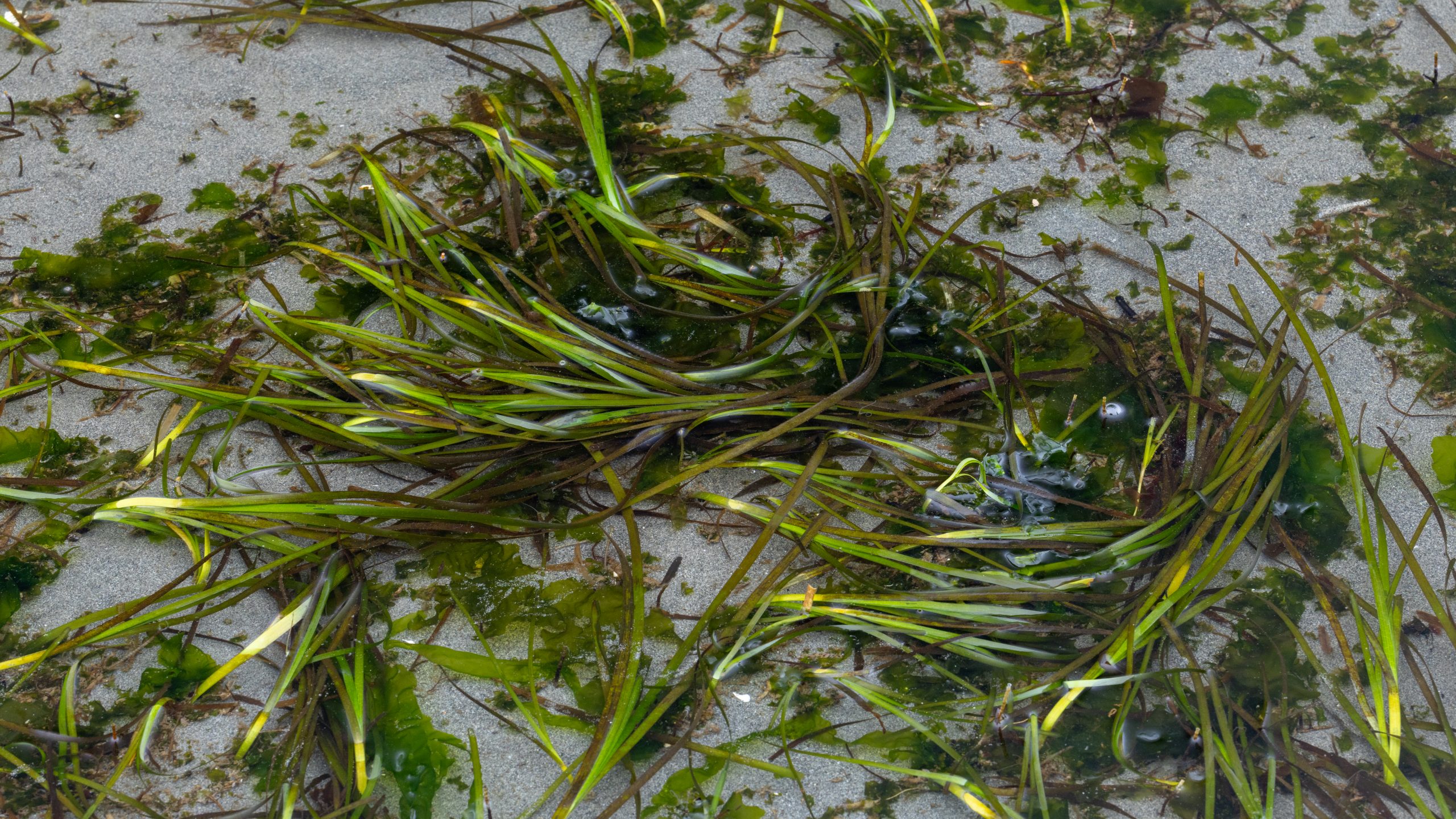
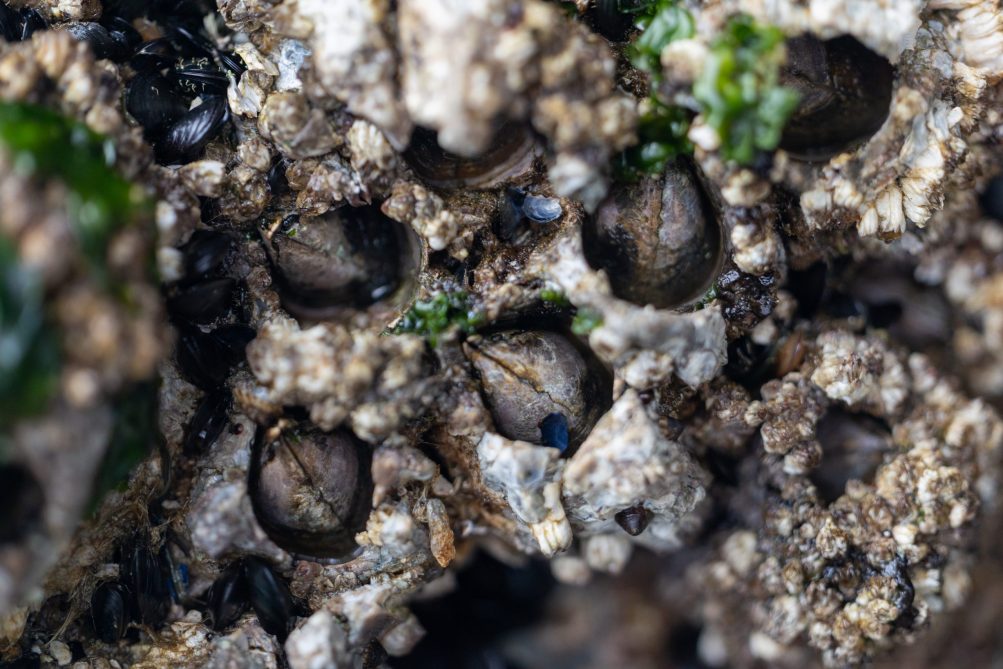
Wednesday and Thursday’s low-low tide will be out to -3.0 feet – 10:20 am Wednesday, 11:07 am Thursday.
Two quick coyote notes while we work on other stories:

A texter sent that photo today from Camp Long, after seeing the coyote “on the west edge, on the path a little bit north of Schurman Rock.” Earlier this week, we had a note from Gay, reporting, “Wanted to let you know that my wife saw a coyote running down Marshall … about 9:30 am. It was heading south toward the greenbelt at the end of the block. Keep your kitties and small dogs inside.” The official advice on coexisting with coyotes is here, and advises encouraging them to keep their distance by not providing any food source, inadvertently or otherwise, from unattended pets to bowls of their food to thrown-out-but-not-secured human food.
This busy summer month’s highlights aren’t all outdoors. This one is about the outdoors – happening inside. You’re invited to the premiere of the film about “beaver detective” Pamela Adams!
Take a journey into the ecosystem of West Seattle’s Longfellow Creek with first public premiere of the film “Freelance Beaver Detective – Tracking Urban Wildlife” on Friday, July 18, 7 PM -9 PM, @ Youngstown Cultural Arts Center.
Learn about the local beaver population, and wild endangered coho salmon spawning, through the lens of local WS filmmaker Kay D. Ray, and featuring local beaver detective Pamela Adams, as well as photojournalist Tom Reese, who will be available for post film Q&A.
Tickets by donation. Kids under 18 are free.
We mentioned the film back in January when Adams spoke to the Highland Park Action Committee (WSB coverage here).

Thanks to Gary Jones for the photos from Constellation Park during today’s low-low tide (as noted in our daily highlight list, it was out to -3.7 feet at 12:05 pm. Birds were enjoying it – that’s a Great Blue Heron above, a Gull below:

Also an Osprey:

And a Caspian Tern:

He shared one non-avian wildlife sighting too – a River Otter:

Tomorrow’s lowest tide falls into the low-low category too – -3.1 feet at 12:51 pm Friday.
Glenn emailed with this question:
I wondered if you all had heard of or know of a population of weasels at Lincoln Park or if perhaps someone may have let a pet go. I’ve lived near and run in the park for 23 years now and have never seen one before, but the other day on the beach path one ran across in front of me from the water back towards the wood. It was quite small, short legged, and black in color which is why I believe it to be a weasel species and not a fisher or ferret but I’m no biologist.
And that reminded us of photos DeAnna had sent last month that we hadn’t published. She thought it was a Stoat:
(DeAnna wrote) It was a tiny thing, body not more than about 6” long ( or counting the tail) and was whipping around the logs and rocks near the pool. There was something kind of swim camp going on and the beach was full of kids absolutely oblivious to the menace among them. This is my first sighting of such a critter in my 35 years here.
We checked the archives but have never had a report on this critter in our 17+ years of wildlife coverage, either. Hoping at least one reader will have further enlightenment for us!

On this day celebrating dads, we start our gallery of West Seattle bird photos – all but one sent by readers (thank you!) – with some family views – above, Stewart L. sent the photo of a Canada Goose family afloat. Below, Janelle Otterholt photographed an American Robin and nestlings:

Barred Owlets in Lincoln Park have drawn a lot of attention lately. This photo is from a reader who asked to be anonymous:

Closer-up views were provided by Jamie Kinney, including this one:

And the grownups are interesting too – WSB contributing photojournalist Oliver Hamlin snapped this one:

Also seen in Lincoln Park: Bald Eagles. Mara Jacroux shared this image:

Jerry Simmons saw a Juvenile Bald Eagle with a familiar green-and-white backdrop:

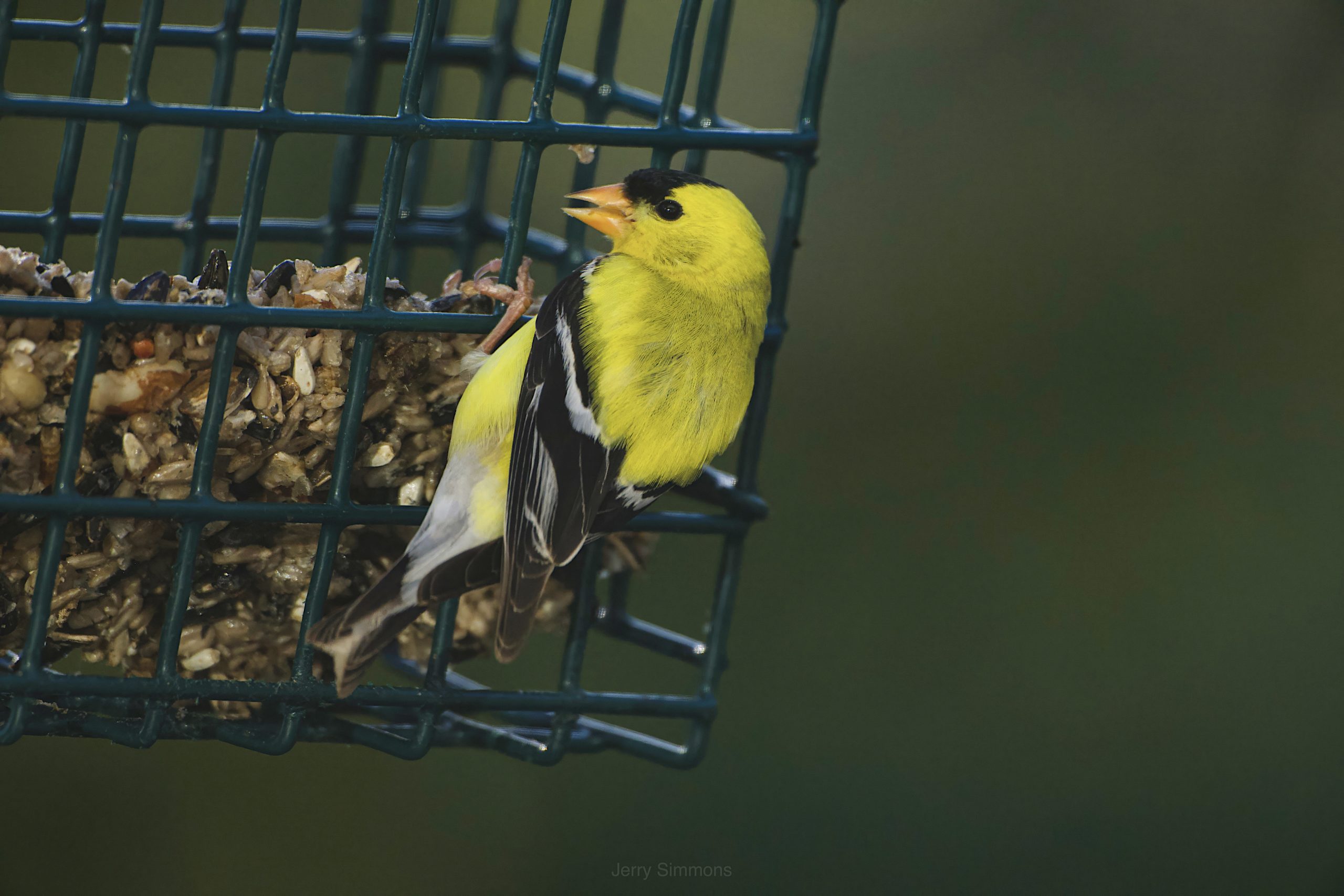
Also from Jerry, an American Goldfinch:
Even the ubiquitous Crow had its moments for photographers in recent weeks. Sarah saw a leucistic – “caramel” – crow in North Fauntleroy:

And Matt Baerwalde caught one posing with a sculpted relative at Cove Park (north of the Fauntleroy ferry dock):

Thanks to everyone who sends bird and other wildlife photos (as well as breaking news, interesting sights, etc.) – westseattleblog@gmail.com is the best mailbox if it’s not urgent!
Two coyote reports, the first with other wildlife involved:

GATEWOOD WILDLIFE: Nathan sent the photo late last night and reports, “Corner of Othello and SW 39th, 11:00 PM, lots of animal noise. The coyote on the left was much bigger than the photo shows, and was aggressively attacking the raccoon on the right. Another raccoon escaped up the hill to the left. The battle ended with everyone alive and frustrated. Does anyone see the bunny by the street sign?”
COYOTE NEAR PELLY PLACE: This report is also from Saturday, via anonymous text: “Coyote spotting. 1 individual, SW Frontenac St and 47th Ave SW.” [map]
Here’s what you need to know about living with coyotes.

Thanks to Mara Jacroux for sharing photos of a river otter having dinner on the beach at Lincoln Park last night.


Mara said some onlookers suggested sending to WSB to share with the community – thank you! If you don’t know much about river otters – who, despite their name, frequent salt-water Puget Sound – check out this fact sheet about coexisting with them.)

If you’d like a chance to do what the Roxhill Elementary student in Fauntleroy Creek salmon-release volunteer John Sturtevant‘s photo is doing – your chance is just three days away. As we look ahead to what’s happening around West Seattle this weekend, this is one of the unique events – a community salmon-release opportunity at the creek, where hundreds of students have been visiting all month to free the fry they’ve been raising at school. On Sunday (June 1), 1 pm-3 pm, enter Fauntleroy Park at the SW Barton entrance and walk to the bridge, where you’ll find Fauntleroy Watershed Council volunteers with a bucket of fish and answers to all your questions – free, all ages!

3:11 PM: Thanks again to Kevin Freitas for a view of Constellation Park as today’s low-low tide bottomed out at -4.1 feet, lowest of the year. Also sending photos was Dawn Roeder, who saw colorful sea life under the Fauntleroy ferry dock:


Tomorrow’s lowest tide is still great for tidepooling – -3.6 feet at 1:08 pm – but the weather is expected to be very different.
ADDED 5:29 PM: Thanks to Stewart L. for the photo of Luna Park‘s pilings (pointed out on Tuesday by Dave Townsend):


It’s not spring without a Canada Goose baby picture from Alki photographer David Hutchinson, who just sent this one. We also recently received a family pic from Rainer Klett:

Everything you never knew about Canada Geese, you can find here, including the much-cited fact that they mate for life.
 (Photo by Javier Fosado)
Thanks for the photos! As noted in our WSB West Seattle Event Calendar – because we finally remembered THIS year to check in advance – today is a big day for fishing in the waters off West Seattle. It’s the one-day, four-hour “season” for recreational spot-shrimp fishing, 9 am to 1 pm.
 (Photo by Mark Bauschke)
We haven’t been to Don Armeni Boat Ramp for a look but on this day every year it’s usually full of trailers, and the area will be busy once the closing time is past this afternoon. The state says spot shrimp are the largest shrimp in Puget Sound and can grow to nine inches long.


| Comments Off on Marine-mammal responders/researchers SR3 come to Alki to tell their story