
West Seattle, Washington
26 Saturday
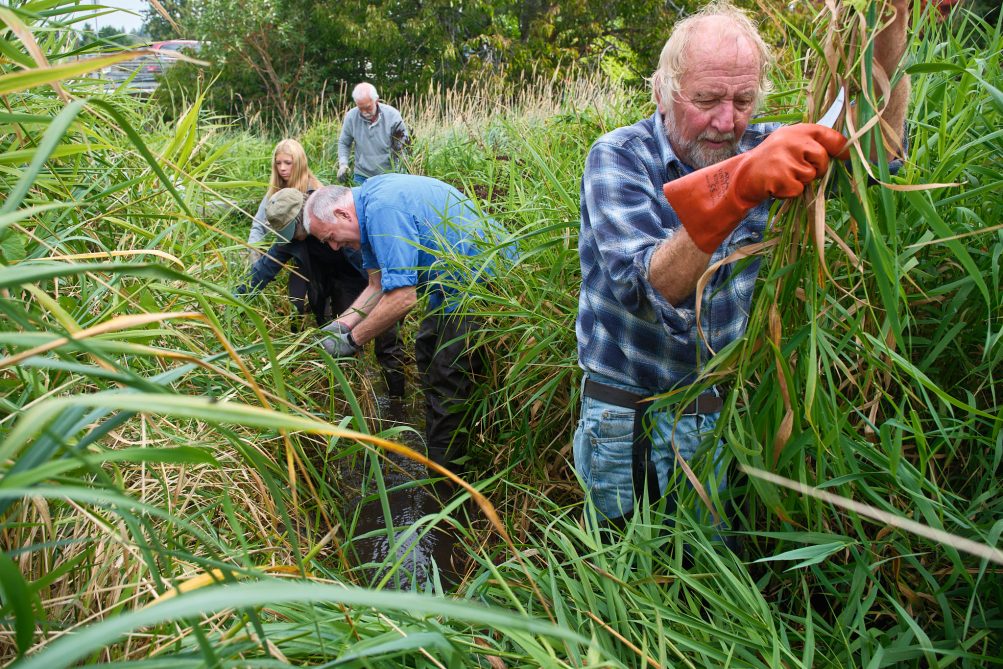 (Photos by Dave Gershgorn: Volunteers Bob Maughan, Lilia Matual, Diana Spence, Gerry Coit, and Mark Sears took on a thicket of invasive beach grass)
By Judy Pickens
Special to West Seattle Blog
On Saturday, 10 volunteers convened in Cove Park to open a pathway for coho spawners to access Fauntleroy Creek this fall.
Using a permit from State Fish and Wildlife, lead volunteer Mark Sears led the crew in relocating a few drift logs jammed into the sand but the task this year was mostly to clear a path for spawners through invasive beach grass.
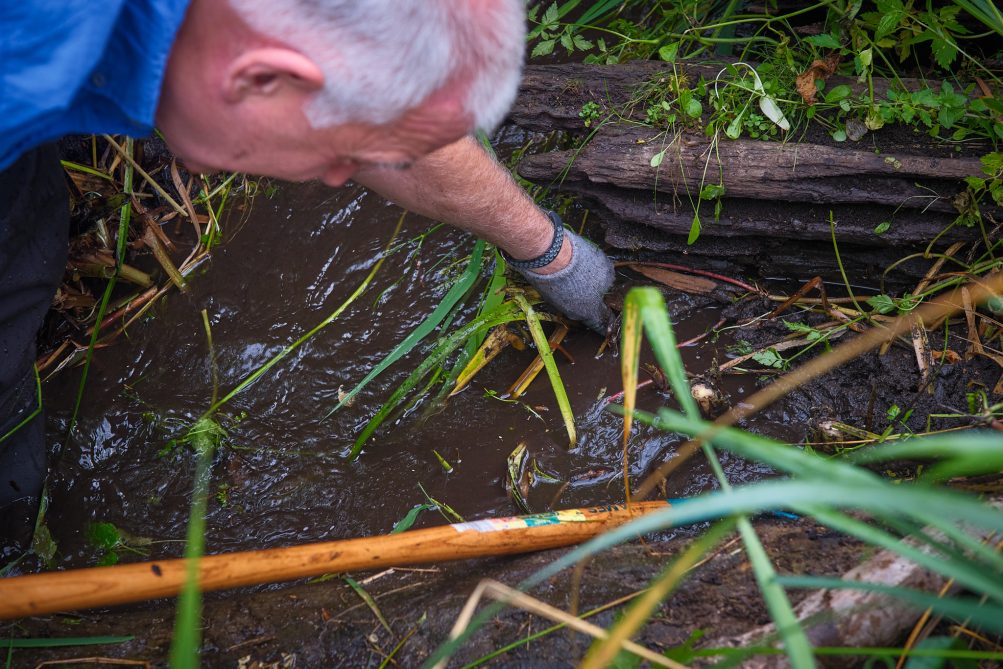 (Gerry Coit worked his way through tenacious beach grass so spawners won’t have to)
The Fauntleroy Watershed Council will kick off the 2026 salmon watch with the annual drumming to call in spawners on Sunday, Oct. 25, at 4 pm, near SW Director and upper Fauntleroy Way SW. Watchers will check the lower creek daily after high tide and, if and when they begin to see spawners, they will host a weekend open creek for the general public.
“Spawners will need at least 11-foot tides to boost them into the creek,” explained veteran watcher Dennis Hinton. “When tides are that high in late September, we will watch for spawners circling in the cove in anticipation of coming in, usually between Halloween and Thanksgiving.”
Last year, watchers documented nine fish and one spawning pair, a low count, but it has fluctuated, with the count well into triple digits some years.
Sent late tonight by Dan:
Tonight while walking home between 36th Ave SW and 37th Ave SW on Trenton, an owl attacked me twice around 9:30 pm. No serious injury, but thought other nearby residents should know.
You can learn more about this owl behavior by checking out this Department of Fish and Wildlife fact sheet, choosing “Preventing Conflicts,” and scrolling down to “Dive-Bombing Owls.”
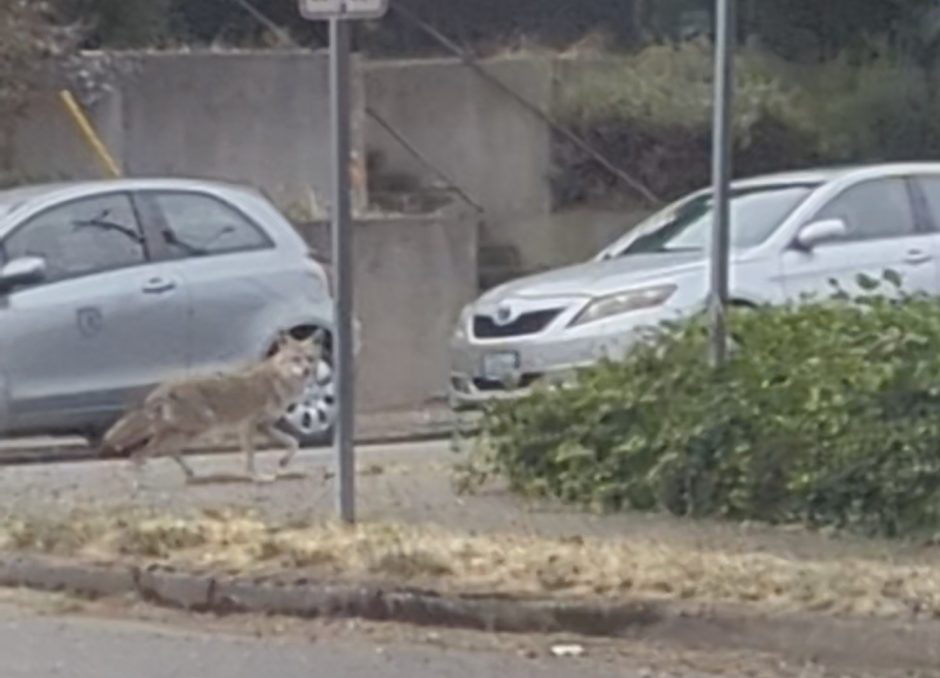
Coyote sighting this morning from Ella, who reports, “On my way to the gym this morning around 7 am, at 35th Ave and Fauntleroy Way SW, I ran into a coyote. It ran off down Fauntleroy Way SW.” Ella also sent a quick clip:
We have published coyote sightings since 2008 to raise awareness, not alarm. Wildlife authorities’ advice on coexisting with them can be found here.
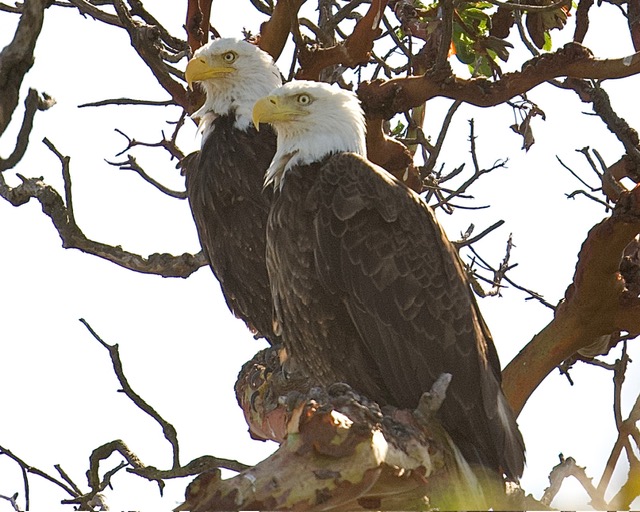
That photo sent by Gary Jones landed just in time for a Bald Eagle photo gallery we’ve long wanted to do, as multiple readers have sent sightings recentlyfrom the greater Alki area. Bob Spears watched one in action off Luna/Anchor Park> during the recent low-low tides:
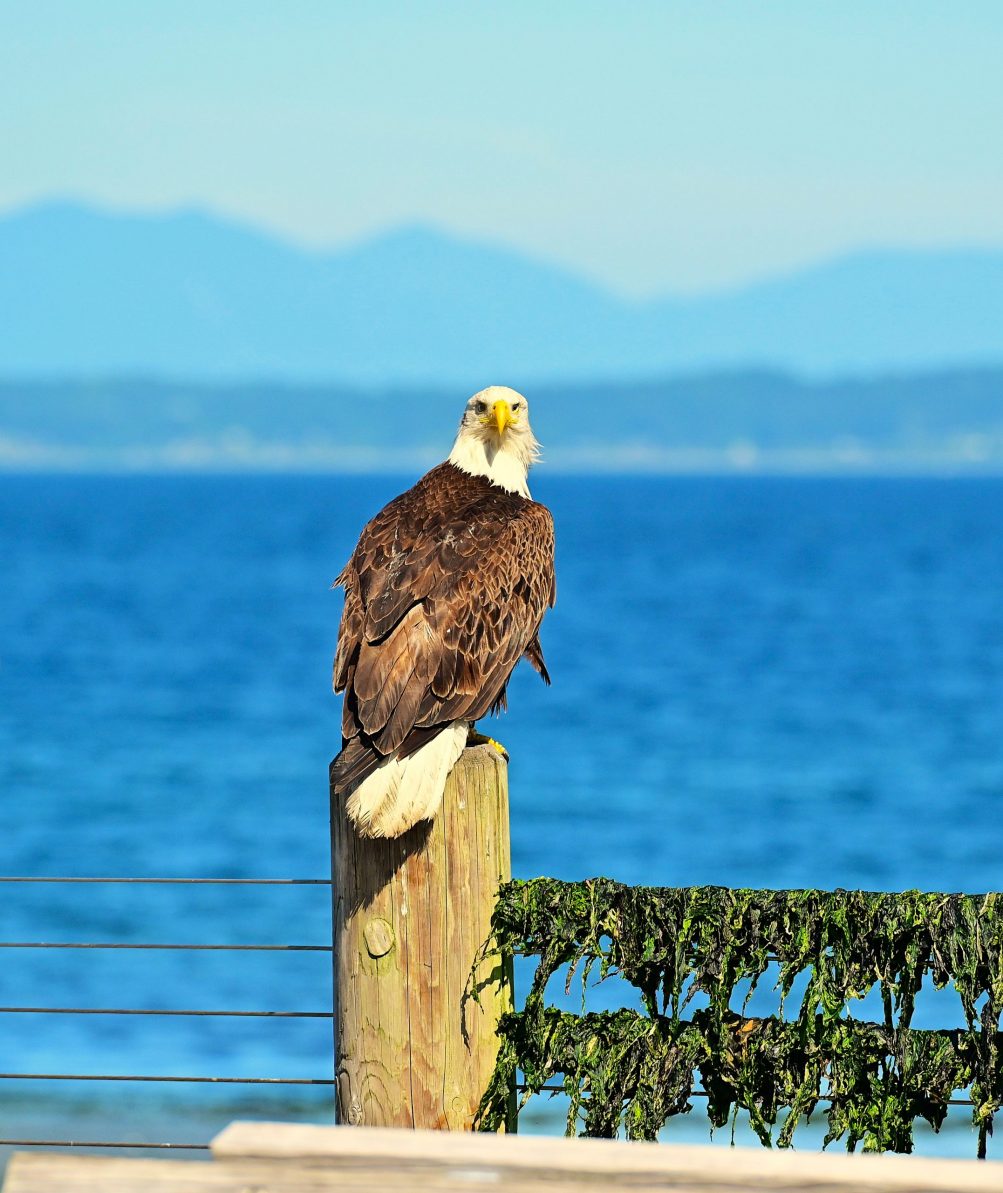
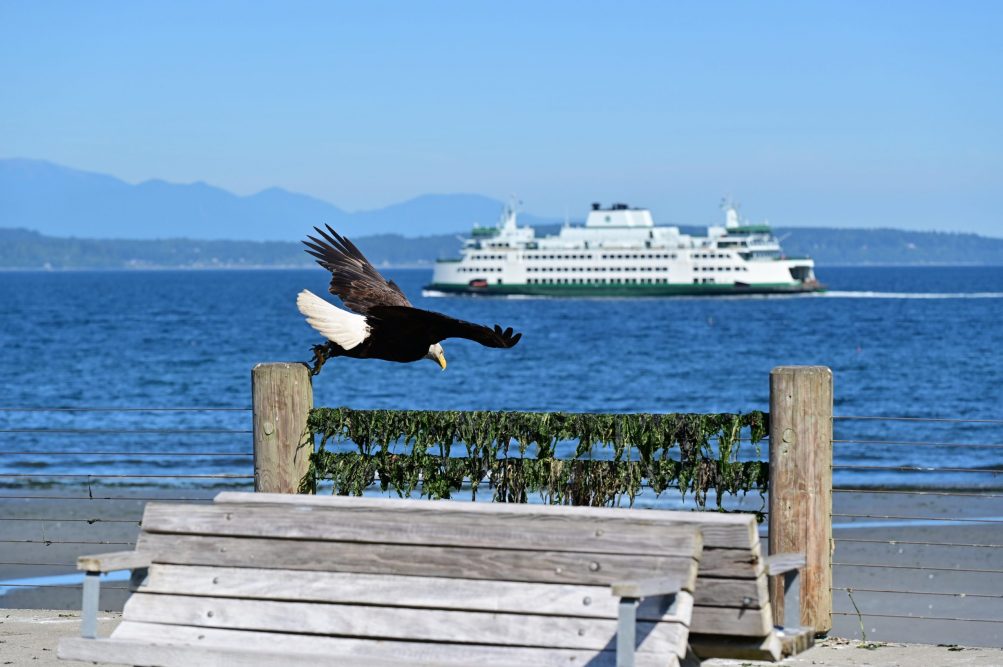
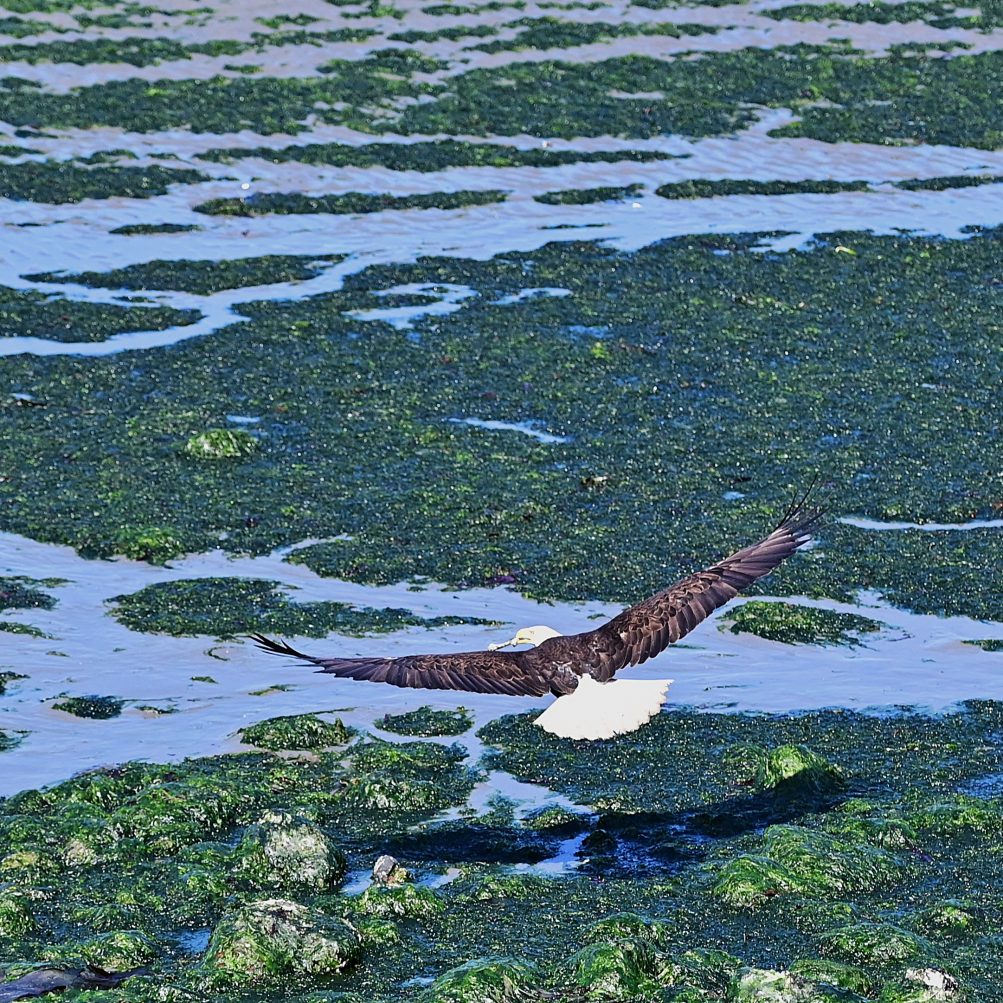
Several photographed eagles just hanging out on the tideflats – this is from Sara Walsh:
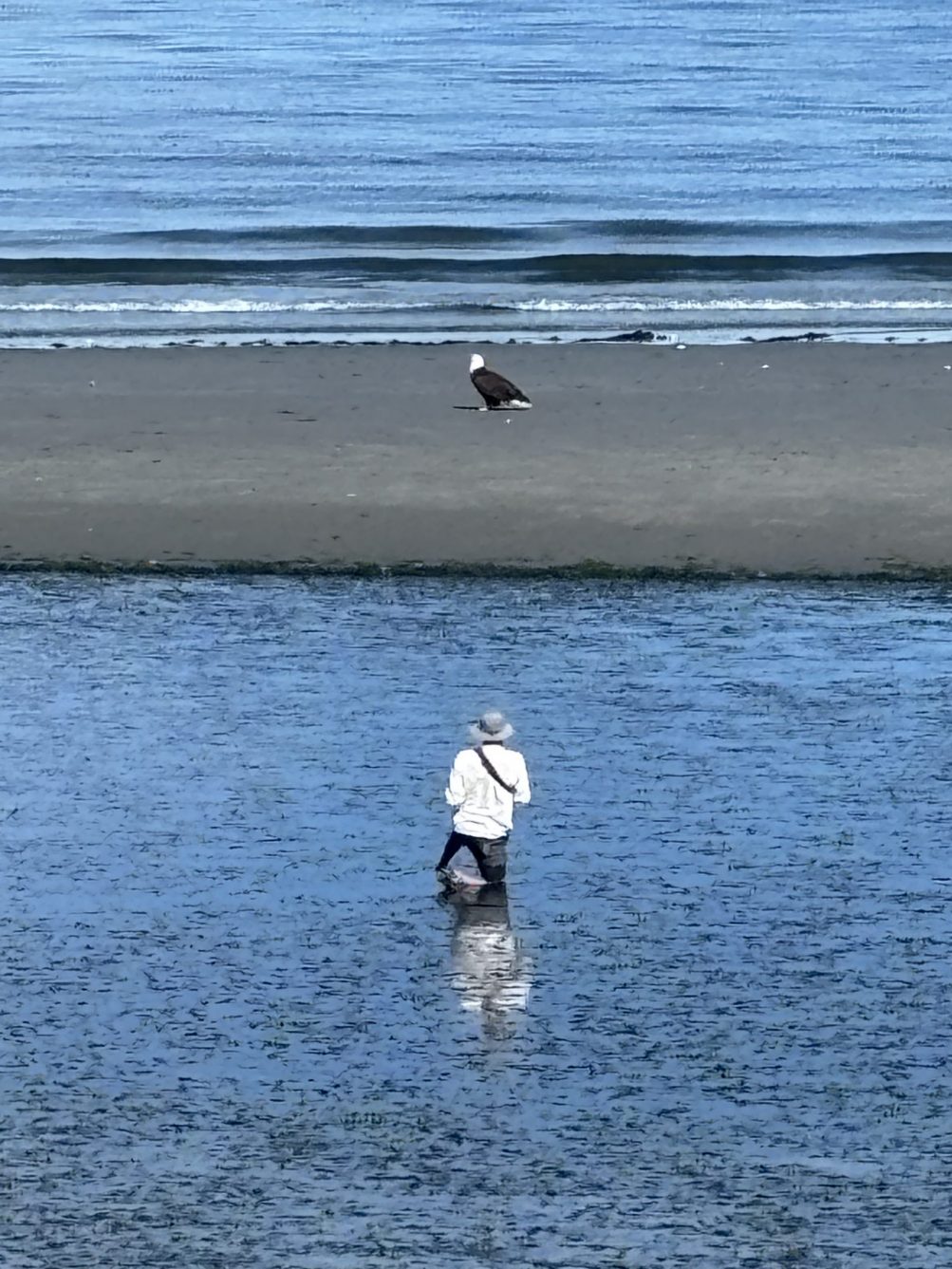
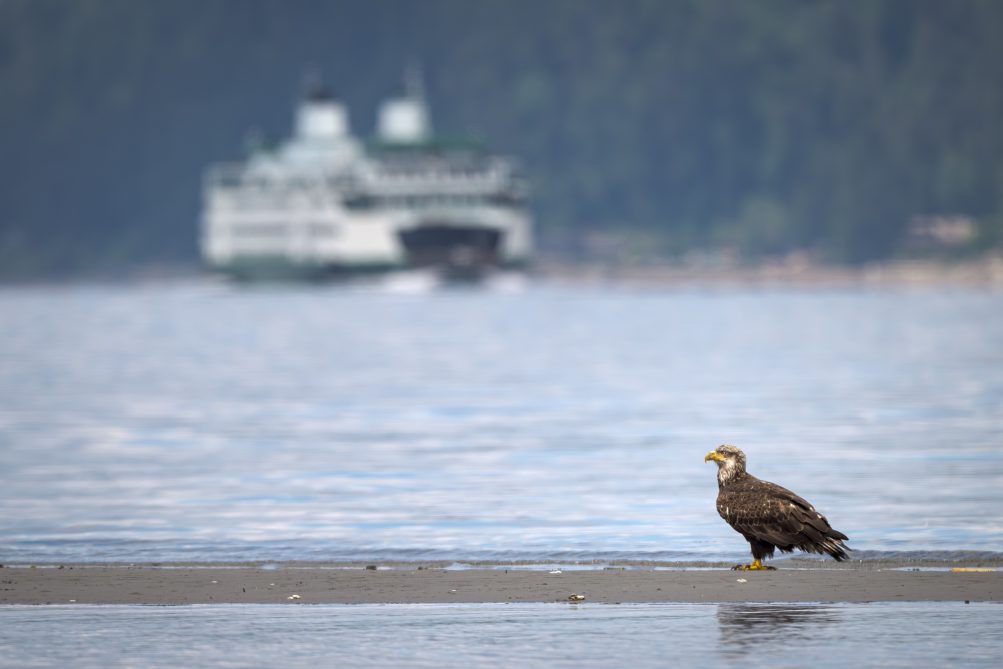
You’d know a juvenile Bald Eagle because their head hasn’t gone completely white yet, like the one in this photo from James Tilley:
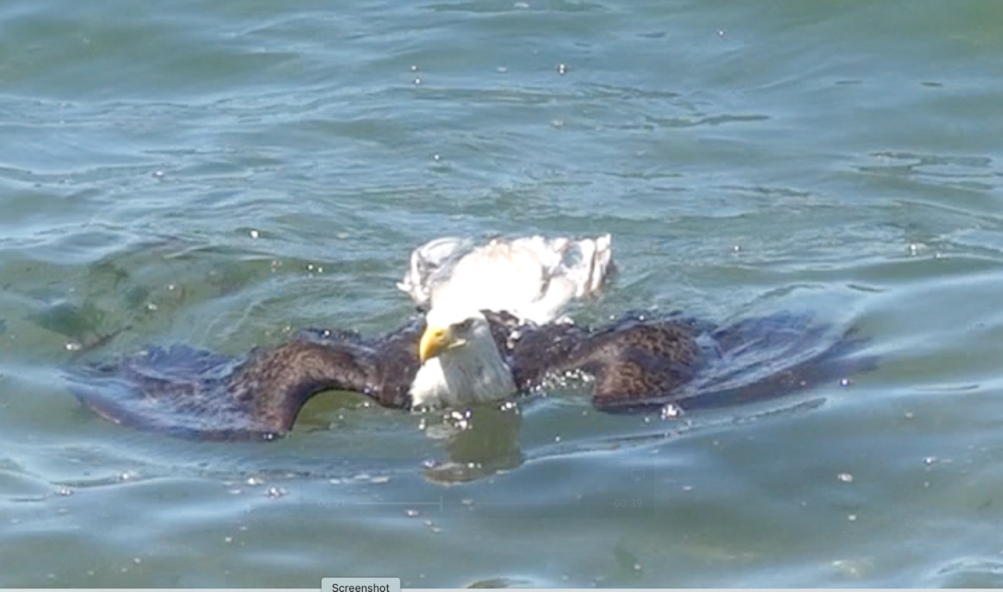
This was an unusual view – Jeremy Gavron saw this one catch a bird and then go into the water to pull it ashore, apparently because it was too difficult to fly with:
Thanks for the photos – we have some non-eagle bird photos awaiting their turn too – the best way to send wildlife and other non-urgent photos is via email, westseattleblog@gmail.com – thank you!
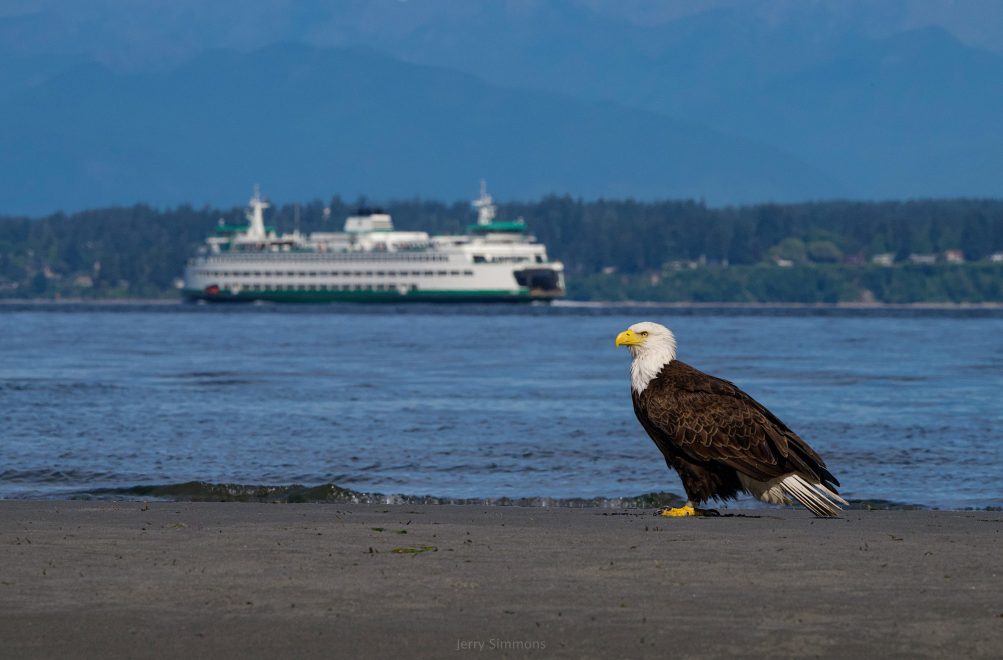
ADDED 7:56 PM: And as discussed in comments, one more photo, from Jerry Simmons:
While your home windows might provide you a great view of birds outside – those same windows also could be a threat to their lives. Local advocates are offering an opportunity through August to do something about that, and asked us to share this announcement with you:
Window collisions kill more than one billion birds each year, but the good news is, simple solutions can make a big difference.
The West Seattle Garden Tour is generously funding a joint effort between Birds Connect Seattle and Urban Raptor Conservancy to help reduce bird-window collisions.
If you are a West Seattle resident that could use some support making your windows safer for birds, please fill out this collision deterrent installation assistance form.
Installation and material costs are fully covered by Birds Connect Seattle, with flexible solutions for most housing types, whether you rent or own (at this time installation is preferred on lower story easily accessible windows.) This program runs through August, and we’d love to connect with you soon.
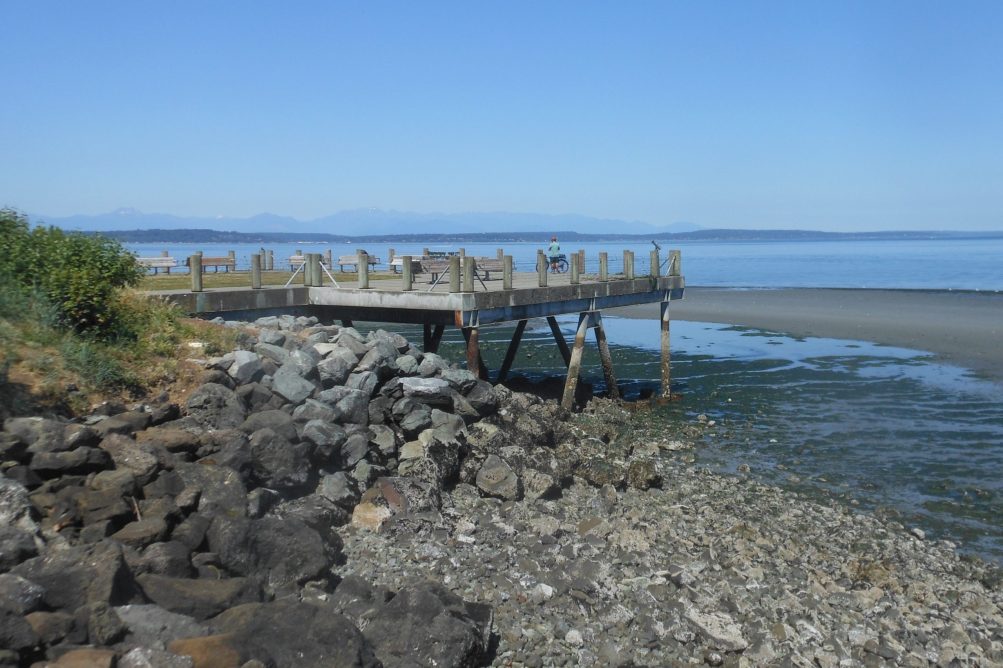
Thanks for the photos from this afternoon’s low-low tide! One more low-low tide tomorrow. Above, Bob Burns photographed Luna/Anchor Park, where the tide was out enough to expose the pilings; the next three are from Rainer Klett, first two colorful creatures, a sea pen and jellyfish:
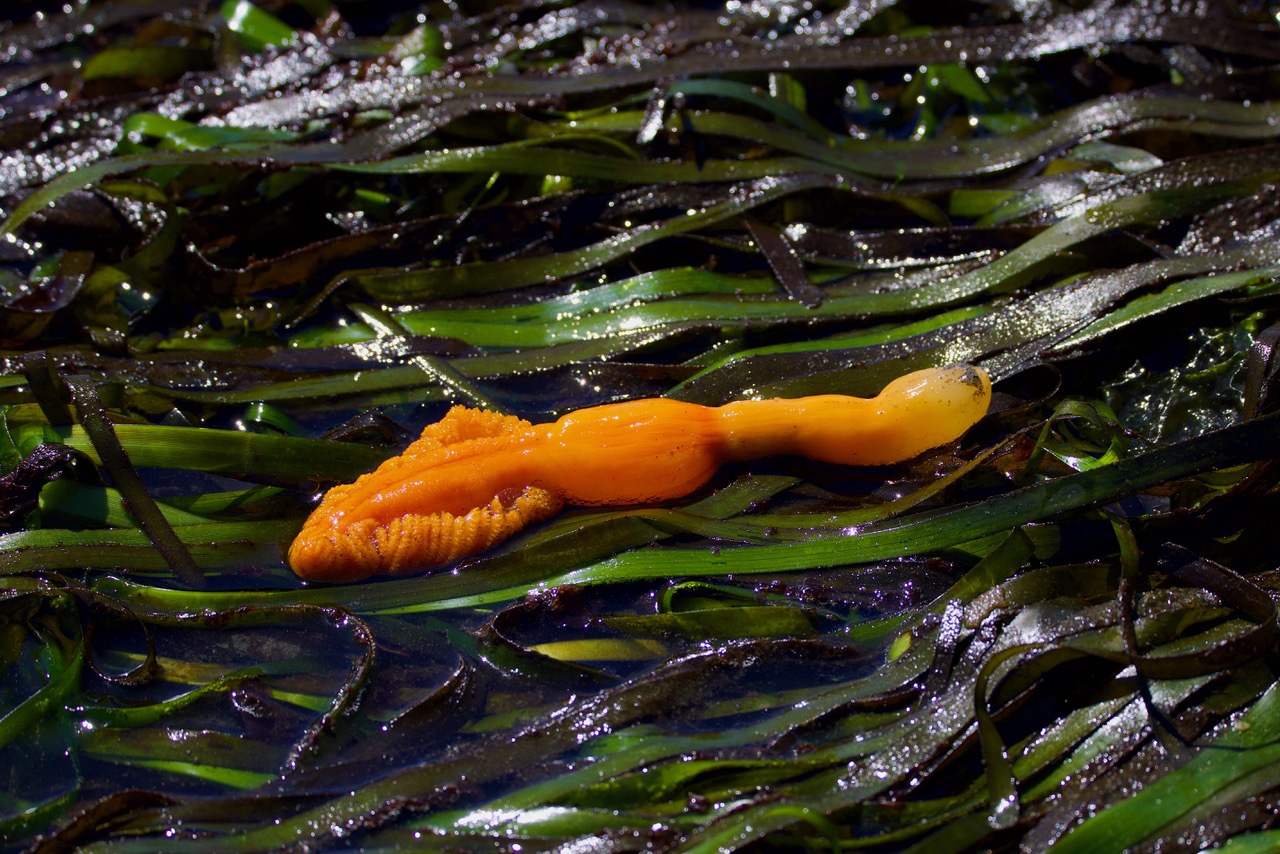
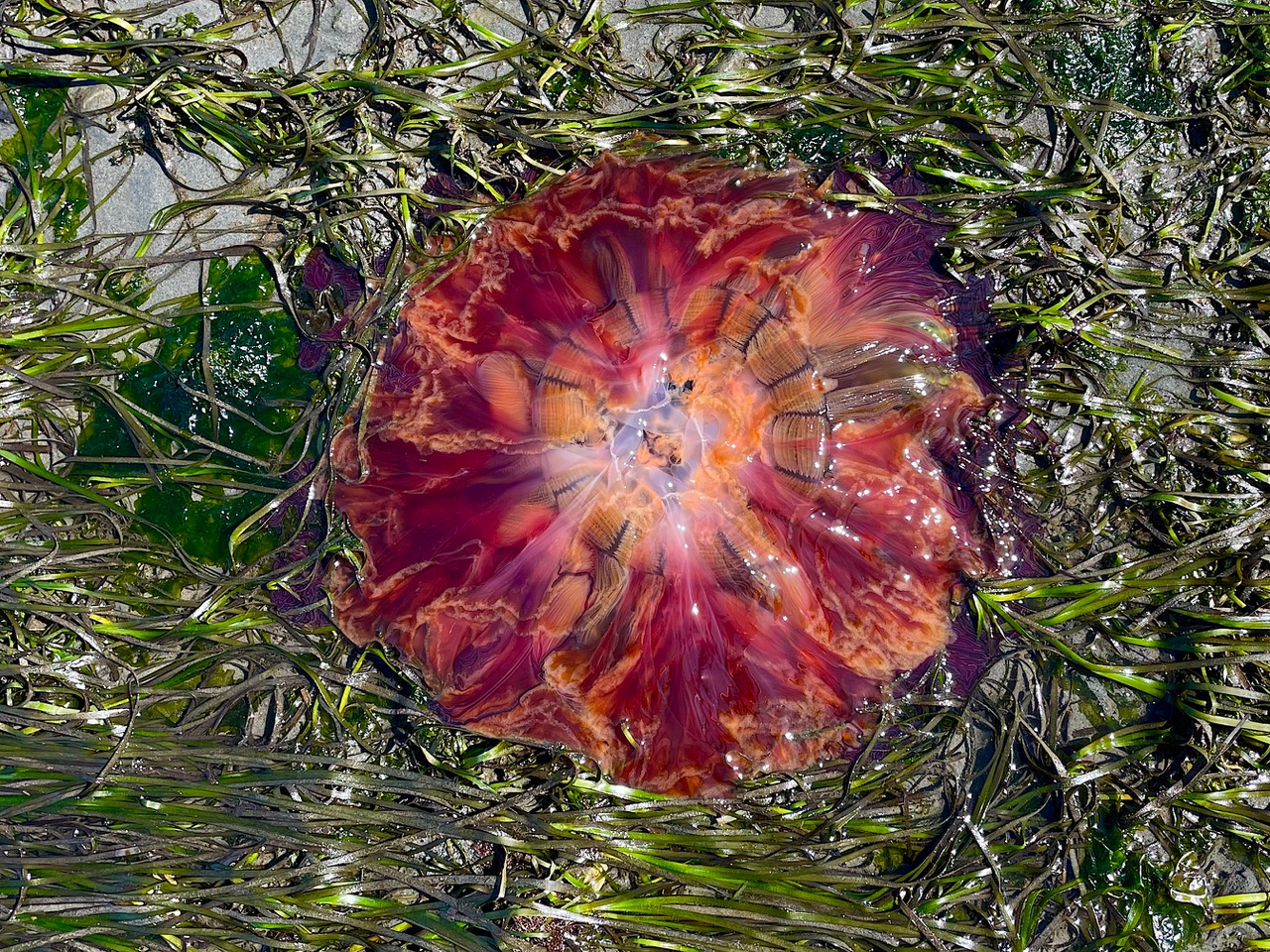
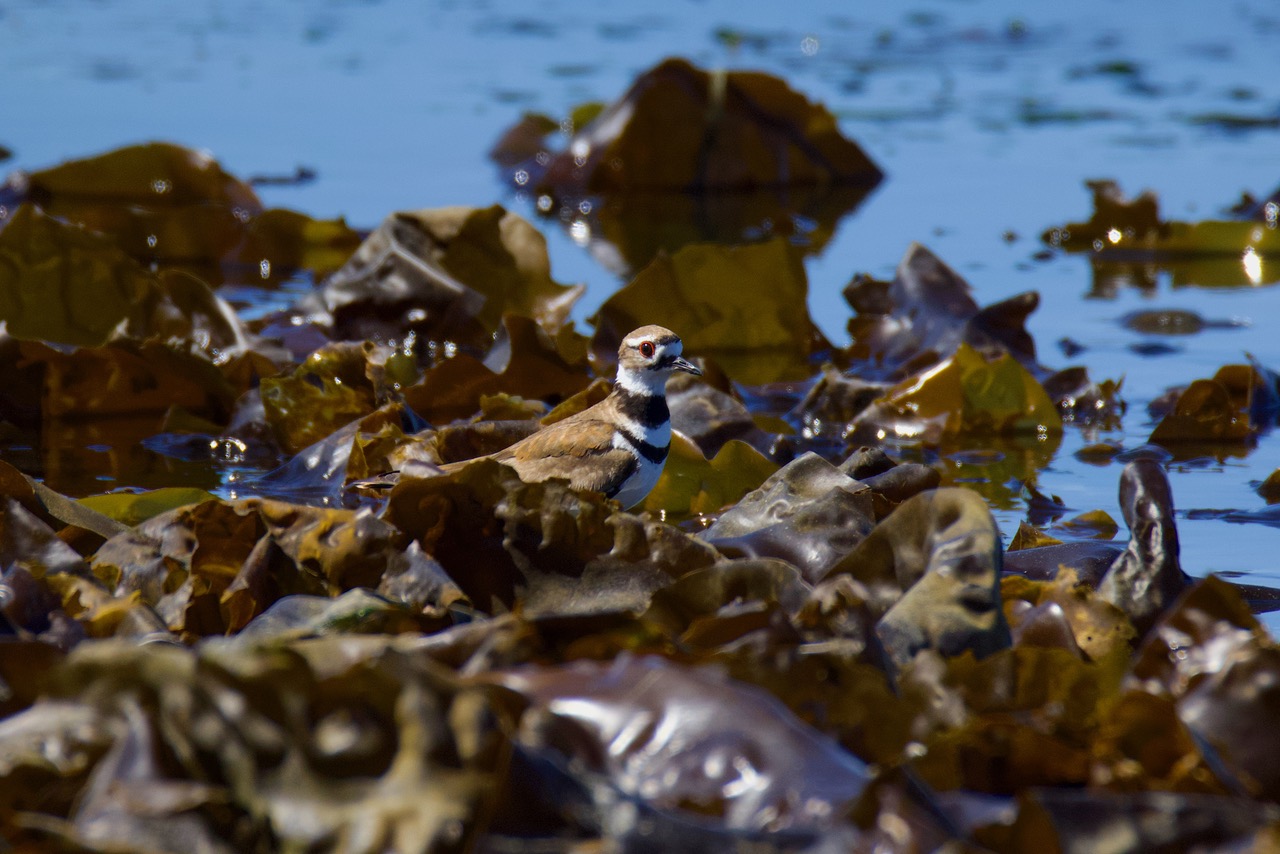
And then a Killdeer among kelp camouflage:
Tomorrow’s lowest tide is out to -3.6 feet at 12:08 pm. It’s the last -3-feet-or-lower tide this summer.
Before Thursday ends, two coyote sightings within one hour of each other in separate West Seattle neighborhoods.
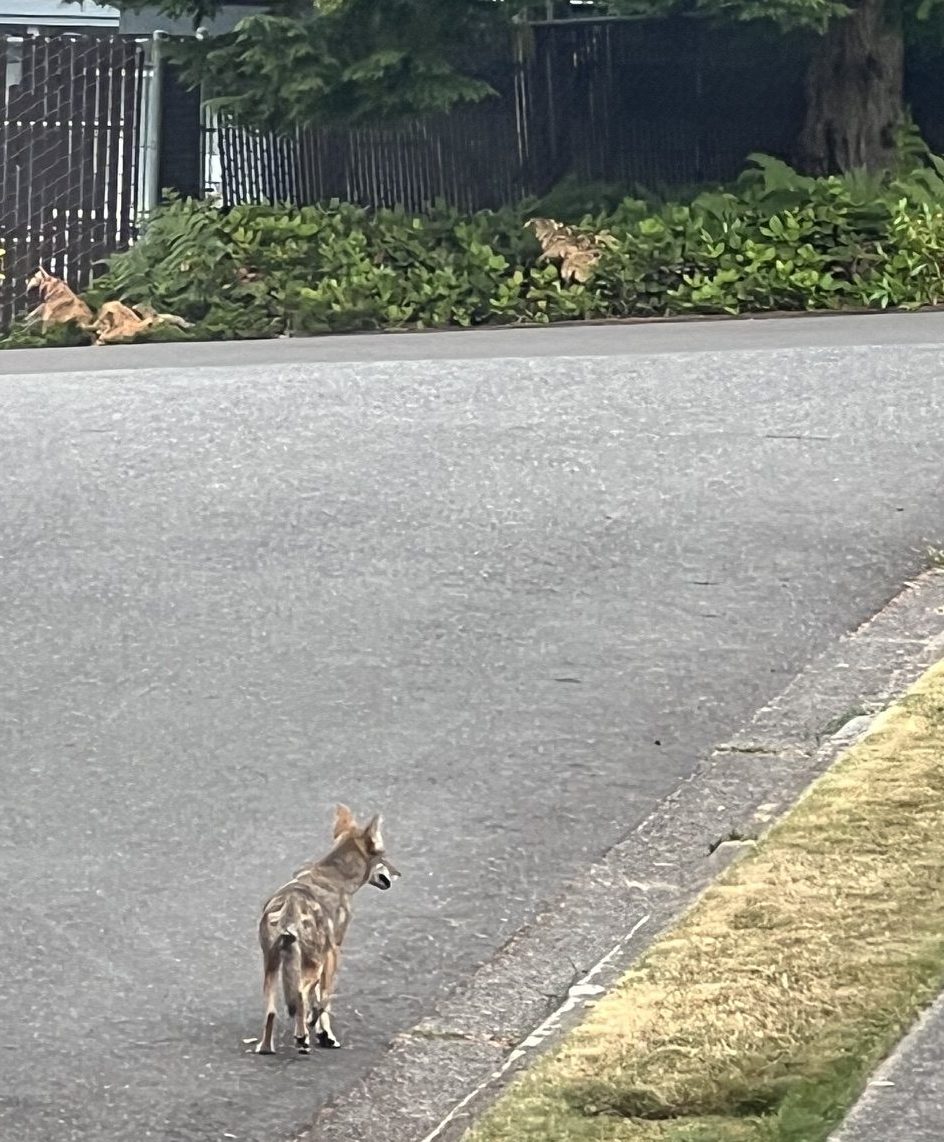
ARBOR HEIGHTS: Amanda sent that one just before 8:30 am, saying it was right outside Arbor Heights Swim and Tennis Club.
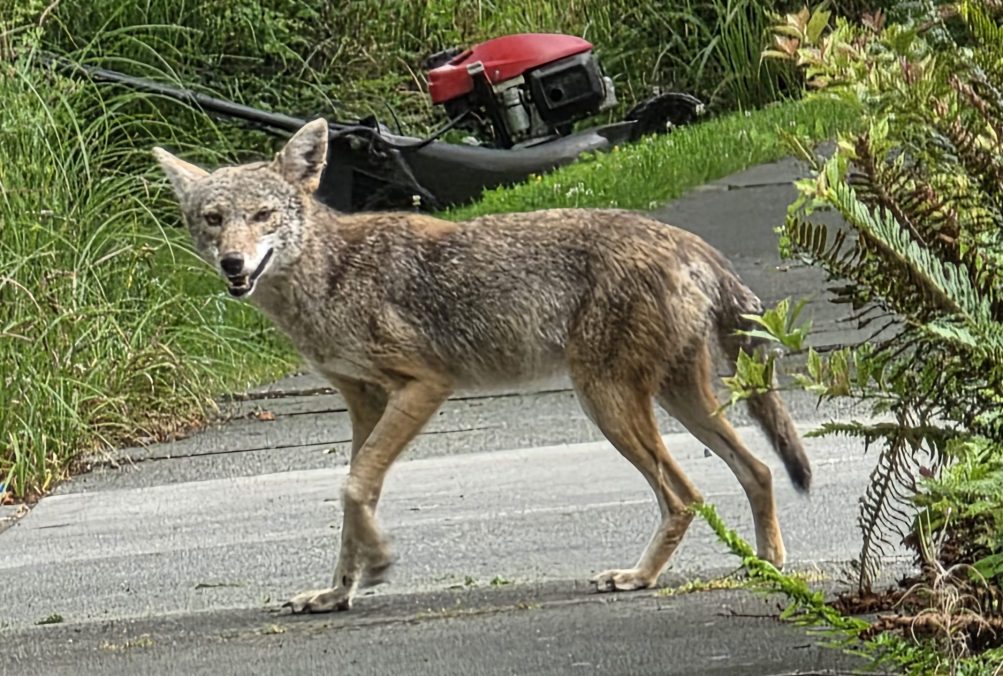
HIGH POINT: Susan sent that one before 9:20 am, saying it was at Morgan and Lanham.
See our 19 years of archived coyote sightings here.
Here are three more coyote sightings reported to us in the past few days:
SATURDAY MORNING: Dwight emailed us this report:
At 9:53 this morning I saw a coyote walking down Brace Point Drive towards the Josslin building. He saw me and quickly changed direction and headed up California Drive. He looked healthy and happy, not starved and miserable .
THURSDAY EVENING: These next two came in almost simultaneously just after 8:30 pm Thursday via texts – this one, from 38th SW and SW Raymond:
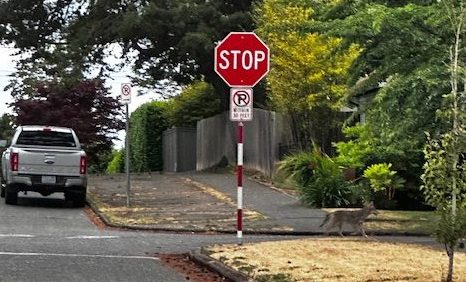
This one, from 37th SW and SW Juneau:
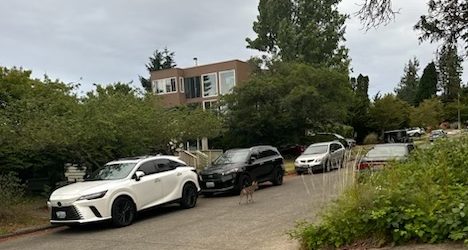
You can browse our past sighting reports here.
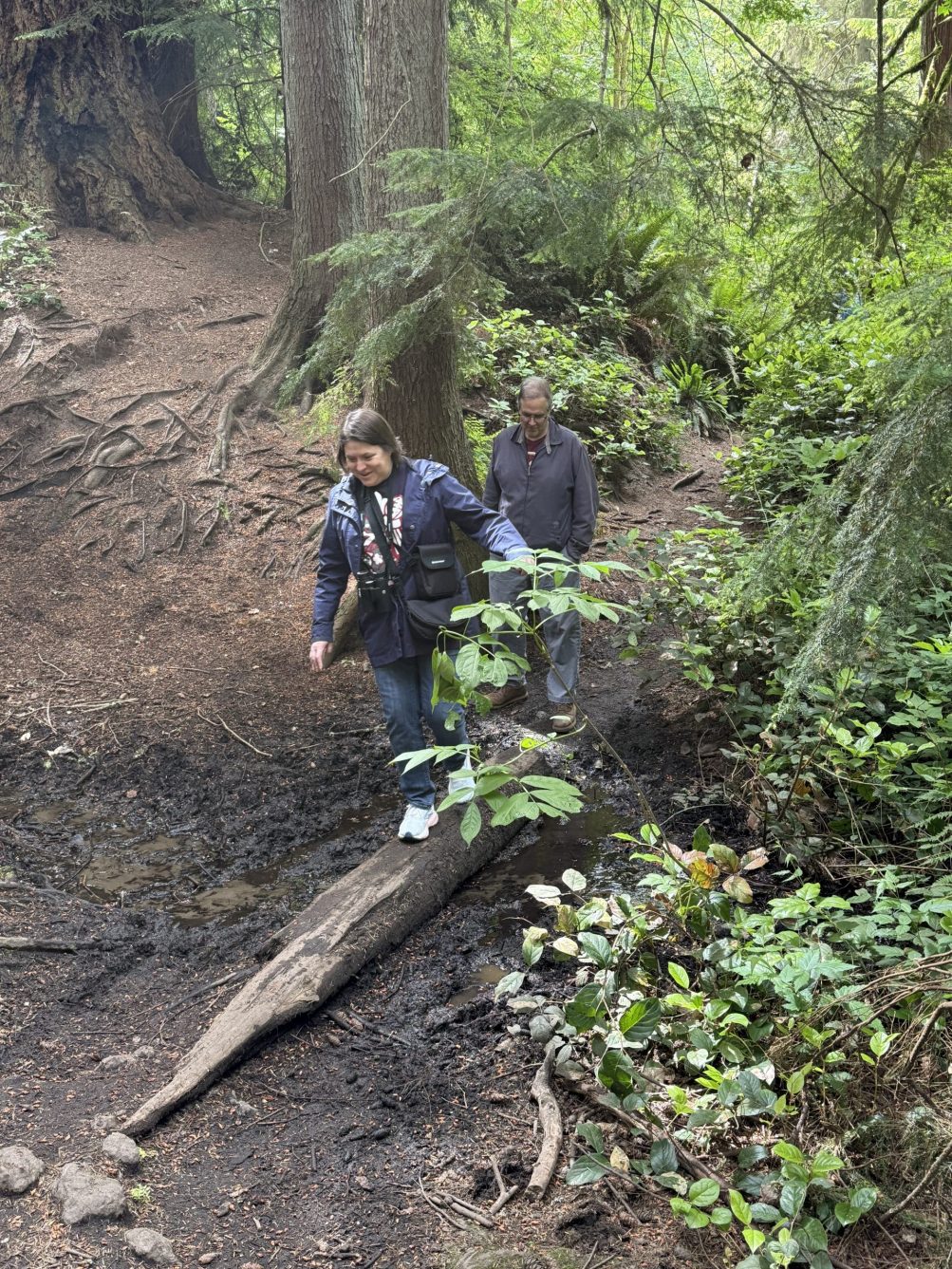
West Seattle has so many public green spaces and shores to explore. That’s why Rob Kellar
launched a new group called West Seattle Wild; the photo above is from one of their first adventures. Here’s his announcement:
I started West Seattle Wild after realizing how much wildlife and natural beauty we have right here in West Seattle. What began as me wandering around local parks, creeks, beaches, and tide pools with a camera has turned into a growing community of people who enjoy going outside and exploring.
We’ve held three successful meetups at Constellation Park, Longfellow Creek, and Schmitz Preserve Park. Over the course of three weeks! It’s great! Folks have come together to look for birds, marine life, insects, native plants, and whatever else we happen to find along the way.
The focus hasn’t really been photography. It’s about getting outdoors, meeting neighbors, and paying attention to the wildlife most people walk past every day. I call it “Looking Closer.” Some participants bring cameras, while others just bring a phone and curiosity.
One of the most rewarding parts has been seeing people return for multiple events. By the end of our most recent outing, several folks were already talking about where we should explore next, and my favorite, “see you at the next one!”
I thought it might be something your readers would enjoy hearing about.
If you haven’t heard about West Seattle Wild yet, Rob has set up a website, and you can contact him through it.
As noted here Friday, West Seattle sealife will be revealed more than usual during very low low tides the next few days.
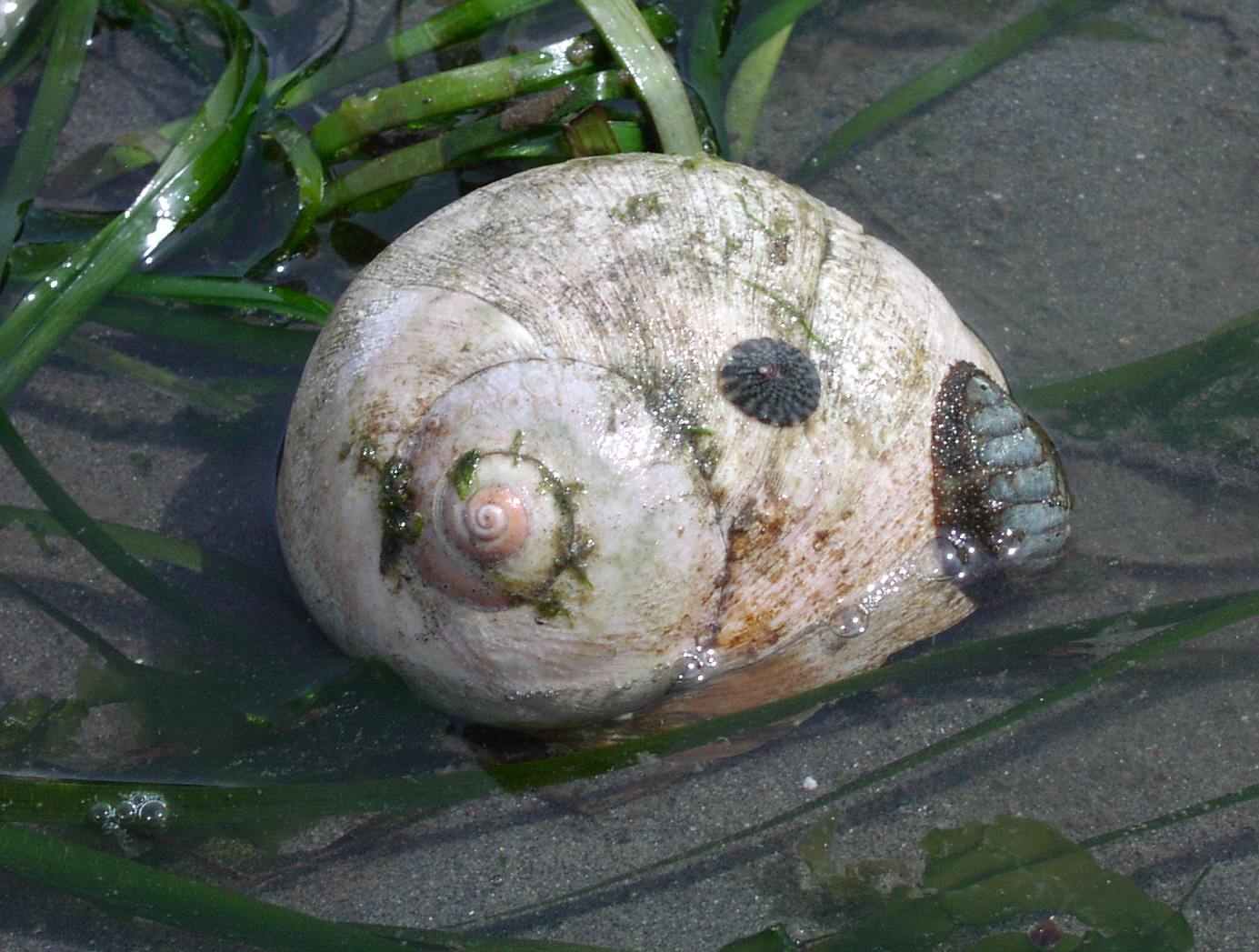
Our first three photos are from Janelle Otterholt, who explored the -3.1-foot low tide this morning near Cormorant Cove Park. Above is a moon snail; below, sea stars:
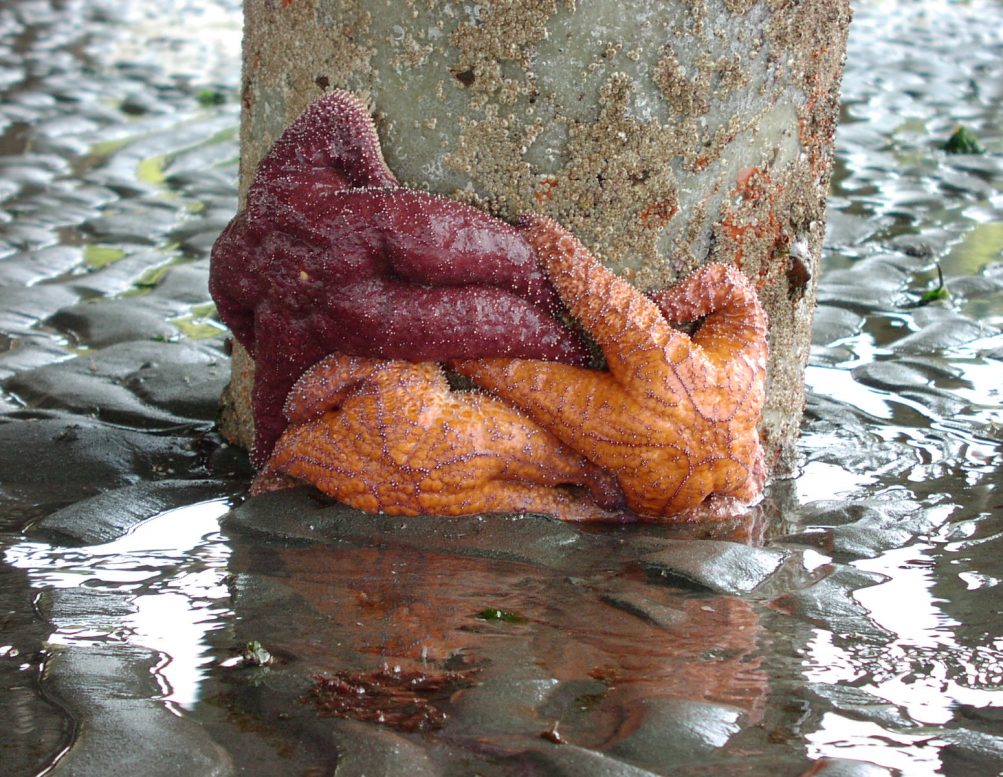
This one seems to have multiple potential IDs:
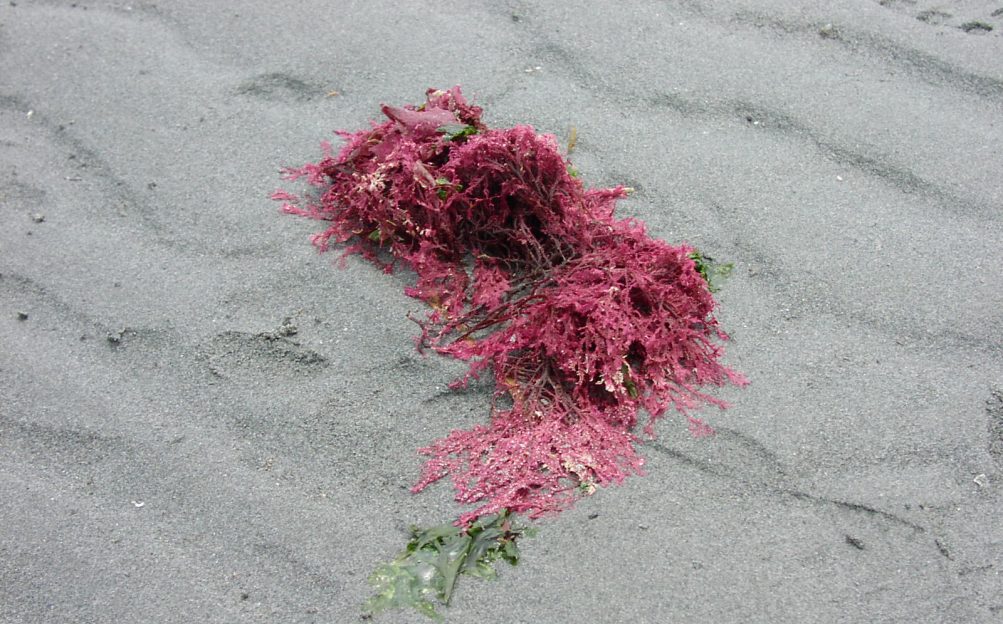
Tomorrow’s lowest tide is predicted to reach -3.9 feet at 10:45 am.
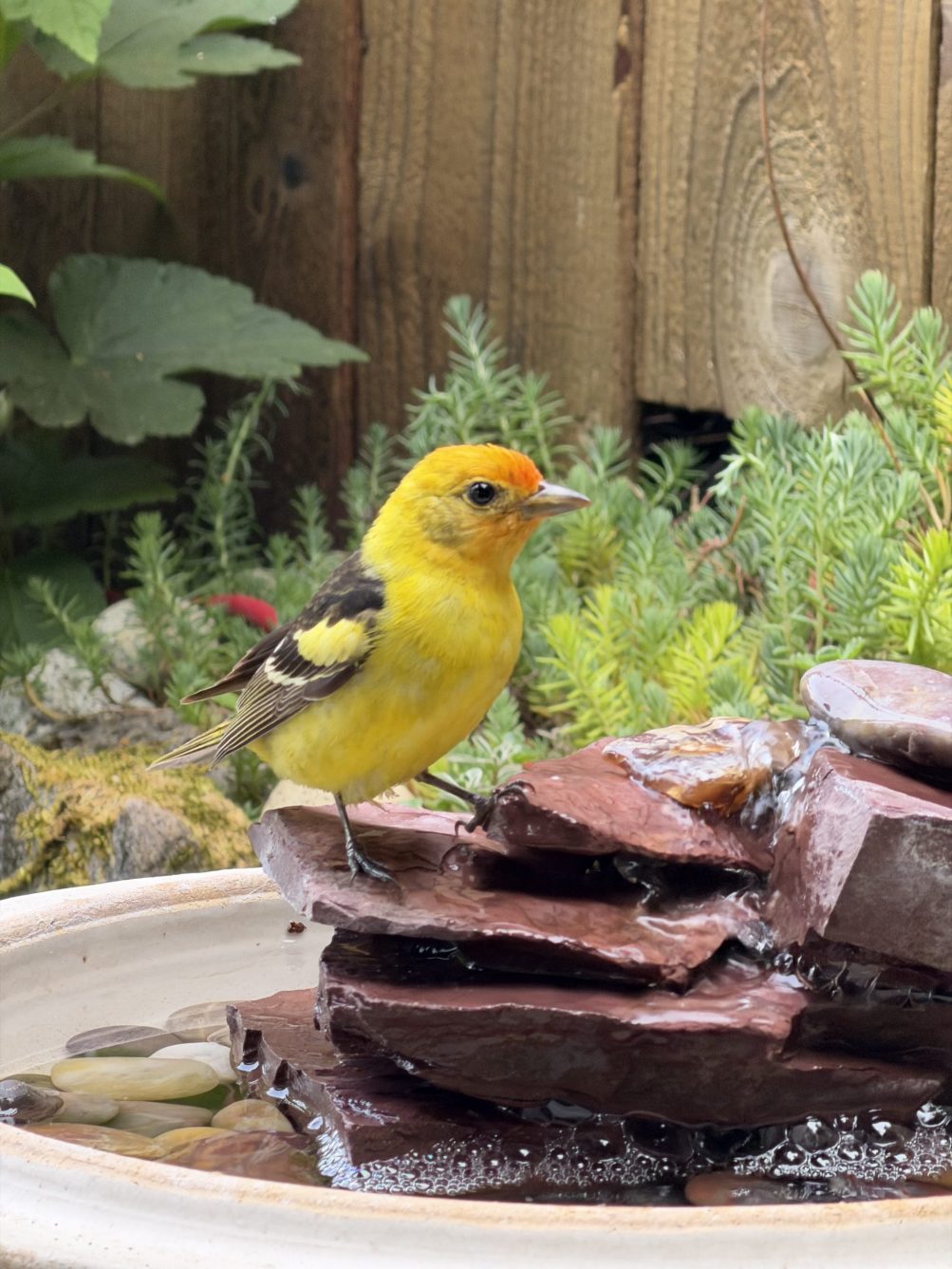
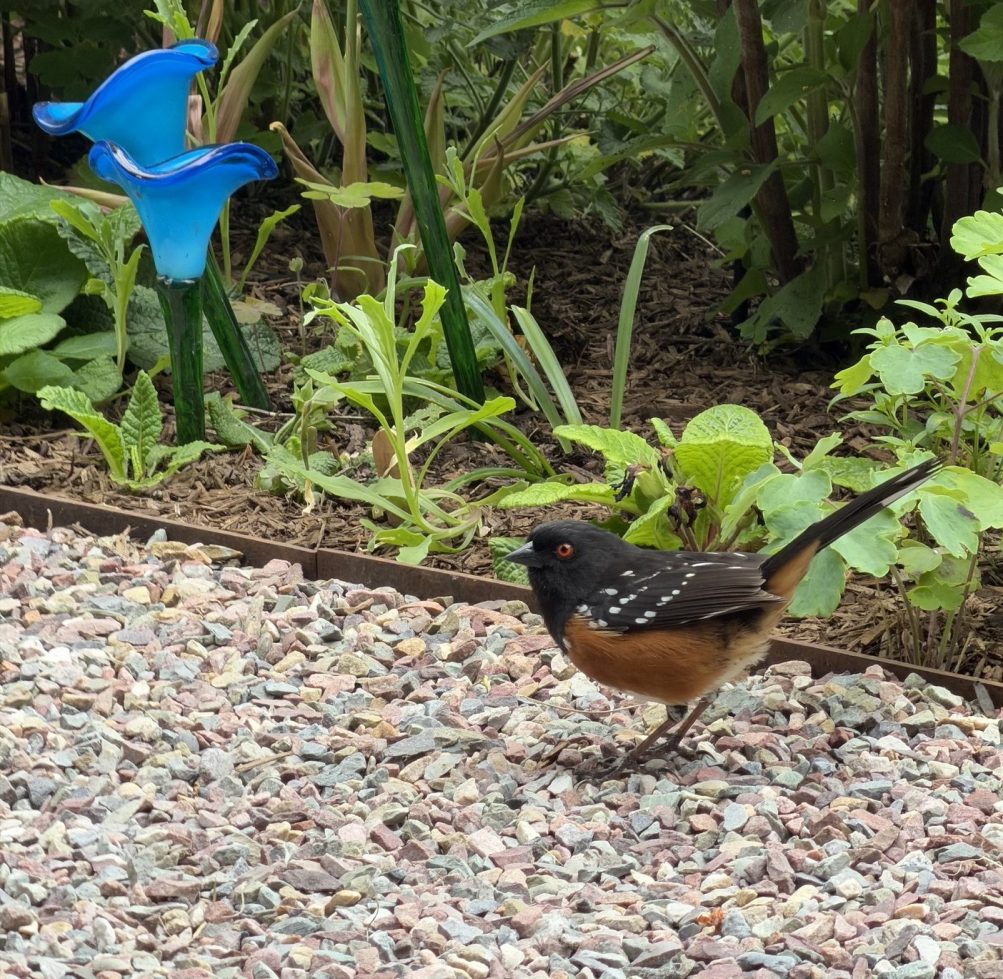
Thanks to everyone who’s sent bird photos – and a bit of video too; the clip above is from Chris, showing a Hummingbird that appears quite happy with a bloom-laden bush. The two photos. below are from Lynn, a bright yellow Western Tanager followed by a Spotted Towhee:
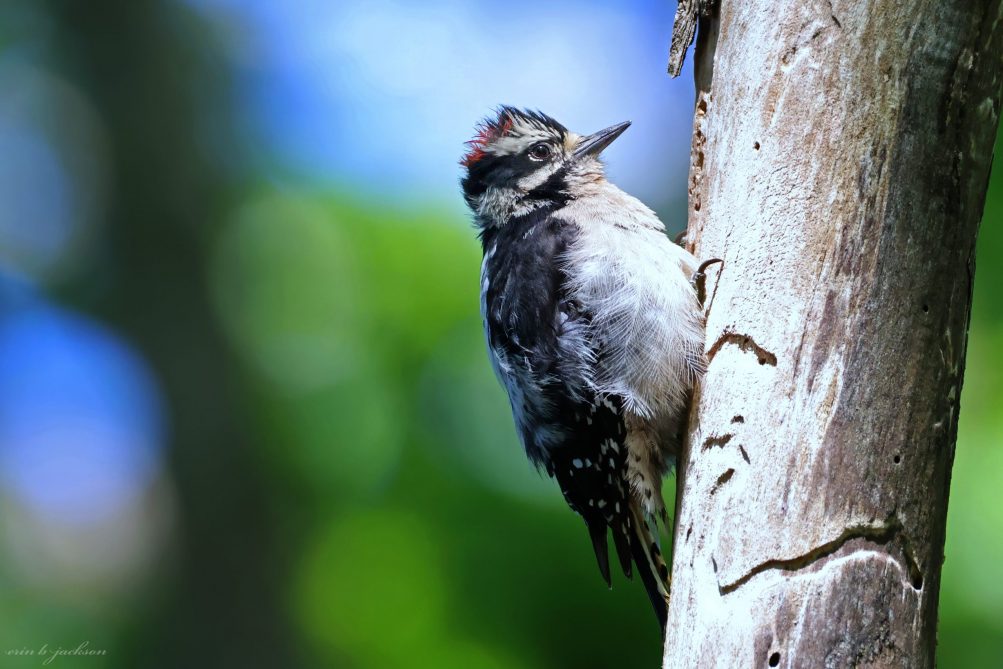
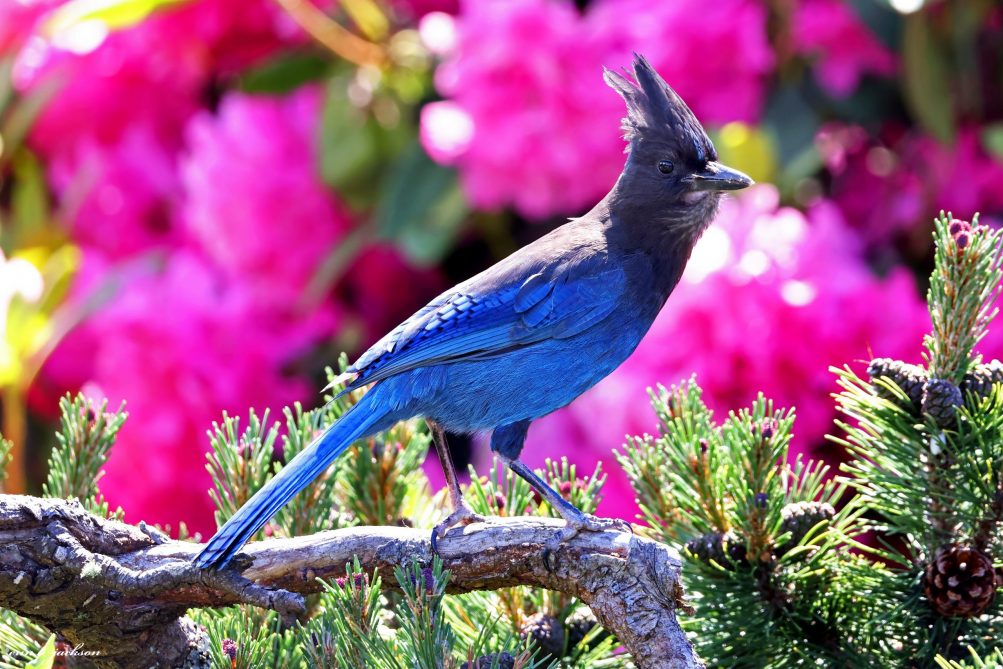
Erin sent the next two, a Downy Woodpecker and Steller’s Jay:
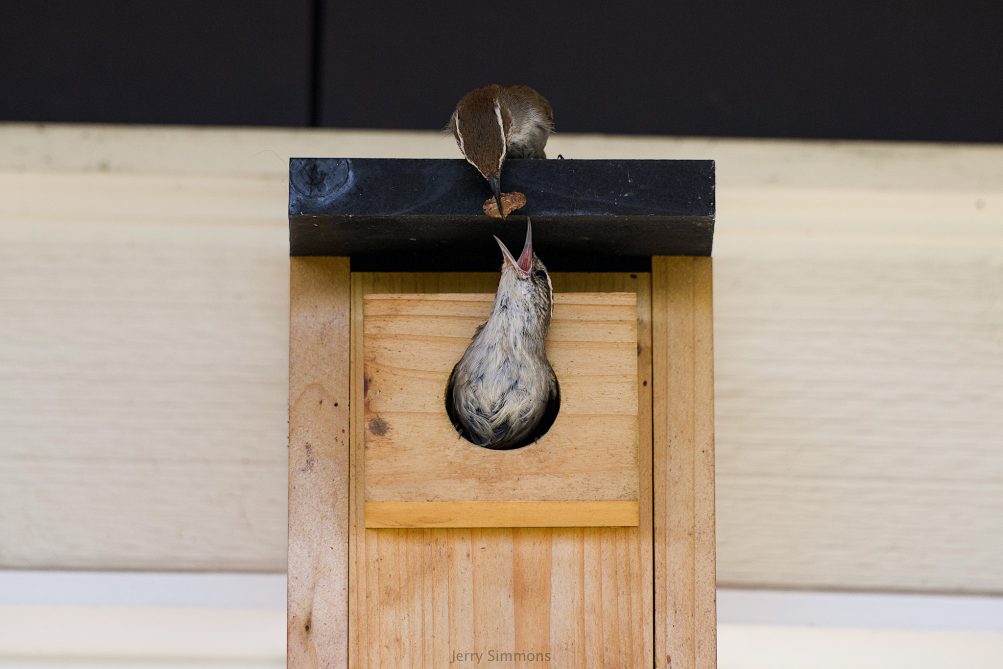
Jerry Simmons caught this scene with a nesting box serving a Bewick’s Wren family well:
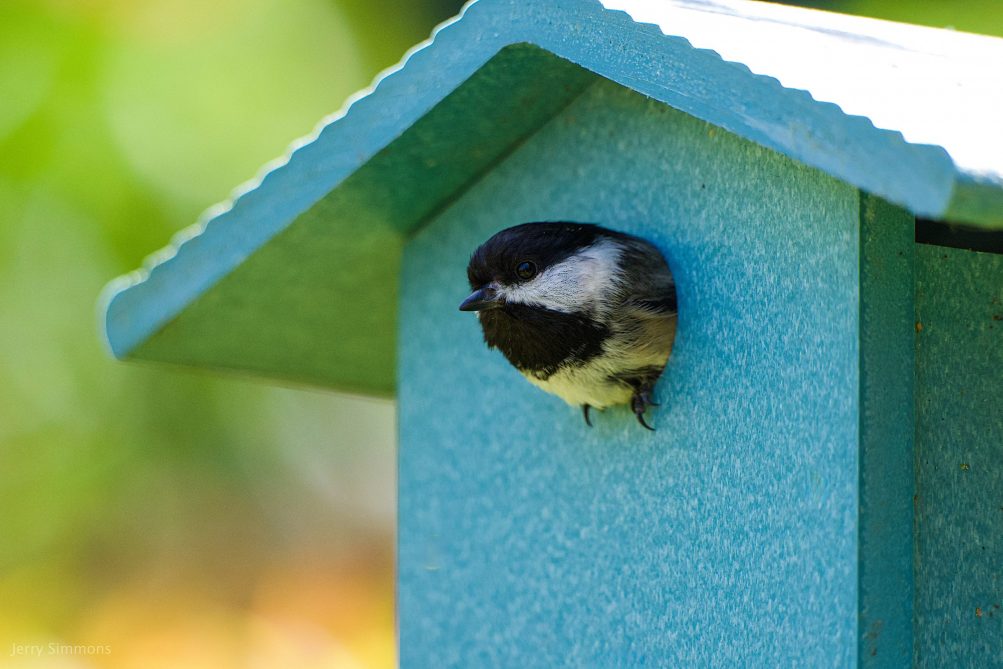
And here’s his photo of a Black-capped Chickadee peeking out of a birdhouse:
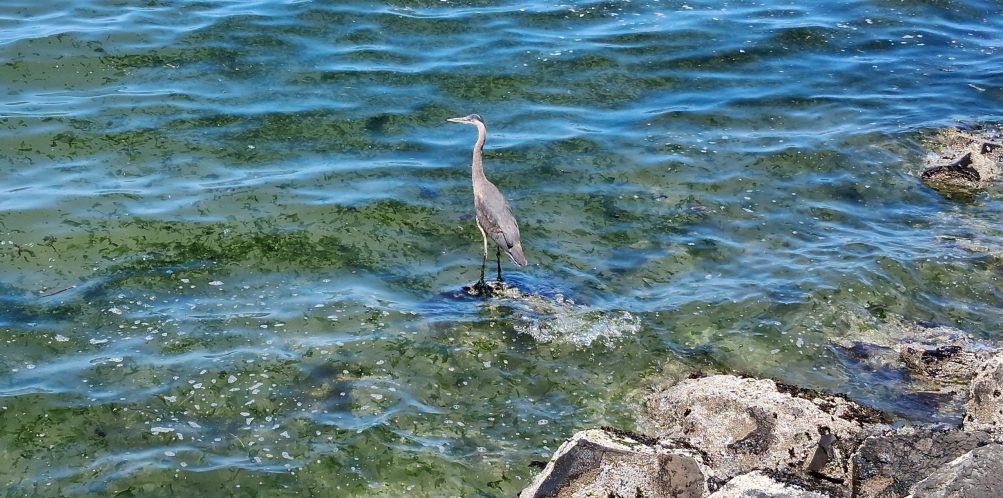
Lots of Great Blue Heron sightings lately – Bob Burns sent this one:
Thanks again to everyone for sharing photos, from wildlife to scenery to breaking news – westseattleblog@gmail.com or text 206-293-6302!
Two more coyote sightings sent in by readers:
LATE SATURDAY NIGHT: This video and report came in via text late last night:
Wild coyote sighting just now. 46th x Andover. Walked up the driveway and trotted through my front porch. May be worth putting up a notice to people in case they have animals out.
FRIDAY MORNING: Further south, Stuart emailed about this sighting:
Coyote sighting … alley between 46th/47th and Edmunds around 7am.
Unfortunately holding part of a cat as it walked away.
Followed it onto 46th as it continued down toward Hudson with an army of crows squawking at it.
Keep an eye on those outdoor pets.
We followed up with Stuart to ask more about the cat for anyone missing one, and he said it had already been identified by a neighbor as theirs. Coyotes eat more rodents than anything else, according to researchers including this one, but unattended pets are certainly at risk from predators and other dangers.
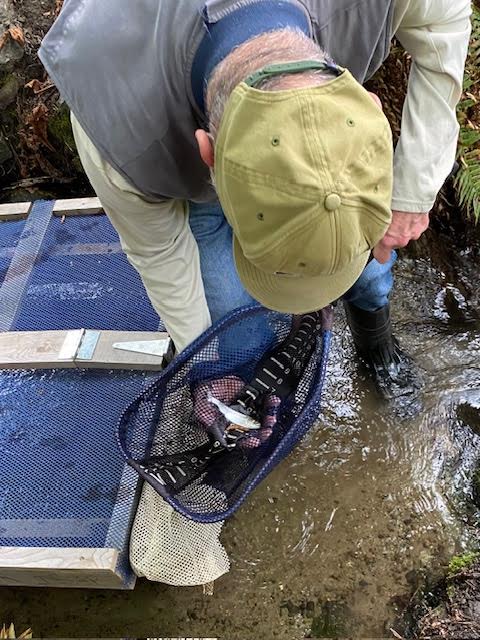 (Photo by Tom Trulin – Monitor Dennis Hinton with a healthy coho smolt)
By Judy Pickens
Special to West Seattle Blog
Volunteers have just capped a busy spring of comings and goings by coho salmon in West Seattle creeks.
Because culvert construction has temporarily closed upper Fauntleroy Creek to Salmon in the Schools releases, volunteers organized by the Fauntleroy Watershed Council supported nine groups that put 634 fry into lower Fauntleroy Creek and another nine groups that put 920 fry into Longfellow Creek. A total of 686 preschoolers through high schoolers released fish and explored habitat.
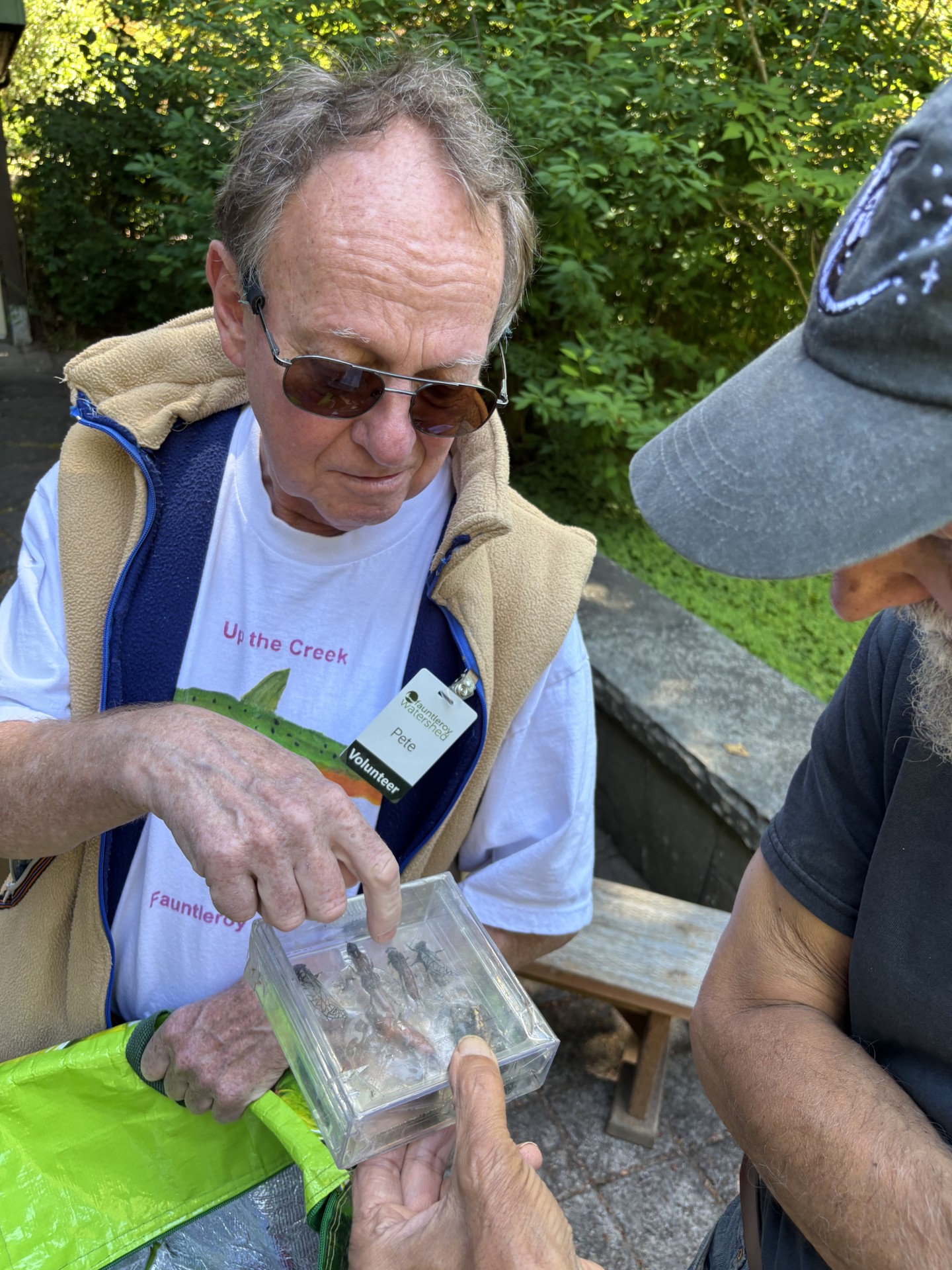 (Photo by Julia Chase – “Bug Man” Pete Draughon showing some of the aquatic insects juvenile coho will find to eat)
Spring is also when coho smolts leave freshwater for their two years in saltwater. To count these “teenage” fish, volunteers checked net traps in upper and lower Fauntleroy Creek at least twice daily from mid March to mid May. They documented 16 healthy smolts, for a five-year average of 24.
“These comings and goings attracted new volunteers and proved that we could meet new challenges,” said fish guy Dennis Hinton. “Thanks to Shannon Ninburg, we maintained ties to schools temporarily releasing in Longfellow and, by welcoming our first group of neurodivergent students, we increased our ability to support all kids who want to get out in nature.”
Thanks to AM for the video, recorded around 8 pm Friday toward the west end of Genesee Hill, near 56th/Dakota [map], where the coyote was seen between rows of parked cars. AM explained that the coyote was “NOT shy. Had my small dog with me and we went to the neighbors.” Other ways to react if you encounter a coyote – toward the goal of awareness, not alarm – are detailed in this tipsheet.
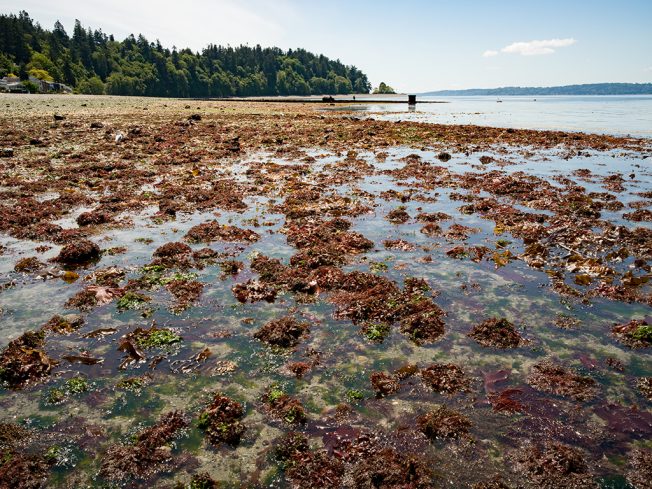
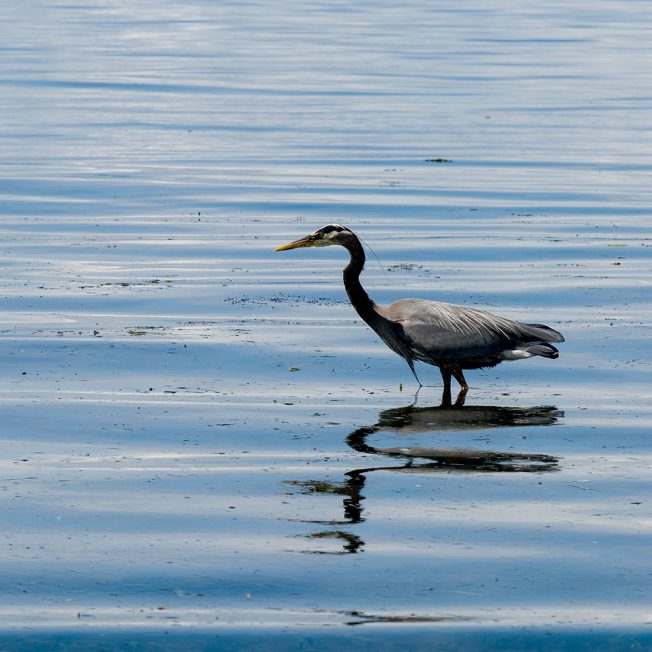
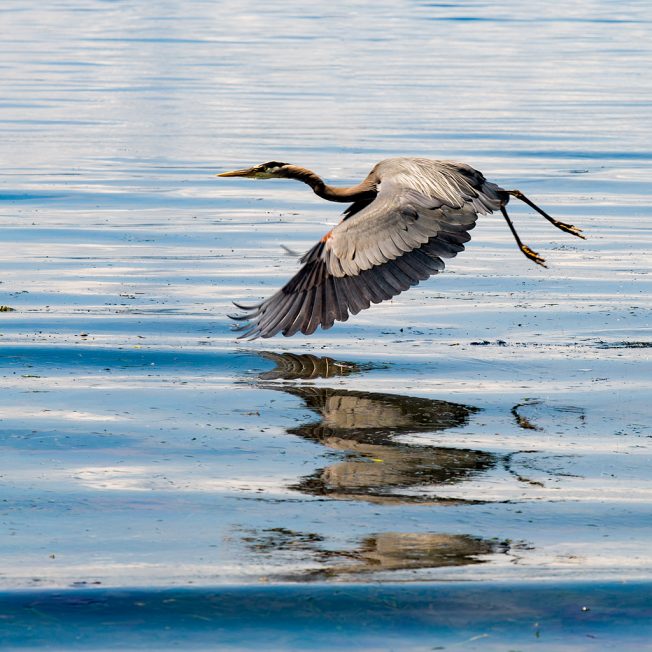
Another mega-low tide brought out the shore explorers this afternoon, and brought in more wildlife photos. The photo above, and the two of the Great Blue Heron below, are from WSB senior contributor Christopher Boffoli:
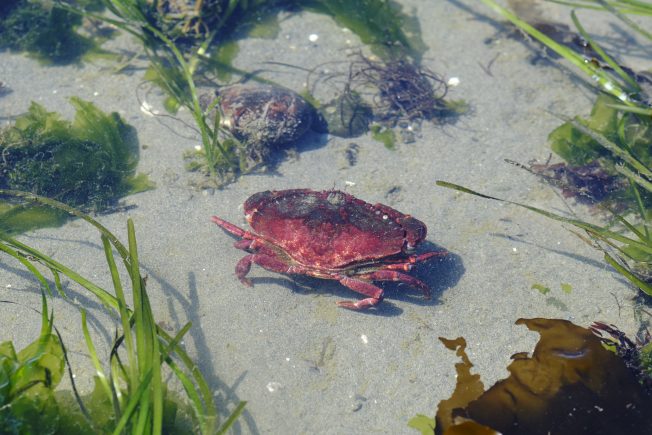
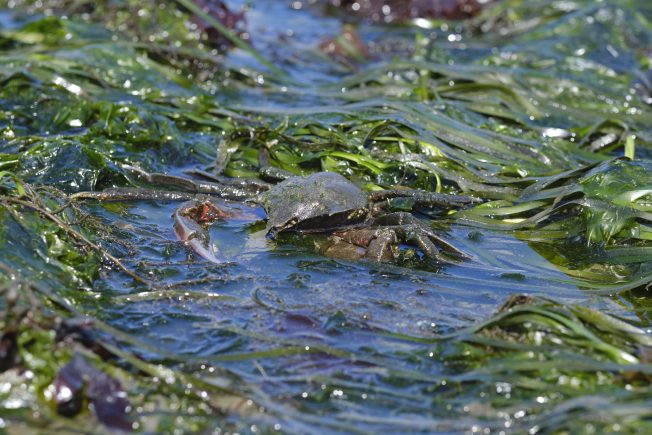
Amadeusz Wieczorek sent the next two photos after discovering crabs on the shore of Emma Schmitz Memorial Overlook:
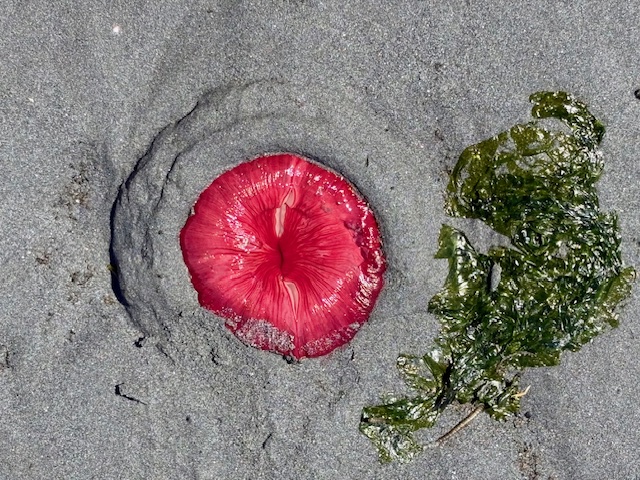
And from Curry Gibson, a strawberry anemone:
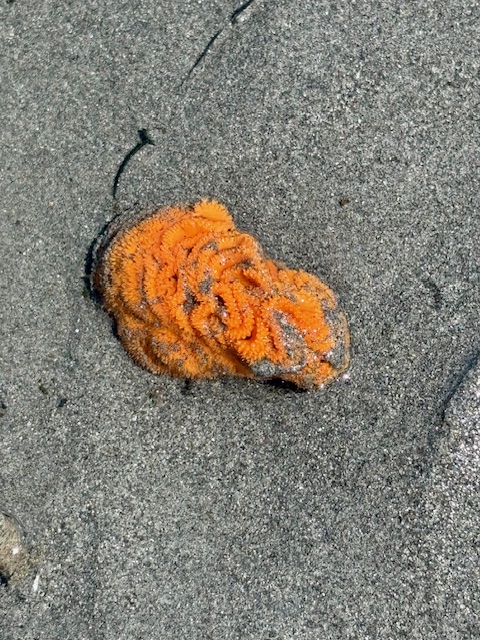
A sea pen:
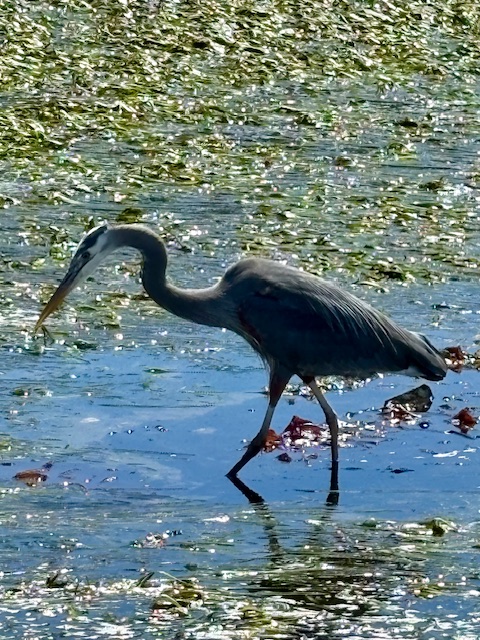
And another look at a heron:
Tomorrow brings yet another mega-low tide – bottoming out at -3.8 feet at 1:25 pm.
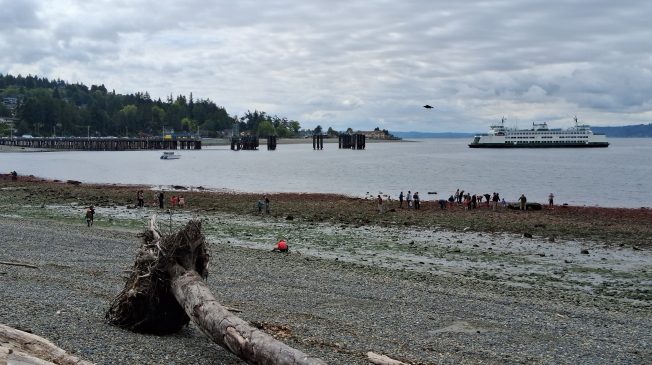
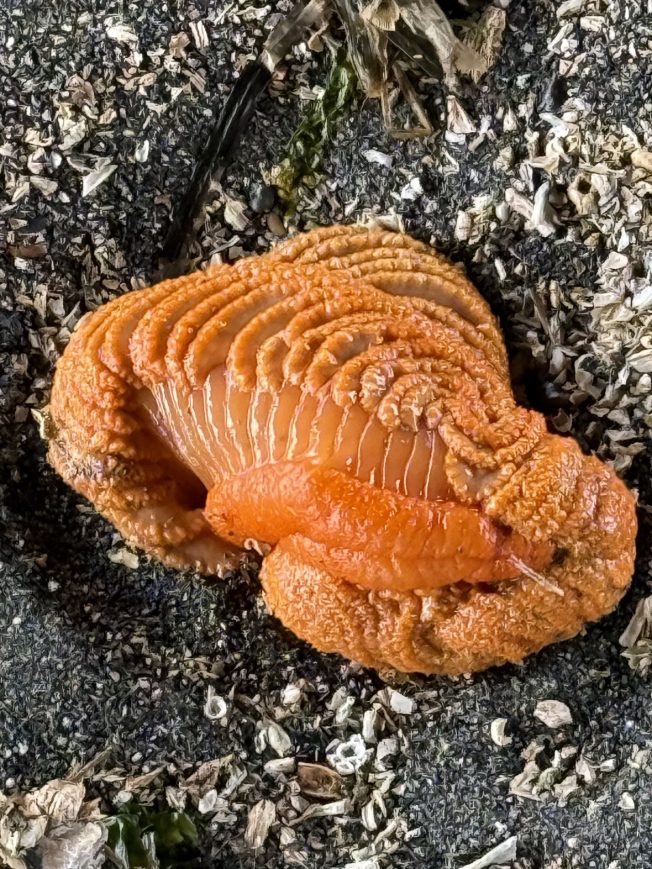
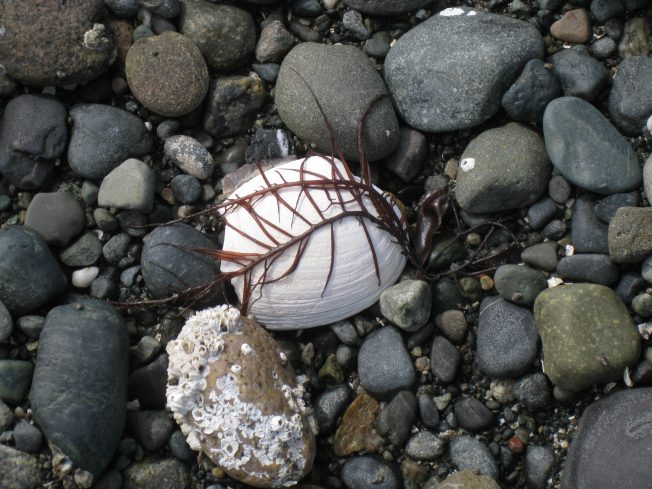
Thanks for all the photos! Mega-low tides these next few days have brought out shore explorers for a close look at wildlife. Bob Burns sent the top photo of the much-exposed Lincoln Park beach; that’s also where Brandy DeWeese photographed these creatures:
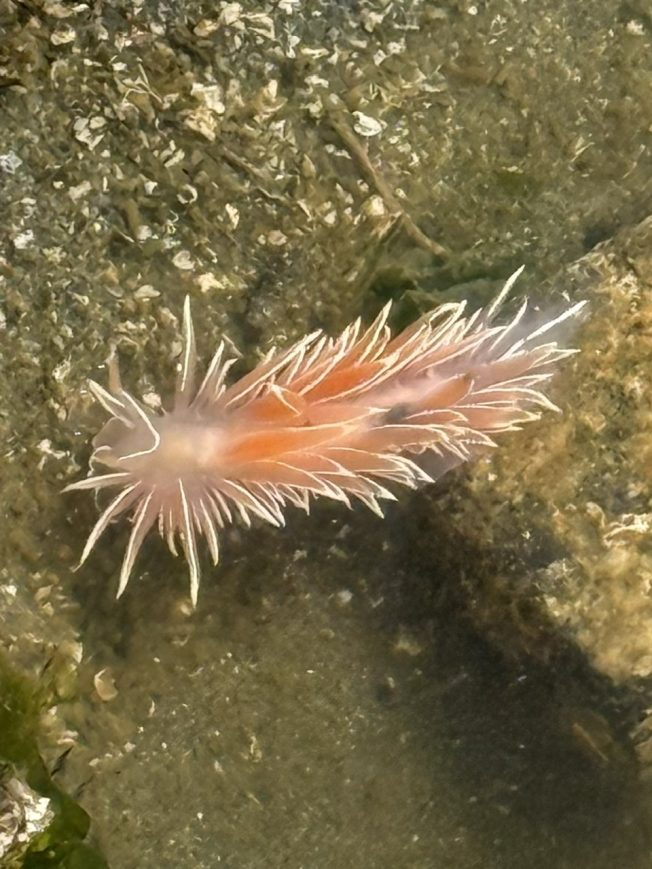
Janelle Otterholt sent these from Lowman Beach:
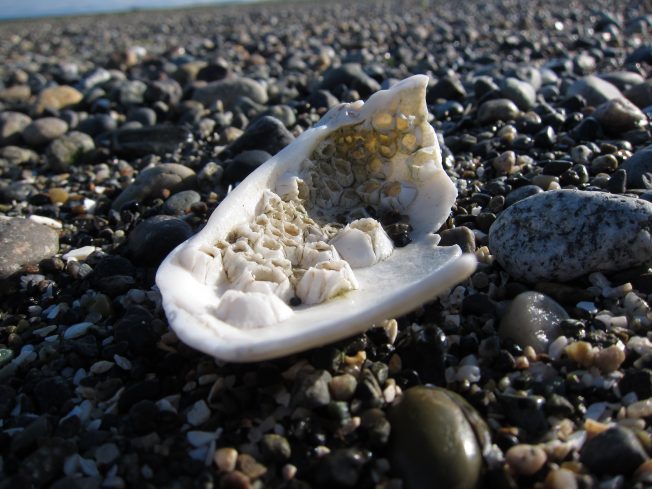
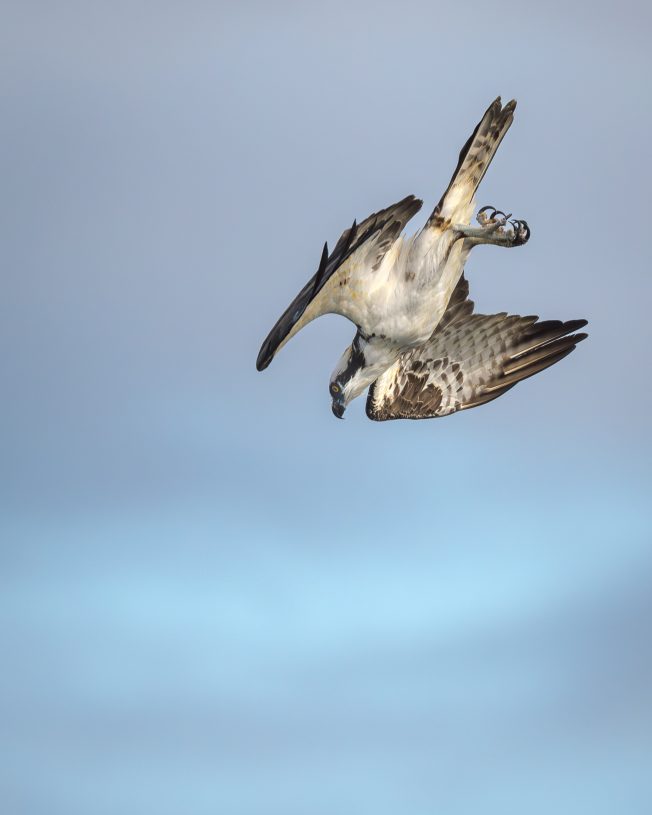
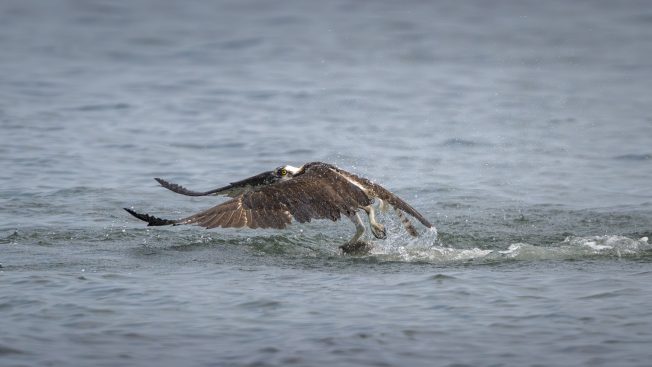
The mega-low tides can also be a boon to birds and others fishing for food – James Tilley caught an osprey in action:
The mega-low tide will be even further out tomorrow – -4.1 feet at 12:36 pm.
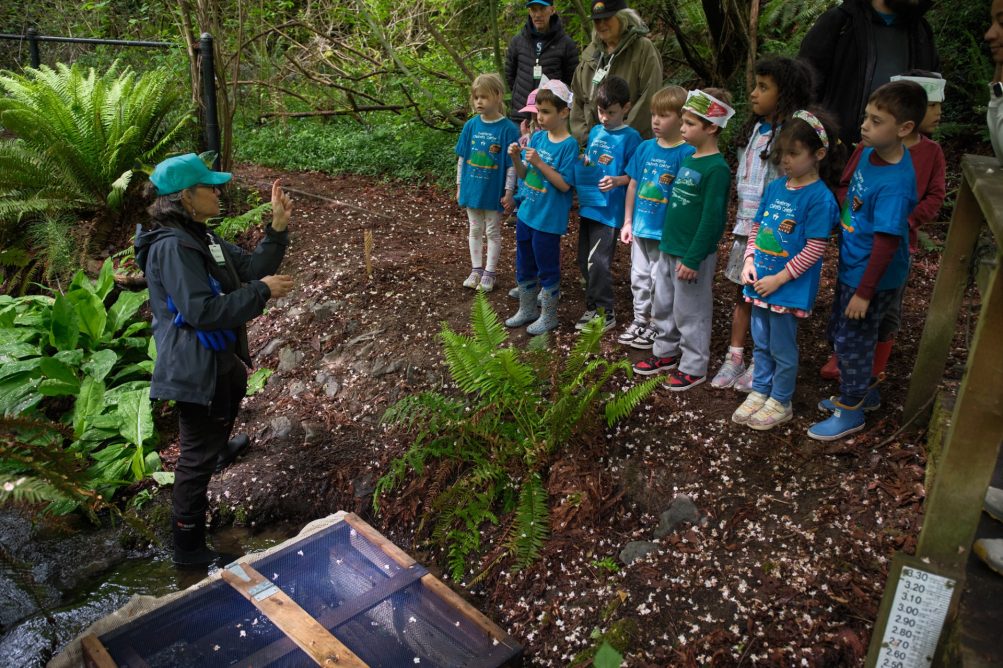 (Diana Spence explained how volunteers use net traps to count coho smolts leaving the creek for saltwater)
It’s the time of spring when students participating in Salmon in the Schools release their school-raised baby salmon into local creeks. One school was joined this week by an elected official. The report is from Judy Pickens of the Fauntleroy Watershed Council, with photos by Dave Gershgorn:
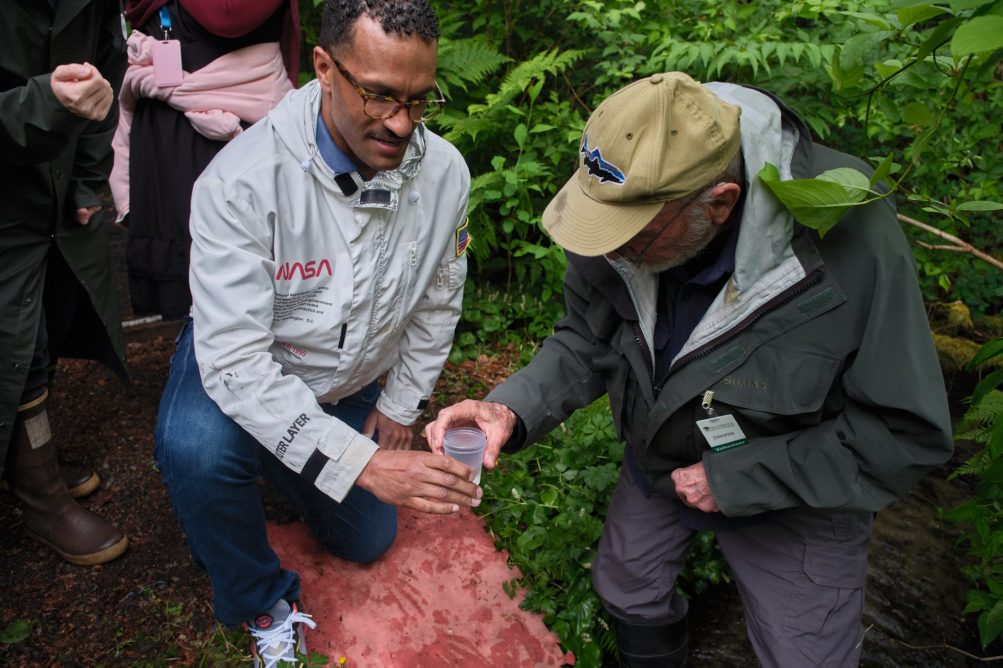
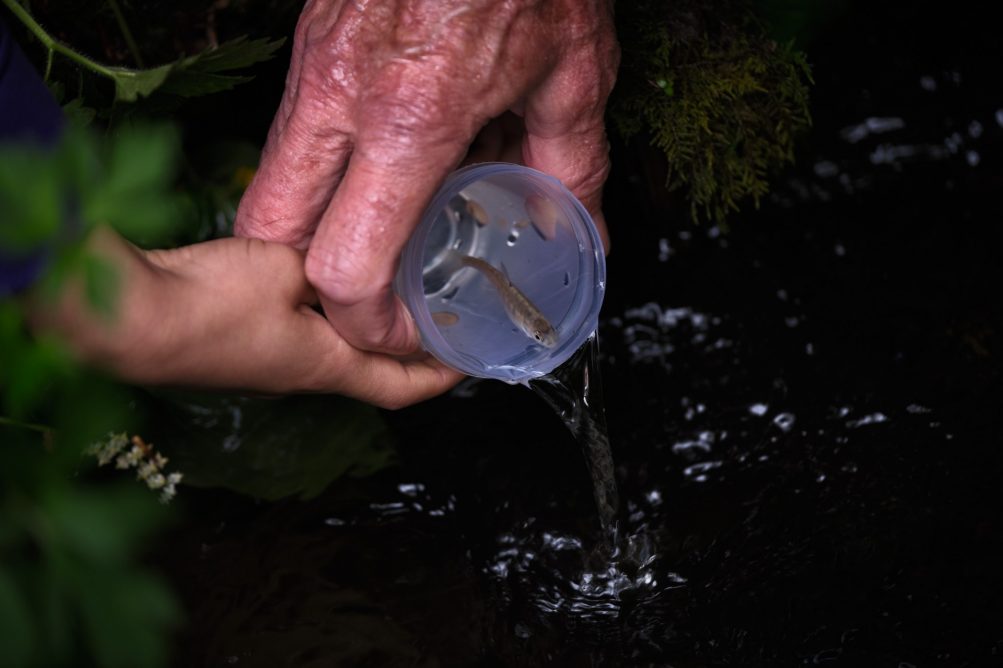
On Wednesday (5/13) 49 kids from the Fauntleroy Children’s Center came in waves to lower Fauntleroy Creek to release 160 coho fry they had been rearing since late December. City Councilmember Rob Saka joined them in putting fish in the water and exploring creek habitat.
(City Councilmember Rob Saka named the coho fry Dennis Hinton dipped for him after his children)
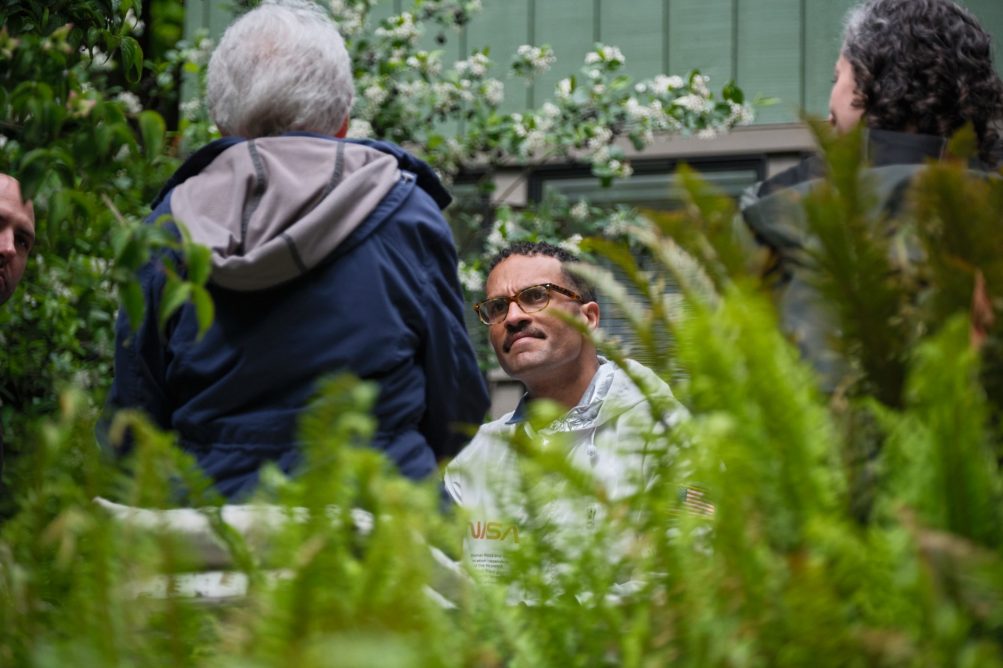
(Volunteers briefed Councilmember Saka about culverts and current concerns in the watershed)
Because culvert construction will be starting soon in the middle reach of the creek, West Seattle schools are not able to release fry as usual this spring and next in Fauntleroy Park.
(Julia Stavnitski pointed out stonefly exoskeletons left behind on a tree near the water
Instead, volunteers with the Fauntleroy Watershed Council are hosting nearly 300 children and teens in the lower creek. Another 450+ students from nine schools are releasing in Longfellow Creek.
We covered one of those release events last month.
We’ve shown many coyotes over the years but seldom the littlest ones. A reader texted these images of coyotes at West Seattle Golf Course, including pups.
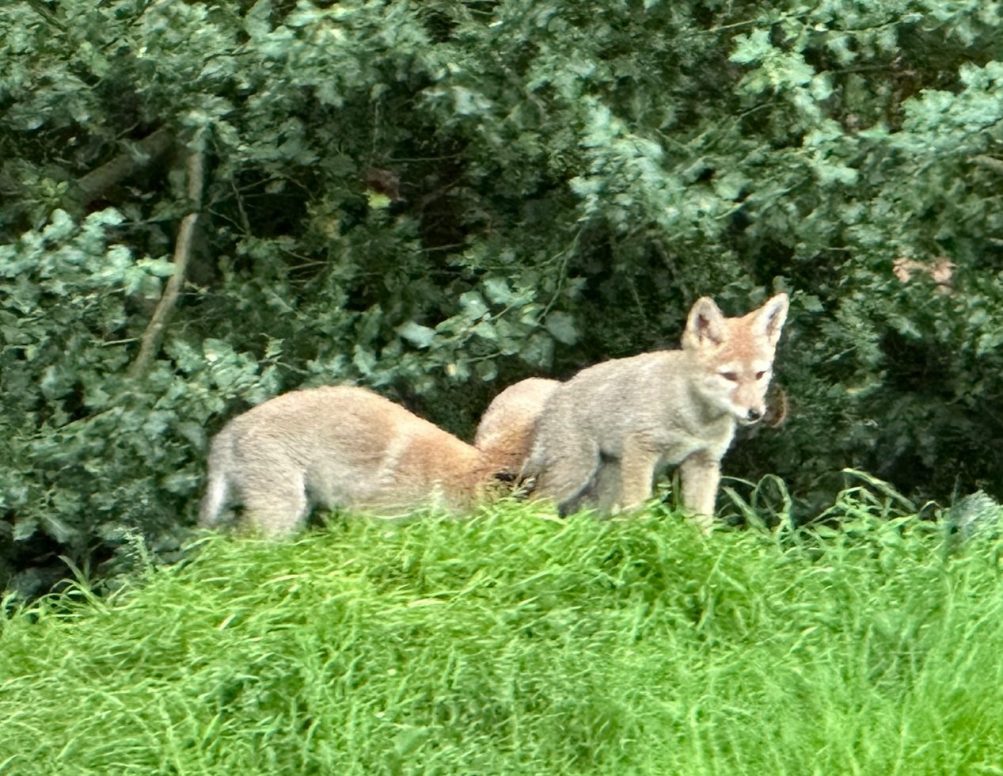
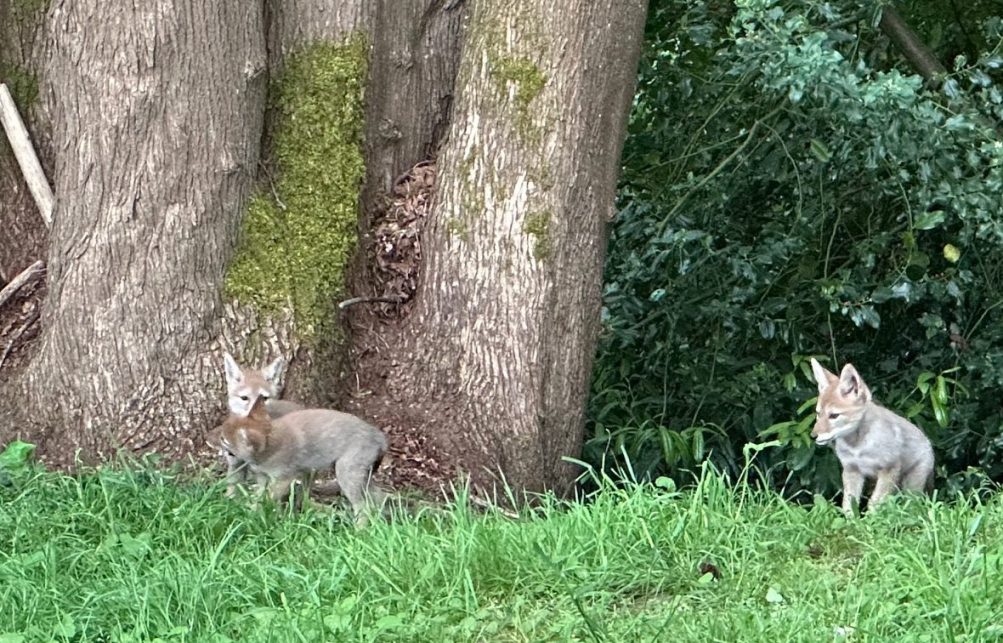
According to this info about coyote reproduction, the average litter is four to seven pups, and gestation is only two months.
Continuing our sea theme this afternoon thanks to Keri Watson for sending the video! That’s a sea lion “sailing” – often mistaken for an orca – off Lowman Beach. We’ve featured and explained this over the years – here, for example.
 (WSB photos)
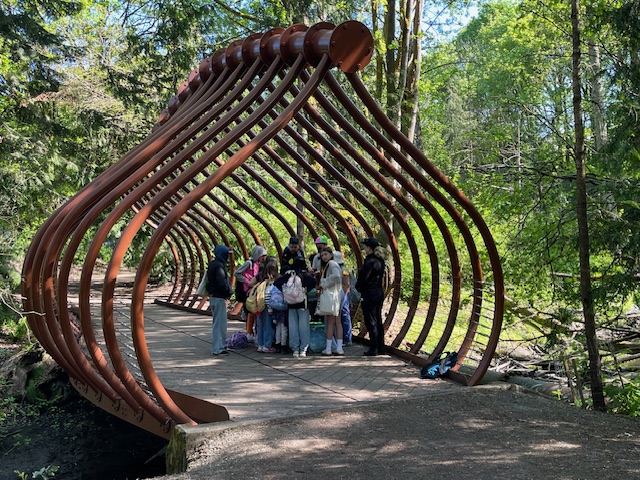
What a day for a field trip! More than 30 students from Pathfinder K-8 spent the morning at and near Longfellow Creek, starting from Dragonfly Pavilion in North Delridge.. They were split into groups for a variety of outdoor-learning activities, led by environmental educators from DNDA, and while the Salmon Bone Bridge (above) is the most scenic, that’s not where the major excitement was:
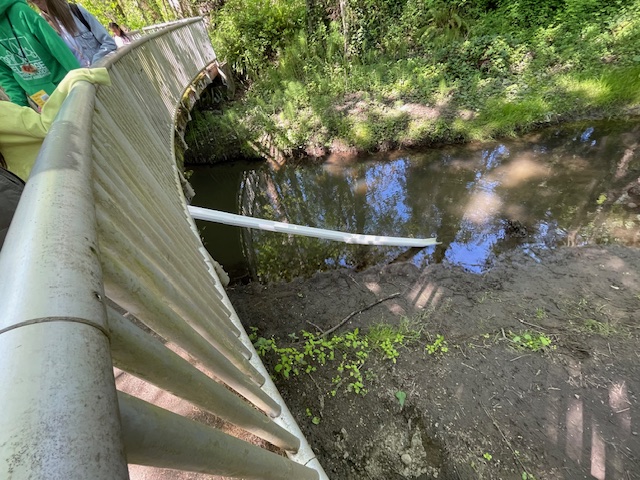
Another bridge a short distance south was set up with a sort of slide into which Pathfinder students released some of the coho they’ve been raising as part of the Salmon in the Schools program. That’s long been focused on Fauntleroy Creek, but as we’ve reported previously, culvert work starts this year so some of the release activities are moaving to Longfellow Creek instead. The release terrain isn’t conducive to getting close to the creek, so it’s down the chute with the fish:
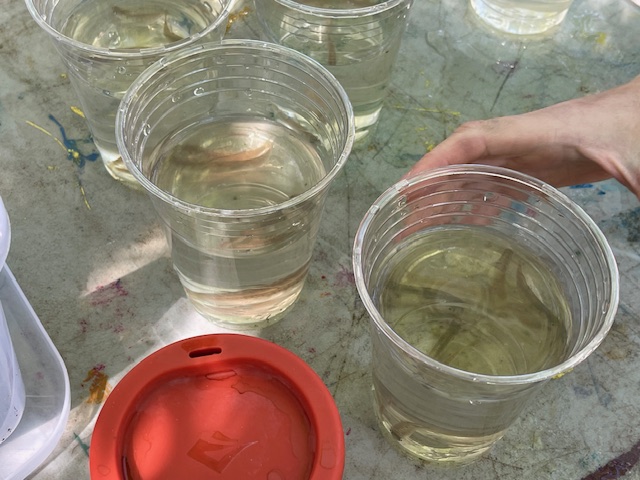
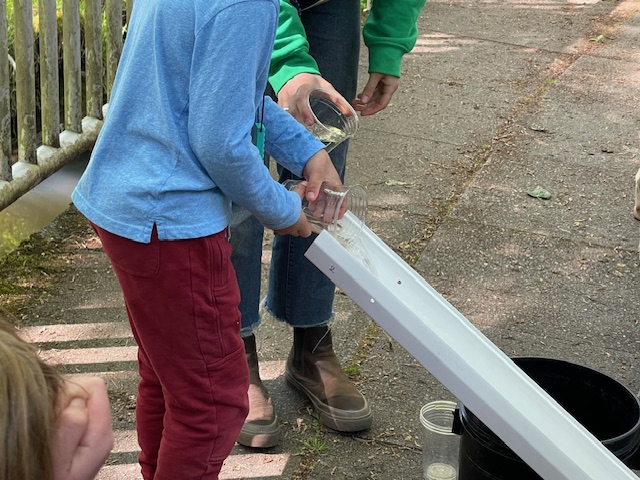
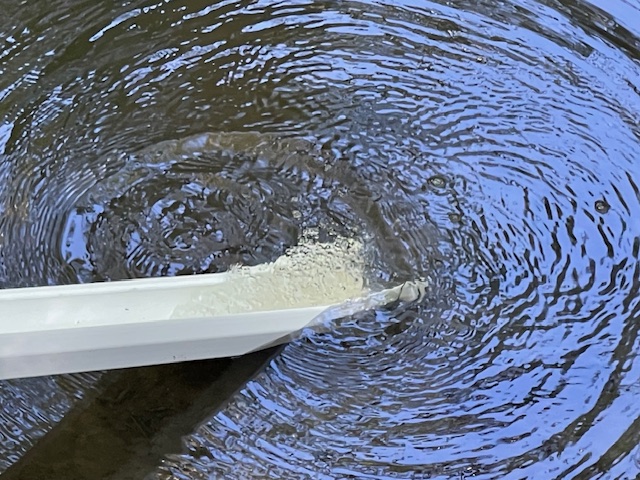
At other stations along the creek, the students learned today about how to making the water safer for salmon – hearing about pollutants like tire dust and fertilizers. DNDA’s environmental-education coordinator Mikaela Ebbeson tells WSB this was the third of four field trips as part of their pilot program. partnering with Salmon in the Schools and Seattle Public Utilities.
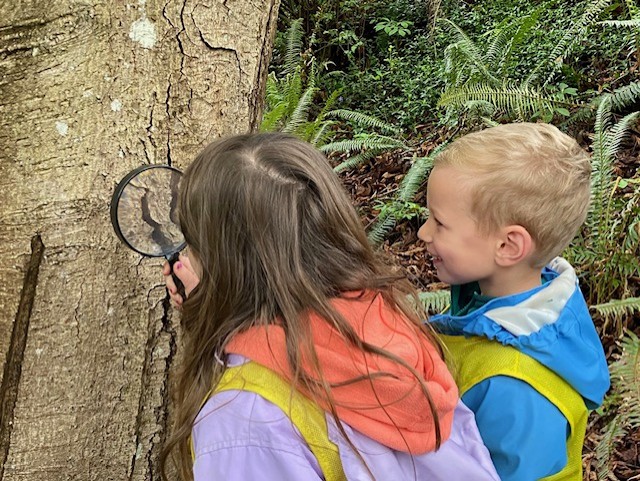 (Volunteer Ann Dunbar helped students measure a torso in centimeters)
Story by Judy Pickens
Photos by Tom Trulin
Special to West Seattle Blog
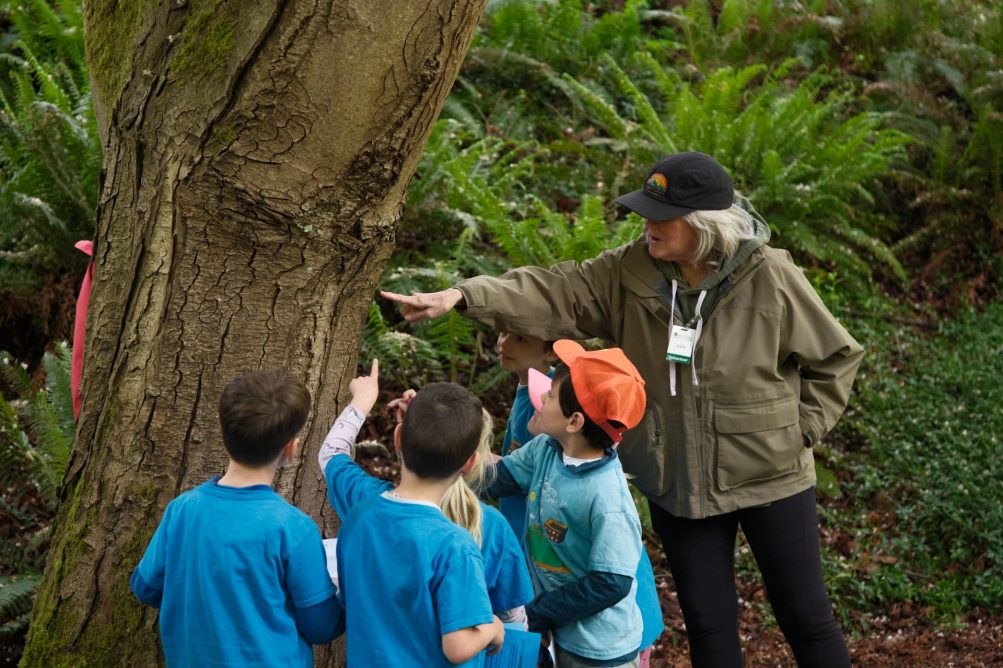
Students from the Urban Nature Preschool got a taste of scientific research on Thursday when they did the annual survey of stonefly exoskeletons in lower Fauntleroy Creek.
As nymphs, stoneflies are a major food source for juvenile coho. Mature stoneflies crawl out of the water in the spring and leave their exoskeletons behind as they take flight, and students have been counting and measuring them since 2000. Their findings are a way to track both quantity of food available to the fish and how clean the water is.
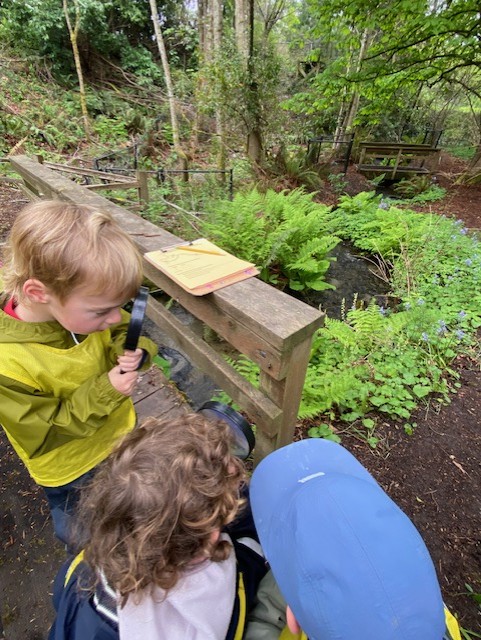 (Finding exoskeletons on bridges required close examination)
With the school’s outdoor focus, the four-year-olds already knew a lot about the creek and, with support from teachers and volunteers, they were up to the challenge of following study protocol. Three teams closely examined trees and bridges while a fourth measured torsos as adults recorded the numbers.
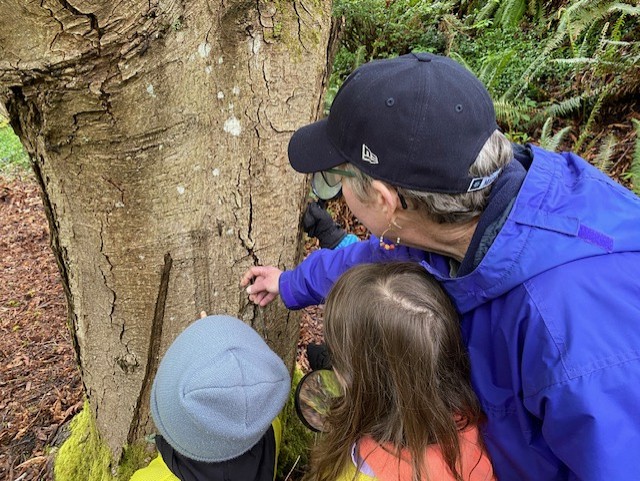 (Volunteer Ann Dunbar helped students measure a torso in centimeters)
After teams reported their findings, volunteer Alana Khayat added the numbers to line graphs so students could see how they compared to findings since 2015.
Thanks to Emily for sending that video of a river otter – that’s what we see in Puget Sound, not sea otters – on the shore at Don Armeni Boat Ramp this afternoon. Emily says, “I just saw the coolest thing … I was sitting here on my blanket hanging out when I noticed a couple looking at an otter that was just hanging out in the mud on the grass rolling around. It was about 20 feet from me. They kept backing up because it was where they were originally standing and it just popped out of the rocks to hang out for a bit. I got this video of it. So cool!!!” As we’ve noted before, river otters’ dens are generally onshore, even some distance inland, so you might see them crossing streets like Alki Avenue, Harbor Avenue, even Fauntleroy Way. Learn more about them via this “Living with Wildlife” fact sheet.
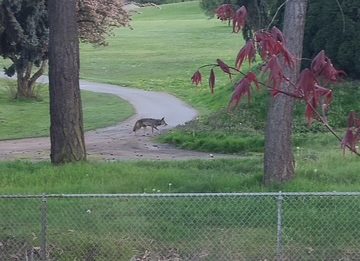
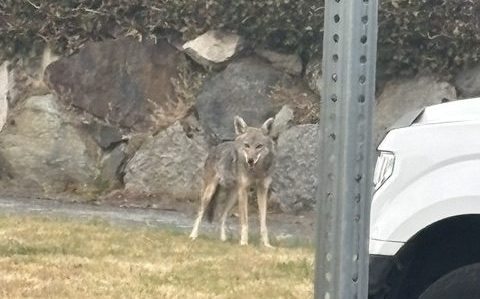
A texter saw that coyote on West Seattle Golf Course on Tuesday and sent the pic, one of three recent reports to share. Another report came in without a pic:
I am not sure that reporting a coyote has been around for a few days is blogworthy but sharing if so. It’s been trotting in and out of the yard for a few days; seen all hours of the day. We abut a city greenbelt so we believe that maybe its set up a HQ/den.
Its not causing any nuisance to us and it trots away when we have gone out to back yard to work on the garden. Looks and watches from a distance of 50-60′. And then leaves. Location is between 16th and 12th and Othello and Webster.
Last but certainly not least, Aaron sent this video from his neighborhood south of West Seattle:
Readers may enjoy this video of a coyote that has frequented our backyard several times, this time on Thursday morning. Thinking maybe there is a den near. Unfortunately it took our three chickens, though I don’t fault it for that. Our kids have surprised it once in broad daylight in the morning before school.
Now our standard reminder – we have shared coyote reports for 15+ years in the spirit of awareness, not alarm, and you can learn about coexisting with them via wildlife experts’ advice.
| 1 COMMENT