
West Seattle, Washington
25 Thursday

(2012 WSB photo)
Last year, four salmon spawners were spotted in Fauntleroy Creek. But each fall, hopes run high and anything can happen – it’s only been six years since 274 showed up in 2012. Right now, watershed stewards are seeking more volunteers to help keep watch. Here’s the announcement from Judy Pickens:
Whether or not coho spawners come into Fauntleroy Creek always depends on their having survived saltwater conditions. If they do come in, watchers need to be on duty to document them.
This year’s watch will start October 22 and continue until mid-November or until no more spawners have come in for one week.
Spawners are most likely to be present in the fish-ladder area during the five hours after daytime high tide, so the watch window varies day to day. Using a simple form, volunteers document activity for a half hour. Written details and a brief training session will be provided to new watchers.
Children are welcome with a parent, and teens may watch on their own. For questions and to sign up, email judy_pickens@msn.com or call 206-938-4203.
No guarantees, but we might be lucky and get a glimpse of the Southern Resident Killer Whales tomorrow. As night falls, Kersti Muul tips us, resident orcas are southbound just north of Elliott Bay, in the Discovery Park vicinity. As she points out, this is a bit earlier than the usual SRKW fall return. And it comes the day after the second of two public meetings about their plight. If you see orcas tomorrow (or any other time!) please let us know – our 24/7 hotline, text or voice, is 206-293-6302.
“Diver Laura” James needs some research help. She’s looking into recent sixgill-shark strandings around Puget Sound – at least five confirmed in the past few months, she says. One happened recently near Alki Point Lighthouse, but “the tide came in and washed the carcass away before the scientists could get to it.”

What you see above is the remains of a six-gill found stranded in Sequim with a mesh crab-bait bag clearly visible. Laura says they want to check other strandings for something similar.
So if you happen onto a stranded/dead shark, she requests that you get in contact with her. Even better – take a picture and send it with the location. Better still, grab and freeze a tissue sample. She adds, “I’m also very interested in any old carcasses that might be around, as I can still get a DNA sample from them.” Laura is reachable at info@diverlaura.com.
P.S. Not familiar with six-gills? Laura points us to this:

The photo is from Matt Hedlund: “My wife Meagan and I stumbled onto a pretty low tide at Alki today and it was awesome. Here’s a picture of a baby octopus.” Per our favorite chart, the tide was out to -1.2 feet at midday. Tomorrow just before noon, -0.6 feet, and after that we are headed into the time of year when the minus tides are after dark, until spring.
l

(Southern Resident orca, photographed in 2015 by Gary Jones @ Alki Point)
By Tracy Record
West Seattle Blog editor
The plight of the dwindling Southern Resident Killer Whale population is in a brighter spotlight than ever, as action to save them is debated.
Local advocate Donna Sandstrom, executive director of The Whale Trail, will provide an update at tonight’s Southwest District Council meeting (6:30 pm at the Senior Center of West Seattle, 4217 SW Oregon).
Last night, her organization started a new season of Orca Talks – opening with an update from Sandstrom, who is also a member of the orca task force set up by Governor Inslee, and moving on to a featured guest’s presentation about a more-abundant, and mysterious, cetacean – the harbor porpoise.

The photo and announcement are from Seal Sitters Marine Mammal Stranding Network, sent by Lynn Shimamoto:
Seal Sitters’ “Share the Shore” banners are once again hanging along Alki Avenue. The banners were designed several years ago as a Seal Sitters outreach project with the help of a city grant. They are to remind everyone that this is the start of pupping season, when newly weaned harbor seal pups show up on West Seattle beaches. Indeed, we anticipate “Jam,” the still-nursing pup who has been frequently seen with mom ”Pearl,” will soon be weaned and vulnerable as he/she tries to rest and warm up on the beach. Please, if you see a seal: stay back, keep dogs off the beach, and call Seal Sitters at 206-905-SEAL (206-905-7325).
Seal Sitters is part of NOAA’s West Coast Marine Mammal Stranding Network. We respond to marine mammals dead or alive in West Seattle from Brace Point to the Duwamish River, including Harbor Island.


(Photos by Dr. Cindy Elliser)
Next week – it’s a marine-mammal two-fer as The Whale Trail resumes its series of Orca Talks. At 7 pm Tuesday, September 4th, at C & P Coffee Company (5612 California SW; WSB sponsor), here’s what you’ll see and hear:
Harbor porpoises are one of the most abundant animals in the Salish Sea, yet little is known about them. Pacific Mammal Research is dedicated to understanding more about this poorly understood population, using techniques such as photo-ID surveys and passive acoustic technology. Learn more about this shy and elusive species, and the research that is shedding new light on them.
The speaker, Dr. Cindy Elliser, has conducted marine mammal research for over 15 years. She worked with Dr. Denise Herzing and the Wild Dolphin Project studying Atlantic spotted and bottlenose dolphins in the Bahamas for 10 years before moving to the Pacific Northwest in 2014 and founding Pacific Mammal Research to study marine mammals in the Salish Sea. She also is an adjunct biology/chemistry instructor at Skagit Valley College.
Whale Trail founder Donna Sandstrom will also give an update on Governor Jay Inslee’s Orca Recovery Task Force (of which she is a member) and how you can become involved in protecting the Southern Resident orcas.
Admission is a suggested donation of $5 (kids free) – advance tickets are available here.

Meet Pearl and Jam. David Hutchinson – who photographed them Sunday – reports that Jam was Seal Sitters Marine Mammal Stranding Network‘s “first new harbor seal pup of the 2018 season,” resting with mom Pearl “on a rock just offshore from one of our local beaches. … If you see them at any of our West Seattle beaches, please keep back, keep people and pets away, and call the Seal Sitters’ Hotline at 206-905-SEAL (7325).” Meantime, he shared this announcement:
SEAL SITTERS’ LAST TRAINING OF THE YEAR – AUGUST 25TH
Seal Sitters is a member of NOAA’s West Coast Marine Mammal Stranding Network. We are responsible for responding to any marine mammal on West Seattle beaches from Brace Point through the Duwamish River including Harbor Island.
All new volunteers are required to take a 2-hour training session. Our last training of 2018 will be held in the front meeting room at the Alki UCC, 6115 SW Hinds (MAP), on Saturday, August 25th from 10 AM – Noon. This will be followed by a short Q&A opportunity. Topics covered will include: The Marine Mammal Protection Act, life in a harbor seal rookery, what is Seal Sitters’ role in NOAA’s network, information on the most common marine mammals in our local waters, your role as a volunteer in a challenging urban environment. Also discussed will be volunteer opportunities as a hotline operator, first responder, and scheduler.
IF YOU DON’T LIVE IN WEST SEATTLE – While all the different groups operating in Puget Sound are part of NOAA’s Network, each group functions separately and provides its own training. Our training would only qualify you to volunteer within the area mentioned above.
If you plan on attending, an RSVP is required. Please include in your email the full names of everyone who will be attending. If any of these are minors, include their ages. A parent or guardian must accompany all minors to the training and when they are on the beach. Seating is limited, so be sure to register early to reserve your place.
To RSVP: SealSitters.Outreach@msn.com
 (Image provided by Seattle Audubon: White-Winged Scoter photographed by Doug Schurman)
We know the WSB readership includes many bird lovers. Seattle Audubon hopes some might be able to help with this:
Are seabirds in Puget Sound and the Strait of Juan de Fuca increasing or decreasing in numbers? Which species are changing their range? Help us find out.
The Puget Sound Seabird Survey (PSSS) is a community and citizen-science project managed by Seattle Audubon that empowers volunteer birdwatchers to gather valuable data on wintering seabird populations across the southern Salish Sea.
This season we will be expanding the project, yet again, this time north to the Canadian border and the San Juan Islands. We received funding from the Environmental Protection Agency’s National Estuary Program through the Washington Dept. of Fish & Wildlife to add 15-30 new survey sites, develop an oil spill plan and train volunteers on how to react to a spill.
You can contribute to vital seabird science by joining the twelfth season of this exciting project. We are now recruiting enthusiastic and dedicated volunteers to help us monitor the status of our local wintering seabirds. Training on survey methodology will be provided on Tuesday, 17th September at Lincoln Park, with other trainings taking place at 8 additional locations later in September and early October.
The first seabird survey of the season will take place on October 6th, 2018. Volunteers should ideally be able to identify Puget Sound’s seabird species and be available on the first Saturday of each month, October through April, to conduct a 30-minute survey. But, if determining between Lesser and Greater Scaup is a challenge, we’ll team you up with more knowledgeable surveyors. To help us determine each volunteer’s seabird identification skill level, please take this short, fun seabird ID quiz.
There are five survey sites in the West Seattle area that we need volunteers for, 10 sites in the Seattle area that require more volunteers, and numerous other sites around Puget Sound with spaces.
Learn more at www.seabirdsurvey.org and email Toby Ross, Science Manager tobyr@seattleaudubon.org to take part.

Two similar views of tonight’s smoke-reddened sunset (along with Siberia and B.C., Northern California is a factor too, says Cliff Mass) – one with something extra. Above, David Hutchinson‘s view from Alki as the sun started to slip behind the Olympics … below, Robin Sinner‘s view, with a seabird that’s been audible inland too:

The silhouetted bird is a Caspian Tern, and their call – which some have described as “prehistoric” (see and hear them here) – has been heard more inland than we recall from previous years. We asked one of our expert local bird/wildlife watchers, Kersti Muul, about it recently and she said the terns heard away from the water are likely carrying food to a nesting colony that’s in the east Duwamish area.
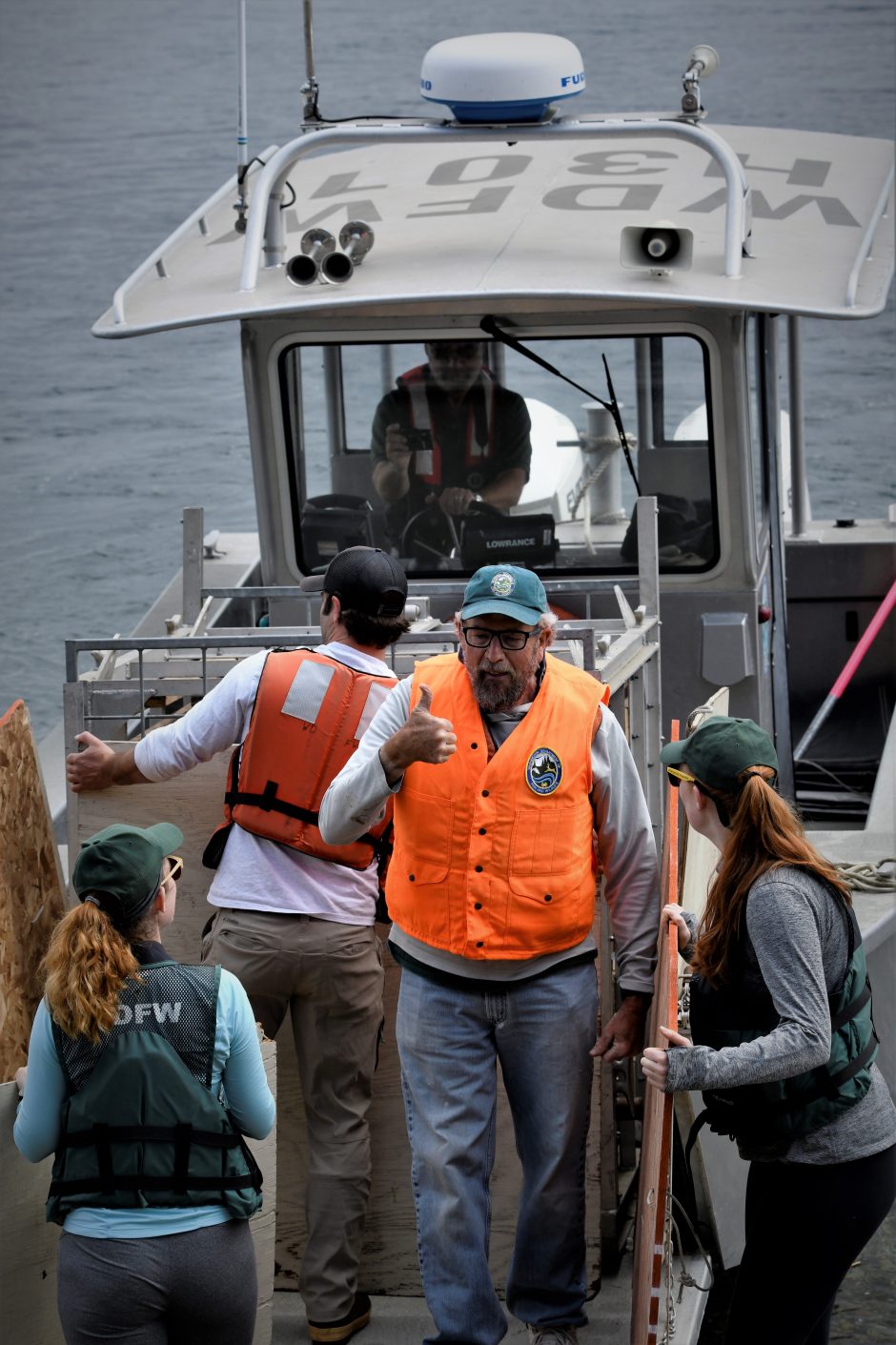
6:33 PM: The photos are from Kersti Muul, one of the local wildlife advocates who had been tracking the saga of this California sea lion for the past week or so.

The sea lion, nicknamed Dudley, was severely underweight and had several signs of major illness/injury, so the state Department of Fish and Wildlife removed him this morning from the beach at Cove 3.
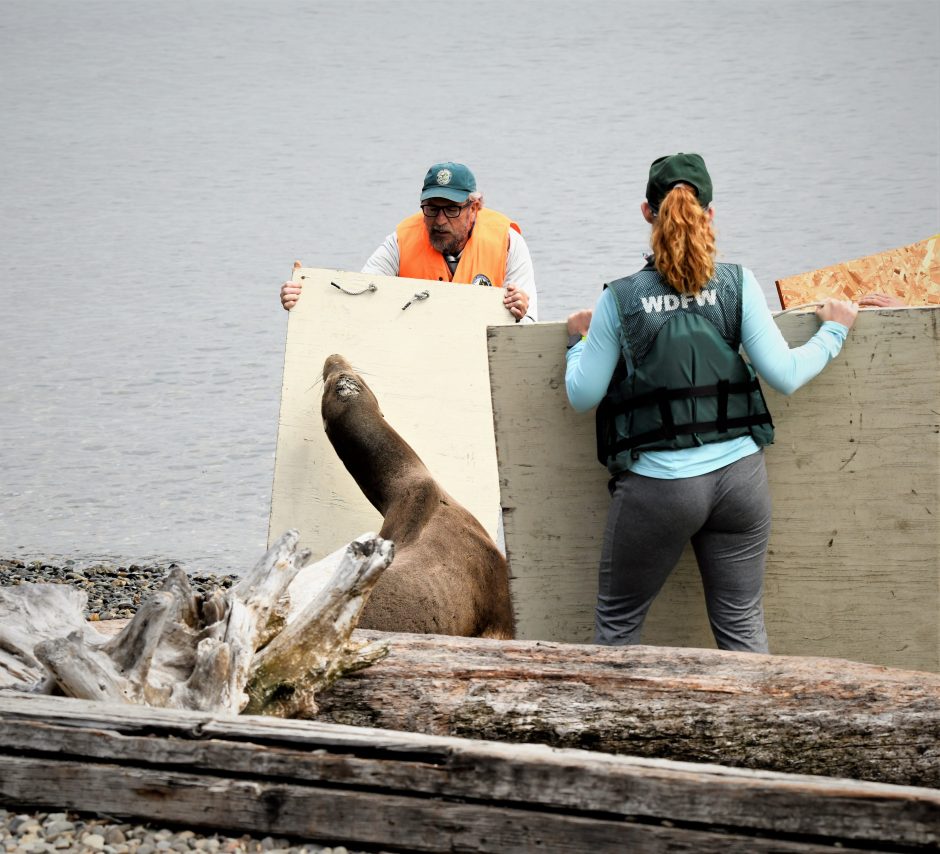
No veterinarian was available to euthanize the sea lion on the scene, so he had to be taken away. They would have let nature run its course, Kersti says, but he was on a public beach and that posed hazards both for him and for the public.
8:34 PM: Kersti mentioned in correspondence with us that Seal Sitters have been dealing with Dudley, and now we’ve heard from them. David Hutchinson sent this:
Since last Friday, Seal Sitters’ volunteers have been monitoring the location and condition of a lone California Sea Lion at various spots along Harbor Avenue. Nicknamed “Dudley,” this animal did not make the normal migration south this spring, possibly due to health conditions. It soon became apparent that his health was extremely compromised. He recently began hauling out at Cove #3, just north of Marination, which was a potentially dangerous spot for him and for the public. In consultation with the Washington Department of Fish and Wildlife and SR3, it was determined that the best course of action would be capture and removal from that location. This morning a crew from WDFW, along with a specialist from NOAA, successfully removed him from Cove #3 and transported him to a WDFW facility in Lakewood. Late this afternoon, we were informed that his health was compromised to the point that euthanasia was required. A necropsy will be performed tomorrow and Seal Sitters will be notified of the results.
We want to take this opportunity to thank Steve Jeffries of WDFW and his staff, along with Jeff Harris of NOAA, for their excellent job with the capture and removal. We greatly appreciate the input and assistance of Casey McClean, Co-Executive Director of SR3, in this difficult case.
Also, Seal Sitters would like to say a special thanks to Greg Whittaker of Alki Kayak Tours and his staff for their patience and cooperation these last few days.
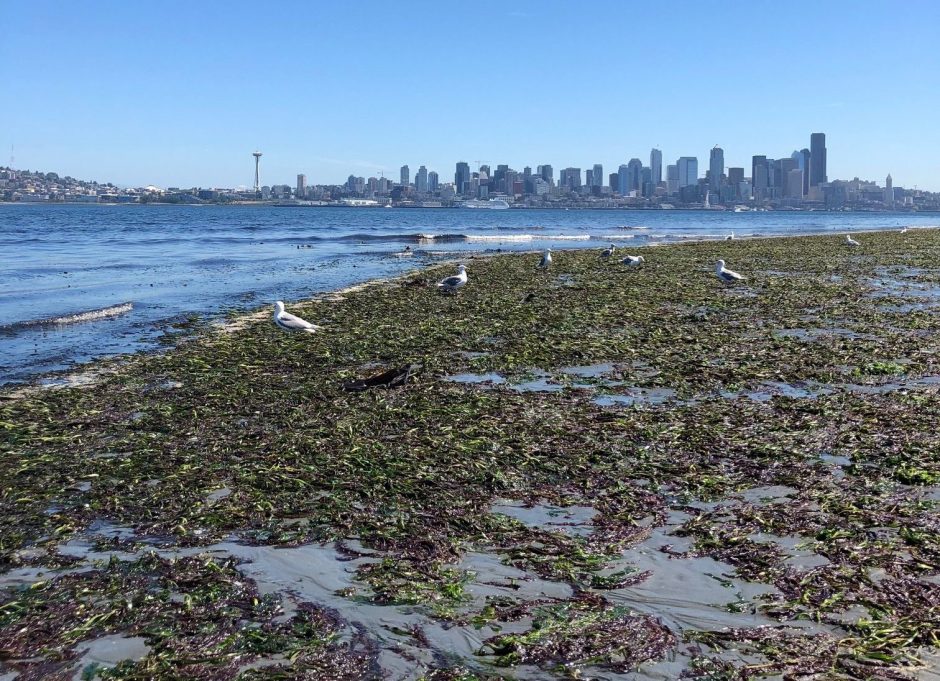
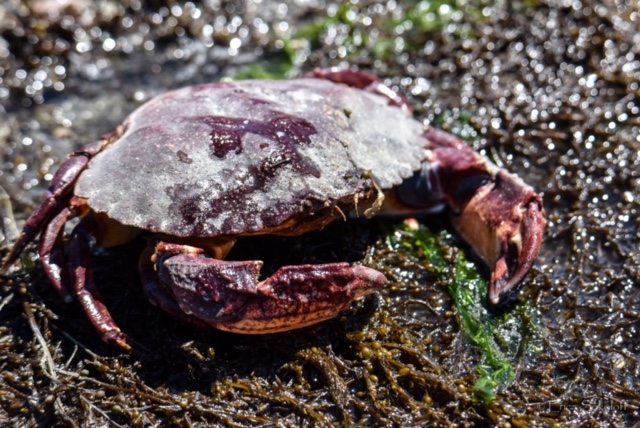
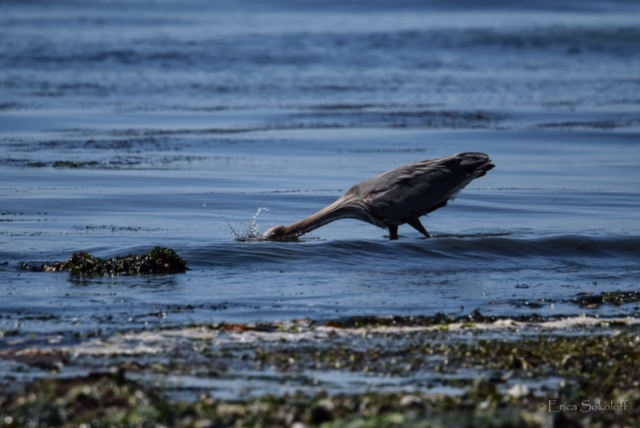
We’ll forgive you if you take a break from West Seattle Summer Fest for a bit tomorrow and go check out the low-low tide … which will be almost as low as today’s! Thanks for sharing photos – above, by Mark McAndrews, looking toward downtown; below, three photos of wildlife seen at low tide by Erica Sokoloff:

Tomorrow’s lowest tide is at 12:26 pm, -3.5 feet (today’s was -3.6). It’ll be the last local low tide beyond minus 3 feet until June of next year.
 (Photos by Kersti Muul)
We’ve received multiple inquiries about dead/dying bumblebees, particularly along California SW from The Junction to Morgan Junction. One of the people who noticed was local naturalist (and more) Kersti Muul, who provided the photos. We investigated a similar phenomenon a couple years ago, and recalled it wasn’t a case of spraying – as most assume when they happen onto the bees – but was traced to a particular kind of tree. Kersti, also an arborist, subsequently noted the trees in question are lindens:

Other parts of the nation/world have noted this phenomenon. Last fall, the New York Times wrote about researchers looking into it; they hadn’t entirely solved the mystery.

Not all bees are susceptible to this, as noted in this one-sheet from Oregon. The dead bees Kersti saw/collected are almost all yellow-faced bumblebees, of the species Bombus vosnesenskii. That Oregon document also reminds us that lindens are the trees that draw so many aphids, their secretions drip onto cars parked beneath them (it’s not the sap making those little spots, it’s the bugs). But you don’t want to spray those trees to kill the aphids – because that will kill other insects, such as bees, too.
If you’re out on the West Seattle shore this morning, be on the lookout for at least one whale! Both David and Jim have sent reports of sightings off Duwamish Head in the past two hours. Likely humpbacks, but no photo so we don’t know for sure. The Whale Trail‘s website has a species guide that might be helpful if you see a marine mammal are trying to identify it.
Thanks to Kersti Muul for the tip – humpback whales have been off West Seattle much of the afternoon, and are in Elliott Bay at last report. One Orca Network commenter reports seeing them from the Water Taxi. Not sure how to ID a humpback? Here’s some help from The Whale Trail.
This morning’s sighting post was a long time ago so we’re starting a new one – multiple reports of orcas visible off Alki Beach right now. While one report has them around 58th and Alki, they’re also reported to be heading north.
9:48 AM: Thanks to Kersti Muul for the tip – take your binoculars and look toward Blake Island, where a sizable group of orcas is reported to be passing, southbound!
12:06 PM: They’re still southbound, Kersti reports – and they’re transient orcas. Now off Burien’s Three Tree Point, she says.
7:57 PM: And now they’re northbound, seen passing Alki a short time ago, per comment and e-mail.
Two reports of up to six orcas seen south of Alki Point in the past hour. Kersti Muul says they were headed southwest toward Blake Island/Manchester. It’s been squalling again, so you would want to take an umbrella as well as binoculars if you go look!
Thanks to Kersti Muul for calling our attention to an Orca Network-reported sighting of orcas between Vashon and Southworth, headed northeast “toward Seattle,” as of about an hour ago. Tomorrow, Kersti will be one of three Whale Scout volunteer naturalists helping celebrate Orca Month with you on West Seattle beaches – she’ll be at Lowman Beach [map], Thorly James will be at Colman Pool [map] in Lincoln Park, and Susann Babaei will be at Constellation Park [map]. That’s noon-2 pm Sunday, and they’ll be ready to talk with you about “Whales in Your Neighborhood” while scouting for them!

While at Fauntleroy Park earlier today for the last Salmon in the Schools release of the season (story later), we found out that forest steward Peggy Cummings had found a dead bat in the park this week. It was a very small and likely juvenile bat, and no reason, she stresses, for you to panic, but it did make us realize we should publish this week’s alert from the state Health Department, since bats do turn up in West Seattle parks:
Since May 1, four bats found in Washington have tested positive for rabies, the highest number identified in the state in the month of May since 1998. The Washington State Department of Health reminds people to call their local health department if they, a family member or a pet interacts with a bat.
Health officials routinely test for and find rabid bats, typically during the summer months. DOH wants the public to continue to take appropriate precautions if a bat – dead or alive – is found. Try to avoid contact with bats and other wild animals; do not touch a bat if possible. If you do have contact with a bat or suspect that a family member or pet had contact with a bat, try to safely capture it and keep it contained away from people and call your local health department for next steps.
It is also important to protect your pets by ensuring their rabies vaccinations are current. More detailed precautions and information can be found on the Washington State Department of Health website.
While any mammal can be infected with the rabies virus, bats are the most common animal in Washington that carry rabies. In 2017, 22 bats were tested and found to have the virus. This is up from 2016 when 20 rabid bats were identified. The Washington State Public Health Laboratories tests between 200 and 300 bats per year. Typically, between three and 10 percent of the bats submitted for testing are found to be rabid.
The state says two of those bats were found in King County, but no further specifics. Cummings says she spoke to the county Health Department today and they said she and another park volunteer who briefly handled the dead bat don’t need to worry. “Rabies is serious but very rare,” she notes. But she also wants to remind you that you and your family should steer clear not only of bats but of any dead animal they find.
 (Photo by Stephen Rink)
One week from tonight, The Whale Trail has an invitation for you:
“Whale Trail Summer Gathering featuring Photos by Stephen Rink”
Presentation by Stephen Rink, PhotographerWhen: Tuesday June 5, 7:00 – 8:30
–Doors open at 6:30
Where: C & P Coffee Company, 5612 California Ave SW
Cost: $5 suggested donation; kids free
Advance tickets: brownpapertickets.com
Presented by The Whale Trail
Sponsored by Nucor Steel
Photos: Transient orcas in Monterey Bay, courtesy Stephen RinkSummer is superpod season! Join us next Tuesday for a celebration of orcas and other whales featuring photos by Stephen Rink. Stephen has followed his passion for whales from Iceland to the Azores, and West Seattle! Stephen most recently traveled to Monterey Bay, where he witnessed a rare predation event.
Whale Trail Founder Donna Sandstrom will also share updates about SRKW recovery efforts and how you can help. Donna was recently appointed to Gov. Inslee’s Task Force on SRKW Recovery, and its Vessel Impacts working group. Hope to see you there. Buy tickets now to reserve your seat.
This is the next in the 2018 Orca Talk series hosted by The Whale Trail in West Seattle. Thanks to Nucor Steel for sponsoring this presentation!
About the Speaker
Stephen Rink is a Whale Trail volunteer who has been fascinated with whales since the age of 5. He has maintained an affinity for the ocean, and continues to travel the world to see different marine life and photograph them along the way. Stephen moved to Seattle in 2017 to be closer to killer whales and participate in recovery efforts. He hopes to continue to travel as a photographer and eventually photograph whales aboard expedition vessels in Antarctica.
About The Whale Trail
The Whale Trail is a series of sites to view orcas and other marine mammals from shore. Our mission is to inspire appreciation and stewardship of whales and our marine environment.
Through our current sites and signs, including two on every Washington State ferry, we reach more than 50 million people each year. The Whale Trail is currently adding new sites along the North American west coast, from California to British Columbia.
The Whale Trail is led by a core team of partners including NOAA Fisheries, Washington Department of Fish and Wildlife, the Seattle Aquarium, the Olympic Coast National Marine Sanctuary, the Whale Museum. Donna Sandstrom is the Founder and Executive Director. Many members of the team first met on the successful effort to return Springer, the orphaned orca, to her pod.
The Whale Trail is a 501(c)3 nonprofit organization, registered in Washington State. Join us!

Thanks to Gary Jones for the photo – a few orcas, transients according to Orca Network, were back in view from West Seattle this afternoon, though closer to the Kitsap side. Gary saw them from Alki Point in the noon hour; ON’s last reported sighting, less than an hour ago, was still off south Bainbridge.
9:31 AM: Just texted by Kersti Muul and by Alisa Lemire Brooks from Orca Network – at least 10 orcas reported in/near the Southworth ferry lane, northbound. On the Kitsap side, so if you’re going to go look from this side, good binoculars are a must! Let us know if you see them.
10:24 AM: As of a few minutes ago, per the Denniston Family in comments, “They are directly in front of Manchester by the big ship.” (Not sure where Manchester is? Here’s a map.)
| Comments Off on YOU CAN HELP! Fauntleroy Creek’s fall salmon-watching starts soon