
West Seattle, Washington
21 Wednesday
 On Earth Day – April 22nd – again this year, electric-vehicle drivers have the opportunity to help others learn about plugged-in driving, and people with questions about it have the chance to get answers. This year it’ll all be happening nearby, at the Duwamish River Community Hub on the southeast corner of downtown South Park’s main intersection, 14th Avenue S./S. Cloverdale. Organizers include the Seattle Electric Vehicle Association and Express CU – different EV models and even test drives will be offered, noon-3 pm on Saturday, April 22nd. If you’re an EV driver interested in participating, the link is on this page (as well as the link for RSVPs).
From Washington State Ferries:
Due to lack of Coast Guard documented crew, the #2 Sealth will be out of service after the 5:20 p.m. Southworth departure. The vessel will tie up at the Vashon terminal and the route will operate on the #1 vessel schedule for the remainder of the evening.
Texter reports a big backup already at Southworth.
 Two main topics at the West Seattle Transportation Coalition‘s every-other-month meeting, held online this past Thursday night:
RECONNECT SOUTH PARK: Maria Ramirez from the Duwamish Valley Affordable Housing Coalition was the guest to talk about this campaign to either cover or remove the section of Highway 99 that cuts through South Park – and cuts it apart. The idea is picking up momentum, and money. Ramirez explained that this started with one person’s idea about a year ago, suggesting that removing the highway could undo some of the injustices suffered to people in the area. “For some reason, this became sort of a sexy idea,” and drew national attention as one of too-many highway sections that have resulted in environmental and other burdens on communities of color. The state allotted $600,000 for a feasibility study, and two weeks ago, the feds allotted $1.6 million for “modeling studies … and an equitable development plan.” (That was a grant for which the city wrote the application, Ramirez explained.) They’ve had South Park community engagement meetings to start developing a vision of what could be done (not necessarily simply closing the highway – maybe covering it). A bigger community meeting is planned for 1 pm May 13th at Concord International Elementary – the first of at least three such meetings. She’s working with a group of 20 people – from activists to writers, “all people who live and work in the area.” In Q&A, WSTC’s Deb Barker wondered “who are the naysayers” or people who aren’t necessarily on board (yet) with the concept? Ramirez said the port and truckers are high on the list of entities/people they need to talk more with. She also said she welcomes ideas of who to talk to, groups to talk with, who else could get involved. You can reach the coalition, and learn more, at reconnectsouthpark.org.
FERRY-DOCK PROJECT: Mike Dey from the Fauntleroy Community Association was there to ask WSTC to join the community organizations who have sent letters of support for FCA’s position that the ferry dock shouldn’t be expanded when rebuilt later this decade. Dey first recounted history including a 1997 city resolution against expansion. He said ferry traffic is growing p past what a state study decades ago said should be the maximum allowable traffic volume. And he recapped what Washington State Ferries has been looking at – not widening the dock, but potentially lengthening it. While the FCA supports rebuilding the dock/terminal, the group contends the expansion is unnecessary, and that it raises traffic and environmental concerns. Dey said the FCA believes expansion is unnecessary because the backups onto the street are largely caused by the tollbooth bottlenecks in the afternoon – automated fare collection (like Good To Go bridge-toll collection) could eliminate that. Street holding is already enough to hold projected traffic increase, he added, and an expanded dock would be a “very expensive parking lot” empty 21 hours a day. Regarding environmental concerns, he mentioned Fauntleroy Creek’s salmon runs; the creek’s mouth is just south of the dock. WSTC did not commit to sending a letter but will consider the issue.
NEXT MEETING: 6:30 pm May 25, since they’re meeting every other month. They’re still working on in-person arrangements so they can transition to hybrid meetings.
 (SDOT photo of Green Lake bike lane like the one to be built on West Marginal)
Another “construction starting soon” notice just in – this time, for the permanent protected bicycle lane on West Marginal Way SW. It’s a two-way lane that will run just under half a mile on the west side of the street between the bridge and the Duwamish Longhouse. (The temporary bike lane installed during the low-bridge closure is still in place there.) Along with building the permanent lane, SDOT will be “updating all 17 Duwamish Trail / driveway crossings on the east side of the corridor with signs and pavement markings.” All this is expected to start in early April – weather permitting, SDOT hopes to finish the bike-lane construction over the first two weekends of the month. Here’s the construction notice, which notes: “Construction will be on weekends for the bike lane and on both weekday and weekends for the Duwamish Trail driveway crossing treatments. Trail detours in short sections will be noted on signs. Please dismount bikes and walk around wet paint near driveways.”
BACKSTORY: SDOT first unveiled the bike lane as an option in January 2021. Various rounds of discussion ensued (including a February meeting at which attendees were invited to begin with a “moment of meditation and reflection”). Then the department told the West Seattle Bridge Community Task Force in July 2021 that it would go ahead with the plan. Here’s the design they showed then:

SDOT promised at the time that construction wouldn’t start until after the reopening of the West Seattle Bridge (which has now been back in service for 6 months, following its 2 1/2-year closure). The department says the change will add a few seconds at most to travel times. Other changes will follow as part of the corridor safety project, as noted on its webpage.

One month ago, we reported four locations where Seattle City Light had applied for permits to install EV chargers in public parking spaces. Today, SCL released its list of 31 installation locations citywide, including those four in West Seattle, plus a fifth, South Seattle College (WSB sponsor). SCL’s announcement notes the 31 sites were chosen by a panel from SCL and SDOT who reviewed 1,800 community requests received last year, reviewed by a panel from SCL and SDOT. Construction is expected to start soon and SCL believes half of the stations will be ready by the end of May, the rest by the end of summer. The announcement notes, “Each charging site was designed based on its own individual location with 12 planned to be installed on wood poles, 6 on new steel poles, and 13 sites installed on stand-alone pedestals” like the one in the SCL photo above. The full list of West Seattle sites:
4800 block California Ave SW
2100 block California Ave SW
6000 block 16th Ave SW
4800 block Fauntleroy Way SW
7000 block 17th Ave SW
SCL will charge its standard Level 2 charger rates, currently $0.21 per kilowatt-hour (kWh), which is three miles worth of power for the average EV, the utility says.
One more thing to add for tonight, not on our event list published this morning because the announcement just came in this afternoon: The West Seattle Transportation Coalition meets online at 6:30 pm. Two major topics – Reconnect South Park, the proposal to decommission the stretch of Highway 99 that goes through SP, and the Fauntleroy ferry-dock replacement. Here’s the connection information: Video here, or by phone 253-205-0468. For either option, it’s meeting ID 8768293 5206, passcode WSTC.

Thanks to Joe Laubach for the photos and report:
The old bike counter on the East end of the Spokane Street bridge has been out of order for several years. I’m pleased to see SDOT has installed a new bike counter and it is up and operational!
On a related note, I’m happy to see so many people biking around West Seattle now that the weather has warmed up. Motorists – please drive carefully and be attentive. Thank you.

This is near the site where Robb Mason was hit and killed last July (his accused killer‘s case continues making its way through the court system, with another hearing next month). We have an inquiry out to SDOT for more information about the new counter and will add whatever we hear back. (The stats page is here.)
ADDED WEDNESDAY: SDOT spokesperson Mariam Ali responded to our inquiry: “We have replaced the bike counter on the Spokane St Swing Bridge (West Seattle Low Bridge) to address inconsistencies with the data from the old counter. The previous bike counter was experiencing intermittent issues storing and transmitting data which has led to periodic gaps in our historical data beginning in May 2021, despite multiple repair attempts.”
 (WSB photos/video)
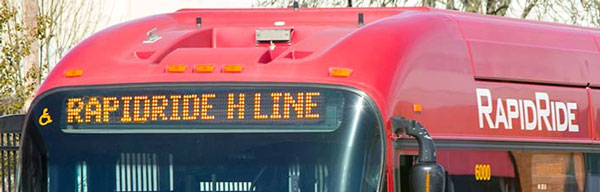
That’s Metro driver Ermias Mulugeta, a 14-year veteran transit operator who had a starring role in today’s ribboncutting-and-speeches event celebrating tomorrow’s launch of the RapidRide H Line. He drove the newly rebranded red-and-yellow bus into the lot at Steve Cox Memorial Park in White Center, with dignitaries aboard including King County Executive Dow Constantine and Metro’s new general manager Michelle Allison:

Before the ribboncutting, 26 minutes of speeches – here’s our unedited video:
Allison emceed, with opening and closing remarks. Constantine declared that RapidRide is “the evolution of Metro Transit.” (Long-running evolution – West Seattle’s first RR line, C, launched 10+ years ago.) Route 120, which becomes the H Line tomorrow, carried 1.7 million people last year, he said, and he observed that the new line’s route between Burien and downtown will help people “enjoy more of what this part of King County has to offer.”
It’ll also help with everyday tasks, added the next speaker, White Center Food Bank executive director Carmen Smith.

WCFB’s new location will be close to an RR stop, and that means people carrying food won’t have to hike uphill with heavy loads any more. Other speakers included King County Councilmember Joe McDermott – who is leaving office this year but has helped shepherd the H Line into reality – and Burien Mayor Sofia Aragon (who happens to be running to be McDermott’s successor), who said her city is proud of how this is factoring into many improvements along its main thoroughfare, Ambaum Boulevard. From Seattle city government, executive general manager Adiam Emery reoresented Mayor Bruce Harrell‘s team:

She noted that Seattle had invested (corrected) $90 million in the H Line, as well as projects such as the Delridge repaving/reconfiguration. And District 1 City Councilmember Lisa Herbold noted that the “multijurisdictional project” is an enhancement to what’s already King County’s sixth-busiest bus route. After Allison wrapped up with a few more stats – 51 new stations, 40 new crosswalks, five miles of new bus lanes – it was ribboncutting time:

As reported here Wednesday, the H Line officially begins running with a 5:26 am northbound departure from Burien on Saturday morning. The first coach, we’re told, will be the same one that rolled up at the start of this morning’s event – 6209. The launch comes four years later than the originally announced 2019.

Just two more days before it’s out with the green-and-yellow Route 120 buses, in with the red-and-yellow RapidRide H Line buses along Delridge. We asked Metro spokesperson Jeff Switzer about the first official H Line trips on Saturday (March 18). He says the first one will be a 5:26 am northbound departure from Burien; the first southbound H Line will leave downtown at 6 am Saturday. Final touches on the stations along the line, according to Switzer, include glass installation and activation of real-time information signs (the ones we passed along much of southbound Delridge this afternoon all appeared to be activated). He says the transition hasn’t required much training, as, “The buses are familiar to many of the drivers, and the route 120 routing is too.” Though the launch isn’t until Saturday, there will be a ceremonial ribbon-cutting on Friday, with County Executive Dow Constantine and others in White Center, same spot where a ceremonial groundbreaking two years ago celebrated the start of station construction along the line.
 (Admiral Way Bridges from Fairmount Avenue, via Google Maps Street View)
Three years after voters approved the “Move Seattle” transportation levy in 2015, SDOT announced a work plan that included various West Seattle projects. Among them, seismic retrofitting for the Admiral Way bridges over Fairmount Ravine (technically two structures). Fast-forward to late 2021, when SDOT told us planning for the retrofit was under way and that construction was likely to start in late 2022-early 2023. It’s been pushed back again, we learned, after following up on a mention of the Admiral Way bridges last week when an SDOT rep briefed the Levy Oversight Committee. Wes Ducey‘s briefing focused on studying various bridges around the city for eventual replacement, including Admiral:

Here’s what an “alternative analysis” is about:

In the briefing, Ducey suggested, among other things, that the city might consider designating one particular bridge to be the next in line for replacement, rather than continue to study and re-study multiple bridges:

After that briefing, we checked with SDOT regarding the Admiral Way bridges retrofit project. And we learned the retrofit is now not expected to start in “early 2023” after all. SDOT spokesperson Ethan Bergerson told WSB, “We are still planning to complete a seismic retrofit on the Admiral Way Bridges by the end of 2024, thanks to funding from the voter-approved Levy to Move Seattle.” As for studying it for potential replacement, Bergerson explained,”While we do not anticipate the need to replace this bridge anytime soon, the planning study will incorporate what we learn during the seismic retrofit and be a valuable resource in the future if the City ever needs to choose between investing in additional major maintenance or completely rebuilding the bridge decades from now.”
P.S. During last week’s Levy Oversight Committee briefing, City Councilmember Alex Pedersen – who’s a committee member – mentioned that the council committee he chairs, Transportation and Public Utilities, will talk about bridges later this month, in the context of the citywide bridge audit.
 (WSB photo, ferries seen from Lincoln Park at midday earlier this month)
Though Washington State Ferries has said it doesn’t expect to be able to restore the “Triangle Route” to three-boat service until later this year, it has added some sailings starting this week. Here’s the announcement:
To help supplement service, Washington State Ferries has added the following weekday service on our Fauntleroy/ Vashon/ Southworth “Triangle” route to fill gaps in the two-boat schedule when crewing allows:
11:15 a.m. existing Southworth to Vashon will load Fauntleroy traffic
11:50 a.m. Vashon to Fauntleroy
12:15 p.m. Fauntleroy to Vashon (continues to Southworth)
7:35 p.m. Fauntleroy to Southworth (currently to Vashon)
8:10 p.m. Southworth to Vashon
8:30 p.m. Vashon to Fauntleroy
8:55 p.m. Fauntleroy to Vashon
9:20 p.m. Vashon to Southworth
9:35 p.m. Southworth to Vashon (Fridays only)
As reported here, WSF hopes to restore three-boat service on weekdays in May, then full 7-days-a-week restoration in fall.

That’s the southbound RapidRide H Line station on Delridge Way just north of Henderson, shown in a screengrab from one of seven new traffic cameras installed along Delridge in advance of the bus changes that take effect one week from today (Saturday, March 18th). Until the first of these debuted three months ago – as reported here in December – Delridge was devoid of traffic cameras, unlike most of West Seattle’s other north/south arterials. We’ve been featuring them in our weekday-morning traffic watches, but if you don’t look at those or the citywide camera map, you might not be aware of them. North to south, the cameras are at:
Delridge/Genesee
Delridge/Oregon
Delridge/Juneau
Delridge/Orchard
Delridge/Holden
Delridge/Thistle
Delridge/Henderson
Holden and Thistle are only showing video so far, which only displays through the display window on the SDOT map (click the camera and then, when the window pops up, click “Video”).
Meantime, as for the bus service, here’s the Metro reminder; H is its seventh RapidRide line, second one in West Seattle after the C Line, which began service in September 2012.
 Metro has published the list of which routes will be affected by its next twice-yearly “service change,” which happens on Saturday, March 18th. Three West Seattle routes will have changes this time:
*RapidRide C Line – “On weekdays, two southbound and three northbound trips will be added, on Saturday & Sunday, two southbound trips will be added.” (See the timetable here.)
*Route 50 – ” On weekdays, two eastbound trips will be added, on Saturday & Sunday, two westbound trips will be added.” (See the timetable here.)
*Route 120 – Will be replaced by the RapidRide H Line. (See the timetable here.)
The full citywide list is here. You can read more about RapidRide H Line, and see the list of stops, here.
You’ve probably heard by now that SDOT is out with its promised review of Vision Zero, as ordered by director Greg Spotts shortly after he took over the department. Tomorrow, he is scheduled to lead two briefings on the report – 9:30 am at the City Council’s Transportation and Public Utilities Committee meeting, 5 pm at the Move Seattle Levy Oversight Committee meeting. And SDOT is seeking community feedback on the review.
After it was released, we read the entire report to look for West Seattle-specific mentions. While it’s largely devoid of those, it does feature several maps showing problem spots here and elsewhere, so we’ll start with those. First, locations of fatal and serious-injury incidents, by mode:

Here are high-collision locations:
2:14 PM: From Washington State Ferries:
Due to a shortage of crew, the final sailing for the #2 vessel will be the 3:40 p.m. sailing from Fauntleroy to Vashon. The route will operate on the #1 boat schedule for the remainder of the service day.
This cancels the following sailings:
4:05 p.m., 6:40 p.m. and 9:15 p.m. Vashon to Southworth
4:30 p.m., 7:05 p.m. and 9:35 p.m. Southworth to Vashon
4:50 p.m., 5:45 p.m., 7:25 p.m. and 8:25 p.m. Vashon to Fauntleroy
5:20 p.m., 6:15 p.m., 7:55 p.m., and 8:50 p.m. Fauntleroy to Vashon
We’ll update if this changes. You can also check Vessel Watch for boats’ location/status.)
3:18 PM: Never mind, WSF now says:
A crewmember has been dispatched and the #2 vessel will remain in service. There will be no disruptions on the route.
 (Image from kingcounty.gov)
Metro‘s next twice-annual “service change” is set for March 18th, two weeks away, and this one will include a major change for West Seattle – the long-planned, long-delayed conversion of Route 120 into the RapidRide H Line. That means many things, from more service to fewer stops (though the H Line stops are closer together than the usual RR half-mile, because of community concern – see the map here). This won’t be the only Metro change on March 18th, but we don’t have the full list yet; that’s expected to be available “approximately March 8th.”
 (2021 photo of Fauntleroy ferry, by Theresa Arbow-O’Connor)
Washington State Ferries has released its latest report on service-restoration progress. Fauntleroy-Vashon-Southworth – also known as the “Triangle Route” – is still on reduced service, 2 boats instead of 3. It’s now estimating that three-boat service can be partially restored in May, fully restored in fall. From the report:
Fauntleroy/Vashon/Southworth
Estimated restoration: May 2023 (weekday service); Fall 2023 (full service)• WSF expects to begin trialing full weekday three-boat service in early-April, or once a vessel and crewing is available. Because the three-boat schedule is so different from the two boat schedule, the Trial Service stage will be more challenging than trials on other
routes. WSF will communicate with customers regularly about each day’s expected schedule and anticipates it may take longer than three weeks to reach full route restoration.• The route will be considered fully restored once it reaches 95% reliability on the threeboat schedule for a period of three weeks. At this time, WSF expects weekday service on the Fauntleroy/Vashon/Southworth route to be restored by the end of May 2023 and to be operating the full weekly schedule by Fall 2023.
• While waiting for both the vessel and crewing availability necessary to trial three-boat service, WSF will add some additional midday and evening service to fill gaps in the two-boat schedule.
The report also details fleet and staff status; on the latter, citing “unprecedented” staff shortages, WSF says, “The number of licensed deck officers (captains and mates) is the biggest crewing challenge facing WSF. Ideally, WSF would have approximately 200 licensed deck officers in the system. As of Feb. 15, 2023, WSF has 165 LDOs. These highly skilled and highly credentialed positions are challenging to fill.” Regarding the fleet, WSF recounts the need to extend the usage of three vessels slated to be retired this decade, and notes that it’s running so close to bare minimum that unscheduled problems result in unavoidable service reductions: “Vessel availability has recovered from the maintenance backlog in the initial months of the pandemic; however, the vessel pillar remains at high risk because of an aging, diminishing fleet.”
From King County Councilmember Joe McDermott‘s newsletter:
Last week, we launched the 2023 Van Grant Program. Every year, the Council allocates retired passenger vans to nonprofit organizations and local governments. These vans must be used to transport people with special needs or to transport goods and services to those with special needs. These include seniors, low-income, youth, or people with disabilities. This year, the requirements differ slightly from previous years in that the vans can now be used for the transport of goods and supplies to special-needs groups. If you are part of an organization in District 8 or know of an organization in District 8 that meets these requirements, please reach out to Helen Dahl (helen.dahl@kingcounty.gov) on my staff. The deadline for van applications through the District 8 office is Monday, March 13th at 5 pm.
P.S. For some background on the program, see this report on its first 20 years.

11:15 PM: Thanks for the tip and pic. A texter sent that from the scene of a car-on-side crash on Dawson near Fauntleroy about an hour ago, just north of Fairmount Park [map]. Apparently no serious injuries – only one engine was sent, and the incident log shows it was only on scene a few minutes. The texter says a tow truck is on scene now.
2 PM FRIDAY: Police confirm what’s mentioned in comments – the driver was arrested for investigation of DUI.
 Multiple levels of transit-service updates were presented at s King County Council committee meeting that just wrapped up. In the big picture, transit executives and councilmembers alike observed that transit usage has changed in a big way, largely because of the pandemic-triggered change in work styles – only about half as many people as pre-pandemic commute five days a week, for example. Metro‘s new general manager Michelle Allison noted that the system will recognize this in its marketing: “We want transit to be your first choice” for all kinds of transportation needs. (It’s not just Metro – the councilmembers also heard from a Sound Transit executive who said that for one example, Saturday ridership on light rail has doubled.)
However, it was also acknowledged that the bus system is not yet back to full speed – “near-term delivery challenges” is how the ongoing problems were described. While the steering issue that took more than 200 buses out of service are “on track” to getting handled, a worker shortage is still a major factor. Allison gave the councilmembers the newest numbers:
-119 fewer full-time-equivalent operators (drivers) than needed
-36 fewer maintenance mechanics than needed
The first number is higher than a month ago, when Metro told us they estimated 99 more FTE drivers were needed. So trip cancellations aren’t going to go away any time soon.
Back to the big picture – the councilmembers also were asked to approve a “recovery plan” that basically acknowledges the current level of service – including reduced/suspended routes – and a new strategy for future planning. As explained in the plan’s staff report, one component of the strategy will be regional “restructuring” that will, among other things, review suspended/reduced routes. From the staff report:
To allow time to address operational capacity and staffing shortfalls and to coordinate service restoration with several significant high-capacity transit expansions, the Service Recovery Plan proposes that Metro will use service restructure projects as the primary means for reshaping service and reinvesting suspended hours back into the system. The Plan notes that Metro’s adopted policies would be followed in developing these service restructures. It also states that Metro does not plan to restore all suspended hours to the system in the same routes and times that they were removed, but that each mobility project would maintain service investments (service hours) within their geographic project areas, so there would be no net reduction in the total amount of service in an area.
As proposed, the service restructures would be organized into six geographically focused mobility projects:
(including)
•Seattle, Vashon Island Restructure and Restoration. For routes within Seattle and on Vashon Island that are not part of the other mobility projects described above, Metro proposes to pursue a new mobility project to consider service recovery options for routes that are currently reduced or suspended.
The Service Recovery Plan states that the following routes with reduced or suspended service hours would be included in this restructure, coordinated by geography:
o Central Seattle: 3, 4, 7, 9X, 11, 12, 27, 40, 43, 47, 48.
o Queen Anne/Magnolia: 19, 24, 29, 33.
o North Seattle: 15X, 17X, 18X, 31, 32, 45, 62, 79, 255, D Line, E Line.
o West Seattle/Vashon Island: 21X, 22, 37, 55, 56, 113, 116X, 118X, 118, 119X, 119, 120, 131, C Line.
o Other areas: 231, 631, 906, 914, 915.
Metro says 17 routes remain fully suspended – that would include West Seattle’s Route 37. Allison also noted at the meeting that, as we’ve reported, RapidRide H Line is launching March 18th – but rather than an addition, that’s a conversion, of the existing Route 120.

Above are two SDOT maps from the pothole program – at left, pending potholes as of last week; at right, recently patched potholes as of last week. Today the department is out with its latest stats: 23,000 potholes filled last year, 50 percent more than the year before, and the most in any of the past five years. The roads suffered extra damage in the December ice storm, so SDOT says it’s beefed up its response team, and is on an even busier pace so far this year – 5,500 potholes filled since January 1st. They warn that the usual within-three-days response-time goal has been tougher to meet while they catch up on storm damage. The update notes:
When SDOT crews respond to a request to fill a pothole, they also repair any other nearby potholes they discover. This year, crews have also been patrolling snow plow routes to proactively look for new potholes. These routes are essential to Seattle’s transportation system and are more likely to develop potholes because they carry more heavy vehicles during winter storms.
New potholes continue to appear every day, so SDOT is asking for the traveling public’s patience as crews continue to repair new road damage. SDOT cannot fix potholes that it doesn’t know about, so the public can help by reporting any potholes using the Find It, Fix It app, this online form, emailing 684-ROAD@seattle.gov, or calling 206-684-ROAD.
Today’s update also addresses the question of why some potholes need repeated refilling.

Those are the city-owned electric-vehicle chargers on 39th SW in The Junction, by Spruce and West Seattle Bowl. As reported here last month, vandals/thieves have left both inoperable, and they’re not fixed yet. We asked Seattle City Light spokesperson Jenn Strang about its status; she says, “We plan to repair all of the recently damaged chargers. Unfortunately, there are supply-chain disruptions in purchasing the replacement charging cables that have caused some delays, but we expect to begin repairs on the 39th Ave SW chargers this month.”
We also asked her about permit applications we’ve seen in the city’s online files for publicly owned chargers on the street in several West Seattle areas. According to Strang, “That is part of Seattle City Light’s new Curbside Level 2 EV Charging pilot project. We received 1,800 requests through public process and evaluated each based on pre-defined criteria designed to select locations that will serve the greatest number of customers and best achieve the City’s equity and environmental goals. The chargers will be owned and operated by City Light and will be available for use by the public. We expect to begin construction in late March and to have all locations operational by summer. The complete list of locations will be announced soon.” So far we’ve found permit applications for four West Seattle public-charger locations: 2100 California SW, 4830 Fauntleroy Way SW, 4850 California SW, and 7015 17th SW.
Updates tonight on three traffic signals in West Seattle, after we checked in with SDOT:

12TH/HOLDEN: The new pedestrian signal at this intersection is taking shape, and you may see crews there again this weekend. SDOT spokesperson Ethan Bergerson tells WSB, “We have completed three of the curb ramps and are pouring concrete for the final curb ramp today. We have also begun installing the signal poles. The remaining steps will be to finish installing the underground power conduit across the road, installing electrical equipment, and painting the crosswalk. We’ll be working at this intersection this weekend and next weekend, so anticipate some travel delays.”
We got that news after asking SDOT about two intersections where “temporary” signals are to be replaced with permanent installations:
DUWAMISH LONGHOUSE: SDOT’s Sara Zora had told the Bicycle Advisory Board at its meeting last week that the permanent installation here may not happen until next year. So we asked for more information. Bergerson replied, “Finalizing the schedule will require more coordination with our rail partners. The work to install new traffic signal equipment has already been completed, and we are now working to finalize an agreement with the railroad companies so that we can move forward with paving work around the railroad tracks. This would include creating a smoother transition from the street to the sidewalk on the eastern side of the crosswalk and building more room apart from the bike trail for people to wait for the signal.”
HIGHLAND PARK WAY/HOLDEN: You probably recall this “temporary” signal going up at lightning speed days after the West Seattle Bridge closure in March 2020, with promises that a permanent one would replace it. That’s getting closer, Bergerson tells us: “We still expect to begin construction on the replacement Highland Park Way SW & SW Holden St traffic signal this summer. We will build new curb ramps and curb bulbs at all four corners of the intersection, repaint the crosswalks, replace the wooden signal poles with more durable metal poles, and add underground vehicle detection equipment.” And as we’ve reported previously, public art is going up there too – a giant Steller’s Jay.
| 5 COMMENTS