
West Seattle, Washington
14 Sunday
This time around in the day-by-day “Go Bag” building series – featured on WSB so you can do something meaningful during Washington State Disaster Preparedness Month – today’s bag-building step involves something you can’t buy at the store, though you might still have to spend a little money to make it happen if you don’t have anything to use to copy or scan. From West Seattle Be Prepared:
Make copies of your important papers and put them in a waterproof bag in your kit. Here’s a list of what to consider including: identification cards, insurance policies, birth certificates, passports, glasses prescriptions. Also include a picture of each family member and pet; these can be especially helpful should you get separated and have to search for each other later.
And in today’s reminder that our most common type of disaster – Wyoming, seldom hit by earthquakes according to US Geological Survey records, had one on Friday, magnitude 3.6; today, a magnitude 6.5 quake hit in the Gulf of California.
Catching up? Previous installments are archived in reverse-chronological order here.
As noted last night, Tuesday’s meeting of the West Seattle Block Watch Captains Network will focus on emergency preparedness; details here.
Two weeks to go as we continue building a “Go Bag” one day at a time, with the help of West Seattle Be Prepared, as a meaningful way to observe Washington State Disaster Preparedness Month.
Today’s inspiration, if you need some – a 3.6-magnitude earthquake in Utah. Yes, they happen everywhere. But we have the advantage of knowing The Big One is expected here someday, so we can prepare.
So – about that bag. Next thing to put into it, according to WSBP – more food:
Today you should put cans of vegetables, beans, chili, or stew in, especially things that do not require heating or more water to prepare, just in case. Seriously, even SPAM is not a bad idea. The focus for today is to have veggies and proteins in your bag, so whatever you like, put it in!
If you’re falling behind, or still haven’t started, another weekend is hours away and that’s a great chance to catch up. This is something that could make a life-or-death difference in case of a disaster. So if you need to review, revisit, or get started – our previous installments are all archived in reverse-chronological order here.
P.S. We’ve just been reminded that next Tuesday’s meeting of the West Seattle Block Watch Captains Network will focus on emergency preparedness, in which many of the group’s members/leaders are involved. Details here.
At 10:17 this morning, our state marked Disaster Preparedness Month with the Great Washington Shake-Out earthquake drill. Were you part of it, at work, home, or school? If you were, consider writing a comment below to share how it went and why you did it (required to? wanted to? curious? etc.). Now, on to the next installment of our ongoing “pack your ‘Go Bag’ one day at a time” series – here’s what West Seattle Be Prepared advises this time:
Specialty items this time to mark the special Great Shakeout drill: Put either baby food and diapers or pet food and litter in your kit, enough for 3 days. If you are helping pack for a senior member, think about something unique they must have if evacuated. Women, think about sanitary supplies to add. If nothing above applies to you, you get to skip this turn!
It’s never too late to start getting the “Go Bag” together as a VERY basic step in preparedness. Our previous installments are all archived in reverse-chronological order here.
Tomorrow’s the day for the big statewide quake drill, the Great Washington Shake-Out – 10:17 am on 10/17. Timely – as the Pacific Plate continues to be very active, with large aftershocks in the Philippines, and two quakes in Papua, New Guinea (6.8, followed by 5.3).
Tonight, we’re continuing to build a “Go Bag” in honor of Washington State Disaster Preparedness Month, with the help of West Seattle Be Prepared, whose announcement for this round is:
First-aid supplies go into your bag today. A pre-purchased kit is easiest, but if you have these things around your home, put them in a ziplock or small toiletry bag: scissors, tweezers, thermometer, disposable hand wipes, non-latex gloves, Band-Aids, gauze, ACE or roller bandage, adhesive cloth tape, space blanket, antibiotic ointment packets, antiseptic wipe packets, aspirin, and a First Aid instruction book. A very complete list with suggested quantities can be seen here.
STILL haven’t started building your “Go Bag” yet? No problem – start with this, then backtrack, and when you’re caught up, move forward to rejoin us somewhere in the second half of the month. Our previous installments are all archived in reverse-chronological order here.
Hear about the Philippines earthquake, and sizable aftershocks? 7.1 magnitude, dozens of people killed. And even in a big city, this is what the aftermath can look like, for those trying to stay safe, facing aftershocks – taking refuge or camping in open areas, not knowing if buildings are safe to beinside:
So get going on your “Go Bag” if you’re not already proceeding along with our monthlong effort honoring Washington State Disaster Preparedness Month. If we’re lucky, none of us will ever need to use ours. But there is just no way to tell.
From West Seattle Be Prepared, the next thing to get into your bag:
Time to think about your medications. Often you will be able to set aside 2 or 3 pills and just renew a tiny bit early. So do not throw away your prescription bottles/containers this month; hold onto them and start putting your 3-day stash of pills in them, and then add to your kit. At a minimum, list your medications and put that in your bag. And don’t forget your children’s, seniors’, or pet’s medications.
Catch up with previous installments by going here. The most recent installment will always be linked atop the BIG STORIES list in the sidebar on the right side of WSB pages, through the end of this month.
We’re approaching the midpoint of Washington State Disaster Preparedness Month – there’s a big statewide quake drill on Thursday, if you’re looking for something to reignite your inspiration for participation in our ongoing one-item-at-a-time “Go Bag” creation project with West Seattle Be Prepared.
Or – read up on Typhoon Phailin. Weather disasters can happen too (remember the 2006 windstorm? the 2007 rainstorm? archived coverage of both is in the “categories” list toward the bottom of our sidebar).
Next item for your “Go Bag”:
Either put a gas utility shut-off wrench in your bag or attach it to your outside meter near the valve. They cost less than $5 at hardware stores. But be aware that you should only shut off your gas if you smell gas, which would indicate a leak or ruptured line, or have been instructed to turn off the gas by emergency personnel. Once you turn off gas to your house, only a trained technician utility person can reactive the line; you cannot do it yourself. Imagine being in line for that service if you turn off the gas and didn’t really need to during a disaster.
While you are thinking about the gas line, you should also know where your water-shutoff valve is and have a tool nearby to do emergency shut off should the water lines rupture as well. A brochure from the Seattle Neighbors Actively Prepare (SNAP) program shows how to shut off the gas, water and electrical power. SNAP groups receive training on how to utility shut off and more, consider starting a SNAP group in your neighborhood! Here’s the brochure.
P.S. Enjoy tests? If you’re really confident about your preparedness skills, take this one on the San Francisco Office Of Emergency Preparedness site.
Catch up with previous installments by going here. The most recent installment is always linked atop the BIG STORIES list in the sidebar on the right side of WSB pages.

Get a chance to catch up on your day-to-day “Go Bag”/disaster-preparedness-kit building on Saturday? No? Today’s another chance to at least get started – and if you’re all caught up, congratulations! Remember we’re doing this with the help of West Seattle Be Prepared, in honor of Washington State Disaster Preparedness Month, because much as we hope The Big One never happens, it COULD happen at any time. (Not to mention other types of disasters …)
Motivation of the day: Saturday’s earthquakes around the globe included a 6.4-magnitude shaker off the coast of Greece. Check out this view on the US Geological Service website showing where people felt it. The USGS calls this feature “Did You Feel It” (DIFY) and anyone can report in about any quake, which helps with data collection.
Now, what to do today for your growing “Go Bag” – Cindi from WSBP writes:
We will continue the water stashing today. If you set aside 2 gallons earlier, today you will add 3 more gallons. For those who are using liter soda bottles and had to break out calculators, I just went online and the answer is today you will fill 11 liters. And a double check for everyone, the goal will be 7 gallons or 27 liters. A reminder for how to clean those bottles – see the cleaning and labeling guide here.
Those 27 liter soda bottles will take up a huge amount of space. Rumor has it that if you ask soda delivery drivers nicely, they will sometimes let you have the plastic carriers that they use, and then you can stack several carriers on top of each other. Let us know if the rumor is true!
For a refresher course (including the conversation in the discussion section), go back to Day 5. And to catch up with other days, scroll through our newest-to-oldest archive of preparedness-related coverage.
In honor of Washington Disaster Preparedness Month, we’re continuing to publish day-by-day instructions on making the “Go Bag” that you want to have in case of disaster (big earthquake, longrunning power outage, etc.). Some of the items on the list so far are things you might well already have around the house. This one probably is not. From West Seattle Be Prepared:
It’s Saturday, so hopefully you should have time to shop for this item; a hand-crank AM/FM radio with NOAA weather radio channel. If it also has a USB charger, that’s even better.
In Seattle there are several commercial radio stations that would become official emergency-channel radio stations: KIRO-AM 710 and/or FM 100.7, KOMO-AM 1000, KNWX-AM 770, and KVI-AM 570. But to hear directly from the National Weather Service, a NOAA Weather Radio is best. It also has a warning alarm feature, and site-specific and event-select capabilities. It serves as Washington’s “all-hazards” warning system, including tsunamis, volcanoes, and hazardous releases. Lots of detailed information about weather Radios and the spotter system we have in Washington can be found here.
You can look for this type of radio at a variety of stores – hardware and electronics, among them. If you can’t find one at a store, order it online and put it in the bag as soon as it arrives. We found them on websites including Radio Shack (here) and Amazon (here) – and you can even buy yours from the Red Cross!
Haven’t started the “Go Bag” yet? Don’t feel guilty! Just get GO-ing. Find the suitcase or backpack you’re going to designate (that was Day 1) and scroll through this WSB archive page to find the items for days 2-10.
Here’s tonight’s installment of what to put in your “Go Bag” – which we’re building one day at a time during Washington Disaster Preparedness Month, with the help of West Seattle Be Prepared:
Put these basic hygiene items in your kit today: toothbrush, travel size toothpaste, comb, hand sanitizer. A ziplock bag is a great way to keep all these together.
WEEKEND ALERT: We’re still only a third of the way in and this weekend is another perfect opportunity to catch up, even if you are starting from scratch (first thing to do: find the suitcase or backpack that will be your “Go Bag”). So Saturday’s installment will be published here by 9 am tomorrow, so that you can go shop, whether you’re looking for the next item, or catching up on what’s gone into the bag so far, or both.
Catch up with previous installments by going here. The most recent installment is always linked atop the BIG STORIES list in the sidebar on the right side of WSB pages.
If you still haven’t jumped into our item-at-a-time “Go Bag” preparedness series in honor of Washington State Disaster Preparedness Month – we’re getting closer to the weekend, great time to catch up! But the next items to put in your bag are fairly simple. From West Seattle Be Prepared:
We’re going to do a couple of days of hygiene supplies. Put 1 roll of toilet paper and one washcloth per person in your kit this time. Heads up – start looking in the stores for a small first aid kit, so when that comes up, you know where to get one, or think about what you might already have around that house that could be collected together.
Catch up with previous installments – and join in as we head toward the goal of finishing October with a vital preparedness item on hand – by going here.
How’s your “Go Bag” going? In honor of Washington State Disaster Preparedness Month, we’re leading you through the process of putting one together, one day/item at a time, with the help of Cindi Barker from West Seattle Be Prepared. The next item on the list:
Back to food items – today put 3 cans of fruit and 3 granola/trail bars per person in your kit. Fruit can be applesauce or good old fruit cocktail; you are adding variety and different vitamins with the fruits. The trail bars can be the energy bars as well, and it’s fine to have more than 3 – they can provide lots of calories in a small package.
Remember that the disaster most likely to strike in our area is an earthquake – smaller ones happen frequently, and if you need a reminder, check the U.S. Geological Survey website – as we write this, we see that site showing a string of quakes in California – none big, but quake prediction remains elusive, so all you can do is be prepared.
Catching up? Our previous PACK YOUR BAG! installments are archived here, newest to oldest.
So we’ve been talking for more than a week now about what to put in your “Go Bag,” to achieve a certain level of preparedness one day at a time … how about what NOT to put in your bag?
Thanks to Mat McBride for sharing the clip!
Meantime – today brought another “natural” reminder of the topic at hand. Lightning, thunder, downpour, yet again – no cataclysmic events that we know of in West Seattle, but imagine that kind of downpour lasting for hours and hours and hours, as happened recently in Colorado … it’s another scenario for which you need to be ready. Today is Day 8 of Go Bag-building in honor of Washington State Disaster Preparedness Month, and here’s the next item, thanks again to Cindi Barker of West Seattle Be Prepared:
This time we’re adding to your MacGyver equipment: basic tools, pliers, screwdrivers, hammer, gloves, disposable dust mask, camping or utility knife. Check around your garage for odd tools lying around; they are perfect for the kit. Also, around this time of year, some of the hardware stores have very nice basic tool kits that go on sale for the pre-Christmas sales season. Just don’t overdo it; you will need to lift this pack at the end.
Cindi also reminds us that a “Go Bag” isn’t a use-it-all-at-once-or-nothing item – once you have yours in place, you will know where to find one or two or three items you might need for specific situations like short-term power outages!
Catching up? Our previous PACK YOUR BAG! installments are archived here, newest to oldest.
Sorry to be late with publishing today’s addition to the “go bag” we’re building together, one day/item at a time, here during Washington State Disaster Preparedness Month. Part of the reason we’re late is coverage of one of the smaller “disasters” that might wreak a little havoc in your life – or a lot: This afternoon/evening’s West Seattle power outage.
 Usually, if an outage strikes, it’s a few hours at most. Then, there’s a situation like the windstorm power outages of December 2006, when some in West Seattle lost their power for more than a week (left). And if a major catastrophe like a big quake hit – it might take a lot longer to get it back, and, unlike those post-storm days, there might NOT be anywhere nearby where the power stayed on.
So, here we are on Day 6 of bag-building. (Remember, you can catch up at any time – any way that works for you – the goal here is just to get SOME preparedness into your life/home.) From Cindi Barker of West Seattle Be Prepared:
Today you should put “comfort” items in your bag. Toys for children, a deck of cards, a book, the things that can keep you busy should you have to evacuate to a shelter.
Bonus preparedness info: Cindi says the Seattle Times (WSB partner) earthquake story linked here the other day had a companion “pullout page” in the Sunday print edition – and now that guide can be seen online.
Catching up? Our previous PACK YOUR BAG! installments are archived here, newest to oldest.
Earthquakes can happen any time, anywhere. Thirty years ago tomorrow, a 5.3-magnitude quake rattled people in upstate New York – not what you might think of when you think “earthquake country.” Here, we KNOW we are in quake country, so there’s no excuse not to have at least a little disaster preparedness happening in your home.
That’s the premise behind what we’re doing all month – Washington State Disaster Preparedness Month – here on WSB, with the help of Cindi Barker from West Seattle Be Prepared: Putting together a “go bag.” Today is Day 5 of adding an item a day – but don’t be put off if you’re just getting going – you can catch up in a big hurry OR go start at day 1 and take it from there. Here’s Cindi’s item du jour –
Today we’ll start storing water. Set aside 2 gallons of water per person. You can store tap water in cleaned one litre soda bottles, in which case you would store 4 litres per person. Here is a good guide on how to clean soda bottles and label them for the tap water – go here.
Otherwise, you can just buy the gallon containers at the grocery store.
Advance hint: If you don’t want to drag the collection of water out, fill a total of 7 gallons (14 litres) for each person today and you’ll be completely done with the water needed for your kit. The Red Cross does recommend a bigger stash than I’m suggesting right now, they suggest having a 3-day supply for evacuation and a 2-week supply for home. So if you have lots of room (a 4 person family would have 68 gallons of water to stash!), go for it. But I’m taking a more achievable path and suggesting you store one week’s worth per person, and if you have to evacuate, grab the 3 gallons you would need for those first 3 days. You’re right, it won’t all fit in the kit; start thinking about a place where you can store the kit and the water together. When we get to the end, we’ll talk about the best place to store all this.
Next item, tomorrow – again, don’t feel overwhelmed, do what you can, when you can – the “item a day” plan is intended to be a manageable way to get you from unprepared to somewhat prepared! Catch up by seeing the stories in the WSB “preparedness” archive.
It’s the first weekend of Washington State Disaster Preparedness Month – and if you haven’t joined in our daily PACK YOUR BAG! activities yet, this weekend is a great time to catch up so at least you have that “go bag” of emergency supplies ready, should disaster strike. Every day, we’re publishing an item announced by Cindi Barker of West Seattle Be Prepared, the volunteer group that has been working on preparedness here for the past several years (check out the map of emergency communication hubs when you can spare a few minutes, and memorize the one nearest you).
As extra inspiration, we’re tracking the most recent earthquakes, as an ongoing reminder that we could get shaken up at any time, without warning. Just this past hour, according to the U.S. Geological Service, Alaska had two quakes and Southern California had one. Don’t wait till it’s too late – keep packing that bag. From Cindi:
Put 2 flashlights in your bag, along with 2 changes of batteries for each. A battery-powered lantern (and batteries) is a bonus if you want to have “hands-free” light. Also, people traditionally have put candles in their kits, but those are no longer listed by the Red Cross, due to the fire hazard and if you have to go to a shelter, they do not allow candles. Get a few glow sticks instead.
If you’re catching up, this is Day 4 – the previous three days (beginning with, pull out a suitcase or backpack or whatever you have on hand and just use that!) are all archived here, newest to oldest. Next item tomorrow!
California has the earthquake reputation. But we have the REALLY big earthquake threat. This book excerpt published today at SeattleTimes.com (WSB partner) can turn you from skeptic to believer, if necessary.
And it’s necessary if you still haven’t bought into the premise of what we’re doing every day through the end of the month – in honor of Washington State Disaster Preparedness Month. We’re packing a “go bag” for you to have ready in case of catastrophe, putting it together an item or two at a time, something you can do every night (or catch up with, a couple days at a time), so that you’re actually taking action to be prepared JUST IN CASE, instead of feeling overwhelmed by how NOT prepared you are.
Cindi Barker from West Seattle Be Prepared is leading us through the daily bag-packing addition(s):
Today’s activity:
Put some rope, 20 feet or so, and a roll of duct tape in your bag. You never know when you might have to MacGyver something!
Catch up with Days 1 and 2 – or get started this weekend, if you haven’t yet – by going to the WSB “preparedness” archive.
If you missed Day 1 – in honor of Washington State Disaster Preparedness Month, WSB is working with Cindi Barker from West Seattle Be Prepared to help you take one major step toward personal/family preparedness, with one simple action every day, resulting in your “go bag” being packed and ready in case of disaster.
In our state, that disaster is most likely to be an earthquake. We haven’t had a big one since the Nisqually quake in 2001, but it could happen without warning. And quakes are happening in many places every day, so Cindi will share quake info every day along with the tip for what to do next to PACK YOUR BAG! Ready?
On Wednesday, there were 9 earthquakes, all between 3.0 and 4.0 magnitude, the closest being a 3.4 in the ocean, off southern BC. There has been a lot of activity going on in that area; the Pacific Northwest Seismic Network Facebook group often posts charts showing the latest swarm of quakes that goes on in our greater Northwest area.
The Day 1 action to take was: Get a suitcase or backpack and designate it your go bag. Today on Day 2, we start packing:
PACKING YOUR BAG TODAY: Put 3 cans of ready-to-eat soup for each person in your bag, plus a hand-operated can opener. You won’t want to be using precious water to dilute soup; that’s why ready-to-eat soup is recommended. Hand can openers can be found at the local dollar store (and often at garage sales).
OK, we’re off to the store. Got yours? Send us a pic! (editor@westseattleblog.com) And watch tomorrow for the next item(s) to pack. If you miss a day, this info is all in the WSB “Preparedness” archives – westseattleblog.com/category/preparedness.
October has a lot of identities. A big one for people in our area: Washington State Disaster Preparedness Month.
Here at WSB, preparedness is one of our favorite topics. It’s something YOU can do, without spending a lot of time or money – little steps that could make a big difference if something major happened.
West Seattle is fortunate to have the area’s premier grass-roots preparedness group, West Seattle Be Prepared, which launched an incredibly info-packed website years ago, and continues to work on initiatives to help people around the peninsula be prepared. And WSBP’s Cindi Barker is working with WSB this month on daily advice that will get you from here to the vital preparedness step of having a packed “go back.”
For inspiration, we’ll be reminding you that earthquakes – the most likely kind of disaster around here – can happen anywhere. WSBP’s home page is tracking all the 3.0-or-more quakes around our country this month. Scroll down westseattlebeprepared.org to see the list of what’s been recorded today alone! 3.0 isn’t a megaquake but it’s enough to be a wakeup call.
So jump into the spirit with us. PACK YOUR BAG! For starters, today’s step to take – just GET the bag. As Cindi puts it:
Today, find a backpack (for 2 people) or suitcase (for 4 people). Look around in your garage or attic for one you haven’t used in a while, or check out thrift stores for inexpensive ones. The West Seattle Senior Center Thrift Store had a 50% off sale on luggage the other day; might still be going on!
We’re going to designate one too; we’ve always had a “go bag” for our news-producing gear (laptop, extra power, portable Internet, etc.) but not one with other basics. So we’ll build along with you. Sometime tonight when you’re at home – find that suitcase. Maybe even send us a pic, so we can publish it as inspiration! (editor@westseattleblog.com) And watch tomorrow for what to start putting IN it. If you miss a day, this info will all be in our archives for preparedness – westseattleblog.com/category/preparedness.
A text about 45 minutes ago asked if there had been an earthquake; we checked the Pacific Northwest Seismic Network‘s site, and at the time, nothing was showing – subsequently, though, PNSN has posted information on a 3.6 earthquake that did happen right about then, but nowhere nearby. We’re mentioning it because we’ve since received a few more inquiries. See it on the map here; the epicenter was equidistant from Bremerton and Tacoma, according to the earthquake’s “event page.” P.S. Are you prepared, in case something big hits? Check out the West Seattle Be Prepared website and find your nearest hub, for starters.
12:40 PM NOTE: Eric reminds us via Facebook that geologists would appreciate getting an official report from everyone who did feel it – the link is here.

(Photos courtesy West Seattle Amateur Radio Club)
This weekend, West Seattleites of all ages are welcome to go look, learn, and listen during amateur-radio operators’ annual Field Day, a national event that will locally be running around the clock for more than 24 hours starting at 11 am Saturday on the south field at South Seattle Community College (WSB sponsor).

Read on for the details:

The timing was a coincidence – but, just hours after the Skagit River I-5 bridge collapse, firefighters from Seattle and other metro-area departments were here in West Seattle, practicing skills they would need if faced with a disaster or attack requiring people to be rescued from wreckage and debris.

The “structural collapse and heavy rescue” training was at the Joint Training Facility, off Myers Way South in the city limits’ southern pocket east of White Center, north of Top Hat.

The facility is specially set up to facilitate training for situations that rescuers seldom get to see, but need to know how to handle:

SFD Lt. Frank Brennan offered more specifics:
According to the media advisory sent late yesterday by Seattle Fire, while this training is applicable to other types of rescue situations, it’s funded by a regional grant that’s part of the federal Department of Homeland Security’s Urban Areas Security Initiative. The program is described on a federal web page as involving “the unique planning, organization, equipment, training, and exercise needs of high-threat, high-density urban areas, and assists them in building an enhanced and sustainable capacity to prevent, protect against, mitigate, respond to, and recover from acts of terrorism.”
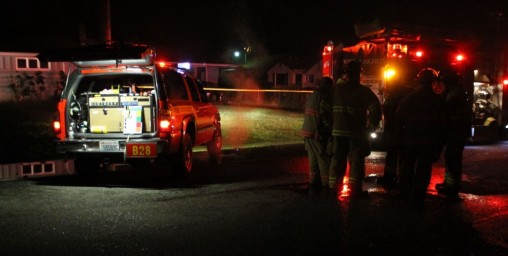
(November 24th WSB/WCN photo by Patrick Sand)
The night of the November 24th house fire that killed 71-year-old Peggy Munsen, we heard from her friend Lissa Stephens, who explained she had seen the WSB coverage and went to the scene to tell authorities she knew the victim’s identity – since she wasn’t sure they would be able to reach Ms. Munsen’s out-of-town family. As a result of that, Lissa and her husband wanted to share information to make sure that others could be sure that their families could be reached in case of tragedy or disaster. Here’s their message to you:
A Note to Our Friends and Neighbors of West Seattle and beyond –
Our friend Peggy Munsen passed away tragically from a fire in her home on November 24th. To quote her sister, Kay, “Peggy was a friend to all.” She was a wonderfully sweet and kind lady with a wicked sense of humor and a hearty laugh that could make you laugh; a dear friend who will be greatly missed.
When we first saw the article about the fire on the Blog, all I could think of was “How would they find her sisters to let them know she passed?” and so we (my husband and I) raced over to Peggy’s that night and gave the fire commander the contact information, who then contacted her sister, Kay, of Bremerton.
With Peggy’s passing, it became very apparent to us that very few people would know how to reach our families (all out of town) if such circumstances were to happen to us.
I would like to ask everyone to take a few minutes to really consider the importance of having an emergency contact information sheet. In the last few days I have asked several of my friends “If you perished in a house fire, how would people know how to notify your next-of-kin?” Nobody had a good answer, me included. Our hope is that this small note will get people thinking and taking action to make sure their emergency contact information is in order and with a neighbor, a copy in the freezer or with friends.
Here is a sample template of an emergency contact sheet that is downloadable and alterable to fit your family and circumstances. site.beaniedesigns.com/blog/emergency-contact-sheet-template
There are many samples on the internet, most free. In our case we will also include our pets and any medications.
It is also suggested to put a contact listing in your cell phone titled “ICE” – in-case-of-emergency, with important contact information and phone numbers.
During this busy holiday season please take a few minutes to update your emergency information.
Be grateful for your friends and family who are still with you.
Wishing everyone safe and happy holidays!Lissa and Bill Stephens
As noted in Ms. Munsen’s obituary, published here earlier this morning, her memorial service is at Our Lady of Guadalupe Catholic Church tomorrow.
Today we’ve received media alerts about two upcoming local multi-agency drills that MIGHT catch your eye – so we’re mentioning them briefly and inviting you to file the info away just in case: Sunday afternoon near First and Holgate in SODO, a drill is planned to simulate terrorism targeting a passenger train. All day Monday, it’ll be a drill simulating response to a threat onboard a state ferry, which will be somewhere between north Vashon Island and Edmonds as it all unfolds (with both helicopters and boats involved in that one). So now you know.
| Comments Off on PACK YOUR BAG! Day 18: Duplication in preparation