New management, an old problem, and what else was discussed @ Camp Second Chance’s Community Advisory Committee online meeting

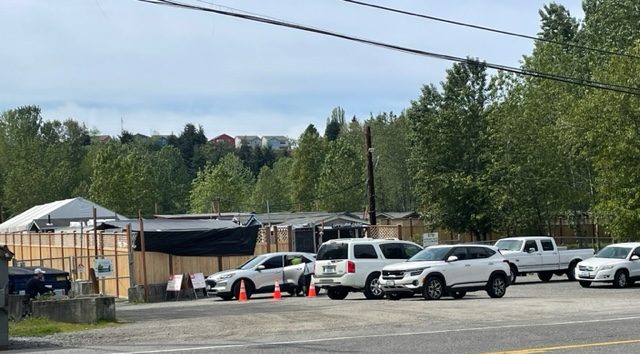
(WSB photo, entrance to Camp Second Chance as seen from other side of Myers Way)

By Tracy Record
West Seattle Blog editor

The problem plaguing West Seattle’s decade-old tiny-home village Camp Second Chance is is exactly what neighbors of the future Glassyard Commons are worried about: Camping outside the fence.

Camp Second Chance is at the southeast edge of West Seattle, at 9701 Myers Way South, on the city-owned Myers Way Parcels, where it started as an unsanctioned encampment in 2016 and eventually got the city’s blessing, as well as a contract for the Low-Income Housing Institute to run it (and most of Seattle’s other tiny-home sites). That’s the same organization that’ll be running the Glassyard Commons tiny-home and RV-lot site once it opens, also in southeast West Seattle.

Residents and businesses are concerned about unsanctioned camping that could be drawn to the periphery, with some already happening in the nearby West Duwamish Greenbelt. There have been promises of monitoring and action to keep that from becoming a problem. But a longtime member of Camp Second Chance’s Community Advisory Committee – one of two who showed up for its monthly online meeting Tuesday – says it’s a chronic problem outside the camp’s fence. Grace Stiller leads a nonprofit that has long worked on restoration of the wetland-rich site surrounding the camp.
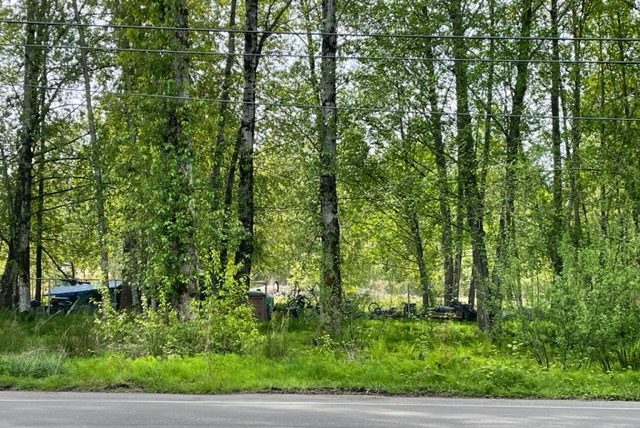
(WSB photo, unauthorized camp north of CSC, seen through fencing along Myers Way)

Now, she says, some unsanctioned campers are actually on and in the wetlands. They have a big “pile of bicycles,” she noted. And she said she has also seen people hauling food into the area, leading to concerns that food donated for the “enrolled” campers is winding up diverted to those outside.

LIHI staffers in attendance at the meeting said that’s against the rules and that the policy was reiterated at a camp-wide community gathering. But what the solution would be for the camping outside CSC was’t clear. Stiller wondered what the policy was for those who might be on the outside because they’ve been kicked out – aka “exited” – from CSC. The staffers said it would depend on what someone was “exited” for doing; in some cases they might be able to earn their way back in.

Also discussed at the meeting:

CURRENT CAMP POPULATION: 87 people, 26 pets, four empty tiny homes because of “abandonments” (people who left CSC and didn’t return). They expected to fill those vacancies soon. Nine people currently have housing possibilities, pending action they have to take to help make it happen; staffers said they are clear that they don’t just take all the steps necessary for a housing placement and deliver it on a silver platter. And some do participate, they also said, including looking for work so they’ll have rent money, for example.

CAMP MANAGEMENT: CSC hasn’t had a permanent operations manager for almost half a year, but LIHI staffers believe they’ve made a hire who should be on board soon. They’ve also up to full strength on shelter monitors with recent hires for weekend shifts.

NEXT COMMUNITY ADVISORY COMMITTEE MEETING: 4 pm May 26, online. Email marta@lihi.org if you are interested in attending.

15 Replies to "New management, an old problem, and what else was discussed @ Camp Second Chance's Community Advisory Committee online meeting"

  • aa April 30, 2026 (5:32 pm)

    I drove by Southend Village the other day, it’s a tiny home community on MLK and it is immaculate.  No garbage, no abandoned cars, 

  • Kyle April 30, 2026 (7:34 pm)

    This is actually the worry about the new tiny home site. If hosting a tiny house site meant Seattle and other officials patrolled and cleaned up any illegal camping near the tiny home site communities would be tripping over themselves to host. Offering services and enforcing drugs/illegal behavior outside the camps is the winning combo our officials haven’t put together yet. The “it’s okay to deny help and continue to do illegal drugs/sell illegal merchandise on our streets etc.” is what needs to stop.

    • GenesseeValley May 1, 2026 (1:19 pm)

      100% agree.  Residents of Seattle, for the most part, are willing to put their money where their mouths are on funding social programs.  Where those same residents balk is when a facility is proposed in their neighborhood because they know things like illegal camping and disorderly conduct are soon to follow.  If the city was able to handle the negative externalities of these facilities people would be much more willing to have them in their neighborhoods.

  • anonyme May 1, 2026 (6:53 am)

    “…it started as an unsanctioned encampment in 2016 and eventually got the city’s blessing”.  This is how Seattle runs; persist with any illegal activity for long enough, and the city will, at the very least, turn a blind eye.  Laws have become meaningless. Illegal camping should be addressed on day one, not months after a camp has become entrenched and requires extensive cleanup at taxpayer expense. And the campers who stole most of the garbage should be the ones cleaning it up.

    • k May 1, 2026 (10:04 am)

      I mean, if the city has that policy for SPD and all of the people who drive and park in bike lanes, why not extend it to regular old poor people too?  Why are we okay with the powerful and privileged breaking laws with impunity, but jump so quickly to punish those without means when they commit minor offenses?

      • don'tblockme May 1, 2026 (10:24 am)

        @k… 🤦🏻‍♀️ but their offenses aren’t minor

        • k May 1, 2026 (6:14 pm)

          Littering is a minor offense.  Sleeping outdoors is a minor offense.  Public intoxication is a minor offense.  Public consumption is a minor offense.  Literally none of the things people are complaining about are major offenses.  Housed people break minor laws all the time and aren’t charged with anything.  That doesn’t mean no one is ticketed or charged ever, but homeless people also get ticketed and charged for things at times too.  Why does it bother you so much to have enforcement applied equally? 

      • WS Person May 1, 2026 (10:54 am)

        Why should people be exempt from following the laws? If I speed I get a ticket. Is it a minor offense to camp illegally, damage public lands, do drugs, etc while taking tax payer dollars?  I don’t think so. Would you be ok if a tent city popped up in front of your home? 

      • GenesseeValley May 1, 2026 (1:16 pm)

        Equating illegal camping with parking in a bike lane? 

        • k May 1, 2026 (6:15 pm)

          Yes, I know, it causes a lot more danger to people when someone parks in a bike lane, but it’s something I see about as often as public camping, so I made the comparison.

      • flimflam May 2, 2026 (8:44 am)

        Of course laws should be enforced, who is saying otherwise? You seem to have invented something to argue with…

  • JTM May 1, 2026 (8:40 am)

    LIHI staffers in attendance at the meeting said that’s against the rules and that the policy was reiterated at a camp-wide community gathering. But what the solution would be for the camping outside CSC was’t clear.”And there’s the problem. No consequences at all for illegal activity for a certain group of folks. Where are the environmentalists when a wetlands is being polluted?

  • WS Res May 1, 2026 (7:18 pm)

    So you build tiny house and RV sites in  areas off the beaten path – you know, the kind of places where unhoused people might pitch their tents, and in some cases already have tended to gather – because we certainly couldn’t have them in the heart of more developed areas. And then unhoused people pitch tents outside their borders, which gets blamed on the existence of the tiny house and RV sites? Seems like folks have the direction of causality all wrong here.   Let’s build the Glasshouse Commons on the land-banked empty lot on 40th south of Alaska right across from the Whole Foods. Then you can be pretty sure there won’t be an issue with “camping just outside the borders.” Problem solved, right?

  • Chonkers May 1, 2026 (7:44 pm)

    That entire area is owned by the city. Currently, there are 66 units at CSC with 80-90+ people. With the new legislation about to be passed, that camp size can increase to 150 total people, so another 40+ tiny homes. The current site could be a super sized tiny village of 250 since it is about 4 acres in size, so 160 to 200+ more units.

    In fact, if the city wished, they could add even more since there are different parcels such as 9800 Myers Ways S which is about 3 acres south of the current CSC which could also hold 150 people. So, in about a 7 acre of land, there could be 400 people of the highest acuity meaning homeless with Substance Use Disorder (SUD) and/or Severe Mental Illness (SMI) and/or chronic homelessness.

    But wait, there is even more land surround this owned by Seattle. So, worrying about the unsanctioned camps should really be secondary versus the issues of concentration and proximity.

Leave a Reply to anonyme Cancel reply

Your email address will not be published.