
Story and photos by Jason Grotelueschen
Reporting for West Seattle Blog
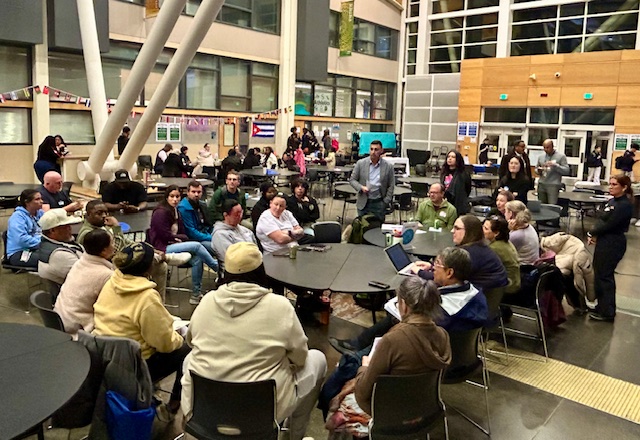
Local school families, parents, students and education advocates gathered on Thursday night at Denny International Middle School (2601 SW Kenyon) to learn and share ideas about positive impacts made possible by the Families, Education, Preschool and Promise (FEPP) levy, which Seattle voters approved for renewal/expansion in the November election.
The 6-year $1.3 billion levy was overwhelmingly approved by 80% of voters (the highest margin in the 35-year history of Seattle education levies) and is now in “implementation planning” mode through next summer (the Seattle City Council will vote on the plan in June 2026), followed by “year one” implementation beginning in fall 2026 and running through 2032. For more details, see this PDF fact sheet about the levy renewal and the “Every Child Ready” initiative (announced in April).
Organizers on Thursday night expressed gratitude to voters and described the levy as “the biggest education levy in the history of the city and the state,” noting that Seattle is the only city in Washington that provides this type of supplemental funding for the local public school system.
Back in June, we reported about mayor Bruce Harrell (who is in office until the end of this year, before incoming mayor Katie Wilson takes office) signing the bill to send the FEPP levy (aka Proposition 1) to the November ballot. As we reported when Harrell proposed the levy in April, it’s projected to cost the median-assessed-value Seattle homeowner $654 each year. The expiring 2018 version of the levy was described as costing the median-value homeowner $249 each year. Later in June, the City Council considered the FEPP levy proposal and voted to approve the ballot measure, which was then approved by voters in November.
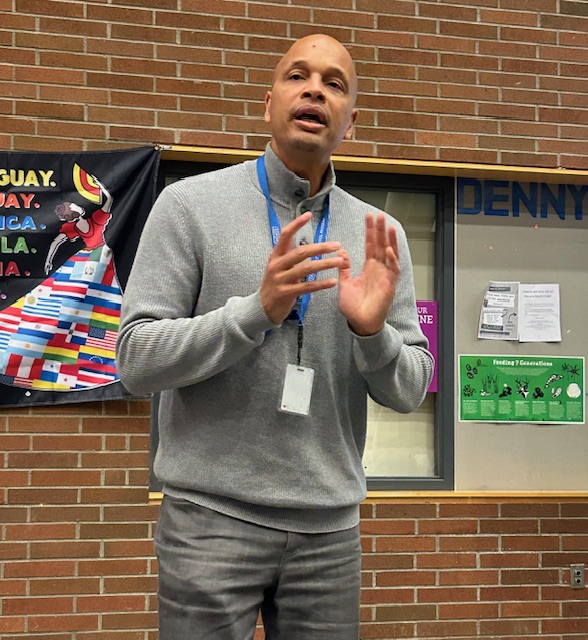
The event on Thursday, held in the “galleria” area that Denny shares with Chief Sealth International High School, was the third of four public meetings about FEPP that were organized by the Department of Education and Early Learning (DEEL), whose director Dr. Dwane Chappelle welcomed attendees:
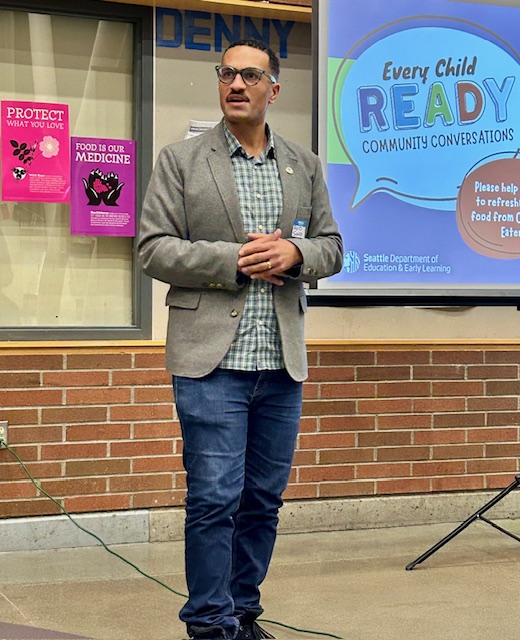
Two members of the Seattle City Council were in attendance at Denny on Thursday night and were also invited to give opening remarks. First up was District 1’s own Rob Saka:
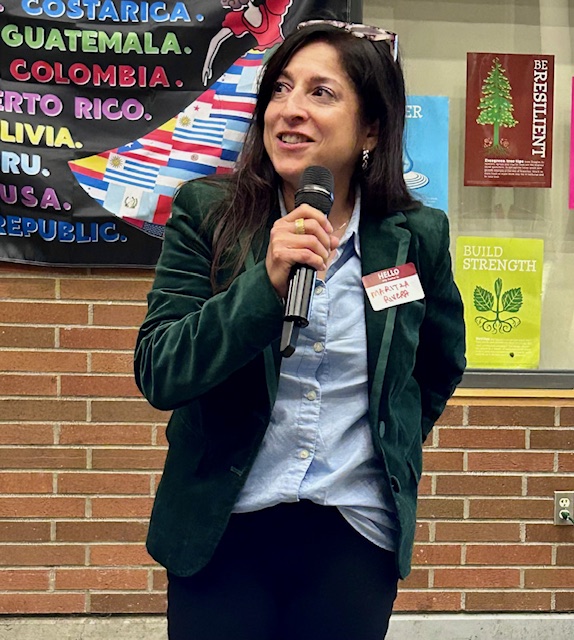
As well as Maritza Rivera from District 4 (northeast Seattle) who serves as chair of the council’s Libraries, Education & Neighborhoods Committee and worked closely with Harrell as part of the select committee for the FEPP levy:
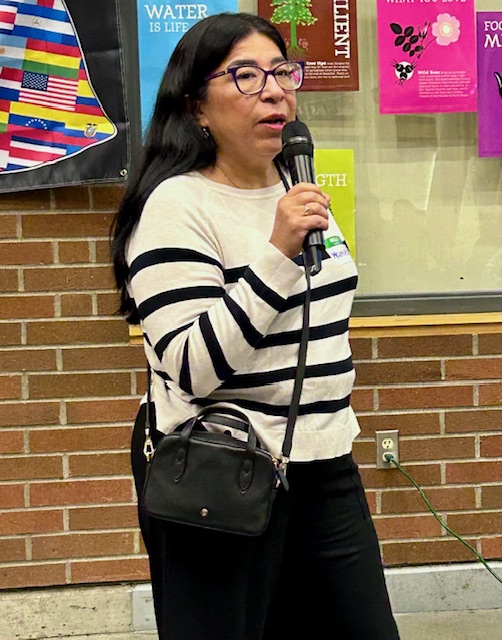
The evening’s emcee was longtime local educator and advocate Manuela Slye, who is also a member of the levy oversight committee:
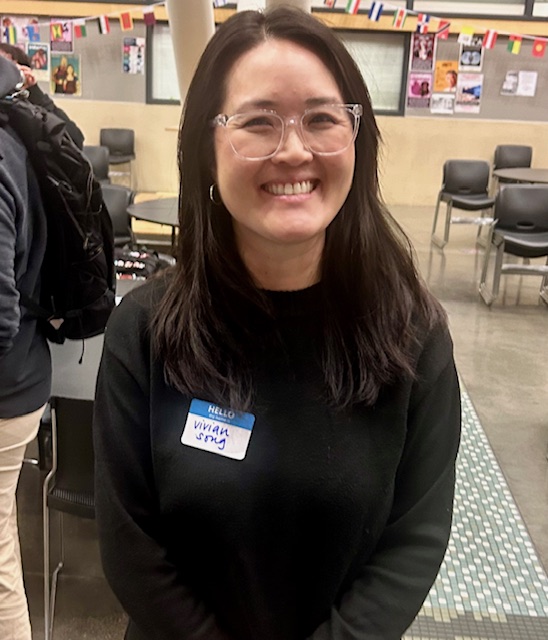
Also in attendance was Seattle School Board member Vivian Song, who formerly served on the levy oversight committee and said she welcomed the opportunity to listen and learn from the community:
After the opening remarks and overviews of the levy, attendees divided into discussion groups to dive deeper into the three key areas that the levy funding is intended to support in 2026-2032. Per the DEEL website and information sheets, these three areas (and their respective “share” of the levy funding) are:
- Ready to Start: ($658M) High-quality preschool for three- and four-year olds, with free tuition for low- and middle- income families, child care co-pay support, supports for families with children prenatal to age three, and direct payments to childcare workers.
- Ready to Learn: ($510M) Free expanded learning supports for Seattle youth including school-day, afterschool, and summer academic, enrichment, and mentorship programs; funding for five new School Based Health Centers bringing the total citywide to 34; and expanded school safety and student mental health services.
- Ready to Launch: ($84M) Tuition-free college at Seattle Colleges accessible for all Seattle public high school graduates through the Seattle Promise program, supported transfer pathway to University of Washington-Seattle, and scholarships to grow a diverse workforce in high-demand careers such as education, trades, and the public sector.
Attendees interested in these topics on Thursday gathered for about 45 minutes of discussion, then shared notes back with the larger group, which we’ll summarize below.
The Ready to Start group talked about issues and opportunities for our youngest scholars:
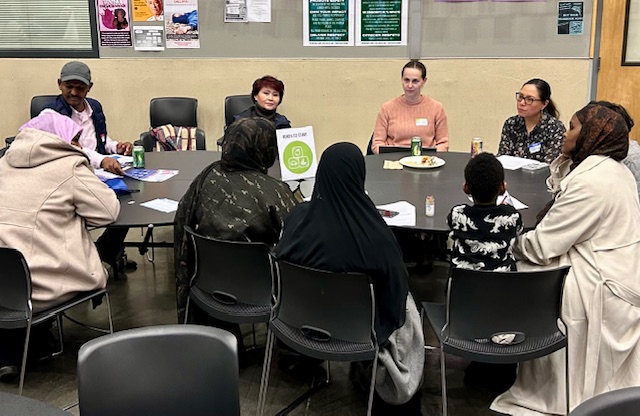
The group shared family and provider experiences with childcare programs and after-school programs including CCAP (Child Care Assistance Program) and preschool. Some families said they felt they had access to the financial support they need for childcare, but improvements are needed to expand subsidies for middle income families who may not qualify yet and are cost burdened; need to “broaden access overall. Also discussed was the idea of earlier workforce opportunities for high school students to support the child-care workforce by assisting experienced adults, and overall to help providers get certified to offer childcare and preschool services.
Family priorities when choosing child care and thinking about key logistics included:
- Core priorities across ages: Quality, trust in providers, cultural and linguistic match (especially for infant and toddler care), reliability, and safety.
- School-age priorities: After-school programs that actively engage students in learning.
- Logistics and flexibility: Need for flexible hours (including before-school and after-school care, sometimes as early as 5 AM), and provision of food and transportation where needed.
The largest discussion group on Thursday night was Ready to Learn, focusing on K-12 experiences and needs:
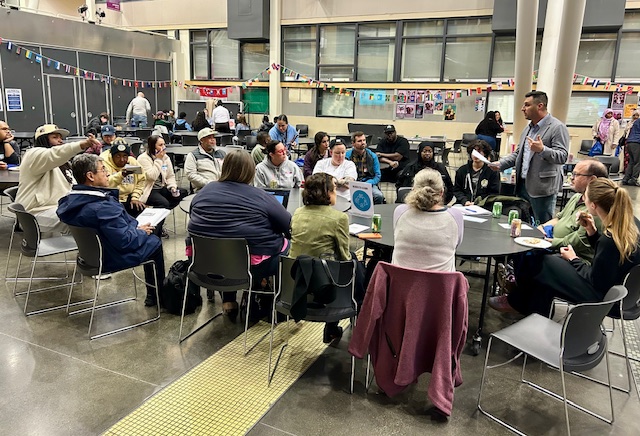
Participants talked about the need to support students and families both academically and with a “whole-child” approach, to ensure that needs are met, including:
- Academic and enrichment support: After school and outside-of-school enrichment that boosts academics, offers hands-on learning, culturally relevant programming outside the school-day curriculum, and opportunities for youth to learn new skills and try new things.
- Whole-child mental health: Holistic mental health that is integrated into daily school experiences and other activities, not solely reliant on youth seeking standalone services. Doing this right requires a range of caring adults who build relationships to reach and re-engage youth.
- Meeting community needs and family engagement: Services reflecting whole-community needs, including workforce support and multi-generational involvement (including grandparents and older extended family. Making this work requires explicit, clear invitations for parents and family members to be involved, treating parents as true partners in youth well-being and education.
- Community partnerships: Sustained, consistent partnerships bridging in-school and out-of-school supports to provide a stable set of adults ready to respond to academic, social learning, and other needs. This also requires schools and partners that are connected to each other, and to youth and their families.
One of the participants in this group was Denny Middle School principal Mary Ingraham, who talked about the importance of “needs assessments” to identify ways that student and family support can have the most impact.
The final group was Ready to Launch, focusing on preparation and paths to careers and college opportunities after high school:
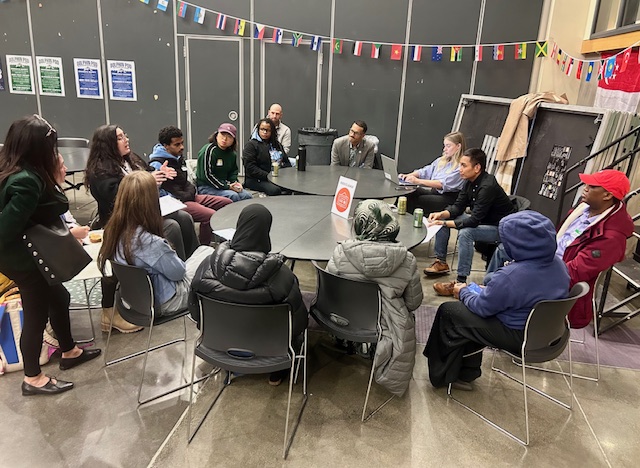
The group included several high school students who shared their stories and experiences, as well as Councilmember Saka and Chief Sealth principal Hope Perry.
Insights and discussion points from the group included:
- Financial assistance navigation and access: Desire for clearer support through applications and access to higher funding amounts, and to involve more people to make processes easier for youth.
- Program experiences that shape careers: Group members shared personal experiences and observations with program services (such as school-based health centers) influencing interests in a positive way, including driving artistic careers and sparking interest in fields like psychology (through working with a therapist).
- Exposure to careers and education pathways: Need for more exposure in schools to diverse careers and colleges to help youth identify their interests.
- Information access challenges: Limited, hard-to-find online information for scholarships, funding for business needs, and internships. One participant noted it is hard to identify the best opportunities online because “the internet is so big,” and others strongly agreed.
- Career exploration: More job shadow opportunities and real-world exposure to see what jobs look like “in the real world.”
As the evening at Denny wrapped up, organizers encouraged attendees to stay involved and stay in touch. DEEL also hosted meetings last week in Magnuson Park and Ballard, and are in Columbia City next week on December 16 (details here) to wrap up the 4-meeting series.
Also, if you’re interesting in diving deeper and getting involved with the levy oversight process, the team is now accepting applications for the levy oversight committee which will help with the implementation evaluation plan and review and advise on legislation and related work for the next levee. Applications can be submitted here.
| Comments Off on SCHOOLS: Denny IMS hosts community conversation about Families, Education, Preschool, Promise Levy just passed by voters