
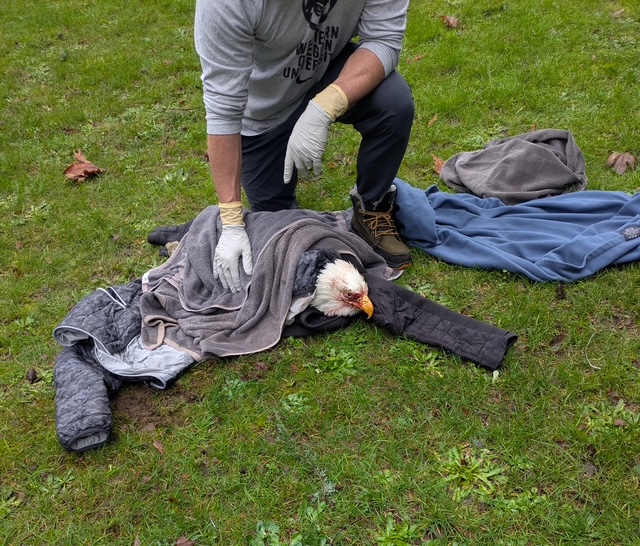
 (Photos courtesy Kersti Muul)
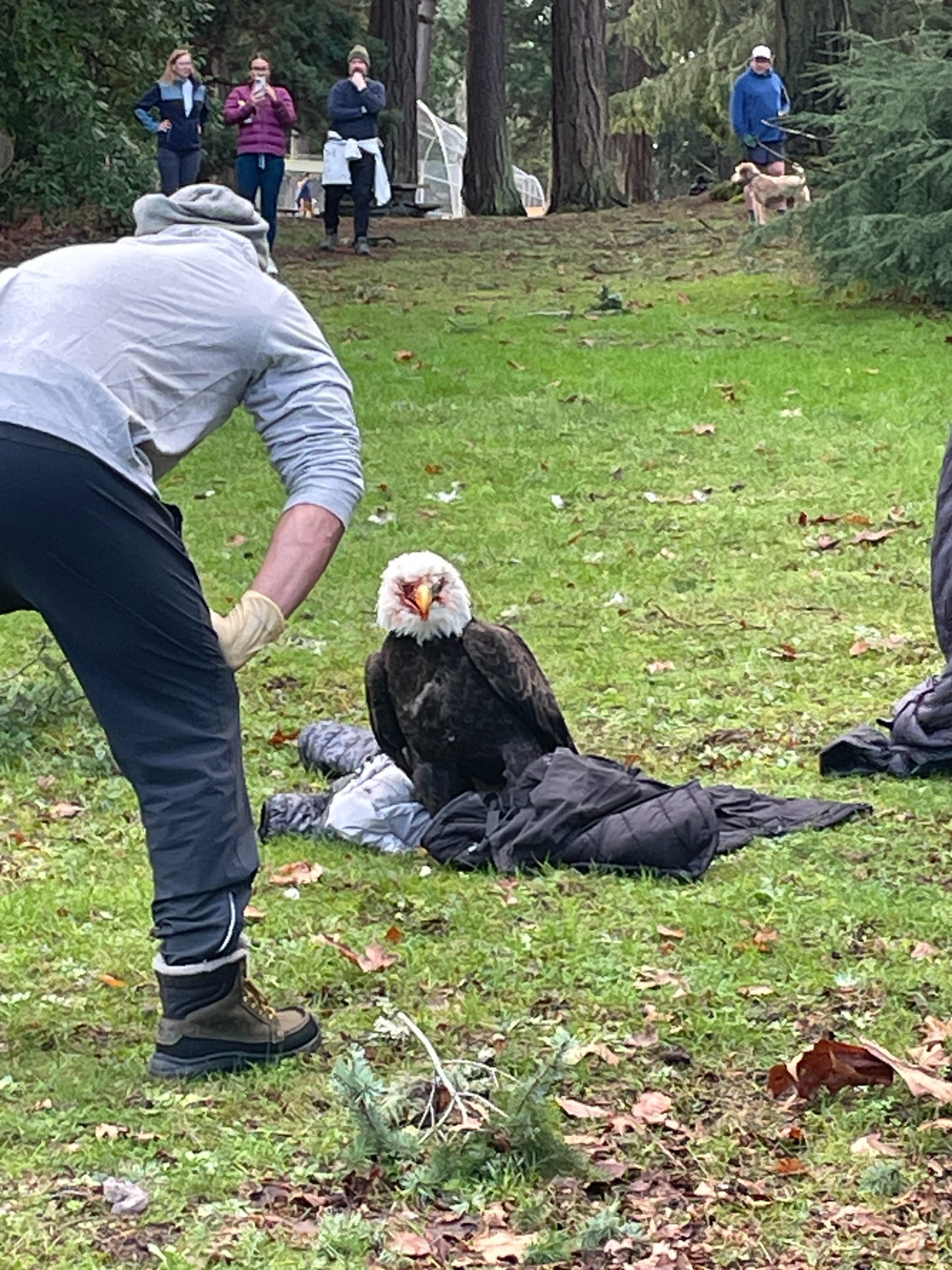
5:08 PM SUNDAY: Bald Eagles are not an uncommon sight in West Seattle. But what two eagles did this afternoon at Lincoln Park was unusual enough to get extra attention from bystanders – and ultimately wildlife experts. We heard from callers/texters shortly after 1 pm, saying two eagles were “stuck together” on the ground after some sort of airborne confrontation. Onlookers were worried the eagles would not be able to untangle themselves from each other; it appeared that one had its talons in the other’s eye. The people we heard from were trying to contact everyone they could think of who might be able to help. Those who responded included Kersti Muul (who’s been involved with other eagle interventions), as well as officers from state wildlife and local animal control.
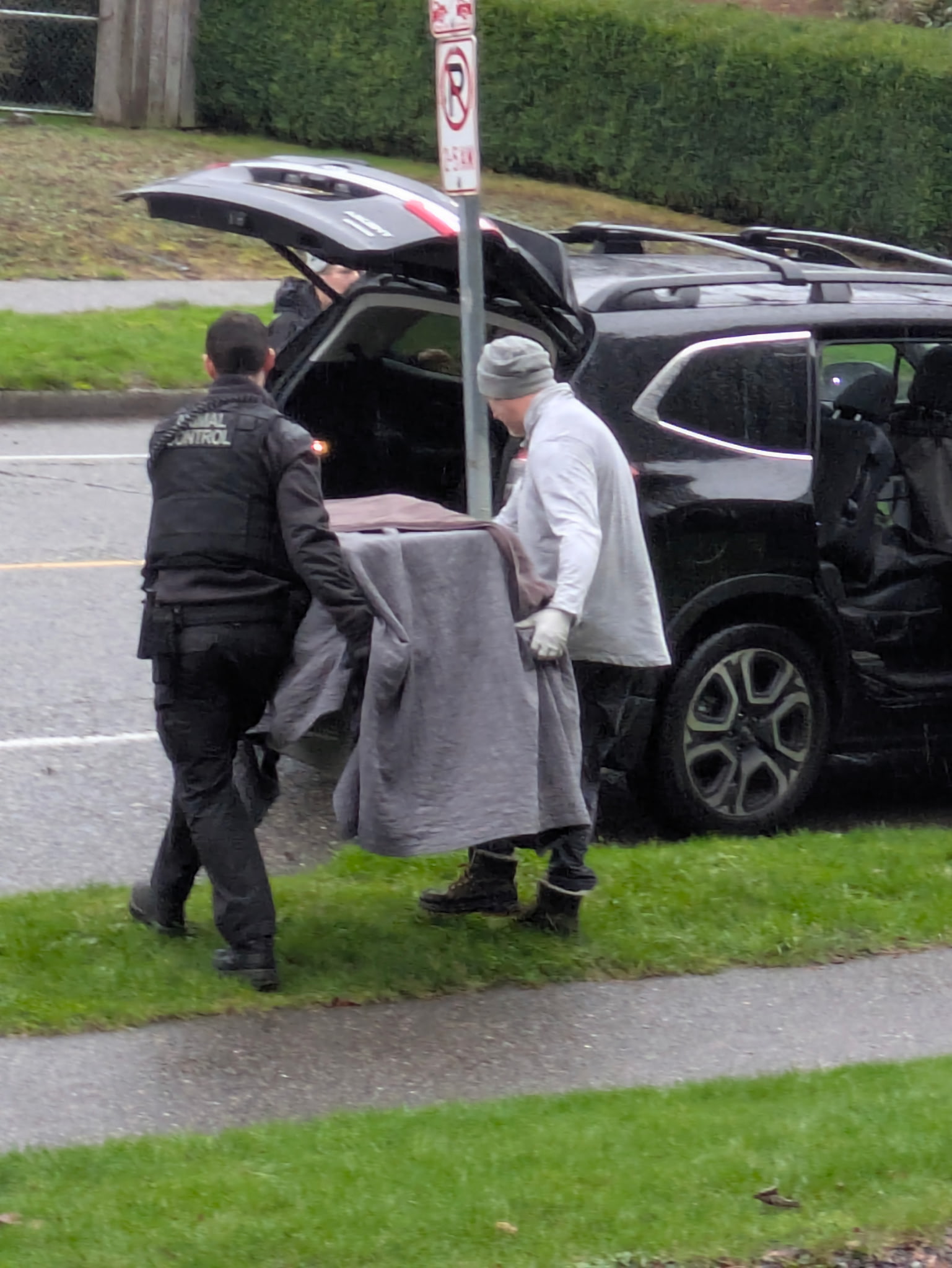
The eagles did manage to untangle themselves. Kersti says one was taken to the PAWS rehab center north of Seattle. In general, she says, watching for a while to see if birds can get themselves out of a predicament is prudent – but on the other hand, she notes, “Also being a public park, intervention may have been a good course of action. She suspects what happened was a “territorial dispute,” having noticed a prospective “interloper” in recent days in Gatewood, uphill from the park.
4:06 PM: Kersti told us today that the injured eagle definitely wasn’t one of Lincoln Park’s “resident pair” – she got word they were seen “intact on their usual perch.” Meantime, we hadn’t followed up with the state Department of Fish and Wildlife but received a statement from them about all this – here’s what WDFW spokesperson Chase Gunnell sent, in its entirety:
We saw your article and wanted to make sure you had the following information:
At approximately 1:30 p.m. on Sunday, Jan. 4, 2026, Washington Department of Fish and Wildlife (WDFW) Police received a report of two bald eagles fighting in Lincoln Park in Seattle. One eagle was reported to be injured. Members of the public were attempting to capture the eagle. While a Fish and Wildlife Officer was enroute, a call was received that the injured eagle had been successfully placed in a crate, and a member of public could take the eagle to a local rehabilitation location. The Officer advised the individual to transport the animal to PAWS Wildlife Center and confirmed that the animal had been received by PAWS.
WDFW wildlife biologists believe the eagles were fighting due to a territorial dispute. While dramatic for onlookers, this behavior is fairly common this time of year with the onset of bald eagle mating season (typically late-fall through spring), when bald eagles stake out territories before building nests and laying eggs later in winter through early-spring.
How to report injured eagles
If people encounter an injured bald eagle, please report it to WDFW using the form on our website at https://wdfw.wa.gov/get-involved/report-observations, or by calling 360-902-2936 or emailing WILDCOMM@dfw.wa.gov.
The public can also submit a report to USFWS’ Washington state office or to a local permitted wildlife rehabilitator.
WDFW coordinates closely with the U.S. Fish and Wildlife Service on bald eagles given the federally protected status of this species. Background information on bald eagle management is available on this webpage.
Please do not handle injured wildlife, including eagles
It is natural for people to want to help when they find wildlife in distress, especially in highly visible locations. However, intervening without the proper knowledge, tools, and protective equipment can be dangerous for the animal and for yourself.
The only time you should consider intervening in a wild animal’s life is if it is clearly sick or injured, or if you are certain the parent of a juvenile animal is dead. In those cases, always consult with a permitted wildlife rehabilitator or WDFW before touching or moving an animal for your safety and to avoid unnecessary handling. The wildlife rehabilitator will advise you on next steps.
It is illegal for anyone in Washington without a permit to hold or attempt to care for wildlife. Attempting to care for wildlife without the appropriate skills and experience can make the situation worse. Eagles – and many other birds – are further protected under additional state and federal laws. Handling wildlife without proper personal protective equipment increases the risk of spreading diseases including Highly Pathogenic Avian Influenza (HPAI).
For more information on what to do if you find sick or injured wildlife, visit the WDFW wildlife rehabilitation webpage. You can also find a permitted wildlife rehabilitator near you on WDFW’s website.
If you cannot find a permitted wildlife rehabilitator with the capacity or ability to take in the sick or injured wildlife you found, you may also contact a licensed veterinarian to see if they can help.
More information on wildlife rehabilitators is available in this WDFW blog post.
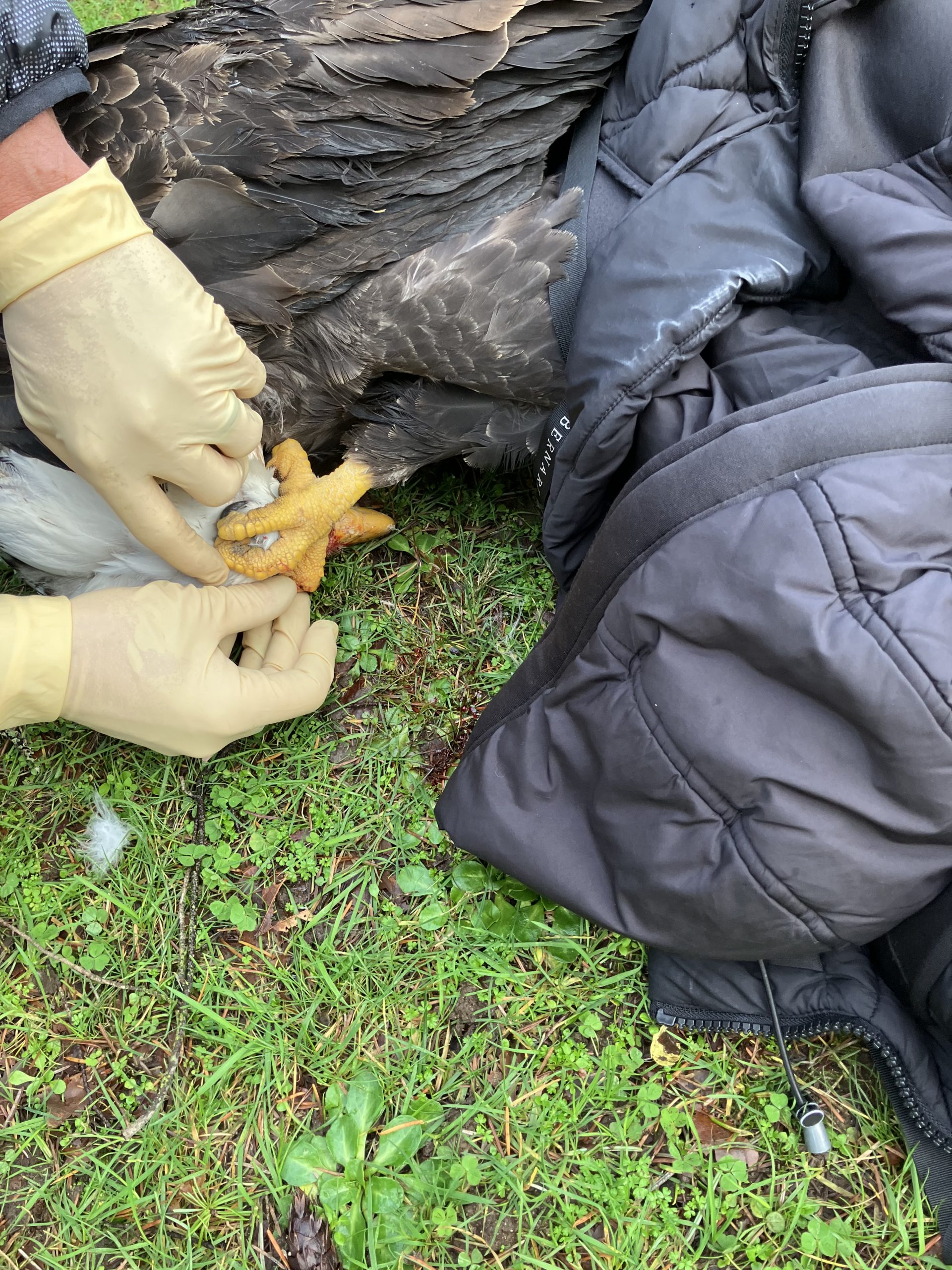 The summary above was written by someone who did not witness the event. The birds most definitely did not disentangle themselves. My friend and I were just arriving at the park when a crowd of crows was making a huge ruckus in a tree close to Fauntleroy. The pair of eagles were on the ground already when we got near. A woman whose name I didn’t catch and Mr. Yount gathered coats, trying to calm and separate the eagles. When it was apparent that the birds were entangled, they both held them while Jovan worked to remove the talons from the injured eagle’s head (very close to its eye). A handful of onlookers brainstormed and shared ideas and resources. Both Animal Control and WDFW came. Fortunately Kersti Muul came with a larger carrier that could be used to transport the injured eagle to PAWS, which the unknown woman and her husband volunteered to do. Thanks to everyone involved who did the best they could under the circumstances.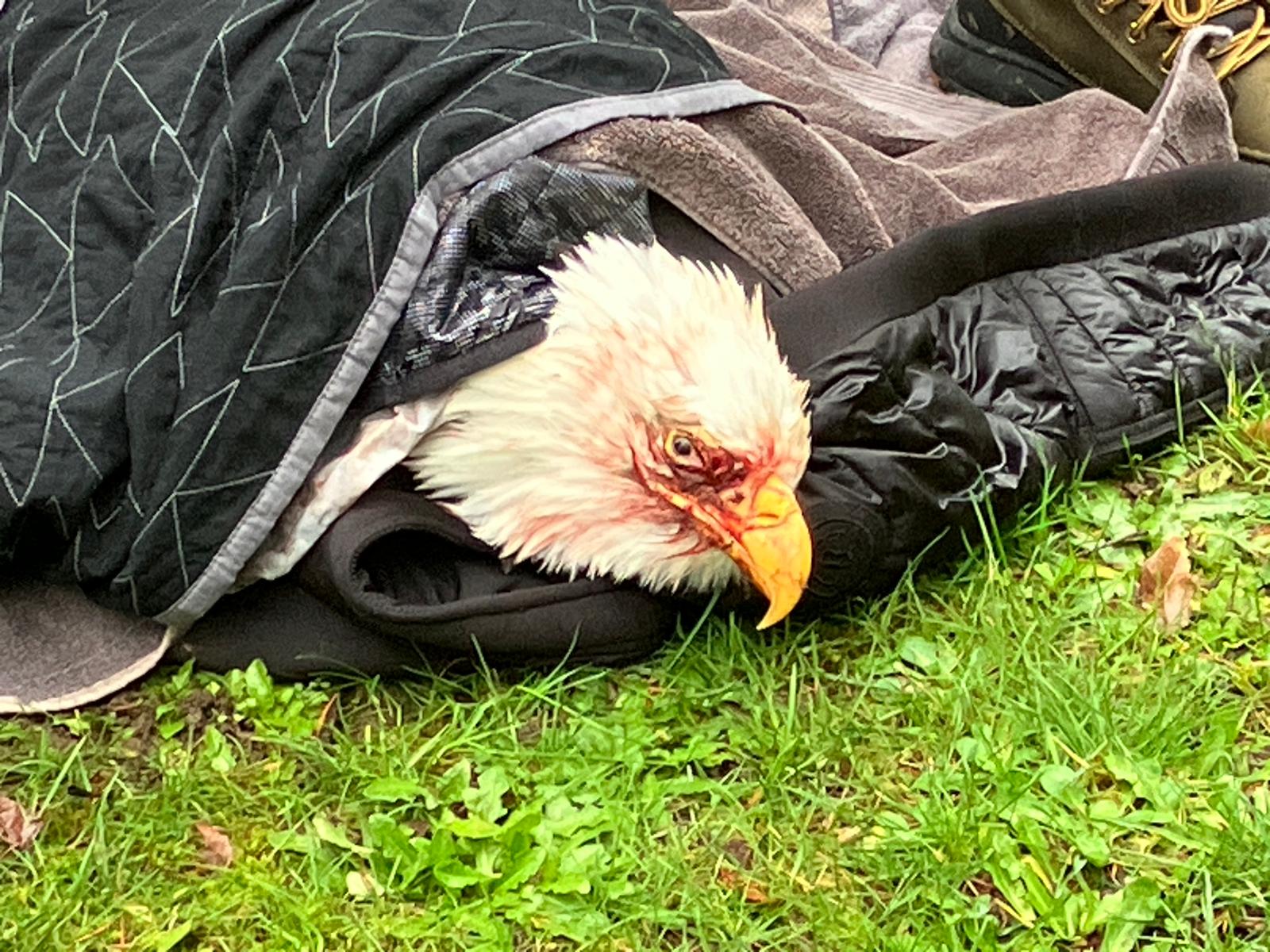
| 51 COMMENTS