VIDEO: Mayor’s office says 70 possible sites reviewed for push to add 500 shelter spaces fast

The mayor’s office says the city has reviewed 70 possible sites for adding shelter space in its push to get 500 people off the streets by June. That was one headline from a briefing today, delivered by mayor’s office reps to the City Council, which will have to approve some components of the plan. Here’s Seattle Channel video of the meeting:

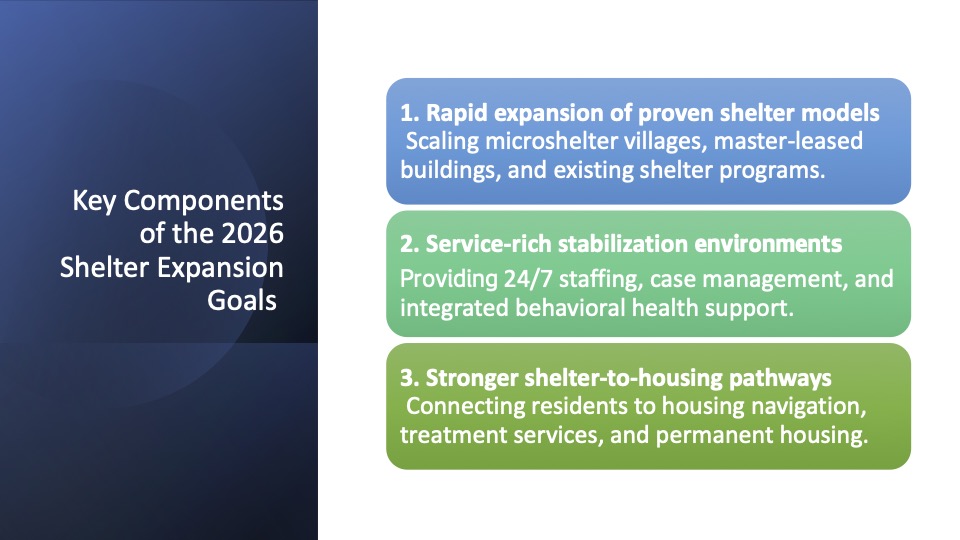
The 70 potential sites weren’t listed in the meeting documents, and our request for the list so far has gone unfulfilled. But the mayor’s-office team told councilmembers they expect to announce five sites before the end of the month. Many of the 500 spaces – but not necessarily all – would be in “microshelters,” which seems to be the alternative name for “tiny houses.” They promised to work with district councilmembers regarding sites for “shelter acceleration” in three types:
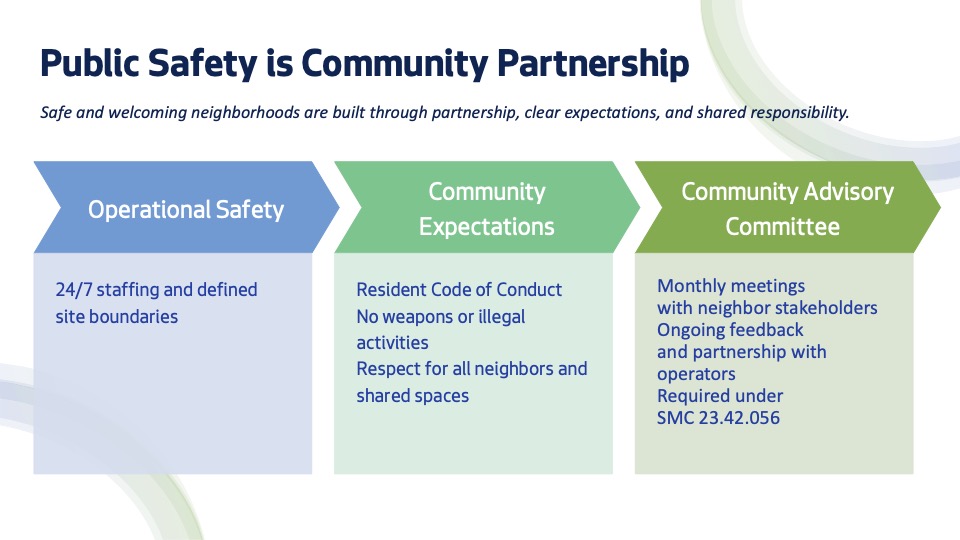
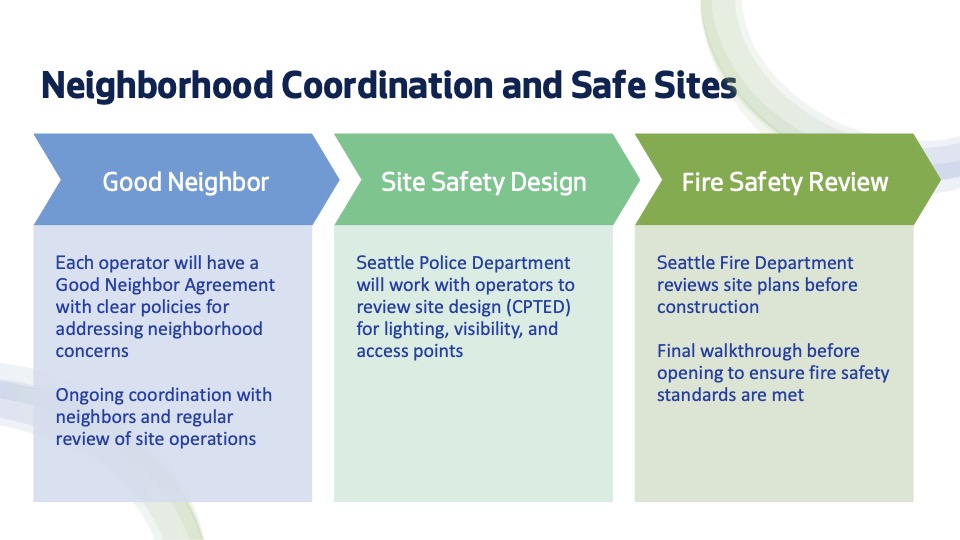
In working with the neighborhoods where shelter would be added, they said they had plans for how safety would be safeguarded:
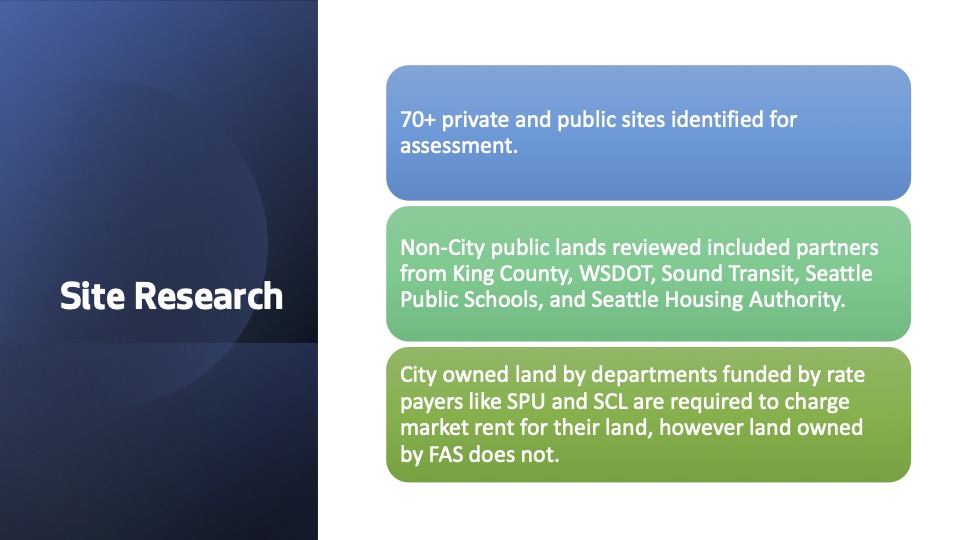
Of the 70 sites they said they’ve “assessed,” about a third are publicly owned. The first five sites, they said, won’t require the mayor’s newly proposed legislation in order to move forward, but others will, so that was part of why they were at the council meeting, to promote that legislation, which she announced at the Hope Factory tiny-home (microshelter) construction facility twelve days ago (WSB coverage here).
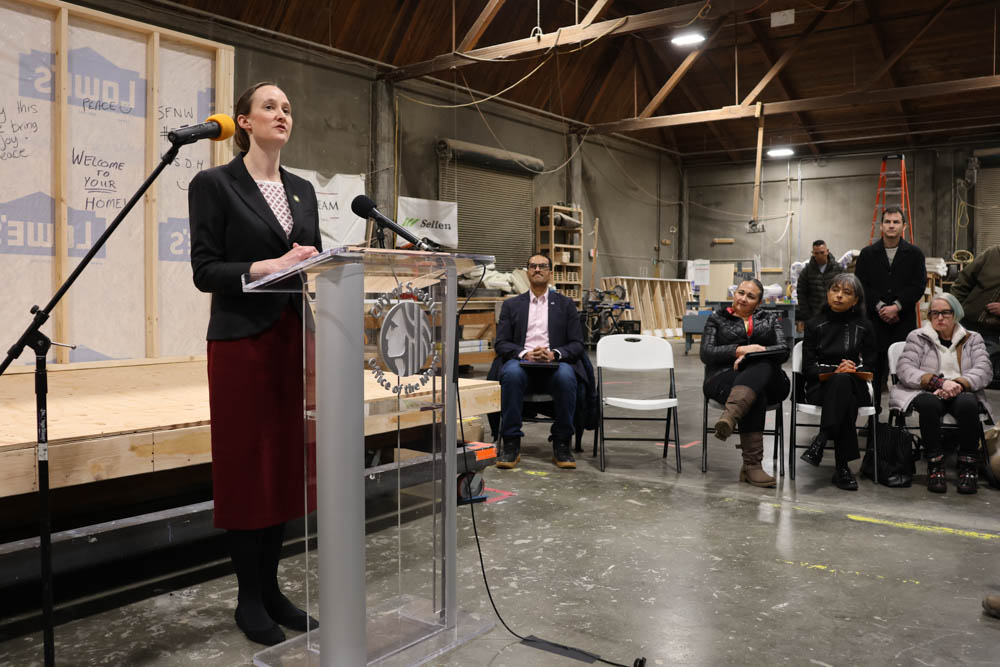
(WSB photo at The Hope Factory in Georgetown, March 4)

That March 4 announcement was brought up by Councilmember Dan Strauss in Q&A, noting a mention in the presentation of each tiny house costing $28,000, while he recalled that the microshelters are built by volunteers.
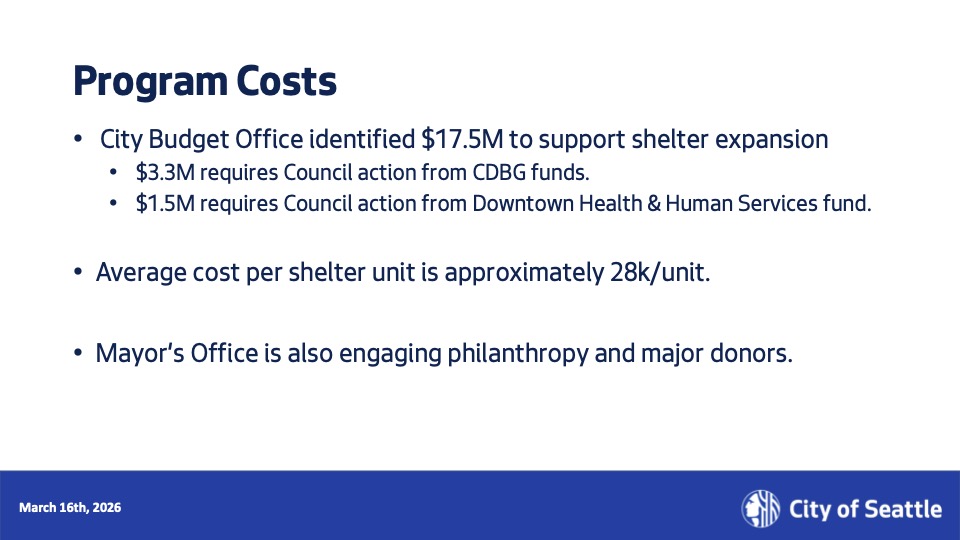
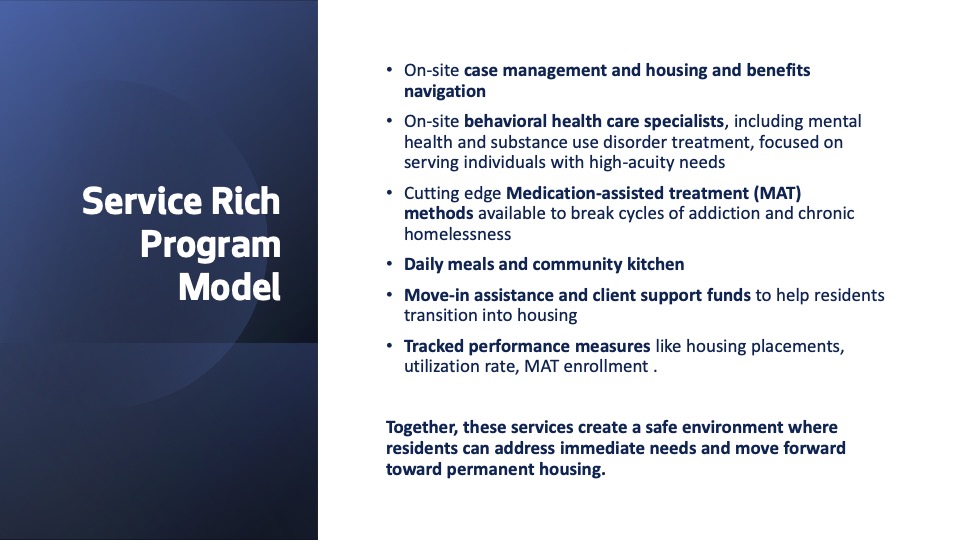
So will the city be paying for them? Strauss asked. The mayor’s-office team told him, “We’ll get back to you.” They did say part of the costs are from the plan to make these shelter facilities “service-rich environments,” explained this way:
There was no mention of the forthcoming West Seattle tiny-homes-and-RV-lot site Glassyard Commons, so we don’t know if it’s going to be considered one of the five sites or not. It’s continuing to make its way through the city permit system.

(See the full slide deck from today’s presentation here.)

27 Replies to "VIDEO: Mayor's office says 70 possible sites reviewed for push to add 500 shelter spaces fast"

  • Question Authority March 16, 2026 (10:33 pm)

    Somebody’s math ain’t mathin if those cost 28K a piece to build. There is no way even with wiring, insulation, window and lockable door they are that expensive to build.  Before they sell the public that story some spreadsheets need to be shown and vetted for public tax dollars usage and cost efficiency.

    • Lauren March 17, 2026 (1:09 am)

      Agreed. $14M in labor to build 500 of these is egregious. 

    • K March 17, 2026 (6:22 am)

      When I see you asking for the same granular-level accounting of SPD spending, I’ll believe this is about “public tax dollars usage and cost efficiency”.  Until then, it’s just another example of how the public demands made of anyone offering services to the homeless cause delays and added costs, making it harder and harder to provide services.  That number seems very reasonable to me, and on track with what I’ve personally spent on recent projects. 

      • Question Authority March 17, 2026 (10:08 am)

        Why go off topic with the anti Police bent, and why do you think the money spent on Homeless endeavors doesn’t need to be vetted for accuracy and efficiency like other budgets?

      • Neighbor March 17, 2026 (11:24 am)

        Ok. I want to see the same cost breakdown for SPD.  Can we stop with the non-constructive whataboutism and get back to problem solving now? 

        • K March 17, 2026 (11:58 am)

          Sounds to me like this IS problem-solving.  This is a fraction of the cost of sweeps, incarceration, and other strategies that exacerbate instability, while creating stable housing so the folks living there have the chance to engage in services.  The cost per unit is in line with the larger construction industry.  Not sure what the hand-wringing is about, besides big feelings about homeless people getting help.

          • Question Authority March 17, 2026 (1:11 pm)

            And if they don’t engage with services then it is truly an exacerbation of the cost to taxpayers forever and ever.

          • k March 17, 2026 (5:54 pm)

            That’s true of anything, including parking tickets and jail time.  We live in a country of free will (for the moment, anyway) and no amount of tax money or austerity can force people to make the most of any opportunity.  Regarding the topic at hand, this is not an exceptional circumstance warranting an exceptional level of scrutiny.  If anything needs to be scrutinized, it’s the “philanthropy and major donors” the mayor’s office is engaging to offset costs.  Generally the taxpayers pick up the tab to keep special interests out of the conversation.  I’m far more concerned about private individuals muddying the waters of public works than the city spending exactly what it costs to build the units.

    • Charles Burlingame March 17, 2026 (7:37 am)

      If you want tiny homes to come with 24/7 security and services for the people who live in them, that’s what it costs. 

      • Mike March 17, 2026 (10:15 am)

        Charles:  I don’t believe that number includes any other support services. It’s just the per-unit construction budget to build these units. Even if we agree re: the need to provide, doesn’t that seem steep for a tiny house?

        • WSB March 17, 2026 (11:10 pm)

          Yes, as I wrote in the story, at least part of that cost was attributed to the “service-rich environment” into which these theoretically will be dropped.

    • Foop March 17, 2026 (8:15 am)

      Makes me wonder why building a 1000 sqft house costs 600ki had a 80sqft bathroom added to my house a decade ago and that was 70kthis doesn’t seem that wild.

    • PropertyManagerNate March 17, 2026 (4:21 pm)

      It cost about $4,500 in materials to build – according to Sound Foundations NW (the builder). Since the foundation uses 100% volunteers for building, the actual building cost is relatively low. What is really expensive is operations (utilities, staffing/services), which the entire $28K most likely includes. 

    • Other Neighbor March 17, 2026 (8:49 pm)

      It costs $4,500 in materials to build a tiny home. Labor is by volunteers. Source: https://soundfoundationsnw.org/If I recall, the cost to build and operate a village was like $100-$200k. Not sure where $28k/home comes from, unless that is averaging the village cost too over some time span.

    • M.B. March 18, 2026 (2:54 pm)

      It’s quite possible they aren’t budgeting for volunteer labor given the desire to stand up 500 units. I’m not looking at their numbers, but water/sewer, possibly storm water,  site work, permits, etc etc all done at state commercial prevailing wages can add up. Carpenters are getting +$80/hr, electricians $111/hr, clean up laborer $67/hr. 

  • Diane March 17, 2026 (3:33 am)

    how did these tiny homes go from $2k to $3k just a decade ago, to now projected $28k???https://www.seattletimes.com/opinion/tiny-houses-have-a-big-impact/

    • Dora March 17, 2026 (10:11 am)

      The article is from only 9 years ago. So they must mean the tiny house plus services, etc . At least I hope so. 

    • Brian March 17, 2026 (10:58 am)

      Diane: it’s because material conditions are worsening as the super rich refuse to stop hoarding the wealth that would fund a proper solution to actually creating suitable housing for human beings. 

      • Julian March 17, 2026 (5:15 pm)

        This is a low effort attempt at trolling

  • Keenan March 17, 2026 (7:24 am)

    I voted for Katie Wilson.  Katie Wilson has been office for three months now and hasn’t DONE anything.  PowerPoint presentations do not count as “something.”

    Like, when is she actually going to take ACTION on all of these awesome social policies she ran on?  Mamdani has already done like 50 things in NYC.  Come on Katie, WE’RE WAITING.

    • my two cents March 17, 2026 (2:31 pm)

      There seems to be a recycling of previous efforts or the need for further analysis & discussion with the messaging so far. Additionally, the roll-out of the administrative changes for the City of Seattle hasn’t been confidence building. The first 90 days roll-out hasn’t been the best.

    • Christina March 17, 2026 (5:51 pm)

      Yes!!! So much “hmm, thinking 🤔, considering 🤔” posts and questionable hires (with walk backs!) in 3 months. Her inexperience is showing and now that we’ve seen what motivated and experienced leadership can accomplish in a major city like New York— there’s no excuse 

  • The Beautiful Game March 17, 2026 (7:46 am)

    Any idea where the third that are public spaces would be?  I’m concerned that they may be placed in public parks and fields where kids play, like what happened 5-6 years ago.

  • fas means... March 17, 2026 (7:58 am)

    First slide says “FAS” which I looked up as the City’s Financial and Administrative Services.  Just FYI!

  • Cobra kai March 17, 2026 (3:48 pm)

    The shed costs less than $4K. The remaining $24K is the grift of the homeless industrial complex…https://www.wayfair.com/storage-organization/pdp/handy-home-windemere-wood-storage-shed-10-ft-w-x-12-ft-d-gcct1041.html?piid=113449379

  • Admiral2009 March 17, 2026 (6:26 pm)

    Why are Seattle taxpayers being burdened with the cost of this issue.  It’s a regional challenge and needs to be paid for by everyone not just Seattle taxes.  Taxes and levies keep going up AND UP!

  • Scarlett March 18, 2026 (11:28 am)

    The real crisis is and will be providing healthcare for this population as they age, as they get sicker and require more and more intensive expensive care.  This happens to all of us, but most of us are able to bear at least some of the financial burden, whether a copay, a Medicare premium.   The real problem is not the cost of the structures, per se, it’s the cost of providing all the other services, including healthcare for those who come with with pre-existing serious chronic conditions.  The cruel irony of increasing Medicaid coverage to millions is that is saved and extended lives, but it also created a healthcare cost tsunami down the road.   I don’t think anyone has a solution, either.   

Sorry, comment time is over.