
By Charlotte Starck
Special to West Seattle Blog
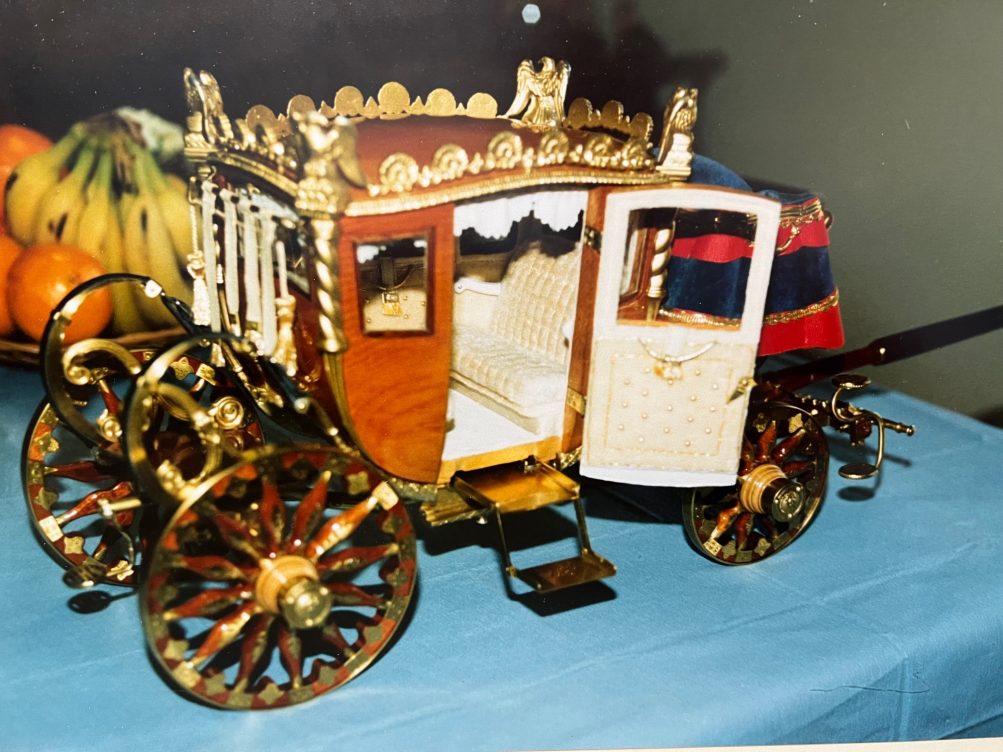
On March 3, my brother Jim Starck and I will board a plane to Detroit carrying something far too fragile to ship — our grandfather’s 1930 Fisher Body Napoleonic model coach, carefully secured inside the handcrafted wooden box he built for it himself.
It will be the first time the carriage has ever left Seattle area.
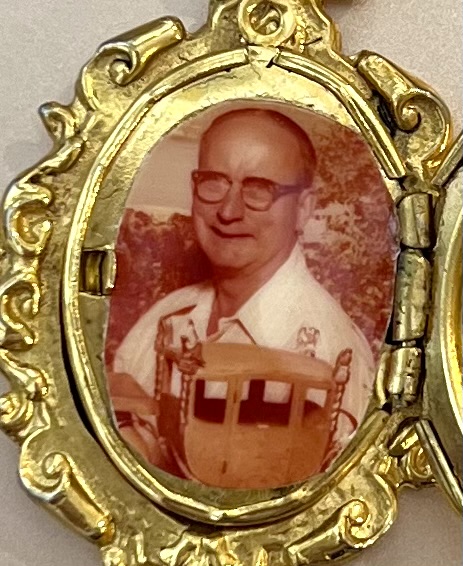 (Irvin Starck and the carriage, photo in locket)
Nearly ninety-five years ago, as a teenager in South Dakota during the Great Depression, our grandfather, Irvin A. Starck, purchased one of the very first Fisher Body Craftsman’s Guild model coach kits – the inaugural year of what would become General Motors’ long running and most influential youth outreach and recruiting initiative aimed at getting boys into auto engineering.
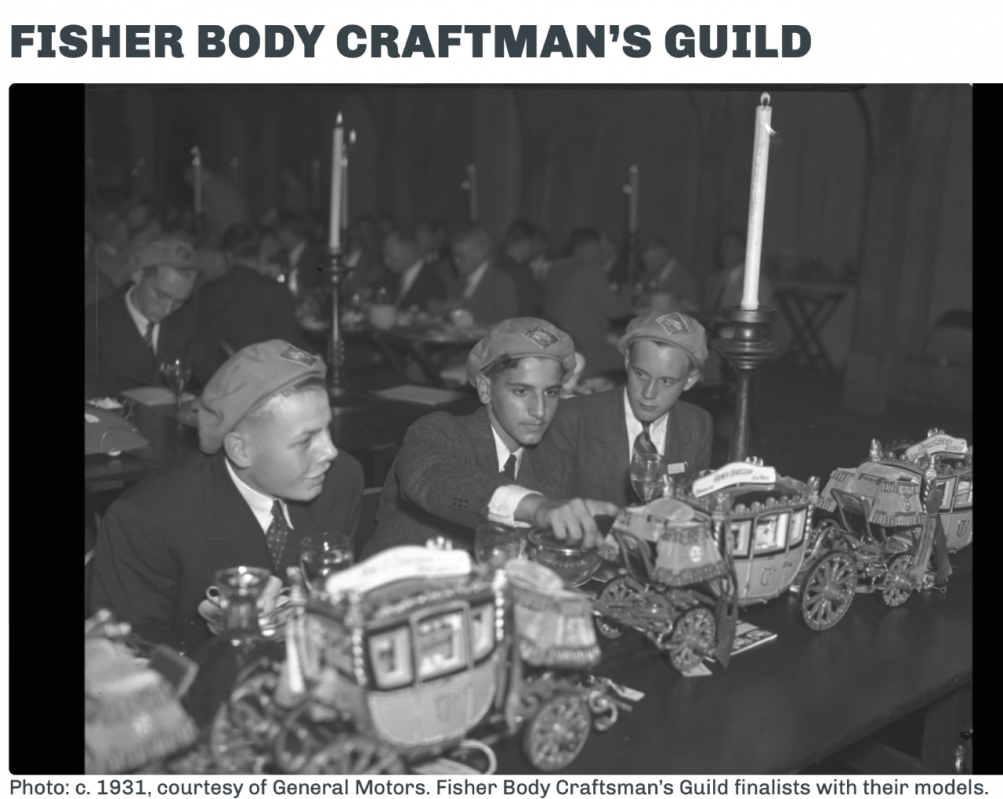
He had a natural-born talent for building things and hoped to enter it by the Guild contest.
But, life happened. He was living in poverty during the Depression. He scrambled to work multiple jobs to survive. And just couldn’t sacrifice the time to focus on the model before the submission deadline.
But he never got rid of it. He kept it. For a someday.
We didn’t fully understand how poor he was then – until much later. One Thanksgiving, I noticed he never put mashed potatoes on his plate. (It was our favorite.) I finally asked why. He replied, “During the Depression, we didn’t have money for food. At one point, he said, that’s all we had. I had to eat potatoes for a few weeks.” He hated them ever since.
That moment stuck with me. As an adolescent, it was the first time I became aware of how fortunate I was to have food on the table every night. When he explained more of those days, it gave new meaning to the unfinished coach.
Eventually he moved to Seattle, was hired at Boeing, and spent 30 years as a machinist building airplanes. Precision became his profession.
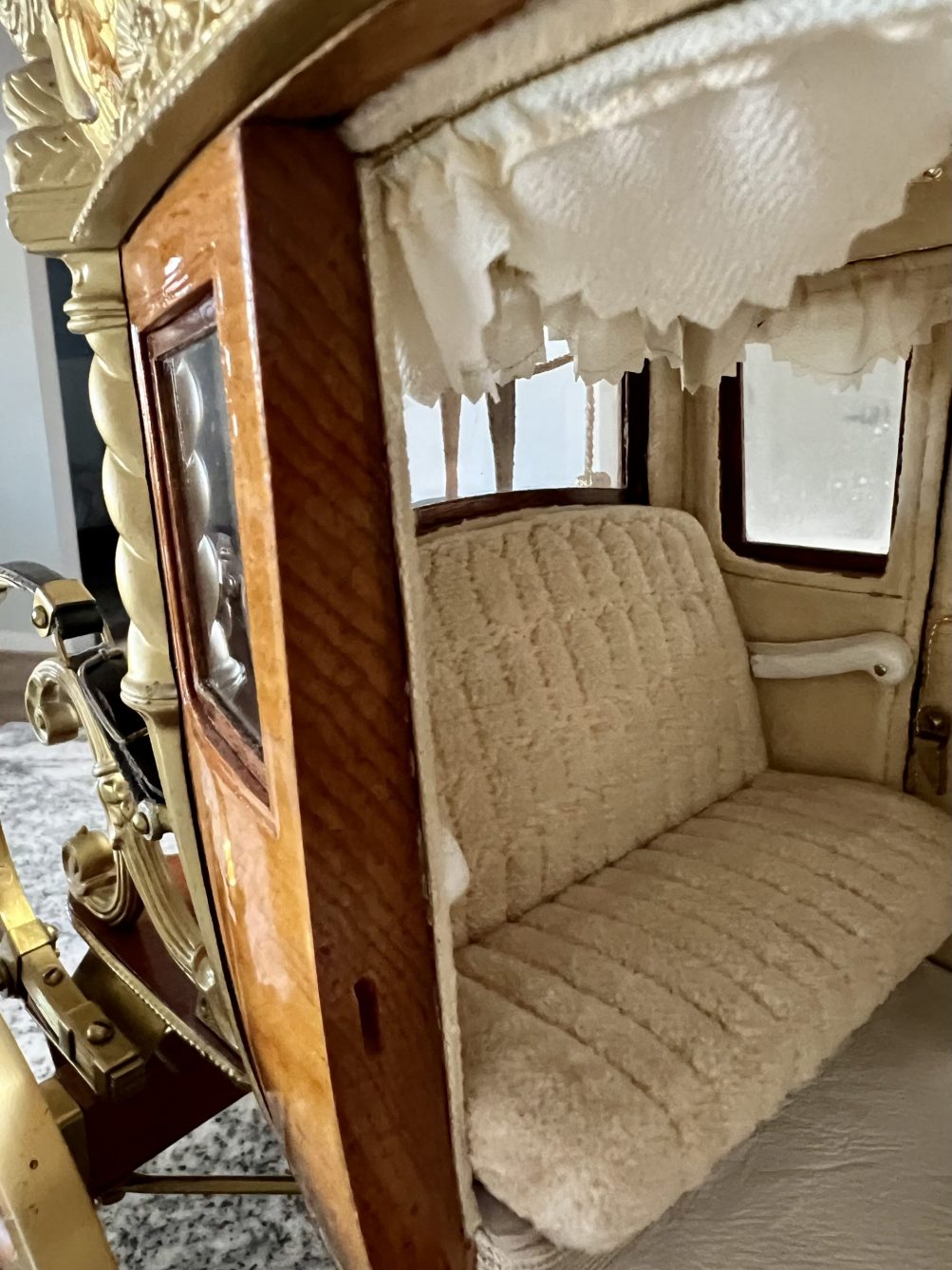
And one day, he started to work on it again. Slowly. In the evenings after his shifts on the line, or when our grandmother was a little grumpy. Down to the garage he would go. To his own creative world. Under dim lights, hunched over his workbench with his glasses low on his nose.
The oversized plans, yellow with age, were mounted on the wall above as he shaped parts so small he sometimes held them in a vice. If a tool did not exist to create a detail, he fabricated one. He built the tool to build the design pressed into leather. He made tools to craft the intricate patterns that embellished the plated wheels. Missing parts didn’t stop him. He just built them.
He kept at it. This was not tinkering. It was mastery.
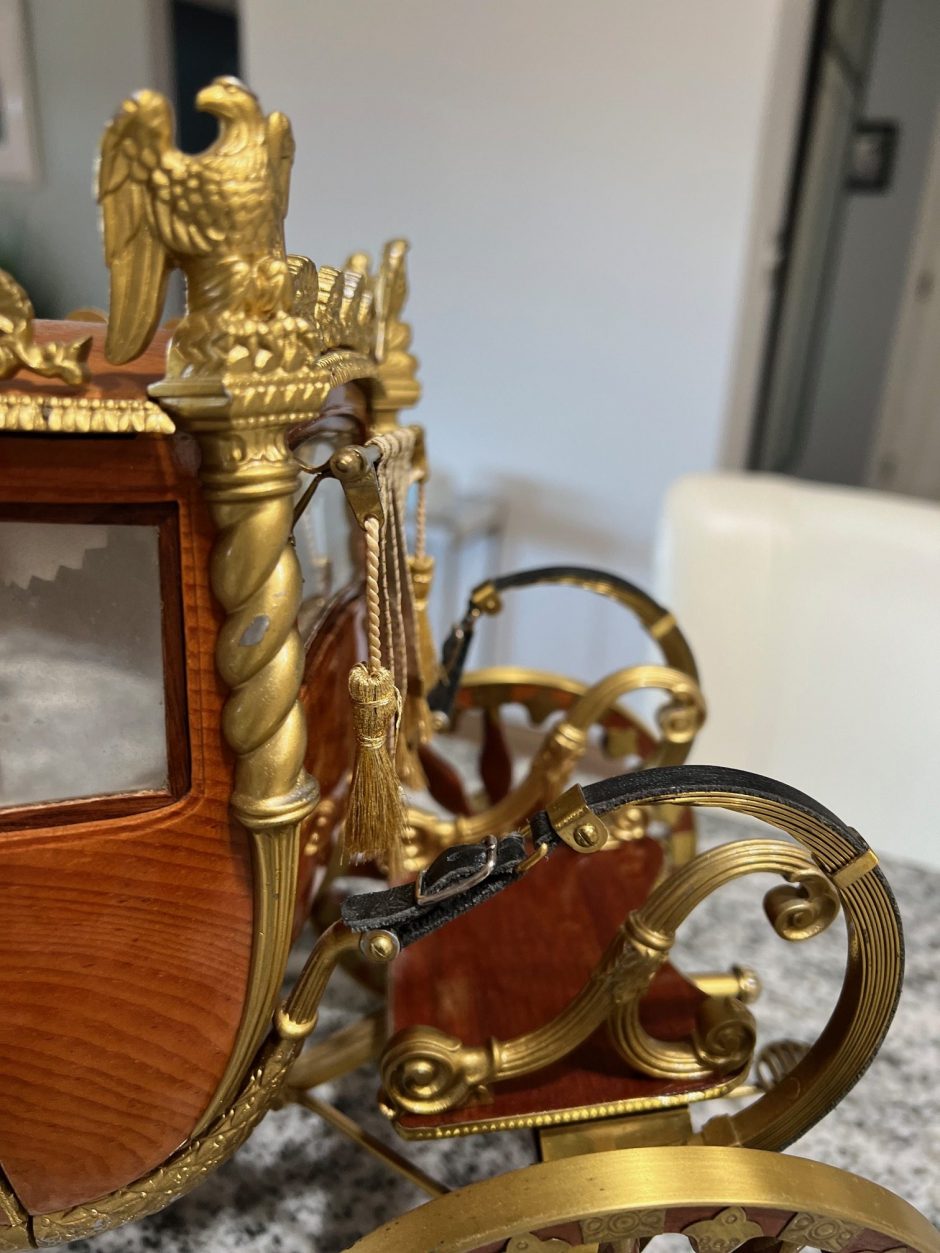
In 1985 — fifty-five years after purchasing the kit — he announced it was finished. That same year, he entered it in the model competition at the Washington State (Puyallup) Fair and won the top prize, a Blue Ribbon. News of the precision craftsmanship traveled from the fairgrounds all the way to General Motors headquarters in Detroit.
An executive wrote inviting him to place the carriage in the GM Heritage Museum.
He declined.
Having only recently completed it after more than half a century, he told us, with a chuckle, “I just finished it.” He wanted a little time to appreciate his own work.
Some facts from the Fair:
Irvin A. Starck’s Fisher Body Napoleonic Model Coach:
• Purchased: 1930 (first-year issue of the Guild contest)
• Completed: 1985 – Seattle, Washington
• Blue Ribbon: Washington State Puyallup Fair (1985)
• Estimated labor: 18,000 hours
• Approximate parts: 2,000
The Fisher Body Craftsman’s Guild contest was created during the Great Depression as both a recruiting pipeline and a youth outreach initiative.
Thousands of teenagers and their families participated. The 1/18-scale Napoleonic coach — based on Fisher Body’s iconic emblem inspired by Napoleon Bonaparte’s ceremonial carriage — became a symbol of craftsmanship and design excellence during the transition from horse-drawn transport to the automobile age.
My brother and I talked and agreed that it was time for others to see it. We contacted Kevin Kirbitz, Chief of GM Heritage. Over the decades, he has seen several surviving Guild coaches in fair shape. But he told us they had not seen one with this level of beauty and precision craftsmanship. General Motors is opening a new Heritage Center museum next spring, and Kevin said they would be honored to include our grandfather’s carriage in the permanent collection.
Now, 40 years after he first declined GM’s invitation — and nearly 95 years after he purchased that original kit — our grandfather’s carriage will finally return to Detroit.
It’s an emotional trip, because we love our grandfather so much and miss him dearly; he died in 2002. He taught us how to finish something you start. How to be patient when you don’t see all the pieces. How to find solutions and move forward. And how to do work you can be proud of.
Before it departs the Pacific Northwest, we believe this represents more than industrial history. It is a Seattle story — a Boeing machinist’s Depression-era dream completed over fifty-five years in a garage, honored at the Washington State Fair, and now returning to Detroit as part of American industrial heritage.
We will depart March 3rd to deliver it to the GM Heritage Center in Grand Blanc, Michigan.
=====
Charlotte Starck is a former journalist currently engaged in civic and community service as president of the Alki Community Council.
| 2 COMMENTS