
By Tracy Record
West Seattle Blog editor
Far beneath the bark chips, the reason for Thursday’s Roxhill Bog celebration is literally dug in and doing its job.
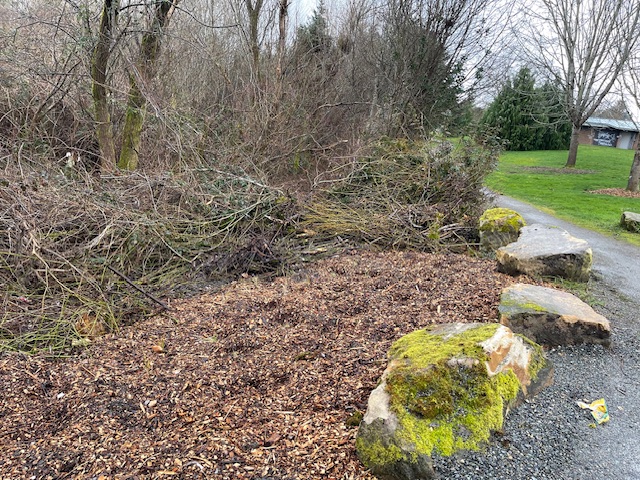
It’s a vinyl barrier, about 300 feet long, installed last fall as a test, to see if it could help keep water in the part of the historic peat wetland, which has been a source of concern over the years as it’s run dry. Now, the simple sight of standing water thrills those who’ve worked on the problem for years. Through a tangle of branches, here’s what we saw Monday on the south side of Roxhill Park:
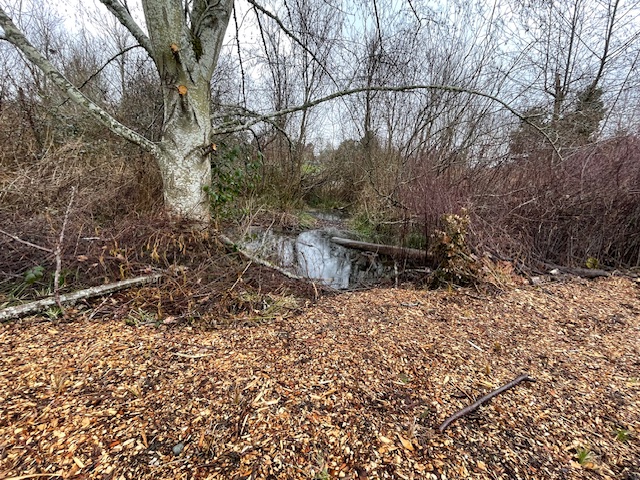
This water is evidence the test barrier is working. And the rain that fell Monday brought more water to the wetland, while dousing us during a mini-tour with Sharon Leishman of the Duwamish Alive Coalition and Danielle Devier of Seattle Parks. They were two of the key participants in a 2021 online meeting we covered laying out the plan for “fixing the bathtub via blocking groundwater from leaving it, with a barrier – not just to save the bog, but to save the park, where trails and bridges have been sinking as the bog dries out.
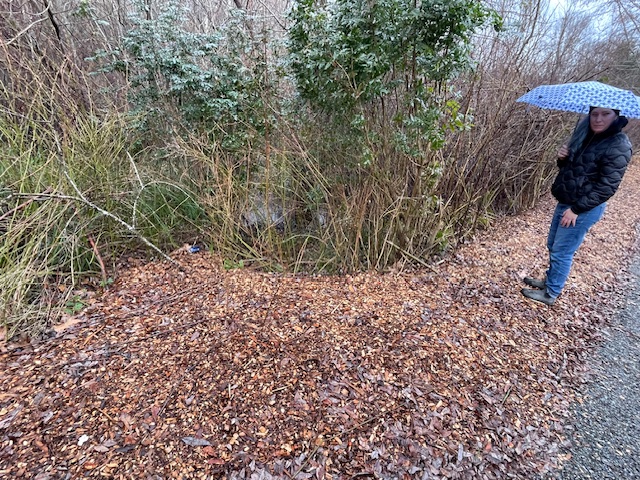
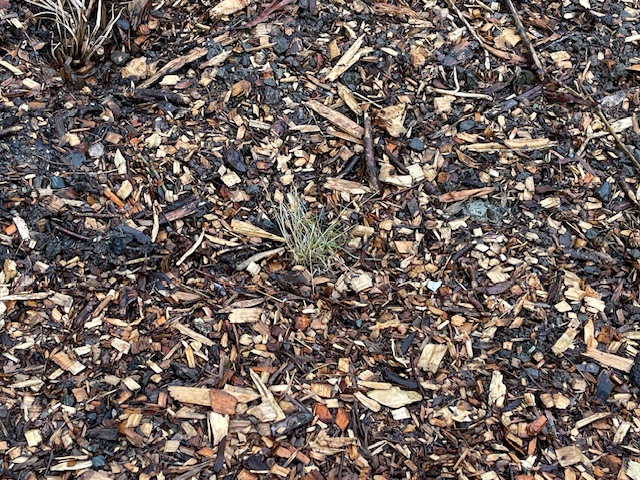
They explained how the vinyl barrier was deemed to be the least damaging way to block it – they wouldn’t have to tear up so much of the bog in the process. Leishman stressed the collaboration that led to the plan, including Natural Systems Design and the Delridge Neighborhoods Development Association, which has been organizing volunteer restoration-work parties in the park – look closely at this photo and you’ll see a tiny starter clump of grass planted during one of those events:
Bog restoration projects are more common outside the U.S., we learned during the mini-tour, and they also serve an educational purpose – to teach people about peat’s role in carbon sequestration. All the harvesting of peat that’s sold or gardens is releasing a lot of it. So what’s happening at Roxhill Bog is just a start – more of the bog could be restored, and an outdoor education lab could follow, for example. Past surveys have shown area residents have an intense interest in access to more natural areas, and they hope to see some of them at the celebration Thursday, 10:30 am to noon, which will include art, speakers, and most importantly, guided bog tours so you can see and hear about all this firsthand,
| 5 COMMENTS